Category | CLOUD and AWS
Last Updated On 18/05/2026
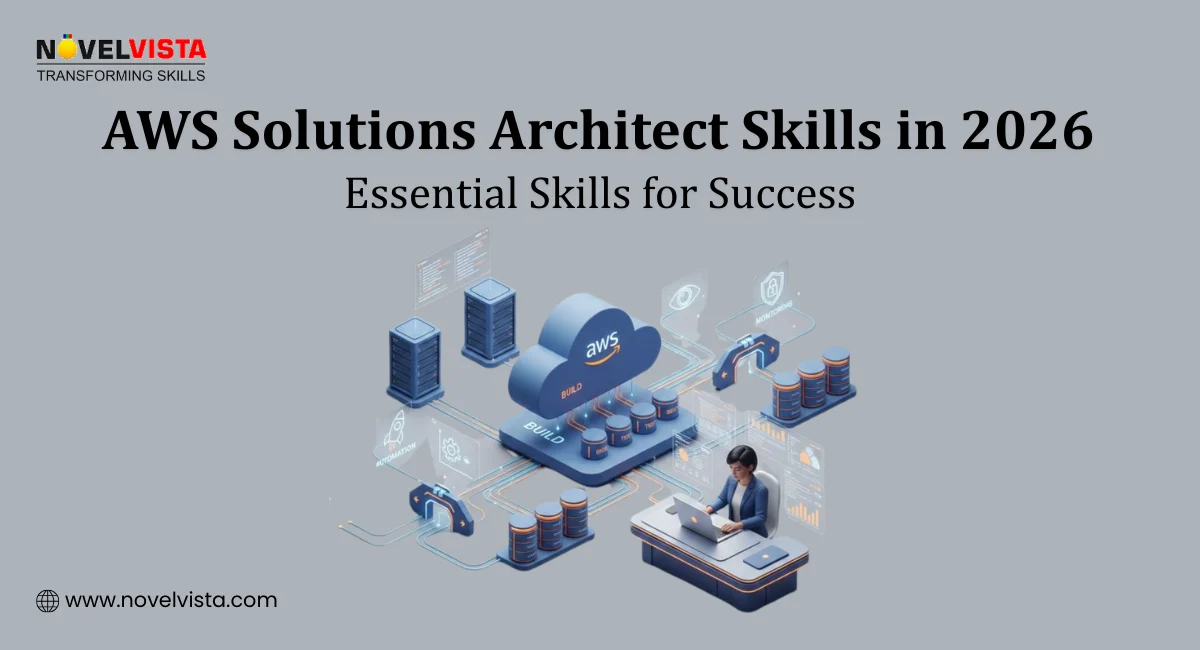
Cloud systems are getting more complex every year. Companies are no longer just moving workloads to the cloud; they are building AI systems, data platforms, and global applications on it. Because of this shift, AWS skills are becoming one of the most valuable capabilities for technology professionals.
In 2026, cloud architects are expected to understand not just infrastructure but also automation, security, cost optimization, and AI-powered workloads. This article explains the most important AWS Solution Architect skills, the skills required for Solution Architect roles, and how professionals can prepare for the next generation of cloud architecture.
TL;DR – Key AWS Architect Skills in 2026
Skill Area |
Why It Matters |
|---|---|
Cloud Architecture |
Design scalable, resilient cloud systems |
Containers & Serverless |
Build flexible, event-driven applications |
Security Architecture |
Protect systems using IAM, WAF, and network isolation |
AI Integration |
Deploy machine learning and generative AI workloads |
FinOps & Cost Optimization |
Manage cloud spending efficiently |
Observability |
Monitor performance and detect failures early |
Developing strong AWS skills across these areas helps architects design reliable and cost-efficient systems.
The role of a cloud architect has changed significantly. Earlier, architects mostly focused on provisioning infrastructure and ensuring uptime. Today, organizations expect architects to combine deep technical knowledge with business awareness.
This is why AWS Solution Architect skills now go far beyond basic cloud deployment.
Companies expect architects to:
Design systems that scale globally
Integrate AI and analytics capabilities
Protect data using strong security architectures
Optimize cost and performance
These expectations make strong AWS skills essential for anyone designing modern cloud platforms.
Another important change is the shift toward hybrid and multi-cloud environments. Even when companies use several cloud providers, AWS still remains a dominant platform. That’s why the skills required for Solution Architect roles often include deep AWS expertise along with broader cloud knowledge.
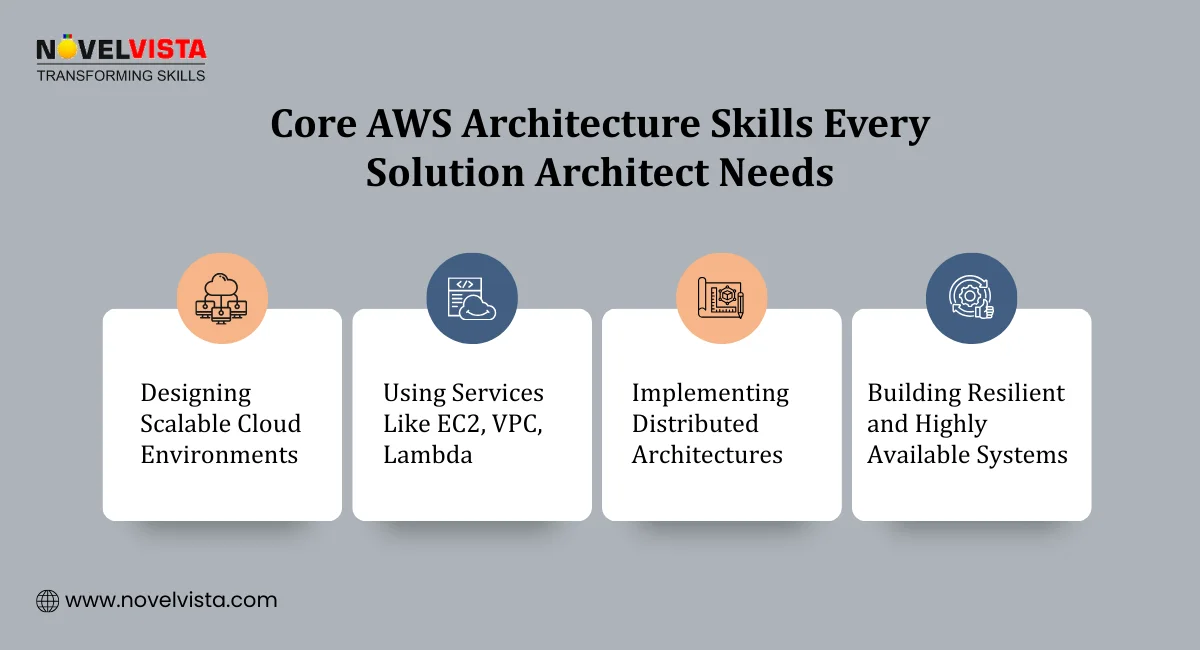
At the heart of cloud architecture lies a strong technical foundation. Every architect needs to understand how cloud services interact and how to design systems that remain stable even during failures.
These fundamentals form the backbone of AWS Solution Architect skills.
Cloud Architecture Fundamentals
A cloud architect must understand how core AWS services work together.
Key foundational services include:
Amazon EC2 for scalable compute resources
Amazon VPC for network design and isolation
AWS Lambda for event-driven computing
Amazon S3 for storage and data durability
Architects also rely heavily on the AWS Well-Architected Framework, which guides design decisions using six pillars:
Operational Excellence
Security
Reliability
Performance Efficiency
Cost Optimization
Sustainability
These principles form the core skills required for Solution Architect roles and ensure systems are reliable and efficient.
During architecture training sessions, professionals often realize that combining multiple availability zones with load balancing significantly improves reliability. In many enterprise deployments, this design reduced service downtime during infrastructure failures.
Serverless and Containerization Expertise
Modern applications rarely run as large monolithic systems anymore. Instead, they are built using microservices and event-driven architectures.
This makes container and serverless technologies essential Solution Architect skills.
Important technologies include:
AWS Fargate for serverless containers
Amazon ECS for container orchestration
Amazon EKS for Kubernetes workloads
AWS Lambda for event-driven applications
These tools allow architects to design systems that scale automatically while reducing infrastructure management. In hands-on cloud labs, teams frequently observe that serverless architectures simplify scaling during unpredictable workloads. Several organizations adopting event-driven designs reduced infrastructure management effort by nearly 40%.
As companies build distributed systems, mastering these technologies becomes a key part of advanced AWS Solution Architect skills.
Networking and Security Skills
Security remains one of the most important skills required for Solution Architect roles. Architects must design secure network architectures that protect applications and data.
Key AWS services used for security include:
AWS IAM for identity and access management
AWS Shield for DDoS protection
AWS WAF for application security
Networking design also plays a major role. Architects often design secure environments using:
Virtual Private Clouds (VPC)
Private subnets
Network gateways and routing tables
Organizations are increasingly adopting zero-trust architectures, which require strict identity verification and controlled access to resources.
Developing strong security design capabilities strengthens overall AWS skills and ensures cloud systems remain protected.
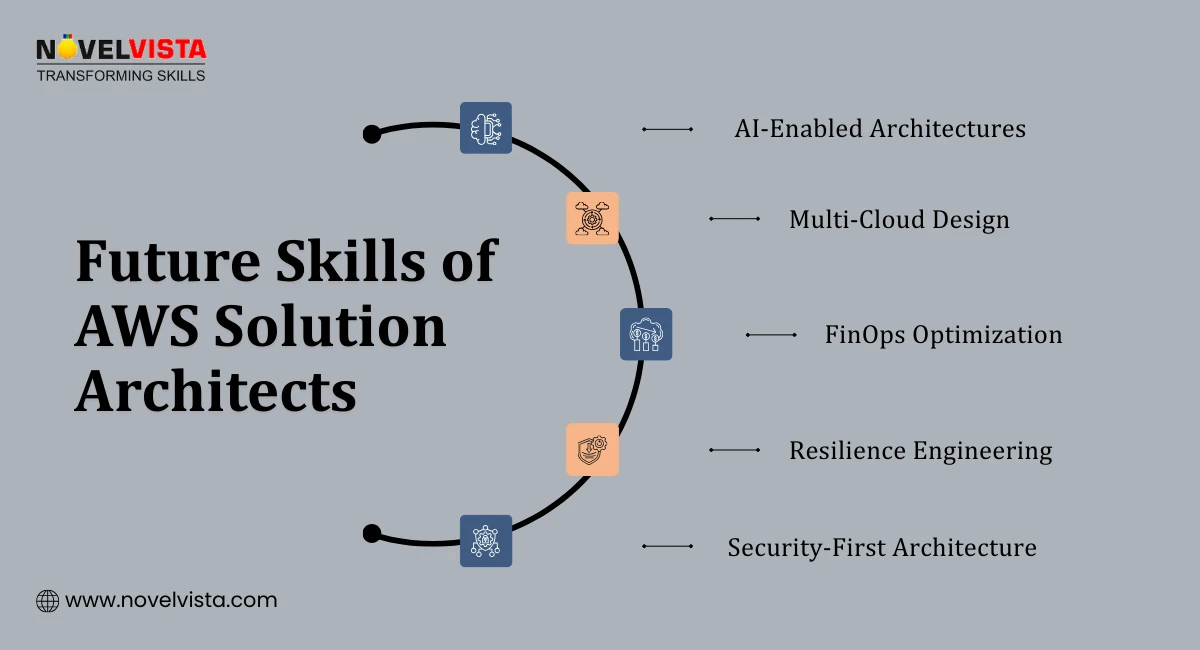
Cloud technology continues evolving quickly. Architects must stay updated with new capabilities that shape how modern systems operate.
These emerging capabilities are becoming essential AWS Solution Architect skills.
Artificial intelligence is rapidly becoming part of enterprise cloud architectures.
Architects are now expected to deploy AI-driven services and manage machine learning pipelines.
Important AWS services include:
These tools allow architects to integrate intelligent features such as chatbots, recommendation systems, and automated decision engines.
As AI becomes more common, integrating machine learning into infrastructure becomes one of the most valuable AWS skills.
Cloud costs can grow quickly without proper management. Because of this, cost optimization has become a major responsibility for architects.
Architects now focus on:
Tools such as AWS Cost Explorer help analyze cloud expenses and improve efficiency.
Sustainability is also gaining attention. Many companies aim to reduce energy consumption and environmental impact through smarter cloud design.
Managing cost and sustainability effectively is becoming one of the most important skills required for Solution Architect professionals.
Maintaining reliable systems requires visibility into system behavior. Observability tools help architects detect issues before they affect users.
Common AWS monitoring tools include:
These tools allow architects to track performance, monitor application health, and identify bottlenecks.
Improving monitoring strategies, therefore, remains a key part of advanced AWS Solution Architect skills.
Knowing AWS services theoretically is helpful, but real-world experience is what truly builds strong architects. Companies expect professionals to design, deploy, test, and troubleshoot cloud systems in real environments.
That’s why hands-on practice is a major part of the skills required for Solution Architect roles. Real infrastructure experience helps professionals understand how cloud services behave under load, how failures occur, and how systems recover.
Strong practical experience significantly improves overall AWS skills and confidence in designing production systems.
DevOps and Automation Skills
Modern cloud architecture is closely connected with DevOps practices. Architects are not just designing infrastructure anymore; they are also enabling automated deployments and continuous delivery pipelines.
Automation is now one of the most valuable AWS Solution Architect skills.
Important tools include:
Automation allows teams to deploy updates quickly while reducing human error. It also ensures environments remain consistent across development, testing, and production.
While AWS Engineers typically focus on deployment automation and infrastructure management, AWS Architects are responsible for designing scalable and secure cloud solutions. Understanding the differences between AWS Engineer vs AWS Architect roles can help professionals choose the right AWS career path based on their technical interests and long-term goals.
Because of this shift toward automation, DevOps knowledge has become a key part of modern AWS skills.
Hands-on platforms like AWS CloudQuest and sandbox labs help professionals practice these automation workflows in real cloud environments.
Data and Analytics Architecture
Data-driven applications are growing rapidly across industries. From recommendation engines to financial analytics systems, many cloud workloads now rely heavily on data platforms.
Architects are expected to design scalable data pipelines and analytics systems.
Key AWS services in this area include:
Architects also design lakehouse architectures, which combine data lakes and data warehouses into a unified analytics platform.
Understanding data architecture is increasingly among the skills required for Solution Architect roles because organizations rely heavily on insights from data.
As cloud data systems expand, architects with strong data design expertise naturally strengthen their AWS Solution Architect skills.
Resilience and Disaster Recovery Design
System reliability remains one of the most important Solution Architect skills.
Applications running in the cloud must continue operating even when the infrastructure fails. This means architects must design systems that recover quickly and avoid service disruptions.
Common reliability strategies include:
Architects also design disaster recovery strategies that define how quickly systems should recover.
Examples include:
Industry reports show that organizations implementing resilience testing and chaos engineering practices have reduced failure rates by nearly 65%.
These practices make reliability engineering one of the most important AWS skills for cloud architects.
Identify missing cloud and AI skills, compare your expertise with industry expectations,
and prioritize practical learning areas to stay competitive in evolving AWS job roles.
Certifications help validate technical knowledge and demonstrate professional capability. For many professionals, certification also provides a structured way to develop AWS Solution Architect skills.
A typical certification path includes multiple stages.
Entry-Level Certification
The first step for beginners is often:
AWS Certified Cloud Practitioner
This certification focuses on cloud fundamentals such as basic architecture concepts, pricing models, and AWS core services.
It builds the foundation for deeper AWS skills.
Intermediate Certification
The most popular certification for architects is:
AWS Certified Solutions Architect – Associate
This certification focuses on:
Designing scalable architectures
Implementing secure cloud systems
Optimizing cost and performance
Preparing for this exam significantly strengthens the skills required for Solution Architect roles.
Industry statistics also highlight the value of certification.
AWS announced that more than 1.2 million certifications were issued globally by 2025 during AWS re: Invent.
In certification preparation programs, candidates who combine theoretical study with hands-on labs typically demonstrate higher exam readiness and stronger practical understanding of AWS architecture patterns.
Building strong cloud expertise requires continuous learning. Cloud technology evolves quickly, and architects must stay updated with new services and architecture patterns.
Several learning resources help professionals strengthen AWS Solution Architect skills.
Popular learning platforms include:
AWS Skill Builder – official training platform with hundreds of courses
Interactive labs that simulate real-world cloud environments
Practice exams designed to prepare professionals for certification tests
Hands-on labs are particularly valuable because they allow professionals to experiment with infrastructure without risking production systems.
Organizations also provide team subscriptions to learning platforms. These programs allow companies to track employee training progress and build stronger cloud teams.
Professionals who continuously practice and update their AWS skills remain better prepared for evolving technology trends.
The role of a cloud architect continues to expand. Today’s professionals must combine architecture design, automation, security, and cost management expertise.
Strong AWS skills are no longer limited to infrastructure deployment. Modern architects must also understand AI integration, observability, FinOps practices, and resilient system design.
By strengthening their AWS Solution Architect skills through certifications, hands-on projects, and continuous learning, professionals can stay prepared for the cloud challenges of 2026 and beyond.
Developing the right skills required for Solution Architect roles ensures architects can design reliable systems, support business growth, and adapt to rapidly evolving technology environments.

Next Step: Build Your AWS Solution Architect Career
If you want to strengthen your AWS skills and become a certified cloud architect, NovelVista’s AWS Solution Architect Associate Certification Training Course provides structured guidance and hands-on learning. The program helps professionals understand real-world cloud architecture, design scalable systems, and prepare confidently for certification exams. With expert trainers and practical labs, it’s an ideal step for professionals looking to advance their careers in modern cloud architecture.
Author Details

Confused About Certification?
Get Free Consultation Call
Stay ahead of the curve by tapping into the latest emerging trends and transforming your subscription into a powerful resource. Maximize every feature, unlock exclusive benefits, and ensure you're always one step ahead in your journey to success.