Category | IT Service Management
Last Updated On 09/06/2026
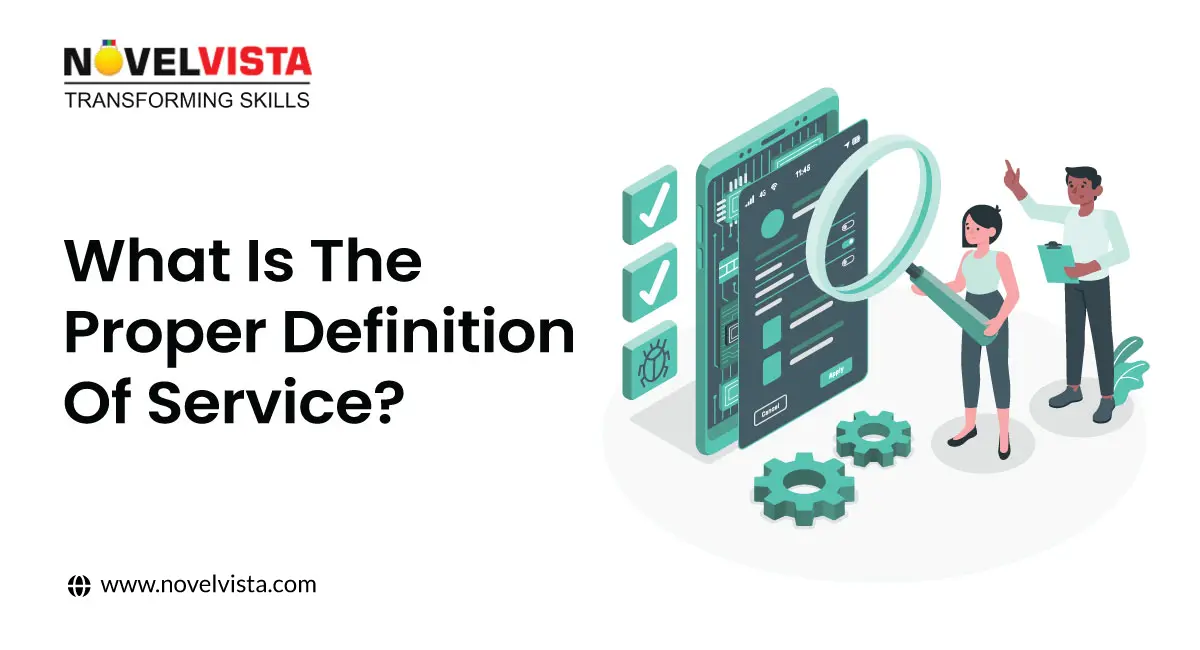
What is a Service? It’s a simple question that often leads to surprisingly complex answers. We use services every day, streaming platforms, IT help desks, banking apps, and healthcare consultations. Yet defining Service Meaning clearly requires stepping beyond products and ownership. A service delivers value, support, or outcomes without transferring physical ownership. Instead of buying something tangible, you experience benefits.
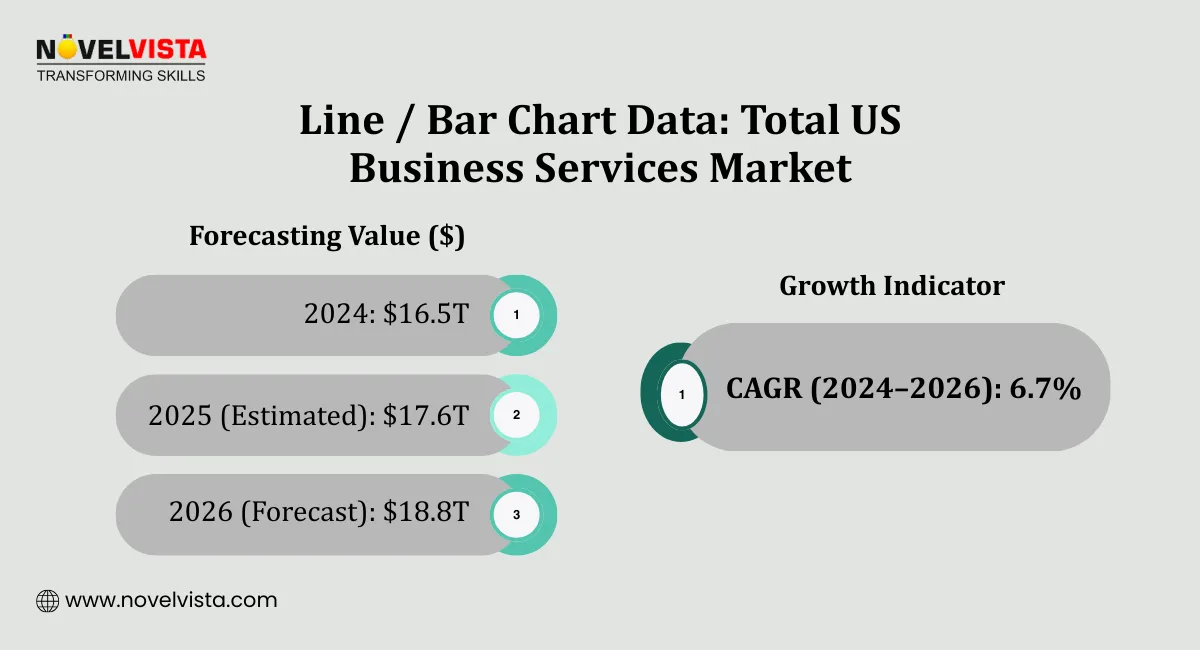
In today’s economy, services dominate nearly every industry. From digital platforms to consulting firms, organizations are shifting from selling products to delivering ongoing value through services. The US Business Services market is projected to grow from $16.5 trillion in 2024 to $18.8 trillion by 2026, reflecting a steady 6.7% CAGR and sustained sector expansion. This growth highlights how critical services are to business models, innovation, and global trade.
Understanding What is a Service helps professionals design better experiences, improve delivery quality, and align operations with customer expectations. Whether you work in IT, customer support, consulting, or healthcare, service excellence defines long-term success.
TL;DR – What Is a Service?
Area |
What It Means in Practice |
|---|---|
What is a Service |
Delivering value without transferring ownership |
Service Meaning |
An experience or benefit provided to meet a need |
Types of Services |
Core, support, and outsourced services |
Customer Service Meaning |
Helping customers resolve issues and improve satisfaction |
Key Benefit |
Creates economic value and customer loyalty |
Common Gap |
Poor delivery and unclear expectations reduce service quality |
A service is any intangible activity, process, or benefit that fulfills a need without requiring the ownership of a physical item. It is typically produced and consumed simultaneously and often requires direct interaction between the provider and the customer.
Consider services as an experience instead of buying that product - for example, you don't own an online course, a hotel, and a software subscription, but you experience them.
Understanding Service Meaning becomes easier when you focus on value creation rather than physical ownership.
Services operate differently from physical goods. Their structure influences how businesses design, manage, and improve delivery.
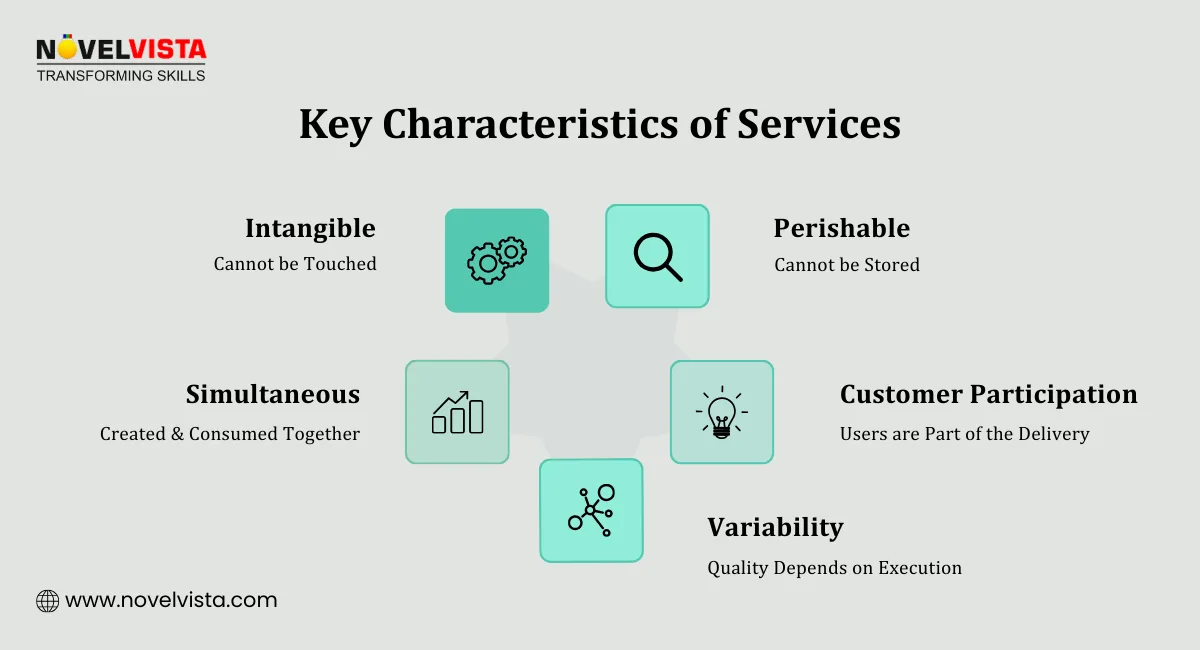
Services do not have a physical form. You cannot touch an IT consultation, a legal advisory, or customer support, but you experience their outcomes.
Services cannot be stored for later use. If a hotel room or airline seat remains unused today, the opportunity is permanently lost.
Services are often created and consumed at the same time. For example, live coaching or a customer care interaction happens in real time.
Many services require customer involvement. Reporting an issue to an IT Service Desk is necessary before resolution can begin.
Service quality may vary depending on who delivers it, when it is delivered, and how it is executed.
During service audits across mid-sized enterprises, variability is consistently the biggest risk to quality. Organizations that implement defined SOPs and measurable SLAs typically reduce service complaints by 25–35% within six months of structured governance adoption.
Because of these characteristics, businesses must structure processes carefully to maintain consistency and satisfaction.
Services can be categorized in multiple ways, but for practical understanding, most organizations classify them into three broad types. Knowing the Types of Services helps businesses define ownership, priorities, and improvement areas clearly.
Core services are the main offerings that directly deliver value to customers and define the organization’s purpose.
Examples include:
These services generate revenue and shape customer perception. If core services fail, the business suffers immediately.
Support services enable and enhance the delivery of core services. While customers may not always notice them, they are critical for service continuity and quality.
Examples include:
Strong support services ensure reliability, faster resolution, and better customer experiences.
Outsourced services are handled by third-party providers to improve efficiency, reduce costs, or access specialized expertise.
Examples include:
Outsourcing allows organizations to focus on core competencies while maintaining service performance. Cybersecurity monitoring (organizations increasingly seek professionals with credentials like ISO 27001 Lead Auditor Training to govern third-party security services)
Explore our Service Terminology Glossary your shortcut to
mastering IT, Operations & Support concepts.
To fully understand Service Meaning, it’s important to look at how deeply services shape modern economies.
Services dominate global markets, from digital subscriptions to logistics and professional consulting. The importance of services in the economy continues to rise as businesses shift from ownership-based models to experience-driven value delivery.
Even, Services now drive most modern business models, replacing one-time product sales with ongoing value delivery. The US Business Services market is set to grow from $16.5 trillion in 2024 to $18.8 trillion by 2026, reflecting sustained industry expansion. (Source: NMS Consulting)
This shift explains why industries such as IT services, finance, healthcare, and education are growing faster than traditional manufacturing sectors.
Services play a vital role across multiple dimensions of society and business. Understanding their importance helps organizations design better service strategies.
Importance of Services for Individuals
Services simplify daily life and improve convenience, access, and quality of experiences.
Examples include:
Healthcare improving well-being
Banking services enabling financial security
Digital platforms offering instant access to information
For individuals, services enhance comfort, productivity, and overall quality of life.
Importance of Services for the Economy
Services are the backbone of modern economies and a major contributor to GDP and employment.
Key impacts include:
High job creation across sectors
Contribution to global trade and exports
Economic stability through recurring service models
Service-led economies tend to be more resilient and adaptable to change.
Importance of Services for Businesses
For businesses, services are no longer optional, they are strategic assets.
Services help organizations:
Build long-term customer relationships
Generate recurring revenue
Differentiate from competitors
Improve brand reputation
Strong service delivery directly influences customer retention and profitability.
Importance of Services for Communities
Services support social development and infrastructure at the community level.
Examples include:
Public transportation
Education systems
Utility services
Emergency response services
Well-managed services improve accessibility, safety, and overall community well-being.
Importance of Services for Innovation
Innovation today is largely service-driven rather than product-driven.
Services enable:
Faster adoption of new technologies
Continuous improvement through feedback
Scalable digital transformation models
From cloud platforms to AI-powered support, services accelerate innovation cycles across industries.
Providing a great service isn’t just about offering something helpful; it’s about delivering it effectively.
To truly understand What is a Service in practice, organizations must focus not only on service design but also on structured delivery and continuous improvement.
Across multiple service transition projects, structured SLA reviews and monthly performance reporting have reduced escalations by up to 40% within the first quarter. Consistent measurement builds internal trust and strengthens stakeholder confidence in service delivery.
Looking to master IT service management? Explore the ITIL (Version 5) Foundation Certification Training Course to learn industry best practices.
The way services are delivered, optimized, and consumed is evolving rapidly.
As industries redefine What is a Service in digital ecosystems, service delivery becomes more technology-enabled, customer-driven, and innovation-focused.
These trends show how service management is becoming smarter, faster, and more customer-focused.
Let’s look at a real-world example of service optimization.
Company: A global tech firm with over 10,000 employees
Challenge:
Solution:
Results:
Want to optimize your service desk? Learn more about Service Desk Optimization.
Delivering a good service is not enough—companies must continuously improve service quality to meet evolving customer expectations.
By implementing these practices, organizations strengthen service reliability and customer trust. During continuous improvement reviews, teams that conduct quarterly service performance retrospectives typically identify 3–5 process bottlenecks per cycle. Addressing these systematically often results in measurable cycle-time improvements within two quarters.
With services dominating global markets, structured management becomes critical.
Understanding What is a Service is only the first step. Delivering it efficiently, consistently, and strategically is what creates competitive advantage.
Organizations that align service strategy with formal frameworks such as ITIL or ISO-based governance models consistently demonstrate stronger audit outcomes and clearer accountability structures. For teams looking to embed quality into their service delivery processes, ISO 9001 Training provides a structured path to understanding and implementing internationally recognized quality management standards. In implementation projects, structured governance has improved cross-functional coordination by over 30% within the first year.
Want to master the art of service management? Explore courses on IT Service Delivery to build expertise in delivering high-quality services.
Understanding What is a Service goes far beyond definitions. In today’s experience-driven economy, services shape how individuals live, how businesses compete, and how innovation scales. From core offerings to support and outsourced models, services are designed to deliver value without ownership, relying heavily on consistency, trust, and customer experience.
As industries shift toward subscription models, digital platforms, and AI-enabled support, the Service Meaning continues to evolve. Organizations that clearly define their services, understand different Types of Services, and manage delivery through structured frameworks are better positioned for growth. Ultimately, strong service management transforms everyday interactions into long-term relationships, ensuring resilience, efficiency, and customer satisfaction in an increasingly service-led world.

If you want to apply these concepts in real-world IT environments, NovelVista’s ITIL (Version 5) Foundation Certification is the ideal next step. The course helps you understand modern service value systems, evolving service delivery models, and high-velocity IT practices aligned with today’s digital economy. Designed by industry experts, the training focuses on practical application, real scenarios, and future-ready service management skills, empowering you to drive measurable value through effective services.
Author Details

Course Related To This blog
ITIL4 Specialist Monitor Support and Fulfil Certification
ITIL® 4 Strategic Leader Digital And IT Strategy (DITS)
ITIL® 4 Specialist Drive Stakeholder Value
ITIL® 4 Specialist High Velocity IT
ITIL® 4 Strategist Direct, Plan & Improve
ITIL® 4 Specialist Create Deliver & Support
ITIL® 4 Foundation Certification
Confused About Certification?
Get Free Consultation Call
Stay ahead of the curve by tapping into the latest emerging trends and transforming your subscription into a powerful resource. Maximize every feature, unlock exclusive benefits, and ensure you're always one step ahead in your journey to success.