Category | IT Service Management
Last Updated On 14/07/2026
Let’s start with something every IT team quietly admits but rarely says out loud: the service desk can either be the smartest part of the business or the most expensive one. When processes get messy, tickets pile up, and users get confused, IT support quickly becomes a cost center. That’s where Service Desk Best Practices make all the difference.
Teams follow these practices not because they want more documents or checklists, but because they want fewer surprises. A well-managed desk helps control IT Service Desk Cost, makes daily work smoother, and creates a support experience people trust. When things are simple, automated, and consistent, IT Service Delivery Improvement stops feeling like a buzzword and starts becoming normal.
And the best part? You don’t need a huge budget or a massive team. You just need the right habits and the right structure.
A solid support system always starts with one thing: a unified ticketing platform. It’s the backbone of Service Desk Best Practices, because everything else depends on how well your team captures, tracks, and resolves issues.
Here’s why centralization matters:
When all requests flow through a single system, your team avoids confusion, users get quicker updates, and leaders get a clear picture of performance.
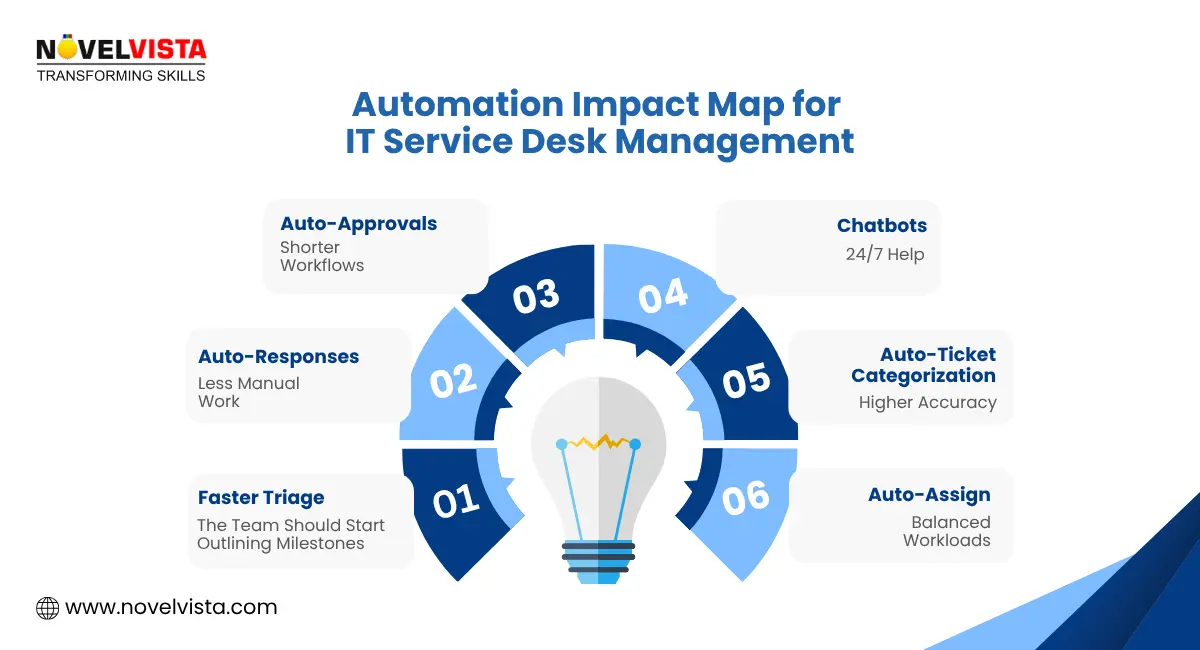
Automation is no longer a “nice to have.” It’s one of the strongest levers for shaping modern IT Service Desk Management. Whether it's routing tickets, answering FAQs, or auto-approving simple requests — small automations remove a lot of manual work.
Examples that make a real difference:
This improves IT Service Desk Efficiency, reduces backlog, and gives agents more time for real problem-solving. And yes — it directly supports IT Service Delivery Improvement by making everything faster and more predictable.
Teams that consistently succeed with automation are the ones that start small and refine rules based on real usage patterns. In several IT departments, even simple routing automations reduced misassigned tickets by over 25%, directly improving SLA performance. Insights like these reinforce how thoughtful automation quickly turns into measurable results for support teams.
Delivering seamless IT support requires organizations to follow proven workflows and customer-focused strategies. Implementing the right practices for Quality Service can help service desks improve response times, enhance user satisfaction, and maintain consistent support performance.
If there’s one thing that consistently cuts IT Service Desk Cost, it’s self-service. A strong knowledge base lets users solve simple issues without waiting for an agent.
Why it works so well:
This is why self-service is always part of strong Service Desk Best Practices. When the portal is updated, easy to search, and full of real solutions, the entire support cycle becomes lighter and more user-friendly.
Get a simple, clear glossary that explains the 25 essential
terms every service manager relies on inside the ITIL SVS.
Users reach out in different ways — email, chat, phone, ticket forms, or even walk-ups. Offering multiple channels is important, but keeping everything consistent is where the real skill lies.
Good IT Service Desk Management focuses on:
When multi-channel support is consistent, IT Service Desk Efficiency stays high, and users feel supported instead of confused.
When replies are slow, deadlines slip, or expectations clash, it usually means SLAs weren’t defined well. Clear SLAs work like a shared promise between the service desk and users, setting simple rules for how quickly help should arrive and what resolution times look like.
Why strong SLAs matter:
A strong SLA isn’t just a rulebook — it keeps the entire service desk predictable, fair, and easier to manage.
A service desk is only as strong as the people running it. Tools help, workflows help, but it’s the team’s skills that decide how fast and how confidently issues get resolved. When agents get regular training, they stay sharp, updated, and ready to handle whatever comes their way.
Here’s what smart skill development looks like:
Investing in people doesn’t just improve performance — it reduces costs by lowering rework, preventing escalations, and making the team more self-sufficient.
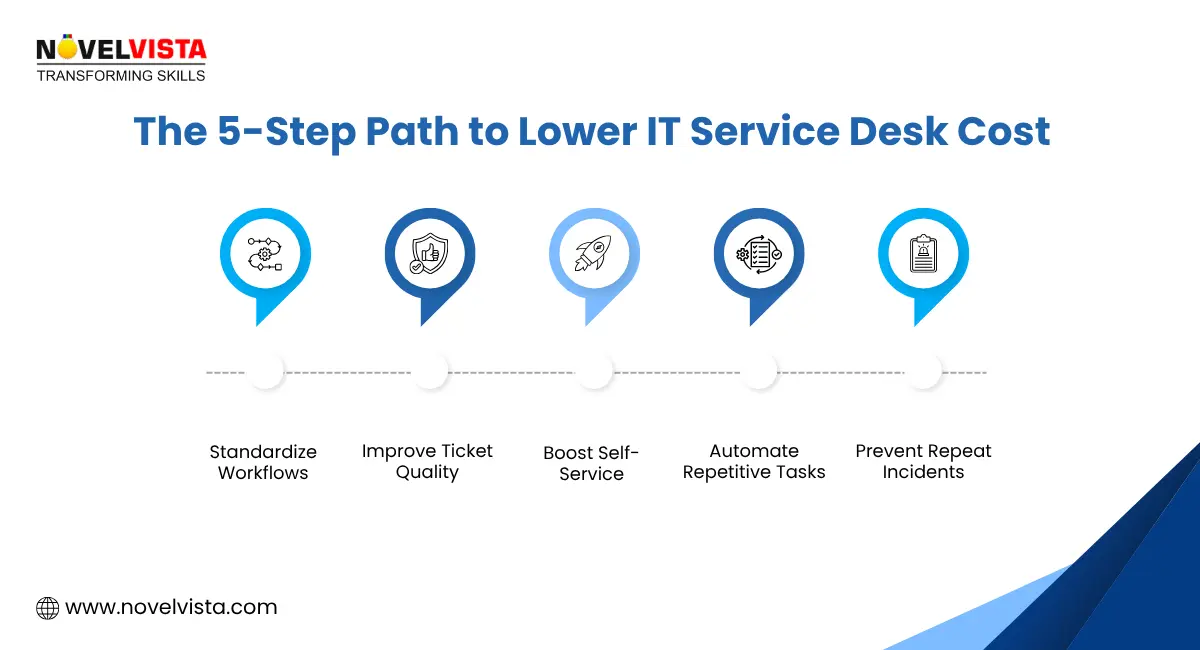
A service desk without metrics is like driving with your eyes closed. You might move, but you won’t know whether you’re going the right way. Tracking the right numbers helps you understand what’s working, what’s failing, and where improvements can create real cost savings.
The most useful KPIs include:
With solid metrics in place, decisions become smarter, costs go down naturally, and service delivery becomes more predictable.
Sometimes the quickest solutions come from simply listening to users. Feedback isn’t just for surveys — it’s a steady source of ideas, early warnings, and improvement opportunities.
Here’s why feedback loops matter:
Open communication saves time, reduces friction, and gives teams a clearer direction for improvement.
The best service desk teams never stop evolving. Even small tweaks — a new automation rule, a refined template, or a smarter routing process — can bring long-term benefits.
Here’s what continuous improvement looks like in practice:
When continuous improvement becomes part of the culture, service delivery feels smoother, costs drop naturally, and user satisfaction rises.
A strong service desk isn’t built on tools alone — it’s built on the right habits, steady improvements, and a team that knows exactly how to support the business. When you bring these Service Desk Best Practices together, everything starts to feel lighter. Tickets don’t pile up the same way, users get answers faster, and your team works with far more confidence. Costs settle down because there’s less rework, fewer escalations, and smoother workflows across the board.
The recommendations in this guide align with proven ITIL practices, insights from ITSM implementation experience, and findings from leading service desk industry reports. Combining these perspectives ensures the advice is practical, reliable, and easy for teams to apply.
If you’re aiming for long-term IT Service Delivery Improvement and a support team that feels solid, predictable, and easy to manage, understanding these practices through ITIL 5 Foundation Certification provides the foundation to build on.

If you want to take your service desk skills even further, this is the right moment to level up. NovelVista’s Service Desk Professional training gives you practical, real-world skills to handle support challenges with confidence. And if you want a bigger leap in your IT career, the ITIL 4 Foundation Certification from NovelVista helps you build a strong understanding of modern IT service management. Take the next step and grow your career with the right training.
Author Details

Course Related To This blog
ITIL4 Specialist Monitor Support and Fulfil Certification
ITIL® 4 Certification Scheme
ITIL4 Specialist Acquiring & Managing Cloud Services
ITIL 4 Specialist Sustainability in Digital & IT
ITIL® 4 Strategic Leader Digital And IT Strategy (DITS)
ITIL® 4 Specialist Drive Stakeholder Value
ITIL® 4 Foundation Certification
ITIL V5 Foundation
Confused About Certification?
Get Free Consultation Call
Stay ahead of the curve by tapping into the latest emerging trends and transforming your subscription into a powerful resource. Maximize every feature, unlock exclusive benefits, and ensure you're always one step ahead in your journey to success.