Category | AGILE and SCRUM
Last Updated On 25/05/2026
In today’s fast-moving digital economy, businesses are expected to innovate faster, deliver products quickly, and adapt continuously to changing customer demands. According to recent industry reports, Agile organizations are significantly more likely to outperform competitors in customer satisfaction, speed of delivery, and employee engagement. At the center of many successful Agile teams is one important role: the Scrum Master.
But what is a Scrum Master exactly? Why has this role become so essential in software development, IT services, product management, and even non-technical industries?
If you have ever asked questions like:
Then this guide will answer everything in detail.
This blog explores what a Scrum Master is, their key responsibilities, essential Scrum Master skills, and their role in Agile teams. You’ll also learn about the Scrum framework, core Scrum roles, and how Scrum Masters help organizations improve collaboration, productivity, and delivery outcomes.
TL;DR | Summary |
| Scrum Master Role | Facilitates Agile teams and Scrum practices |
| Key Responsibilities | Removes blockers, coaches teams, facilitates Scrum events |
| Essential Skills | Communication, leadership, adaptability, coaching |
| Scrum Framework | Supports iterative and collaborative delivery |
| Business Benefits | Improves productivity, collaboration, and delivery speed |
A Scrum Master is a servant leader and Agile facilitator responsible for helping teams follow the Scrum framework effectively. The Scrum Master ensures that the team understands Agile principles, removes obstacles, facilitates collaboration, and helps teams continuously improve.
To understand what is a Scrum Master, it is important to know that the role is not the same as a traditional manager. A Scrum Master does not assign tasks or control the team. Instead, they guide the team toward self-management, productivity, and Agile maturity.
The Scrum Master works closely with:
Their main goal is to create an environment where teams can deliver value consistently and efficiently.
Before understanding what does a Scrum Master do, it is essential to understand Scrum itself.
Scrum is an Agile framework used for managing complex projects through iterative and incremental delivery. It helps teams work collaboratively while adapting quickly to changes.
The Scrum framework is built around:
Scrum Element | Purpose |
| Sprint | A short development cycle, usually 1–4 weeks |
| Product Backlog | List of all required product features |
| Sprint Backlog | Tasks selected for the current Sprint |
| Daily Scrum | Daily alignment meeting |
| Sprint Review | Demonstration of completed work |
| Sprint Retrospective | Reflection and process improvement |
The Scrum Master ensures all these activities happen effectively while promoting Agile best practices.
One of the most common questions professionals ask is: what does a Scrum Master do on a daily basis?
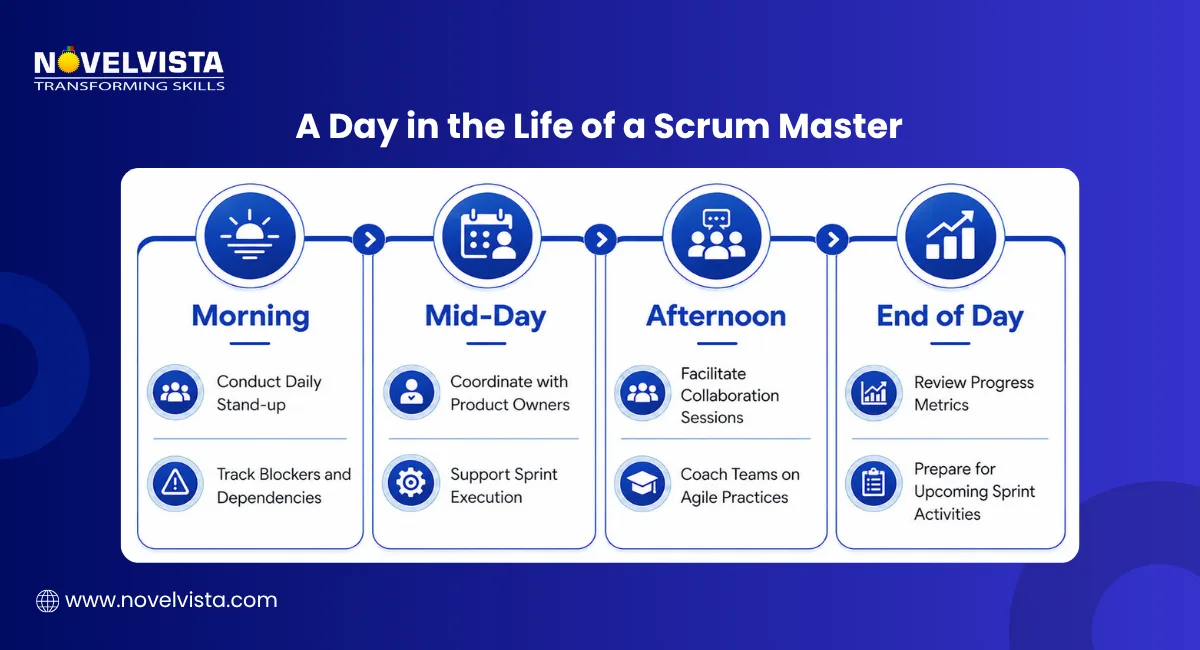
A Scrum Master acts as:
They focus on improving team efficiency and ensuring smooth project execution.
If you want a deeper look into the daily responsibilities, meetings, and real-world workflow of Agile professionals, explore the Life of a Scrum Master guide to understand how Scrum Masters manage collaboration, Sprint activities, and team alignment throughout the day.
1. Removing Impediments
One of the most important Scrum Master responsibilities is removing obstacles that slow down the team.
These blockers may include:
By removing distractions and solving issues proactively, the Scrum Master allows developers to focus fully on delivering quality work.
2. Facilitating Scrum Ceremonies
Another critical part of what is Scrum Master involves facilitating key Scrum events.
These ceremonies include:
| Scrum Ceremony | Scrum Master’s Role |
| Daily Stand-up | Keeps discussions focused and productive |
| Sprint Planning | Helps teams define Sprint goals |
| Sprint Review | Facilitates stakeholder feedback |
| Retrospective | Encourages continuous improvement |
The Scrum Master ensures every meeting delivers value rather than becoming a routine formality.
3. Coaching and Mentoring Teams
A successful Scrum Master helps teams adopt the Agile mindset.
This includes:
Strong coaching abilities are among the most essential Scrum Master skills.
4. Liaising With Stakeholders
The Scrum Master also acts as a bridge between development teams and business stakeholders.
They help:
This alignment helps organizations reduce delays and improve delivery outcomes.
To fully understand what is a Scrum Master, you must also understand the three core Scrum roles.
The Product Owner focuses on maximizing product value.
Responsibilities include:
The Product Owner represents customer and stakeholder interests.
Developers are the professionals responsible for building the product increment.
The development team may include:
They work collaboratively to deliver Sprint goals.
The Scrum Master ensures that the Scrum framework is properly followed.
Their responsibilities include:
Together, these three roles form the foundation of a successful Scrum framework.
The Scrum framework is guided by five important values that every Scrum Master promotes.
Teams commit to achieving Sprint goals and delivering value consistently.
Scrum encourages transparency, experimentation, and addressing difficult problems openly.
Team members stay focused on Sprint priorities without unnecessary distractions.
Communication remains transparent between teams and stakeholders.
Every team member’s contribution is valued equally.
A good Scrum Master reinforces these values in everyday team interactions.
Understanding Scrum Master skills is essential for anyone considering this career path.
A successful Scrum Master requires both technical understanding and strong interpersonal abilities.
Skill | Why It Matters |
| Communication | Improves collaboration and transparency |
| Conflict Resolution | Helps teams navigate disagreements |
| Coaching | Enables Agile transformation |
| Facilitation | Keeps meetings productive |
| Problem Solving | Removes blockers quickly |
| Emotional Intelligence | Builds trust within teams |
| Leadership | Encourages accountability |
| Adaptability | Helps teams manage change |
These Scrum Master qualities help organizations create high-performing Agile teams.
Besides technical knowledge, several personal attributes define an effective Scrum Master.
Empathy
Understanding team concerns helps improve morale and collaboration.
Patience
Agile transformation takes time, and teams evolve gradually.
Servant Leadership
The Scrum Master supports the team rather than controlling it.
Transparency
Honest communication builds trust across the organization.
Continuous Learning
Agile practices constantly evolve, requiring ongoing learning and improvement.
Strong Scrum Master qualities often separate average Agile teams from exceptional ones.
The Scrum framework is designed to help teams deliver work incrementally while adapting quickly to feedback.
Component | Description |
|---|---|
| Product Backlog | Complete list of product requirements |
| Sprint | Time-boxed work cycle |
| Increment | Deliverable produced during the Sprint |
| Scrum Events | Meetings that support collaboration |
| Scrum Roles | Product Owner, Developers, Scrum Master |
The Scrum Master ensures that teams understand how all these components work together effectively.
Not every organization fully understands when a Scrum Master becomes necessary.
Teams particularly benefit from Scrum Masters when:
A Scrum Master helps teams overcome these challenges while improving productivity and alignment.
Many people confuse these two roles. However, they have very different responsibilities.
Scrum Master | Product Owner |
| Focuses on process | Focuses on product value |
| Coaches the team | Manages the backlog |
| Removes impediments | Prioritizes requirements |
| Facilitates Scrum events | Represents customer needs |
| Supports Agile practices | Defines product vision |
Understanding this distinction is essential for implementing Scrum successfully.
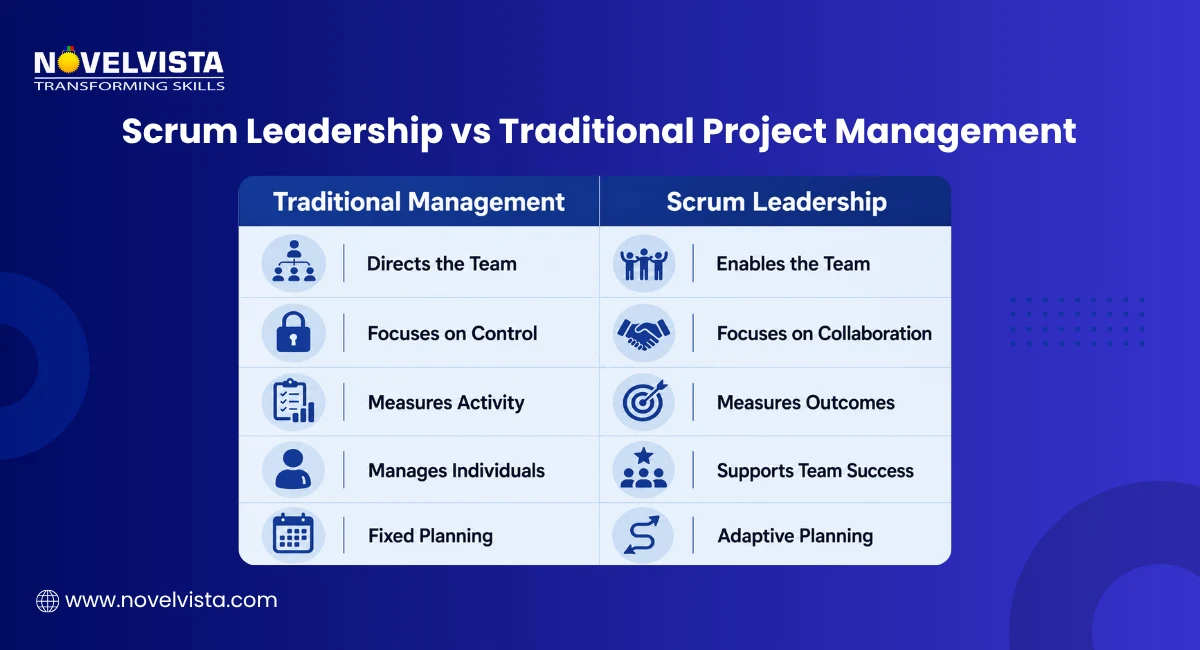
Another common question is the difference between a Scrum Master and a Project Manager.
Although both roles support project success, their approaches differ significantly.
Scrum Master | Project Manager |
| Servant leader | Command-and-control leader |
| Facilitates collaboration | Directs execution |
| Focuses on Agile delivery | Focuses on project scope |
| Encourages self-management | Assigns responsibilities |
| Removes blockers | Tracks schedules and budgets |
Organizations transitioning to Agile often shift from traditional project management toward Scrum-based delivery models.
Businesses investing in skilled Scrum Masters often experience measurable improvements.
Improved Team Productivity
By eliminating distractions and improving workflows, Scrum Masters help teams work more efficiently.
Faster Product Delivery
Agile teams can release updates faster through iterative development cycles.
Better Collaboration
Scrum Masters encourage transparency and stronger communication.
Increased Employee Engagement
Self-managing teams tend to feel more empowered and motivated.
Higher Product Quality
Continuous feedback and Sprint reviews improve overall product quality.
Reduced Risk
Frequent delivery cycles help identify problems early before they become costly.
Organizations adopting Agile at scale increasingly recognize the strategic importance of the Scrum Master role.
As businesses accelerate digital transformation, Agile delivery has become a competitive necessity rather than an option.
A Scrum Master helps organizations:
Whether in IT, healthcare, finance, manufacturing, or marketing, Scrum Masters now play a crucial role in driving Agile success.
Preparing to build a career in Agile leadership? These commonly asked Scrum Master Interview Questions can help you understand what recruiters look for in Scrum professionals and how to prepare for real-world Scrum Master interviews.
By now, you should have a clear understanding of what a Scrum Master is and how they contribute to Agile success.
A Scrum Master is an Agile facilitator, coach, and servant leader who helps teams implement the Scrum framework effectively. From removing blockers and facilitating Scrum ceremonies to mentoring teams and improving collaboration, the Scrum Master plays a vital role in Agile success.

Understanding what does a Scrum Master do is important for organizations looking to improve productivity, product delivery, and team performance. Professionals looking to strengthen their Agile expertise and practical Scrum implementation skills can enroll in the NovelVista Certified Scrum Master Training and can gain industry-recognized knowledge and hands-on Scrum experience.
As Agile adoption continues to grow globally, demand for professionals with strong Scrum Master skills and Scrum Master qualities is also increasing. Businesses today need leaders who can enable adaptability, foster innovation, and create high-performing teams—and that is exactly where Scrum Masters make the biggest impact.
Author Details

Course Related To This blog
Certified Scrum Master
Confused About Certification?
Get Free Consultation Call
Stay ahead of the curve by tapping into the latest emerging trends and transforming your subscription into a powerful resource. Maximize every feature, unlock exclusive benefits, and ensure you're always one step ahead in your journey to success.