Category | DevOps
Last Updated On 22/12/2025
DevOps roles are not about memorizing tools. Recruiters want professionals who understand real work, think practically, and handle problems under pressure. That’s why preparing the right DevOps interview questions matters. The goal isn’t just to pass the interview; it’s to prove that you can build stable systems, automate confidently, and work as part of a team.
In this guide, we’ll walk through DevOps interview questions 2026, what interviewers expect, and detailed DevOps interview questions and answers that help you respond with confidence. Consider this your practical, easy-to-understand DevOps interview Q&A guide.
This blog focuses on:
Before jumping into DevOps interview questions, it helps to know what they truly test.
If you match this mindset, the DevOps interview questions 2026 become far easier to handle.
Below are the Top DevOps interview questions, structured in a simple yet powerful format so you understand what to say and how to say it.
Answer Direction:
DevOps is a culture and practice that brings development and operations together. It focuses on automation, faster delivery, continuous improvement, and reliable software releases. It helps businesses move faster while maintaining stability.
Key points to include in your answer:
This is one of the most common DevOps interview questions and interviewers use it to judge whether you understand DevOps beyond tools.
When discussing DevOps interview questions and answers, this is a must-know topic.
Answer Direction:
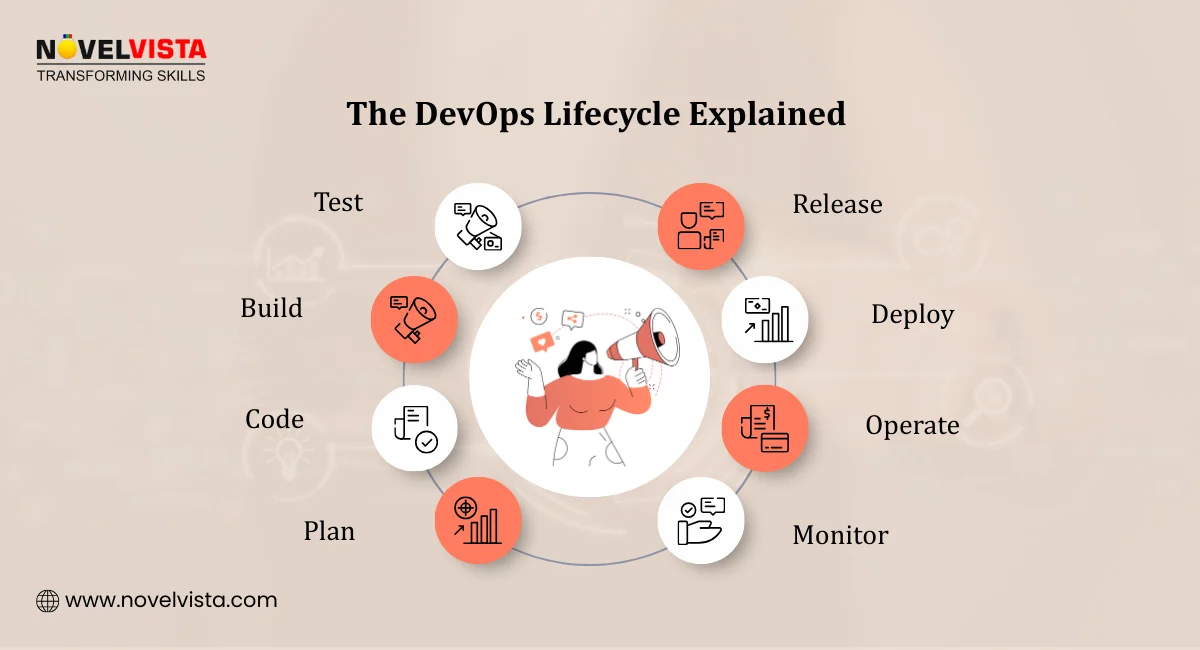
The DevOps lifecycle includes continuous planning, coding, building, testing, releasing, deploying, operating, and monitoring. Continuous feedback connects every stage to improve performance and product quality.
Highlight these stages clearly:
Interviewers want to see clarity and structured thinking here.
This is one of the most expected DevOps interview questions 2026, so answer it confidently.
Answer Direction:
CI/CD stands for Continuous Integration and Continuous Delivery/Deployment. CI automates code integration, builds, and tests. CD automates releasing or deploying applications in a safe and consistent way.
Add:
This shows both conceptual understanding and practical readiness.
Another major part of the DevOps interview Q&A involves Docker and containerization.
Answer Direction:
Containers package applications with dependencies so they run consistently anywhere. They are lightweight, start quickly, and use fewer resources than virtual machines.
Clear comparison interviewers love:
This helps the interviewer see if you actually know why companies use containers.
This is one of the most popular DevOps interview questions 2026 because IaC is now a core DevOps skill.
Answer Direction:
Infrastructure as Code means managing and provisioning infrastructure using code instead of manual configuration. It improves speed, consistency, repeatability, and reduces human errors.
Mention these tools and advantages:
Interviewers use this to evaluate your practical DevOps mindset.
Real hiring panels love scenarios because they show how you think, react, and solve real problems. These DevOps interview questions 2026 often decide who actually gets selected.
Talk through rollback options, error analysis, communication with stakeholders, and learning from failure. Recruiters want calm thinking, not panic.
Explain checking build logs, load on runners, failed dependencies, bad scripts, or infrastructure limits. Show that you focus on the root cause, not just restarting pipelines.
Discuss monitoring dashboards, checking CPU usage, network delays, auto-scaling health, database performance, and caching strategies. Interviewers want structure, not guessing.
Scenario-based DevOps interview questions help employers see if you think like a real DevOps engineer, not just someone who memorized tools.
Know what Microsoft, IBM, TCS, and other top firms actually
ask in DevOps interviews. Practice real questions and walk
in prepared, not surprised.
A big part of DevOps interview preparation is being able to comfortably talk about tools you’ve actually used. Interviewers want clarity, not buzzwords.
Knowing tools is helpful. But being able to explain why and how you used them is what really wins DevOps interview questions and answers.
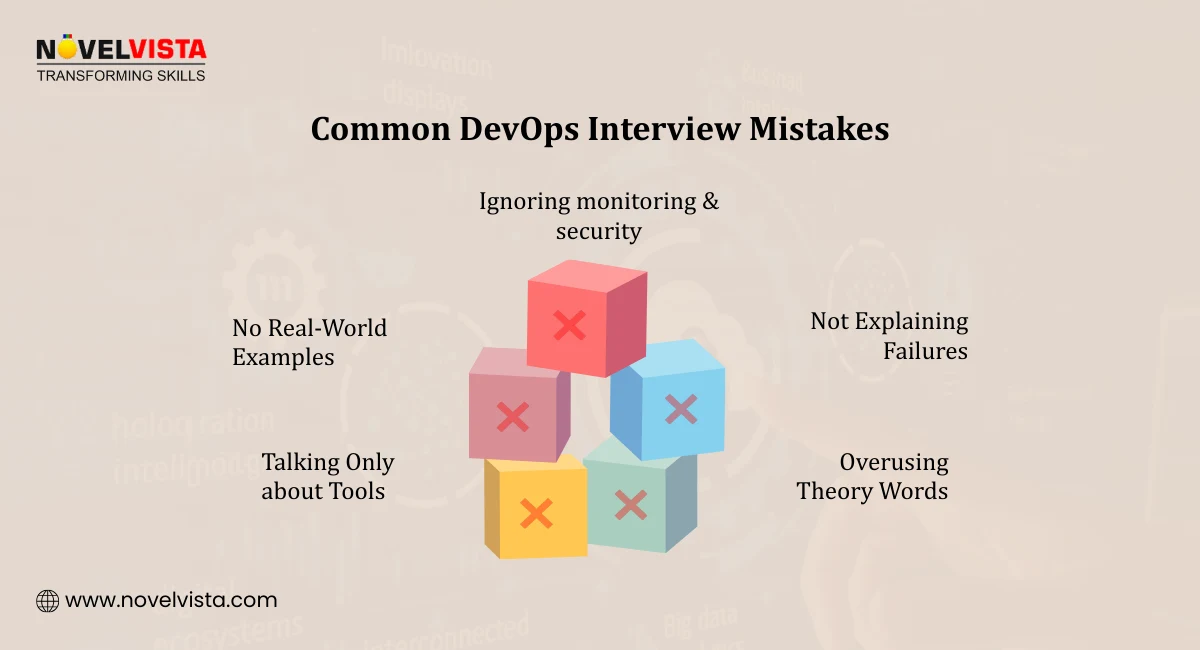 Many candidates lose strong opportunities because of simple mistakes. Here are some that interviewers often notice in DevOps interview Q&A sessions:
Top recruiters expect confidence, honesty, and real-world thinking when they ask Top DevOps interview questions.
Good DevOps interview preparation doesn’t start the night before. Build a plan and follow it consistently:
A well-prepared candidate always stands out.
Preparing for DevOps interview questions isn’t just about memorizing tools; it’s about showing how you think, solve problems, and work with real systems under real pressure. When you understand concepts like CI/CD, automation, cloud, monitoring, deployments, and reliability, you already stand ahead of many candidates.
Focus on DevOps interview preparation that blends knowledge with real examples from your work, talk confidently about failures and fixes, and explain your approach in simple language. If you stay grounded in fundamentals, understand business impact, and communicate clearly, you’ll walk into your next DevOps interview far more prepared, relaxed, and ready to prove your value.
If you’re serious about cracking tough DevOps interviews, strong basics matter. NovelVista’s DevOps Foundation Certification helps you build a real understanding of DevOps culture, automation, CI/CD, cloud workflows, collaboration, and real project use cases. The training is designed to turn concepts into practical thinking, so you can confidently answer scenario-based questions and explain “how you work,” not just “what tools you know.” Build the clarity, confidence, and structure interviewers love to hear—and stay ahead in your DevOps career journey.
Author Details

Course Related To This blog
DevOps Leadership By PeopleCert
DevOps + ASM + CASPO Combo Course
Certified DevOps Engineer
DevOps CDA
DevOps Test Engineering
DevOps Practitioner Certification
DevOps Master Certification
Certified DevOps Developer
Certified DevOps Architect
DevOps Foundation By DOI
Confused About Certification?
Get Free Consultation Call
Stay ahead of the curve by tapping into the latest emerging trends and transforming your subscription into a powerful resource. Maximize every feature, unlock exclusive benefits, and ensure you're always one step ahead in your journey to success.