Category | Quality Management
Last Updated On 03/01/2026
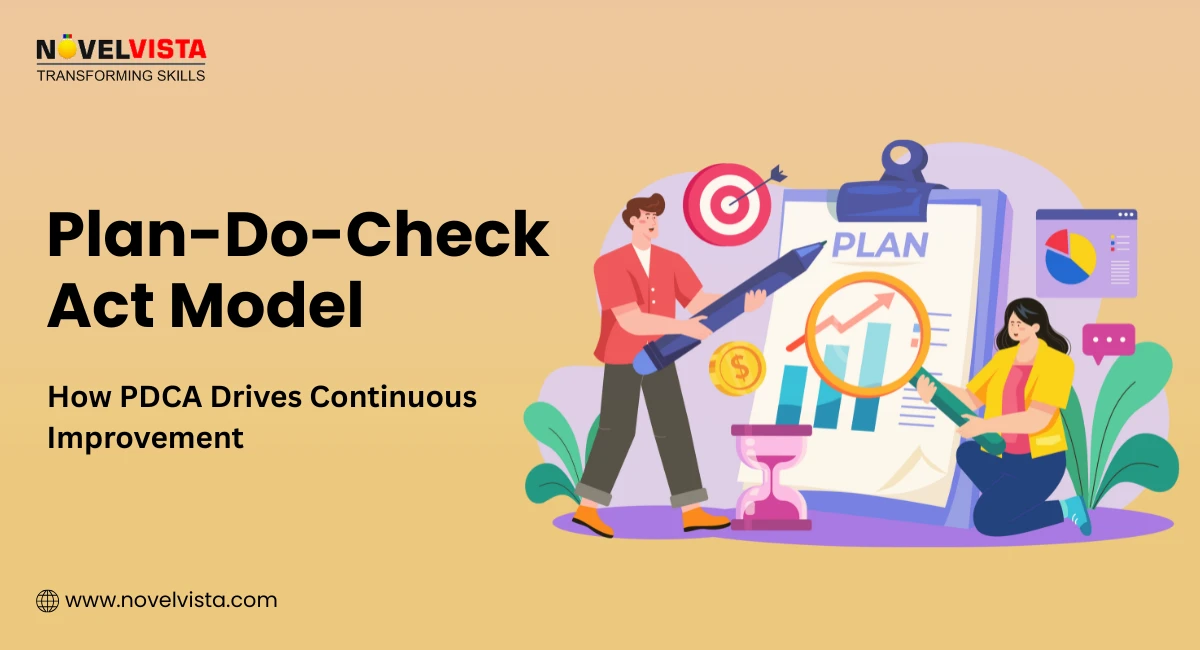
Teams want improvement, but many don’t know how to improve in a structured way. Problems stay unsolved, mistakes repeat, and growth feels random. That’s where the Plan-Do-Check-Act Model changes everything. It gives a simple, repeatable way to improve processes, build smarter decisions, and turn learning into real progress.
In this guide, we’ll break down what the Plan-Do-Check-Act Model is, how each step works, why it is trusted worldwide, and how you can start using it easily.
The Plan-Do-Check-Act Model, often called the Deming Cycle or PDCA, is a structured continuous improvement approach used in quality management, operations, IT, healthcare, manufacturing, and many other fields.
It works on a simple idea:
Plan properly → Test wisely → Check honestly → Improve confidently.
Over the years, we’ve seen teams across manufacturing, IT, services, education, and healthcare successfully apply the PDCA cycle to solve real performance challenges. Teams that previously struggled with repeated problems, inconsistent results, and reactive decision-making were able to bring structure, predictability, and measurable improvement once they adopted PDCA in a disciplined way. Real-world experience consistently proves that PDCA works when it is applied practically, not just theoretically.
The strength of the Plan-Do-Check-Act Model is its iterative nature. You don’t use it once and forget it. You repeat it, refine it, and keep improving. That’s why it supports reliable decision-making and long-term success.
Before diving deep, here’s the quick big picture:
This cycle keeps learning alive, which is why the Plan-Do-Check-Act Model remains a trusted improvement engine.
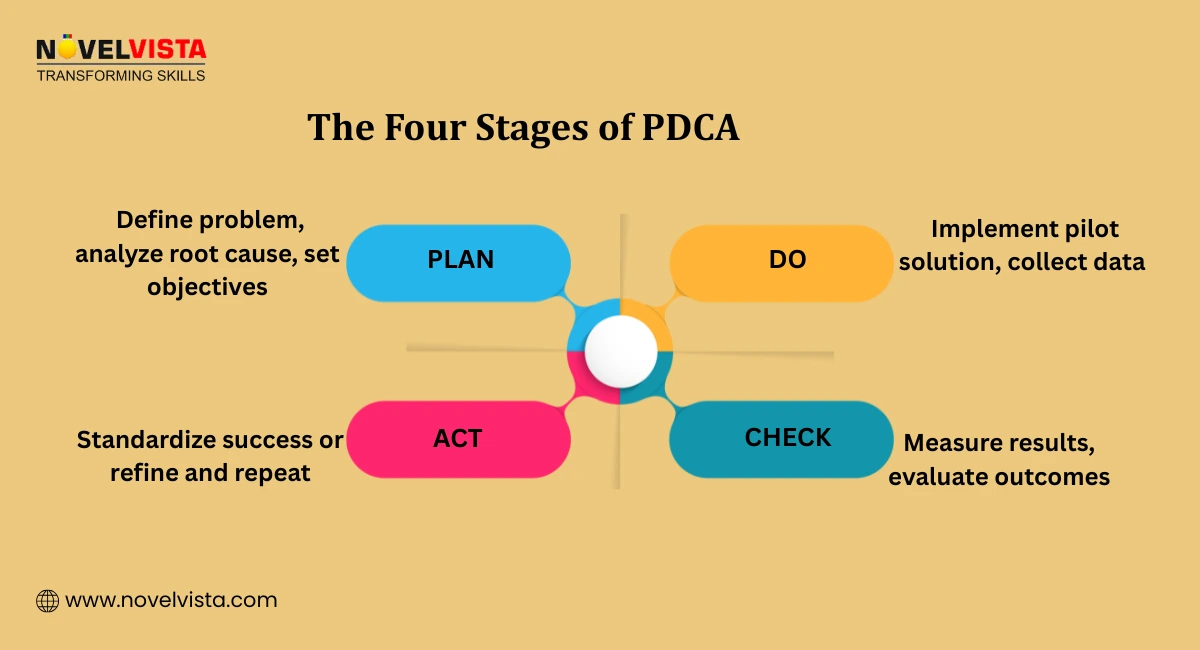
This is where serious thinking happens. The Plan phase defines everything that follows. A weak plan = weak improvement. A strong plan = reliable results.
What the Plan phase includes:
Good planning shapes success. Many failures happen not because teams lack effort, but because they lack direction.
Turn problems into measurable improvement. Follow a clear,
step-by-step PDCA workbook to plan, test, review, and sustain improvements,
without complex tools.
Now the plan moves into action. But here’s something important:
The PDCA model does not push you to make huge, risky changes immediately. Instead, it supports controlled testing.
This approach reduces risk, prevents sudden failures, and keeps improvements practical rather than theoretical.
This is the honest moment. Did the change actually help? Or did it fail? The PDCA model builds maturity by encouraging teams to face reality with facts.
Here’s what happens here:
This Check phase makes PDCA powerful because learning becomes structured, not random.
Now it’s decision time. Based on learning, you either lock success in or try again smarter
The beauty of the PDCA model is that it works in almost every industry. Whether it’s improving quality, fixing inefficiencies, or managing performance, PDCA fits naturally into daily operations.
Industry |
Use Case |
Manufacturing |
Improves production lines, reduces defects, and makes processes predictable and efficient. |
Healthcare |
Enhances patient workflow, reduces waiting time, and improves treatment safety and coordination. |
Software / IT |
Supports Agile sprints, helps refine services, and strengthens reliability and service quality. |
Many global quality and management frameworks, including ISO-based management systems, Lean, and Kaizen environments, continue to recommend the PDCA model because it brings predictable, repeatable improvement. This alignment with internationally recognized standards is why PDCA remains trusted in organizations worldwide. When leaders adopt PDCA seriously, improvement becomes part of governance, not just an occasional activity.
Many professionals love the Plan Do Check Act Model because it feels familiar. In fact, it closely mirrors the scientific method.
Decide what you want to improve and what change you believe will help.
Test the change on a small scale to see real results.
Compare expectations with outcomes and understand what actually happened.
Standardize the successful change or adjust and try again.
Both approaches encourage learning through evidence, making decisions based on facts rather than guesswork. That’s why the Plan Do Check Act Model supports smarter, confident improvements.
Organizations that embrace continuous improvement don’t rely on luck. They rely on structure. The Plan Do Check Act Model helps build that structure.
Over time, companies build a culture where improvement isn’t a project. It becomes a natural way of working.
Many businesses think improvement needs huge budgets or heavy consultants. In reality, starting the Plan Do Check Act Model can be very practical and simple.
In real implementation, teams quickly see that PDCA’s true strength lies in its simplicity. Whether reducing defects, improving services, or stabilizing operations, it keeps everyone focused and accountable. Even small improvements, when repeated, lead to meaningful long-term transformation, something consistently proven in real training environments and industry projects.
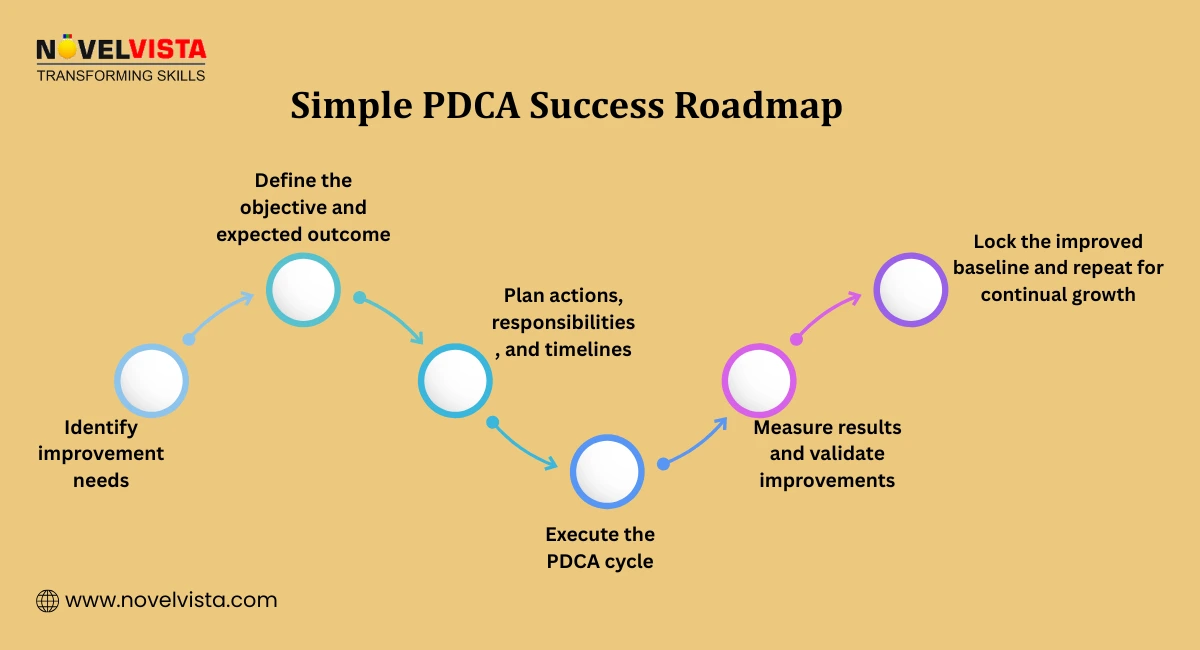
Choosing the Plan Do Check Act Model is not just about process discipline. It delivers real business value.
This is why organizations that consistently use the Plan Do Check Act Model tend to stay more stable, efficient, and future-ready.
The Plan-Do-Check-Act Model remains one of the simplest yet most powerful ways to drive continuous improvement. It helps organizations work smarter, solve problems in a structured way, reduce risks, and steadily enhance performance. Its strength lies in its simplicity, practicality, and ability to repeat endlessly, helping teams grow without confusion or chaos.
Everything shared in this guide is based on real improvement experiences, training insights, and the way organizations actually implement PDCA in daily operations, not just theory. The goal is to help professionals use the Plan Do Check Act Model in a simple, practical, and sustainable way so it truly strengthens performance, decision-making, and long-term growth.
Author Details

Course Related To This blog
ISO 42001 Lead Auditor
Confused About Certification?
Get Free Consultation Call
Stay ahead of the curve by tapping into the latest emerging trends and transforming your subscription into a powerful resource. Maximize every feature, unlock exclusive benefits, and ensure you're always one step ahead in your journey to success.