Category | IT Service Management
Last Updated On 19/05/2026
In today’s fast-moving digital environment, organizations are under greater pressure than ever to deliver value quickly, consistently, and efficiently. Yet research shows that nearly 70% of digital transformation initiatives fail to deliver expected results, often due to unclear workflows, siloed teams, and slow handoffs. Another recent study revealed that businesses lose 20–30% of their revenue each year because of inefficient processes and unmanaged work patterns.
So the question becomes:
How do you ensure your teams are not just busy, but actually delivering value?
Who should be focusing on value flow across processes?
And what can IT, operations, and leadership teams do to ensure that every activity contributes to the customer outcome?
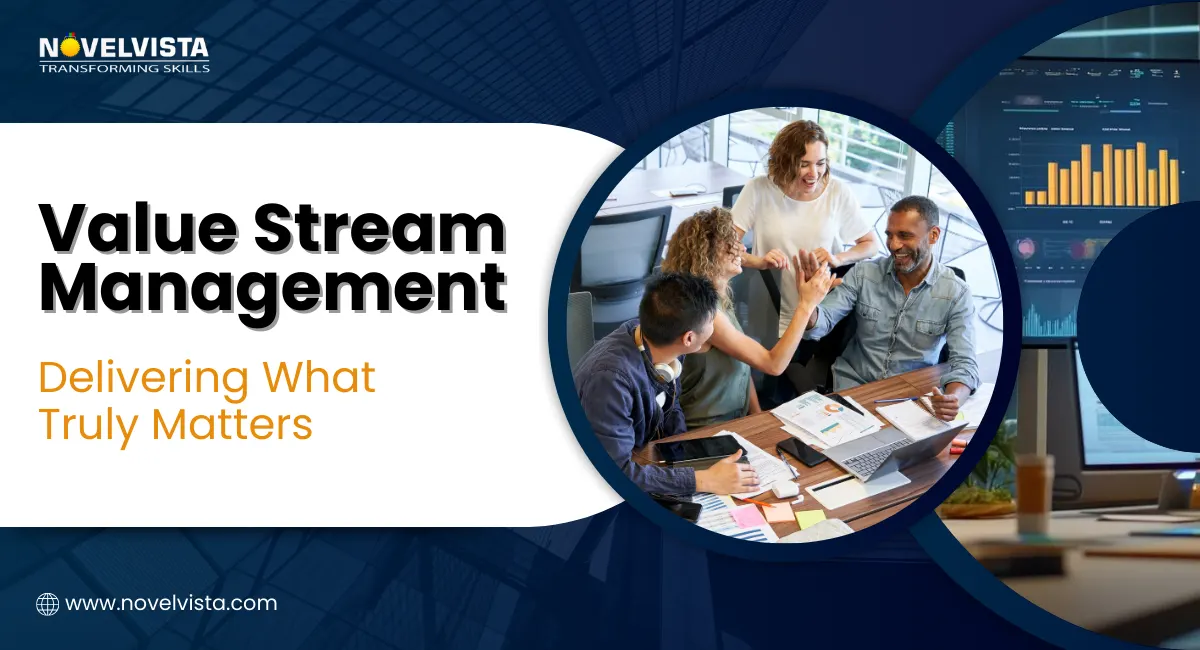
This is where Value Stream Management steps in, a modern, end-to-end approach designed to help organizations deliver what truly matters. If you’ve been wondering What is Value Stream Management, how it works, or how it supports IT Value Streams, this blog breaks it down simply and practically.
Value Stream Management (VSM) is a structured approach that helps organizations visualize, measure, and optimize the flow of work from idea to delivery. Instead of focusing on individual tasks or isolated departments, it provides a holistic view of how value moves across the entire organization.
At its core, it aligns people, processes, and technology toward one goal: delivering value to the customer with minimal waste.
In modern Agile, DevOps, and Lean environments, VSM acts as the connective tissue that brings visibility and coordination across the entire delivery system. It helps teams see bottlenecks, eliminate delays, and improve the speed and quality of delivery.
You’re not just improving a process, you’re improving how value is delivered end to end.
Related concepts, such as IT Value Stream, Value Stream Mapping, flow optimization, and continuous improvement, fit naturally within the VSM framework, creating a unified ecosystem focused on real outcomes. The principles of Value Stream Management align seamlessly with the ITIL 4 Framework, which emphasizes end-to-end value delivery, collaboration, and continual improvement across all IT services.
Organizations are dealing with more complexity than ever: cloud systems, hybrid teams, multiple tools, rising customer expectations, and rapid release cycles. Without clear visibility across workflows, bottlenecks go unnoticed, and value delivery suffers.
A global survey revealed that nearly 64% of IT leaders cannot see work across their entire delivery pipeline. And without that visibility, it’s difficult to improve flow or measure performance.
Value Stream Management solves this by:
Ultimately, VSM helps organizations shift from being activity-driven to value-driven, a major competitive advantage in today’s landscape. By applying it, organizations enhance the effectiveness of ITIL 4 Management Practices, ensuring each practice contributes more efficiently to end-to-end value delivery.
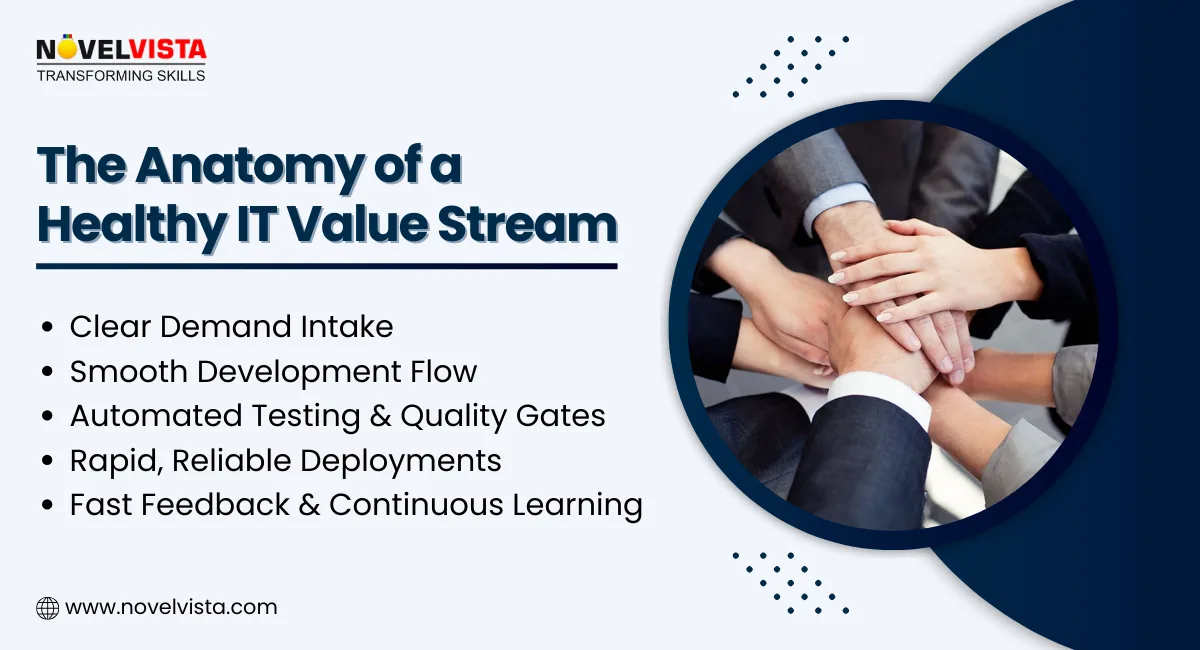
An IT Value Stream represents the end-to-end activities involved in delivering an IT service or product, from planning and development to deployment, support, and ongoing improvement. Typical IT Value Streams include Incident Management, Change Management, Request Fulfillment, the Software Development Lifecycle, and Release and Deployment. Yet many IT Value Streams face challenges like endless backlogs, long team handoffs, manual approvals, tool fragmentation, and repetitive, non-value work. This is where Value Stream Management becomes crucial, giving teams visibility, flow metrics, and stronger cross-functional collaboration. With a VSM-driven approach, organizations reduce waste, speed up delivery, and improve overall customer experience.
If Value Stream Management is the strategy, Value Stream Mapping is the technique that makes it practical.
Value Stream Mapping is the process of visually mapping out how work flows from start to finish. It helps teams see every step, every delay, and every handoff, making areas of waste obvious.
Here are two simple examples:
Example 1: Software Release Cycle
Example 2: Employee Onboarding Process
These Value Stream Mapping examples show how mapping makes inefficiencies visible so that Value Stream Management can address them strategically.
It is not about isolated improvement. It is about ensuring that every step in the value stream contributes meaningfully to the final customer outcome. It also supports clearer ITIL roles and responsibilities by aligning teams around shared value outcomes and reducing ambiguity across the service lifecycle.
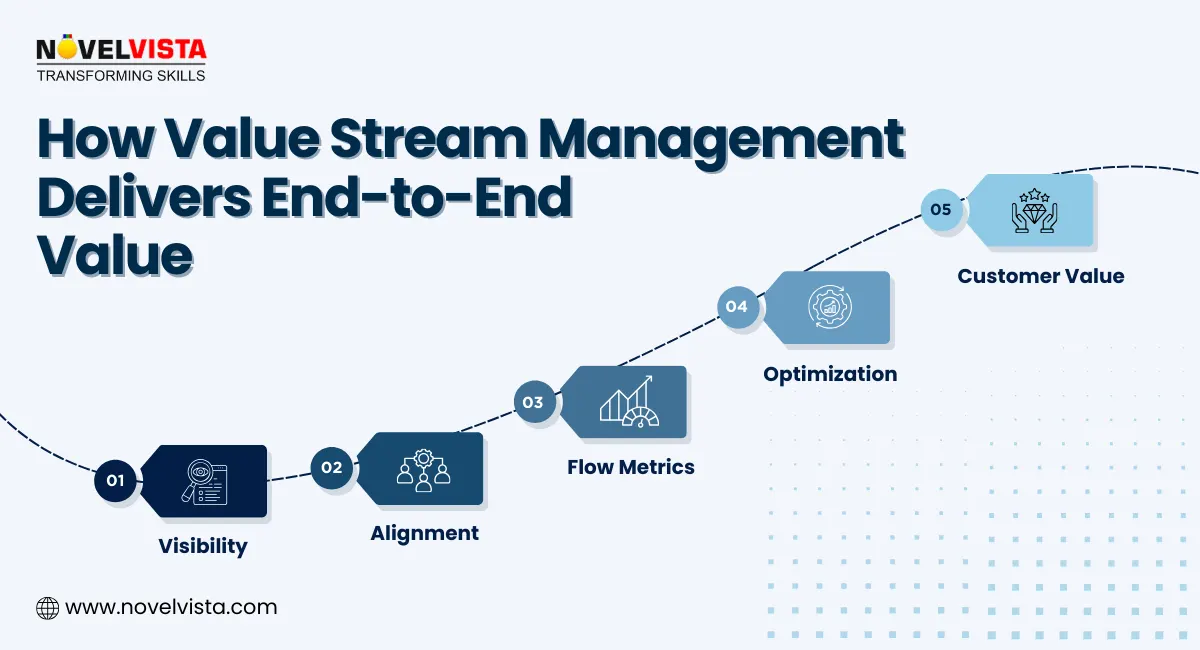
Here’s how VSM drives true end-to-end value creation:
VSM tools and practices provide dashboards and insights that help leaders see work across teams, tools, and technologies. This visibility reduces uncertainty and allows faster decision-making.
Key flow metrics include:
These help organizations measure how efficiently value moves across the system.
A key benefit of Value Stream Management is its ability to systematically eliminate common sources of waste, such as unnecessary handoffs, long approval waits, rework caused by unclear requirements, and tooling fragmentation. By targeting these bottlenecks, VSM improves flow efficiency and strengthens the overall Value Stream.
VSM enhances collaboration by breaking down silos and aligning teams around shared responsibility for end-to-end value delivery—not just isolated tasks or departmental KPIs. It encourages cross-functional visibility, smoother handoffs, and collective ownership of outcomes.
By focusing the entire system on value, organizations improve quality, reduce delays, and enhance customer satisfaction.
This is why Value Stream Management is increasingly seen as a must-have capability for modern IT and business operations.
Here is a practical, step-by-step way to begin implementing VSM:
Step 1: Identify Your Value Streams
Focus on major processes like incident resolution or product development.
Step 2: Use Value Stream Mapping
Map your current state to understand how value flows today.
Step 3: Identify Waste and Bottlenecks
Look for waiting times, redundant tasks, and unclear responsibilities.
Step 4: Introduce VSM Tools or Platforms
Tools enhance visibility, automation, and measurement.
Step 5: Measure Flow Metrics
Use data, not assumptions, to understand the health of your value streams.
Step 6: Continuously Optimize
VSM is an ongoing improvement journey, not a one-time project.
Even with the best intentions, organizations sometimes make mistakes when adopting VSM.
1. Treating VSM as Only a Tool
2. Mapping Only One Department
3. Excluding Cross-Functional Teams
4. Ignoring Metrics
As customer expectations accelerate and digital ecosystems grow more complex, IT teams can’t rely on fragmented processes or siloed visibility. Value Stream Management offers a structured, data-driven way to understand how work truly flows, so teams can identify delays, eliminate waste, and focus on outcomes that matter.
By embracing VSM, organizations gain clearer insight, faster delivery cycles, stronger cross-team alignment, and a higher return on every IT investment—ultimately enabling them to deliver consistent, predictable, and meaningful value.
Join NovelVista’s ITIL® 4 Foundation Certification Training and gain a solid understanding of modern service management practices, value streams, guiding principles, and the end-to-end operating model that today’s digital organizations rely on. Designed for IT professionals, team leads, and aspiring service managers, this course equips you with the skills to improve service quality, optimize workflows, and support value-driven delivery.
Start your ITIL 4 journey today and build the foundation for smarter, more efficient IT services!
Author Details

Course Related To This blog
ITIL4 Specialist Monitor Support and Fulfil Certification
ITIL4 Specialist Acquiring & Managing Cloud Services
ITIL® 4 Strategic Leader Digital And IT Strategy (DITS)
ITIL® 4 Specialist Drive Stakeholder Value
ITIL® 4 Specialist High Velocity IT
ITIL® 4 Strategist Direct, Plan & Improve
ITIL® 4 Specialist Create Deliver & Support
ITIL® 4 Foundation Certification
Confused About Certification?
Get Free Consultation Call
Stay ahead of the curve by tapping into the latest emerging trends and transforming your subscription into a powerful resource. Maximize every feature, unlock exclusive benefits, and ensure you're always one step ahead in your journey to success.