ITIL Service Strategy – 10 ITIL Pitfalls You Must Avoid

Category | IT Service Management

Last Updated On

ITIL Service Strategy – 10 ITIL Pitfalls You Must Avoid | Novelvista

Let’s be honest — most teams don’t struggle because they lack tools or talent. They struggle because their strategy has gaps they don’t even see. That’s why a strong ITIL Service Strategy becomes the one piece that quietly decides whether your IT services stay stable or fall apart.

This blog gives you simple explanations, real mistakes to avoid, and clear guidance to help you build a strategy that actually works. You’ll walk away knowing how to spot hidden ITIL challenges, reduce common ITIL risks, and avoid the ITIL common mistakes that drain time, money, and service quality.

A good ITIL Service Strategy aligns IT with business goals, prevents confusion, and gives your teams a direction that makes sense. When this foundation is weak, ITIL obstacles grow fast. When it is strong, everything else becomes easier.

Pitfall 1: Weak Business and IT Alignment

One of the biggest ITIL pitfalls is when IT runs in one direction and the business runs in another. Teams often assume they understand the business need, but this guesswork leads to mismatched services, wasted efforts, and repeated ITIL risks that never go away.

Here’s what actually helps:

1. Hold short alignment talks with business teams

These quick discussions help IT understand what business leaders want, why they want it, and how service priorities should shift. This avoids confusion and reduces unwanted surprises later.

2. Map every key service to a business outcome

When teams link each service to a clear result, such as revenue support or customer experience, it prevents misalignment and removes many early-stage ITIL obstacles.

3. Review changes when business goals shift

Companies grow, markets change, and new targets appear. Regular reviews ensure IT isn’t working on outdated assumptions that create hidden ITIL challenges.

From our experience training service management teams, alignment instantly improves when IT and business leaders participate in short, structured conversations. During several sessions, teams discovered mismatches they weren’t even aware of, simply because both sides assumed the other understood the priorities. These fixes often reduce months of unnecessary work.

Download: ITIL 4 Capacity Management Guide

Overcome common capacity challenges and maintain
stable, efficient, and disruption-free IT services.

Pitfall 3: Poor Identification of Strategic Assets

Many organizations don’t realise the strength of what they already have. They overlook tools, skills, knowledge, and partnerships that could boost performance. This becomes one of the easier-to-miss ITIL pitfalls, but it has long-term impact.

Why this happens:

  • Teams assume assets are only physical tools
  • People forget to document capabilities
  • No one reviews skills or service knowledge

What it leads to:

  • Missed growth opportunities
  • Weak service differentiation
  • Increased ITIL risks due to outdated resources

How to fix it:

  • List your technical, process, and people capabilities in one place: This helps identify strengths you can use and weaknesses you need to fill.
     
  • Review strategic assets during planning cycles: Regular checks help you spot what needs improvement and what needs protection.
     
  • Recognize knowledge as a key resource: Skills, experience, and long-term insights often help prevent recurring ITIL challenges.

A solid view of your assets makes your ITIL Service Strategy far more reliable.
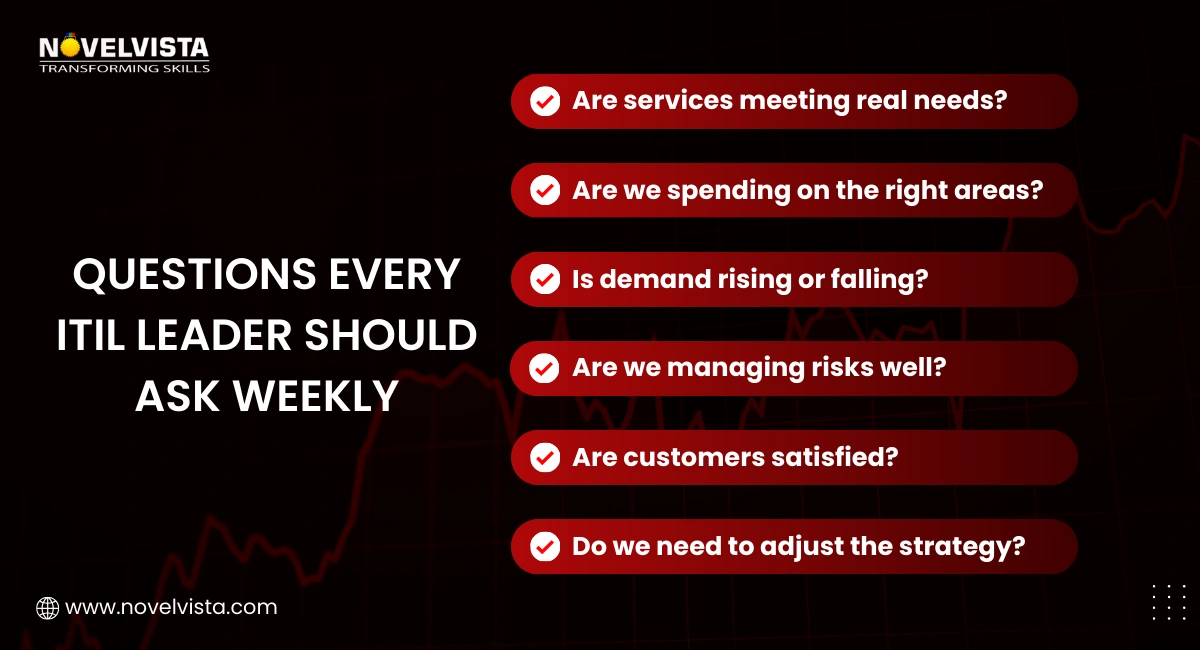
Questions Every ITIL Leader Should Ask

Pitfall 4: Gaps in Service Portfolio Management

A messy service portfolio is a quiet problem that grows quickly. When services are not categorized, evaluated, or reviewed regularly, you face classic ITIL obstacles such as duplication, confusion, and budget waste.

Common issues include:

  • Services that no one uses anymore
  • Overlapping services doing the same job
  • No clarity on cost, purpose, or value

How to avoid this ITIL pitfall:

  • Create a single view of all services, active or retired: This prevents duplication and helps stakeholders understand what exists and why.
     
  • Define clear ownership for each service: With one person accountable, decisions become easier and faster.
     
  • Review the portfolio when business priorities shift: This avoids old services staying active when they should be modified or retired.

Across our ITIL training programs, many service owners admit they struggle when portfolios grow without structure. Once they learn to map services clearly and assign ownership, decision-making becomes faster, and unnecessary services get cleaned out. Good portfolio management removes guesswork and stops small ITIL risks from turning into large problems. This simple discipline reduces confusion and improves overall service clarity.

Pitfall 5: Weak Financial Management Practices

Money shapes every service decision, yet many teams treat financial management as an afterthought. This turns into one of the most expensive ITIL pitfalls because wrong cost planning affects everything from service quality to customer experience.

Here’s where teams struggle:

  • Budgets made on assumptions
  • No clear charging or cost recovery models
  • No visibility into true cost per service

Why this creates ITIL challenges:

  • Wrong investments drain budgets
  • Services become too costly without adding value
  • Leaders lose trust in IT decision-making

What helps:

  • Use simple cost breakdowns for each service: This transparency helps manage expenses and avoid unwanted ITIL risks.
     
  • Define how costs are shared across teams: Clear charging rules reduce confusion and make planning smoother.
     
  • Track cost trends during review meetings: These checks ensure costs don’t surprise you during audits or strategic planning.

Good financial management doesn’t complicate your work — it protects your strategy.
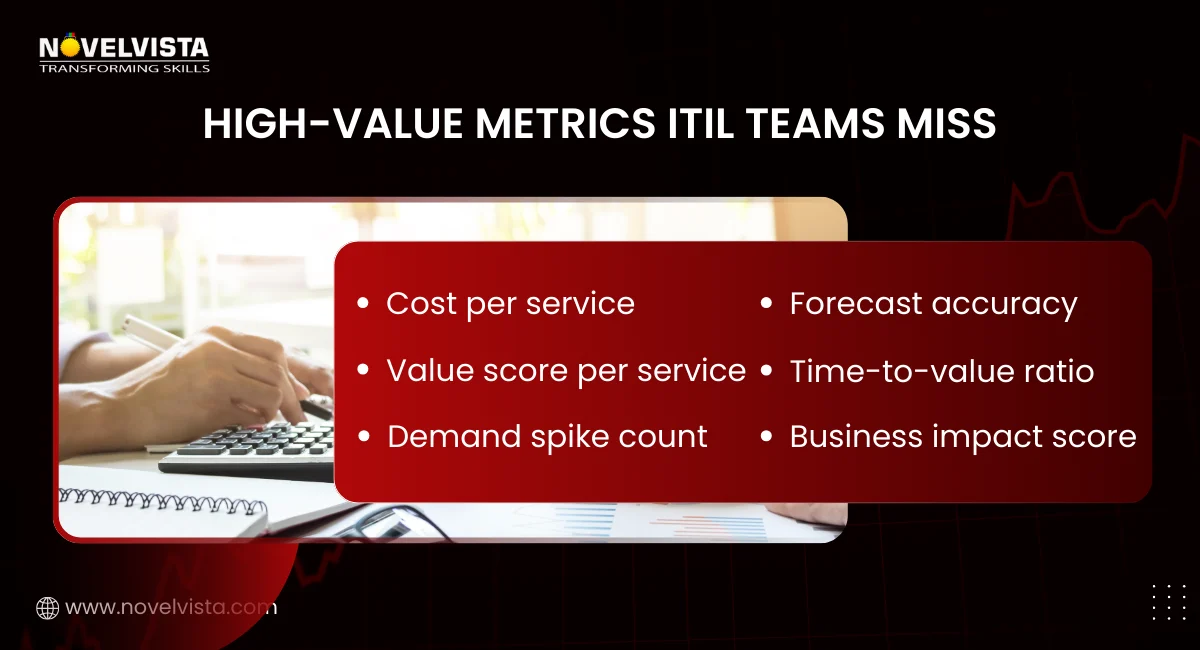
High Value Metrics ITIL

Pitfall 6: Overcomplicating Service Portfolio Management

Many teams turn service portfolio management into a giant spreadsheet that nobody wants to touch. When things get too complex, decisions slow down, service owners disengage, and the portfolio loses its purpose. The portfolio should help you choose what to invest in, what to retire, and what to improve, not overwhelm everyone with endless data.

Here’s what helps:

  • Keep the portfolio simple enough for anyone to understand within minutes: Use clear service names, short descriptions, visible owners, and simple lifecycle stages so even someone new to the organization can scan the portfolio and understand how each service supports real business outcomes without digging through complicated terminology or unnecessary data.
     
  • Review the portfolio regularly with business stakeholders: Set a quick cadence, monthly or quarterly, where teams sit together, assess demand, evaluate service value, and ensure nothing continues running on auto-pilot, allowing better financial decisions and cleaner prioritization.
     
  • Include only the data that drives decisions: Focus on value, cost, usage pattern, risks, demand, and lifecycle phase instead of tracking every tiny technical metric. This keeps the portfolio actionable instead of turning into a storage dump of outdated or unused information.

Pitfall 7: Treating Financial Management as Just Budget Tracking

Some organizations think financial management in ITIL is only about keeping costs down. But financial management is actually about enabling smart investments, identifying service value, and helping leaders make informed decisions. When it’s reduced to a budgeting exercise, you lose the chance to optimize value and justify spending.

Try these approaches:

  • Connect financial discussions to business value instead of limiting them to expenses: Help leaders see which services drive revenue, reduce risk, or improve customer experience by showing value-first numbers rather than focusing only on how much each service costs every quarter.
     
  • Use cost transparency to build trust with stakeholders: Create simple cost models that explain where money goes, why services cost what they do, and how improvements could actually save money. Clear visibility reduces friction and helps stakeholders appreciate IT’s contribution.
     
  • Review service costs and benefits continuously, not once a year: Replace the yearly budget ritual with lightweight checkpoints that surface changing demand, new risks, or cost optimization opportunities so your financial decisions always reflect current realities rather than outdated projections.

Pitfall 8: Not Planning for Capacity and Demand Changes Early

Many teams wait for issues to appear before acting, slow systems, overwhelmed staff, sudden spikes in usage, or unexpected dependencies that break the workflow. When capacity and demand planning is reactive, the impact spreads across IT, customers, and business operations.

A smarter path includes:

  • Use historical data to spot patterns instead of guessing future demand: Track usage behavior, customer volumes, seasonal trends, and workload peaks to forecast the right capacity without relying on last-minute firefighting or sudden emergency scaling activities.
     
  • Collaborate with business teams before major changes or launches happen: Sit with marketing, product, sales, and operations to understand promotions, new products, customer surges, or expansion plans so you can prepare your services instead of reacting later.
     
  • Run small-scale load tests on critical services every few months: Regularly test how systems behave under pressure so you can identify bottlenecks, tune performance, and build confidence that your service can handle future demand without breaking unexpectedly.

During several ITIL capacity planning workshops, teams realized that most outages they faced could have been avoided with early forecasting. Small load tests and simple trend reviews helped them catch scaling issues before customers noticed them. These predictable patterns show how proactive planning prevents unnecessary disruptions.

Want to understand how to plan and manage service performance better? Take a look at our guide on ITIL Capacity Management for clear explanations and practical tips.

Pitfall 9: Ignoring Risk Management During Strategy Creation

Risk often becomes an afterthought in ITIL Service Strategy, discussed only when something goes wrong. But ignoring risks early can lead to service failures, compliance issues, financial losses, and damaged trust. Risk should be built into every strategic decision.

Here’s how to avoid this trap:

  • Identify service-level risks before designing or modifying any service: Look at technology risks, vendor issues, compliance gaps, data vulnerabilities, and operational weaknesses so you make strategic decisions with a clear understanding of what could go wrong.
     
  • Work with business risk teams instead of assessing risks alone: Combine IT knowledge with business insights to capture a well-rounded view of the threat landscape. This ensures no blind spots and helps align risk priorities with broader organizational needs.
     
  • Create simple, actionable mitigation plans for each major risk: Assign owners, create preventive steps, and define monitoring triggers so teams know exactly how to respond before issues escalate into costly incidents that impact service quality or customer satisfaction.

Pitfall 10: Treating Service Strategy as a One-Time Exercise

Many companies create a service strategy document once and never update it. But business needs, customers, technologies, and risks evolve constantly. When the strategy becomes outdated, IT decisions lose relevance and services start drifting away from business goals.

Keep your strategy alive by:

  • Refreshing the strategy regularly with real business insights: Adjust service value, priorities, investments, and outcomes based on new goals, market changes, customer behavior patterns, and internal performance trends that shape how IT should operate.
     
  • Using metrics to understand if the strategy is actually working: Track service performance, customer satisfaction, financial outcomes, and risk trends so you know where the strategy is on track and where adjustments are needed instead of relying on assumptions.
Building a culture where teams revisit strategic decisions often: Encourage conversations about value, priorities, risks, and changes so strategy becomes an ongoing habit rather than a document stored in a folder and forgotten after workshops.

Conclusion

Stepping into ITIL Service Strategy becomes much easier when you know what traps to avoid. These ten pitfalls show where most teams slip, unclear alignment, scattered processes, missing data, or outdated decisions. When you fix these areas, your strategy becomes lighter, faster, and far more connected to what the business actually wants.

A strong service strategy isn’t about creating thick documents. It’s about making smarter choices, reducing surprises, and giving your teams a clear direction they can trust and follow.

Everything shared here aligns with the frameworks we teach during ITIL Foundation and Practitioner programs. The examples, tips, and common mistakes come from real industries and actual learner experiences. The goal is simple: help teams strengthen their service strategy with reliable, easy-to-apply guidance.

ITIL 4 Foundation Certification

Next Step: Build Your ITIL Skills With the Right Start

If you want to apply these ideas with confidence, the best next move is to build a solid base. NovelVista’s ITIL 4 Foundation certification training helps you understand real service practices, common industry gaps, and how to avoid everyday mistakes. You learn through simple explanations, live discussions, and practical examples that make ITIL easy to use at work. It’s a smart step toward stronger IT service management skills.

Frequently Asked Questions

ITIL’s service strategy is the stage that defines how an organization plans, designs, and delivers IT services in a way that aligns with business goals. It focuses on understanding customer needs, creating value, and deciding which services should be offered for long-term success.
A simple example of service strategy is a company deciding to move from on-premise storage to a cloud-based service model because it reduces cost, improves scalability, and better supports customer demand for remote access.
The core elements include defining service value, determining which services should be offered, and planning how those services will be supported. It helps organizations make strategic decisions that directly influence service quality and business outcomes.
ITIL service strategy ensures IT services are built around actual business needs rather than assumptions. By aligning services with revenue goals, customer expectations, and operational efficiency, it helps organizations deliver more measurable value.
Service strategy is important because it sets the foundation for the entire ITIL lifecycle. Without a clear strategy, organizations risk creating services that do not meet customer needs, leading to higher costs, inefficiencies, and weak service performance.

Author Details

Mr.Vikas Sharma

Mr.Vikas Sharma

Principal Consultant

I am an Accredited ITIL, ITIL 4, ITIL 4 DITS, ITIL® 4 Strategic Leader, Certified SAFe Practice Consultant , SIAM Professional, PRINCE2 AGILE, Six Sigma Black Belt Trainer with more than 20 years of Industry experience. Working as SIAM consultant managing end-to-end accountability for the performance and delivery of IT services to the users and coordinating delivery, integration, and interoperability across multiple services and suppliers. Trained more than 10000+ participants under various ITSM, Agile & Project Management frameworks like ITIL, SAFe, SIAM, VeriSM, and PRINCE2, Scrum, DevOps, Cloud, etc.

Enjoyed this blog? Share this with someone who'd find this useful

Sign Up To Get Latest Updates on Our Blogs

Stay ahead of the curve by tapping into the latest emerging trends and transforming your subscription into a powerful resource. Maximize every feature, unlock exclusive benefits, and ensure you're always one step ahead in your journey to success.


Topic Related Blogs