Category | IT Service Management
Last Updated On 22/05/2026
Most IT teams are busy fixing incidents, closing tickets, and delivering changes, but still struggle with the same problems returning again and again. The challenge isn’t effort; it’s the lack of a structured way to manage services across their entire lifecycle.
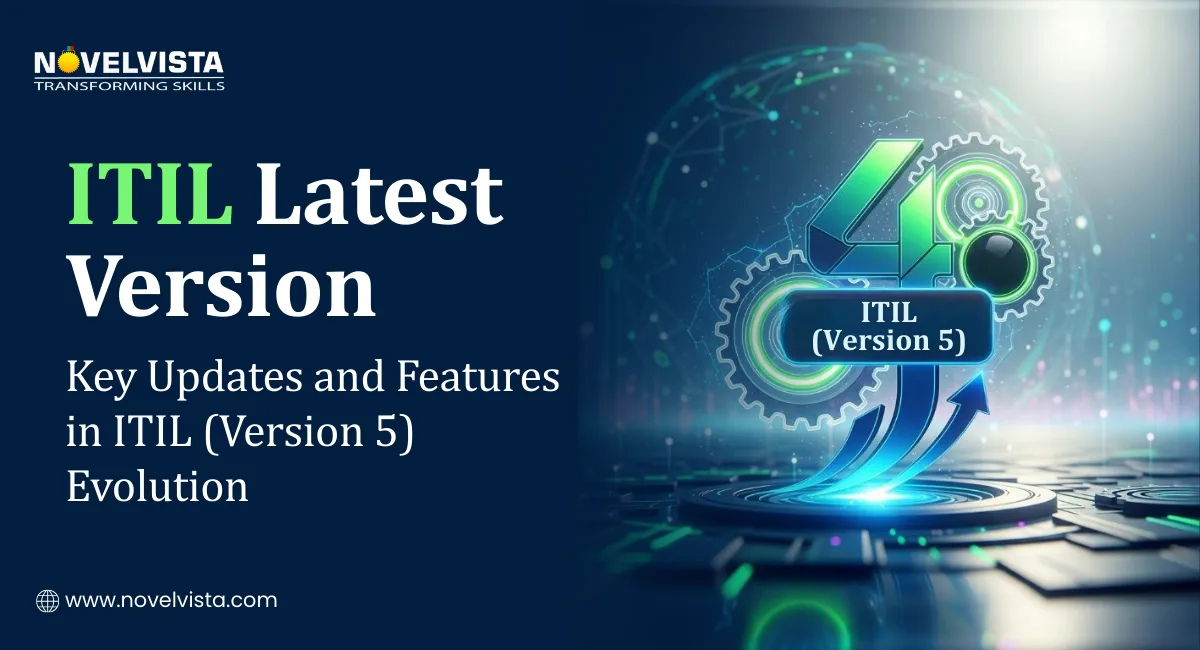
ITIL (Version 5) addresses this by providing clearer guidance on how services and products should be planned, delivered, improved, and eventually retired. Instead of focusing only on isolated activities, the framework emphasizes lifecycle thinking, value creation, and coordinated work across teams.
For professionals involved in IT operations, service delivery, or ITSM roles, understanding ITIL (Version 5) helps build a shared language, strengthen collaboration, and support consistent service improvement. As organizations continue to depend on digital services, applying structured service management practices becomes essential for maintaining reliability and long-term business value.
ITIL (Version 5) builds on earlier versions of the framework and is developed under the stewardship of PeopleCert, the global organization responsible for ITIL certifications and best practices in IT service management. It reflects how service management continues to evolve, incorporating insights from industry experience, modern operating models, and real-world service environments.
Organizations across industries such as finance, healthcare, and technology use ITIL guidance to improve service reliability, strengthen coordination between teams, and align IT services with business outcomes. By emphasizing value creation, lifecycle thinking, and continual improvement, ITIL (Version 5) helps organizations manage services in complex, fast-changing environments.
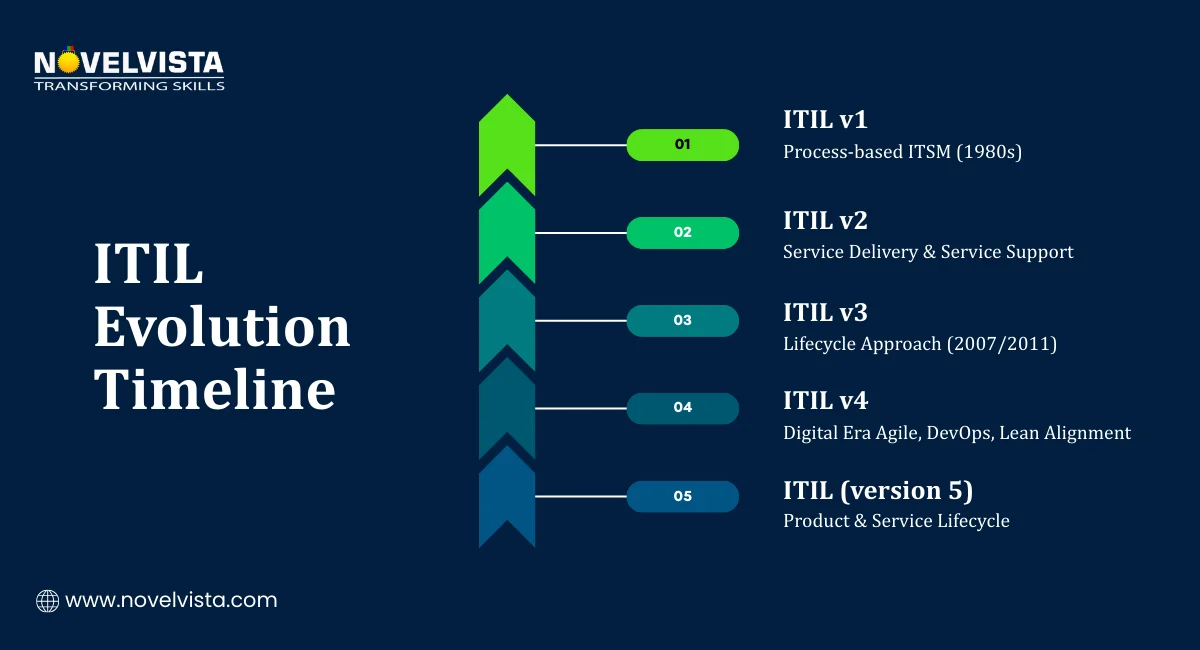
The journey of ITIL from ITIL v1 to the latest ITIL (Version 5) reflects how IT service management has adapted to changing technologies, operating models, and business expectations.
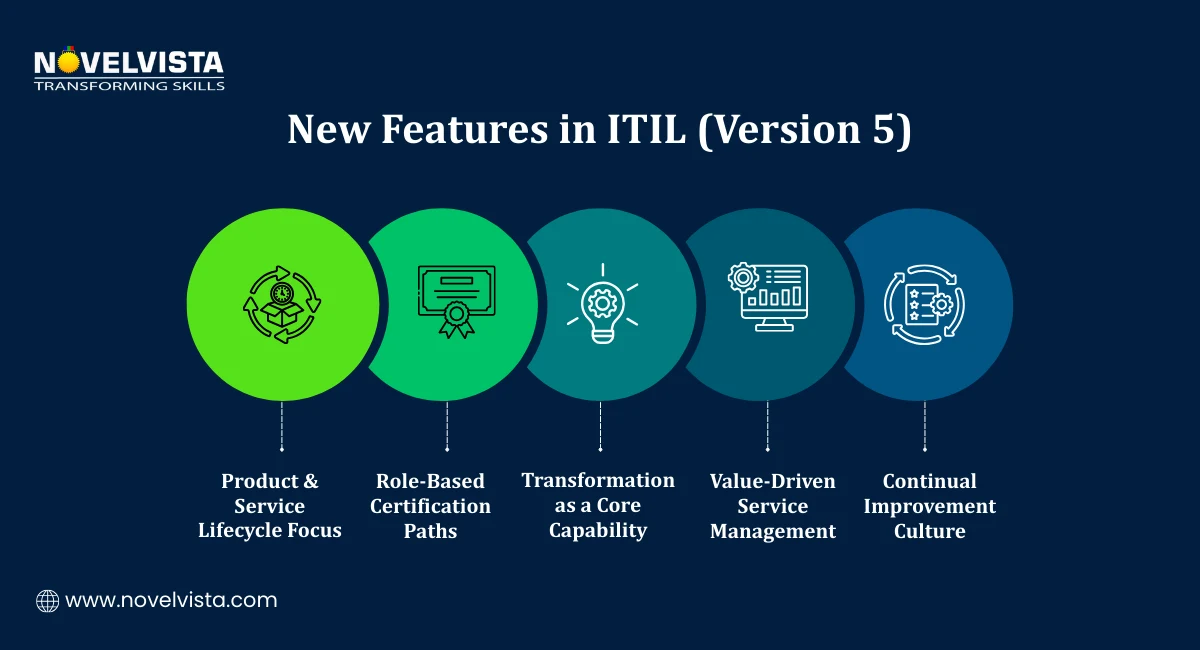
ITIL (Version 5) refines the framework to better reflect how organizations deliver services today. The updates focus on clearer structure, lifecycle thinking, and stronger alignment between services, products, and business outcomes.
For a deeper understanding of how the framework has evolved, explore our detailed comparison of ITIL 5 vs ITIL 4: What’s New, Changed, and Removed.
ITIL (Version 5) helps organizations manage the growing complexity of modern service environments. With hybrid infrastructure, cloud platforms, automation, and AI-driven services becoming common, ITIL provides structured guidance to manage services while staying adaptable to change.
By emphasizing lifecycle thinking, value delivery, and coordinated service management, organizations can:
Align services and products more closely with business outcomes.
Improve service reliability by identifying and resolving underlying issues early.
Strengthen collaboration across teams, partners, and stakeholders.
Support modern ways of working, such as Agile, DevOps, and automation, without disrupting service management practices.
Organizations that apply ITIL guidance effectively often see more stable services, better communication between technical and business teams, and improved decision-making around service improvements. This helps IT functions move beyond reactive support and contribute more directly to long-term organizational value.
What IT Professionals Need to Know
For IT practitioners, understanding the updates introduced in ITIL (Version 5) is important for staying relevant and progressing in IT service management careers. In fact, MarketsandMarkets predicts the global ITSM market will grow at a 15.9% CAGR, reaching $22.1 billion by 2028, highlighting the growing demand for professionals with strong ITSM knowledge. Key areas professionals should focus on include:
Applying ITIL effectively requires professionals who understand both the framework and real-world service environments. Certified ITIL practitioners and trainers help organizations translate these principles into practical improvements that strengthen service reliability and overall business value.
Also Read: What is ITSM in the Future
Explore a role-based roadmap that shows how professionals grow from entry-level
service roles to strategic leadership using the ITIL 5 framework.
Understanding what ISO 9001 is more than learning a standard; it’s about recognizing how structured quality management drives reliability, efficiency, and trust in modern organizations. The ISO 9001 Quality Management System provides a clear framework that helps businesses maintain consistent processes, meet customer expectations, and continuously improve performance. From its core principles to its structured clauses, ISO 9001 ensures that quality becomes part of an organization’s culture rather than just a compliance requirement.
For professionals, mastering ISO 9001 and auditing practices opens doors to global opportunities in quality management, compliance, and governance. In a competitive and fast-changing business environment, organizations and professionals who embrace ISO standards position themselves for long-term operational excellence and credibility.
Next Step
If you’re looking to strengthen your service management expertise, NovelVista’s ITIL (Version 5) training programs offer a practical path forward. The ITIL (Version 5) Foundation Certification Training helps professionals understand modern IT service management concepts, improve operational efficiency, and align services with business goals.
For professionals who already hold ITIL 4 Foundation, the ITIL (Version 5) Bridge Course provides a focused way to transition to the latest framework without repeating the full Foundation program.
With expert-led sessions, practical examples, and globally recognized certification, these programs equip you with the knowledge needed to improve service delivery and progress confidently in your ITSM career.
Author Details

Course Related To This blog
ITIL4 Specialist Monitor Support and Fulfil Certification
ITIL4 Specialist Acquiring & Managing Cloud Services
ITIL 4 Specialist Sustainability in Digital & IT
ITIL® 4 Specialist Drive Stakeholder Value
ITIL® 4 Specialist Create Deliver & Support
ITIL® 4 Foundation Certification
Confused About Certification?
Get Free Consultation Call
Stay ahead of the curve by tapping into the latest emerging trends and transforming your subscription into a powerful resource. Maximize every feature, unlock exclusive benefits, and ensure you're always one step ahead in your journey to success.