Category | IT Service Management
Last Updated On 05/09/2026
Modern organizations don’t fail because they lack processes. They fail because value gets lost between teams.
Projects start with energy. Teams work hard. Tasks get completed. Yet customers still feel disconnected. Services feel fragmented. Handoffs break momentum. Ownership becomes blurry.
This is where ITIL (Version 5) Product and Service Lifecycle changes the conversation.
Instead of focusing on rigid stages or isolated activities, ITIL (Version 5) promotes lifecycle thinking a continuous, end-to-end perspective on how value is created, delivered, supported, improved, and eventually retired.
In this blog, we’ll break down:
The goal is simple: reset your mindset from process execution to value continuity.
The ITIL 5 Product and Service Lifecycle represents the complete journey of a product or service, beginning from the moment an opportunity is identified and continuing until it is retired or replaced. Unlike traditional models, it is not a straight line, a rigid checklist, or a one-time progression of stages. Instead, the ITIL (Version 5) Product and Service Lifecycle is continuous, meaning stages overlap and influence one another; value-focused, where outcomes matter more than individual activities; and adaptive, where change is expected rather than disruptive. Lifecycle thinking removes rigid handoffs and eliminates the “throw it over the wall” mindset that often fragments responsibility across teams. Learning, feedback, and continual improvement are embedded into every phase, ensuring that value is sustained over time. In ITIL (Version 5), lifecycle thinking is about maintaining a consistent flow of value across the lifespan of products and services, not merely delivering a project and moving on.
Before diving into lifecycle stages, we must clarify a common confusion: product and service are not the same thing.
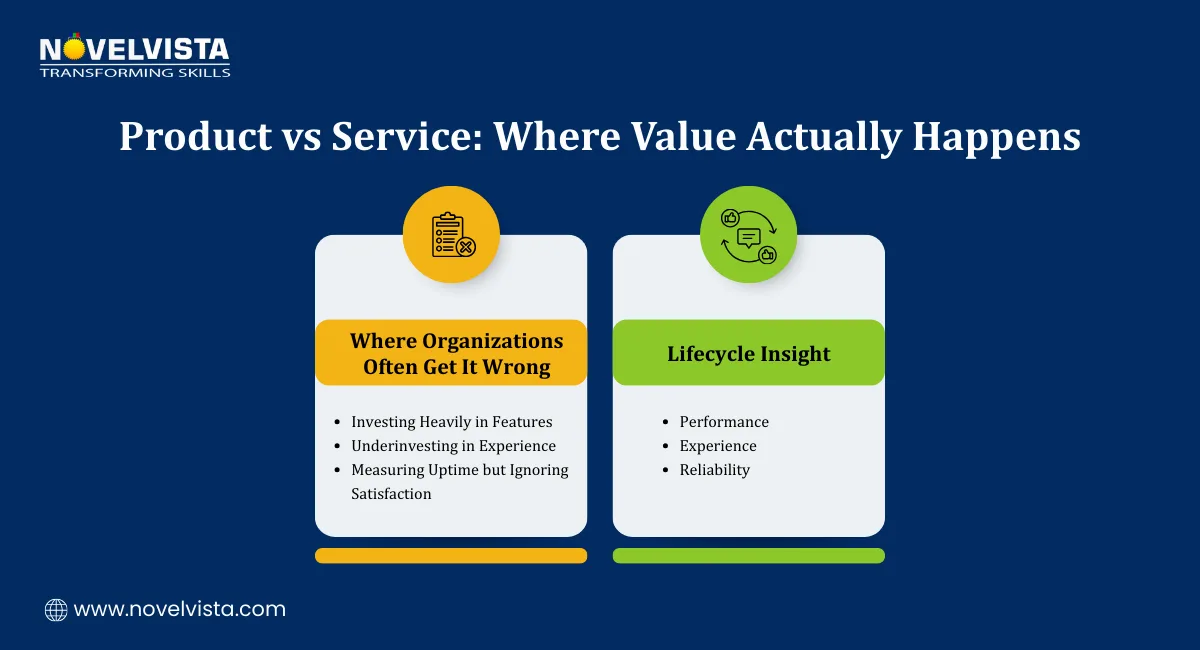
In ITIL (Version 5):
Here’s a simple comparison:
Aspect |
Product |
Service |
Focus |
Capabilities And Components |
Outcomes And Experience |
Ownership |
Managed Internally |
Shared With Customers |
Nature |
Tangible/Intangible Bundle |
Consumption-Based |
Goal |
Enable Value |
Deliver Value |
Both follow a lifecycle but not in exactly the same way.
The ITIL (Version 5) Product and Service Lifecycle recognizes that products evolve technically, while services evolve experientially.
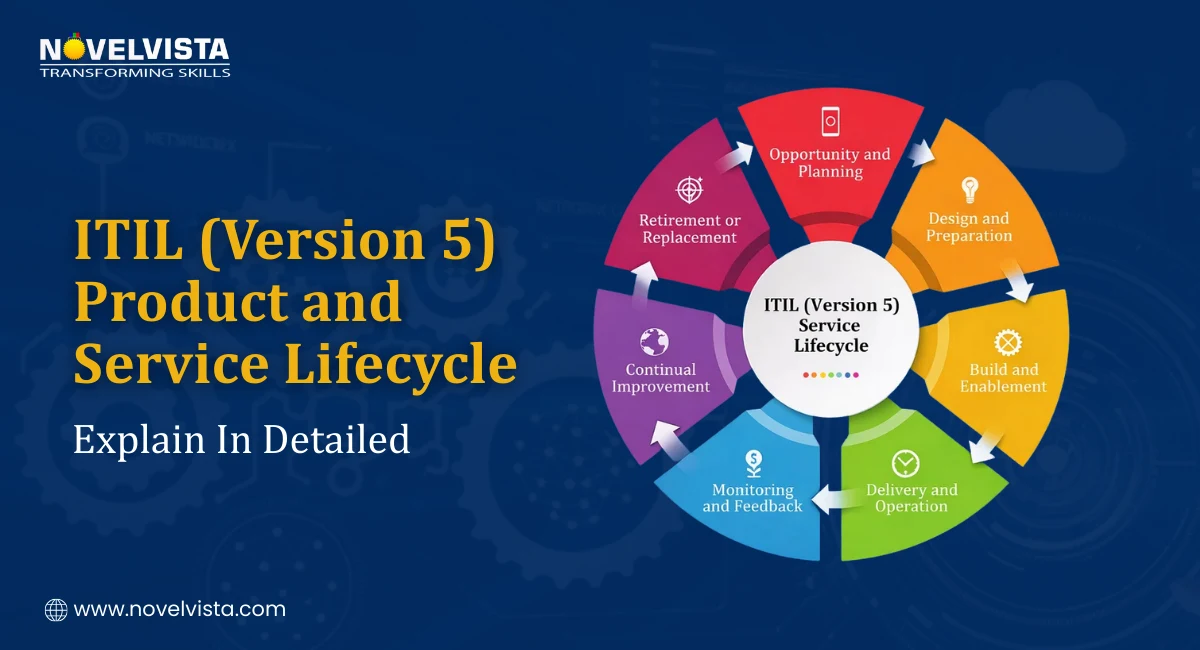
Now let’s walk through the stages of the ITIL (Version 5) Product and Service Lifecycle.
Opportunity and Planning marks the beginning of the ITIL (Version 5) Product and Service Lifecycle, where every lifecycle begins with opportunity. This stage focuses on identifying demand, understanding stakeholder needs, defining intended outcomes, and assessing cost, risk, and feasibility before any significant investment is made. The objective at this point is clear: build only what creates value. Without strong planning, organizations often invest in features or capabilities that customers do not truly need, leading to wasted resources and fragmented efforts. Lifecycle thinking ensures proper alignment before execution begins, making sure that strategic intent, stakeholder expectations, and measurable outcomes are clearly defined from the start. The ITIL Foundation (Version 5) Exam Syllabus covers the core concepts of the Service Value System and lifecycle management.
Once opportunity is validated, the solution must be structured properly to ensure smooth progression within the ITIL (Version 5) Product and Service Lifecycle. This stage includes designing product capabilities, structuring service workflows, preparing tools, platforms, and teams, and setting expectations with stakeholders to create clarity and alignment. The objective is to reduce surprises later by anticipating operational, technical, and experiential challenges before delivery begins. In ITIL (Version 5), design goes beyond technical architecture; it also incorporates experience, usability, supportability, and sustainability, ensuring that both the product and the service are practical, reliable, and capable of delivering consistent value over time.
This is the stage where ideas become real within the ITIL (Version 5) Product and Service Lifecycle. Activities at this point include development or configuration, environment setup, testing and validation, and readiness checks to ensure everything functions as intended. The purpose is to achieve stability before live use, minimizing risk and disruption once the product or service moves into operation. Build is not just about speed or rapid deployment; it ensures that the product is reliable, resilient, and capable enough to support effective service delivery. In lifecycle thinking, build is directly connected to delivery, not isolated from it, meaning that what is developed must seamlessly enable the service experience and long-term value realization.
This stage is where value is realized within the Product and service lifecycle management in ITIL (Version 5). Customers actively consume the service, outcomes are delivered, and expectations are tested in real-world conditions. Key areas include day-to-day operation, support coordination, meeting agreed service levels, and managing customer experience to ensure consistency and reliability. This stage represents the heart of the ITIL (Version 5) Product and Service Lifecycle because it is where the intended value becomes tangible for stakeholders. If delivery fails, the efforts invested in earlier stages lose relevance, as planning, design, and build only matter when they successfully enable meaningful outcomes during live service use.
Lifecycle thinking does not stop at operation within the ITIL (Version 5) Product and Service Lifecycle. Performance must be measured continuously through service metrics, product performance indicators, user feedback, and issue trends to ensure sustained value delivery. In this stage, data replaces assumption, enabling organizations to move from opinion-based decisions to evidence-based actions. Monitoring ensures that improvements, adjustments, and strategic decisions are grounded in measurable insights rather than guesswork.The ITIL (Version 5) four dimensions model ensures that organizations consider people, technology, partners, and value streams holistically to enable consistent and sustainable value delivery. In ITIL, monitoring is proactive, not reactive, meaning potential risks, performance gaps, and customer concerns are identified early and addressed before they escalate into larger disruptions.
Improvement is not treated as a separate initiative within the ITIL (Version 5) Product and Service Lifecycle; it is embedded throughout the lifecycle itself. This stage focuses on incremental enhancements, removing bottlenecks, optimizing value flow, and increasing reliability to ensure that both products and services continue to deliver meaningful outcomes. This emphasizes small, continuous refinements rather than disruptive overhauls, allowing organizations to adapt steadily without destabilizing operations. Improvement keeps services relevant in dynamic environments by responding to changing customer expectations, evolving technologies, and emerging risks in a structured yet flexible manner.
Every product and service eventually reaches end-of-life within the ITIL (Version 5) Service Lifecycle. This stage includes evaluating ongoing value, planning a controlled transition, reallocating resources, and managing stakeholder impact to ensure continuity and stability. Retirement is strategic, not emotional; it is based on value realization rather than attachment to legacy investments. Organizations often waste resources maintaining low-value services long after they stop delivering meaningful outcomes. Lifecycle thinking encourages timely replacement and reinvestment so that effort and funding are redirected toward higher-value opportunities. In the ITIL (Version 5) service lifecycle model, stopping investment in outdated solutions is just as important as launching new ones, because sustainable value depends on both innovation and disciplined retirement decisions.
Although connected, product lifecycle and service lifecycle focus on different dimensions of value.
Conceptually:
Here is a side-by-side comparison:
Lifecycle Stage |
Product Lifecycle Focus |
Service Lifecycle Focus |
Planning |
Capability Roadmap |
Outcome Expectations |
Design |
Features And Components |
Service Model And Experience |
Build |
Development/Configuration |
Readiness For Delivery |
Operation |
Maintenance And Upgrades |
Support And Performance |
Monitoring |
Product Performance |
Customer Satisfaction |
Improvement |
Enhancements And Releases |
Reliability And Experience Gains |
Retirement |
Version End-Of-Life |
Service Discontinuation Or Transition |
The ITIL (Version 5) Product and Service Lifecycle integrates both perspectives to maintain alignment between internal capabilities and external value.
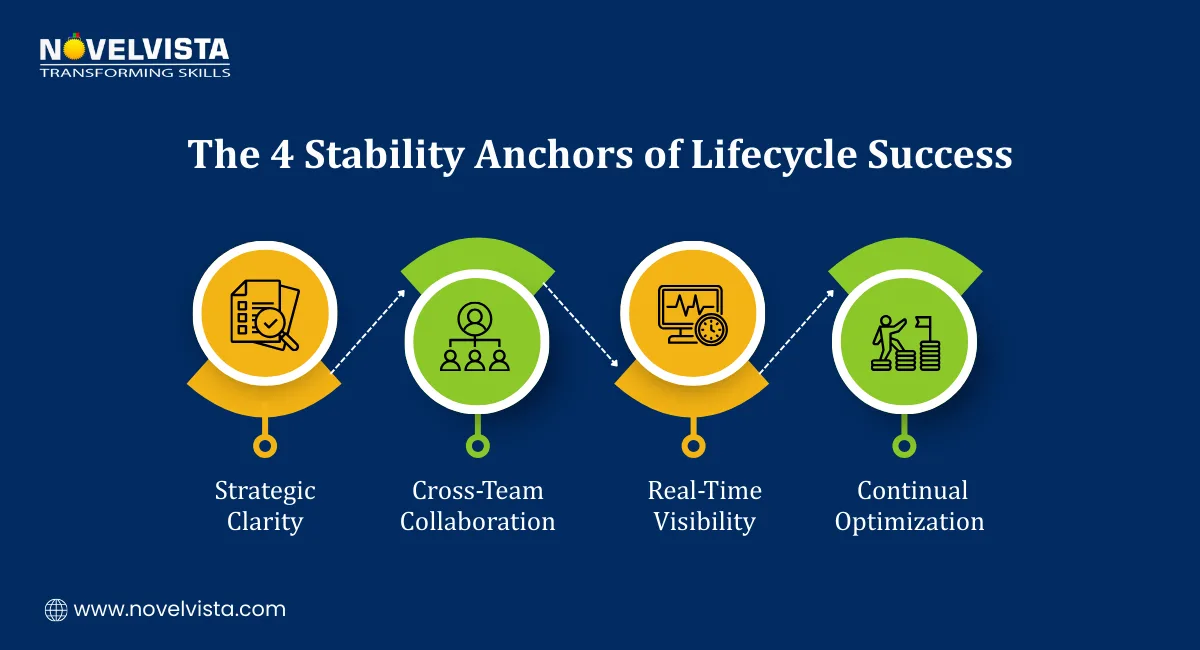
The lifecycle does not operate in isolation.
It connects directly to:
In practical terms, the lifecycle shows how value actually flows over time, while the Service Value System explains how the organization enables that flow. The Service Value Chain in ITIL (Version 5) ensures that every activity, from planning to improvement, is connected to deliver consistent value to customers.
Even with lifecycle models, organizations often struggle.
Common errors include:
The ITIL (Version 5) Service Lifecycle works only when organizations embrace flexibility and accountability. The key ITIL (Version 5) Benefits include improved value delivery, stronger alignment between products and services, and continuous improvement across the organization.
Lifecycle is about continuity, not compliance.
For practitioners: Think end-to-end. Understand how your work affects later stages.
For managers: Track outcomes, not just deliverables.
For leaders: Align lifecycle decisions with long-term strategy.
The power of ITIL (Version 5) lies in mindset transformation, not diagram memorization.
The ITIL (Version 5) Product and Service Lifecycle is not about rigid steps, excessive documentation, or procedural checklists. It is about sustaining value over time. From opportunity identification to retirement, lifecycle thinking ensures that products remain aligned with capability needs, services continue delivering meaningful outcomes, improvement never stops, and resources are used wisely. It creates continuity where many organizations experience fragmentation, embedding accountability and adaptability across the entire journey. Organizations that adopt lifecycle thinking shift from isolated task completion to continuous value delivery. And that shift from short-term execution to long-term value continuity is how ITIL (Version 5) transforms strategic intent into sustained success.

Take the next step with NovelVista’s ITIL (Version 5) Foundation Certification Training and gain practical insights into the Service Value System, Service Value Chain, Product and Service Lifecycle, and the ITIL (Version 5) four dimensions model. Designed for IT professionals, service managers, and aspiring ITSM leaders, this course equips you with real-world knowledge, structured guidance, and globally recognized credentials to confidently apply lifecycle thinking in dynamic digital environments.
Start your ITIL (Version 5) Foundation journey today!
Author Details

Course Related To This blog
ITIL4 Specialist Monitor Support and Fulfil Certification
ITIL4 Specialist Acquiring & Managing Cloud Services
ITIL® 4 Strategic Leader Digital And IT Strategy (DITS)
ITIL® 4 Specialist Drive Stakeholder Value
ITIL® 4 Specialist High Velocity IT
ITIL® 4 Foundation Certification
ITIL V5 Foundation
Confused About Certification?
Get Free Consultation Call
Stay ahead of the curve by tapping into the latest emerging trends and transforming your subscription into a powerful resource. Maximize every feature, unlock exclusive benefits, and ensure you're always one step ahead in your journey to success.