Category | IT Service Management
Last Updated On 08/08/2026

Every minute your IT systems are down, money bleeds, customers lose trust, and competitors gain ground. Industry reports estimate that IT downtime costs mid-sized businesses over $5,000 per minute, while for large enterprises, the losses can skyrocket into hundreds of thousands per hour. Even more alarming, nearly 80% of major IT incidents aren’t caused by technology failure, but by weak operational processes.
Let that sink in.
It’s not the servers.
It’s not the cloud.
It’s not the tools.
It’s how operations are managed.
That’s exactly why ITIL Service Operation is not just a framework; it’s the backbone of reliable IT performance.
In today’s 24/7 digital economy, businesses run on uninterrupted services. From cloud infrastructure and enterprise applications to customer portals and payment systems, operational stability directly impacts revenue, reputation, and regulatory compliance. A single unresolved incident can snowball into lost customers and damaged brand credibility.
In this guide, we’ll demystify ITIL Service Operation, break down the essential ITIL Service Operation Processes, and explain how Service Operation in ITIL keeps businesses running smoothly, efficiently, and confidently.
If your goal is fewer outages, faster recovery, and stronger operational control, you’re in the right place.
Let’s dive in.
ITIL Service Operation is the lifecycle stage responsible for delivering and managing IT services effectively and efficiently, ensuring they remain available, reliable, and aligned with agreed service levels. Within the ITIL framework, Service Operation in ITIL comes after Service Strategy, Service Design, and Service Transition, serving as the critical phase where planning turns into performance. It acts as the execution engine that translates strategic objectives and carefully designed services into consistent, real-world results. In simple terms, if Service Strategy defines what services to offer, Service Design determines how to build them, and Service Transition deploys them into the live environment, then ITIL Service Operation ensures those services function smoothly, meet user expectations, and deliver value every single day.
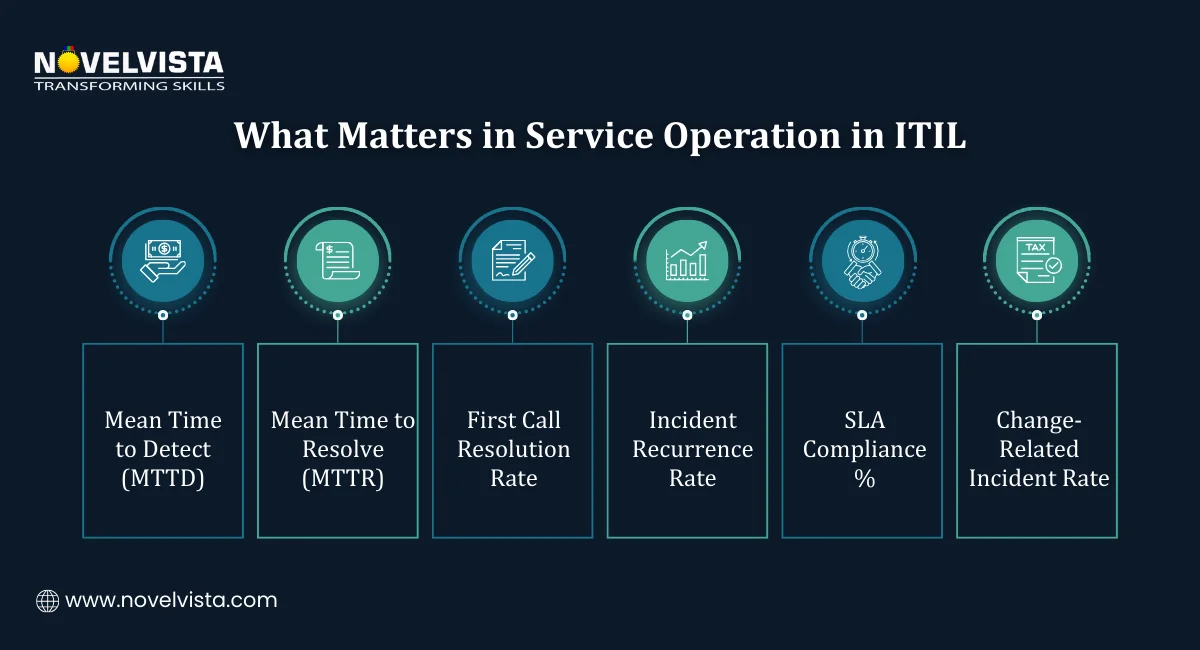
Modern organizations rely on:
Cloud platforms
SaaS applications
Remote work environments
24/7 digital services
Any disruption directly affects revenue, customer trust, and compliance.
Effective Service Operation ITIL implementation helps:
Reduce downtime
Improve incident response times
Meet SLA commitments
Enhance user satisfaction
Lower operational costs
Without structured ITIL Service Operation Processes, IT teams operate reactively instead of proactively, leading to repeated incidents and inefficiencies.
The main goal of Service Operation in ITIL is to maintain a balance between:
IT environments must remain stable but also adapt quickly to incidents and requests.
Deliver services at optimal cost while maintaining performance standards.
Respond to incidents immediately, but also prevent recurring issues through root cause analysis.
Ultimately, ITIL Service Operation ensures that IT services consistently deliver business value.
Now let’s explore the heart of the framework, the ITIL Service Operation Processes that keep everything running.
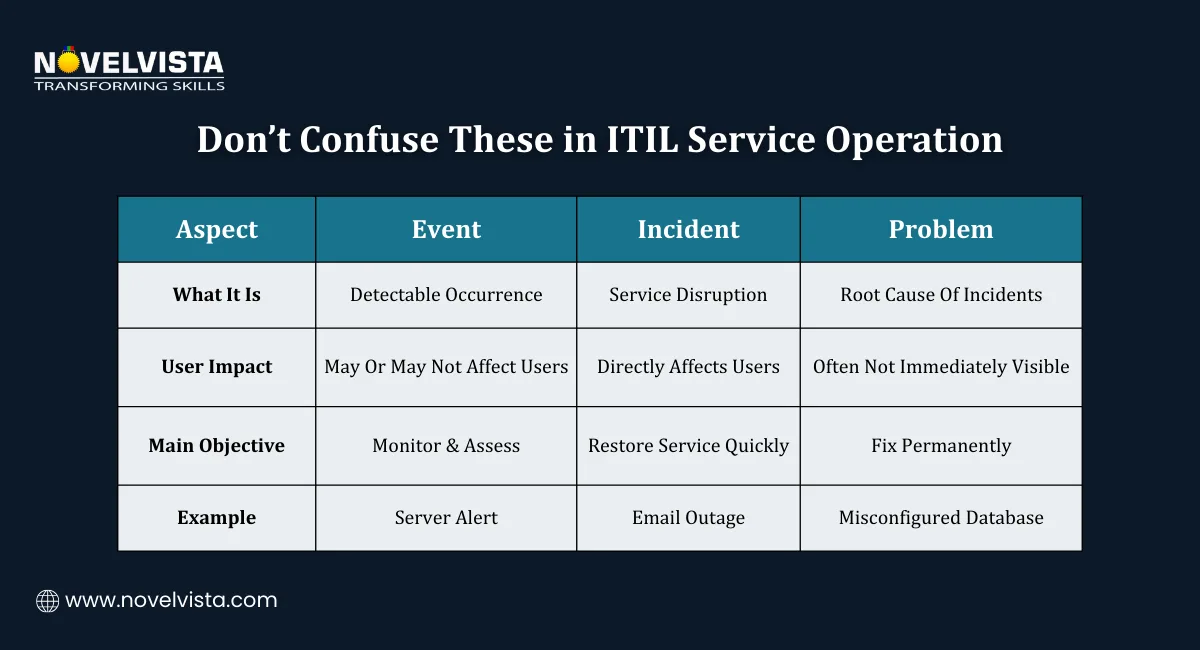
Event Management monitors IT infrastructure and services to detect events both normal and exceptional such as server CPU threshold alerts, security breaches, and application failures. Its goal is to identify issues before they impact users, enabling proactive action. In Service Operation ITIL, it acts as an early warning system, helping maintain service stability and performance.
Incident Management restores normal service operation as quickly as possible after a disruption. An incident could include an email server outage, network connectivity issue, or software malfunction. The primary focus is speed, not root cause, so the priority is to restore service first and investigate later. Incident Management is often the most visible part of ITIL Service Operation because it directly impacts users and business continuity.
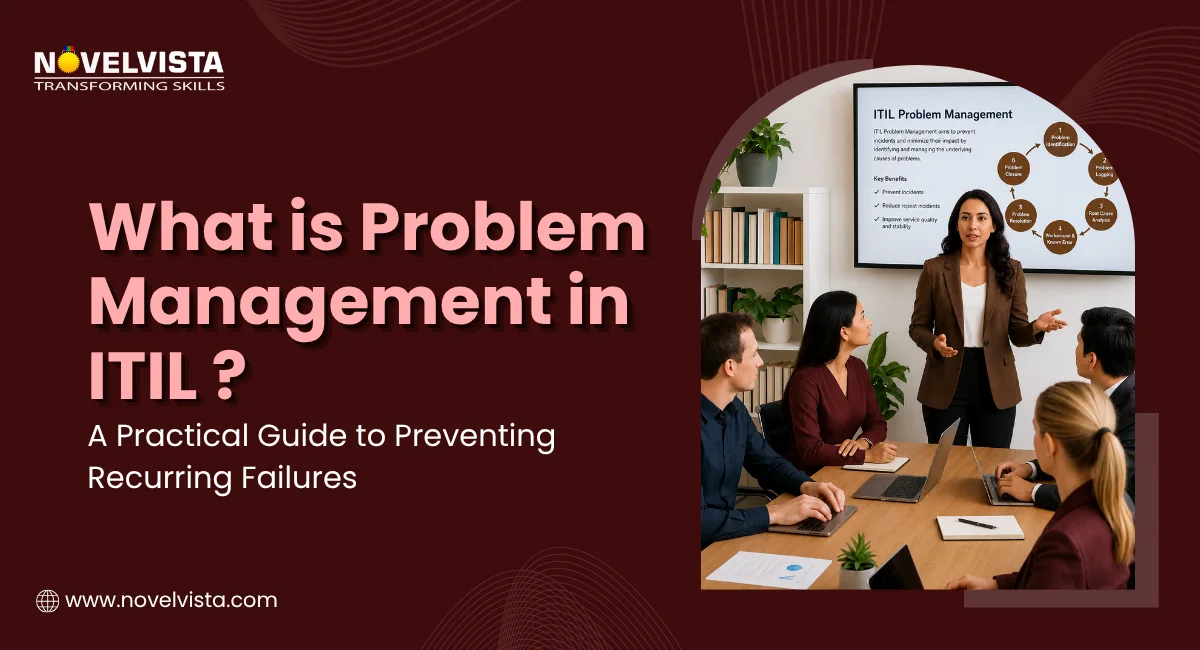
While Incident Management fixes symptoms, Problem Management identifies and removes root causes. It involves Root Cause Analysis (RCA), trend analysis, and updates to the Known Error Database (KEDB). This proactive approach reduces recurring incidents and strengthens long-term stability within Service Operation in ITIL.
Not all tickets are incidents; some are service requests such as password resets, software installations, and access approvals. Request Fulfillment ensures these standard requests are handled efficiently and consistently. Well-defined workflows in ITIL Service Operation Processes help prevent unnecessary delays and maintain smooth service delivery.
Beyond processes, certain functional groups enable operational success.
The Service Desk acts as the single point of contact for users.
Responsibilities include:
It represents the face of ITIL Service Operation.
This team provides expertise for managing IT infrastructure such as servers, storage, and networks.
Ensures daily operational activities like:
Manages applications throughout their lifecycle and supports them during operation.
Together, these functions ensure that ITIL Service Operation Processes work seamlessly.
Imagine an e-commerce company experiencing website slowness.
Here’s how Service Operation in ITIL responds:
This coordinated effort ensures minimal disruption and long-term resolution, exactly what ITIL Service Operation is designed for.
Despite its benefits, organizations face challenges such as:
Resistance to process standardization
Lack of proper documentation
Poor integration between tools
Insufficient training
Overloaded service desks
To maximize effectiveness:
Continuous improvement is essential in Service Operation ITIL.
In today’s digital-first world, IT services are mission-critical to business continuity and customer experience. ITIL Service Operation ensures organizations stay operational, resilient, and performance-driven even during disruptions. By implementing structured ITIL Service Operation Processes, businesses move from reactive firefighting to controlled, efficient service management.
For IT managers, service desk analysts, and aspiring ITIL professionals, understanding Service Operation in ITIL means gaining the practical capability to maintain stability, improve user satisfaction, and protect business continuity.
Simply put:
Strategy defines the direction.
Design builds the solution.
But ITIL Service Operation keeps the business running securely, reliably, and without interruption.

Join NovelVista’s ITIL 5 Foundation Certification Training and build a solid understanding of modern IT service management principles, lifecycle practices, and value-driven service delivery. Designed for IT professionals, service desk teams, and aspiring ITSM leaders, this course equips you with practical insights and globally recognized credentials to confidently manage today’s digital IT environments.
Start your ITIL journey today!
Author Details

Course Related To This blog
ITIL V5 Foundation
Confused About Certification?
Get Free Consultation Call
Stay ahead of the curve by tapping into the latest emerging trends and transforming your subscription into a powerful resource. Maximize every feature, unlock exclusive benefits, and ensure you're always one step ahead in your journey to success.