Category | IT Service Management
Last Updated On 07/08/2026
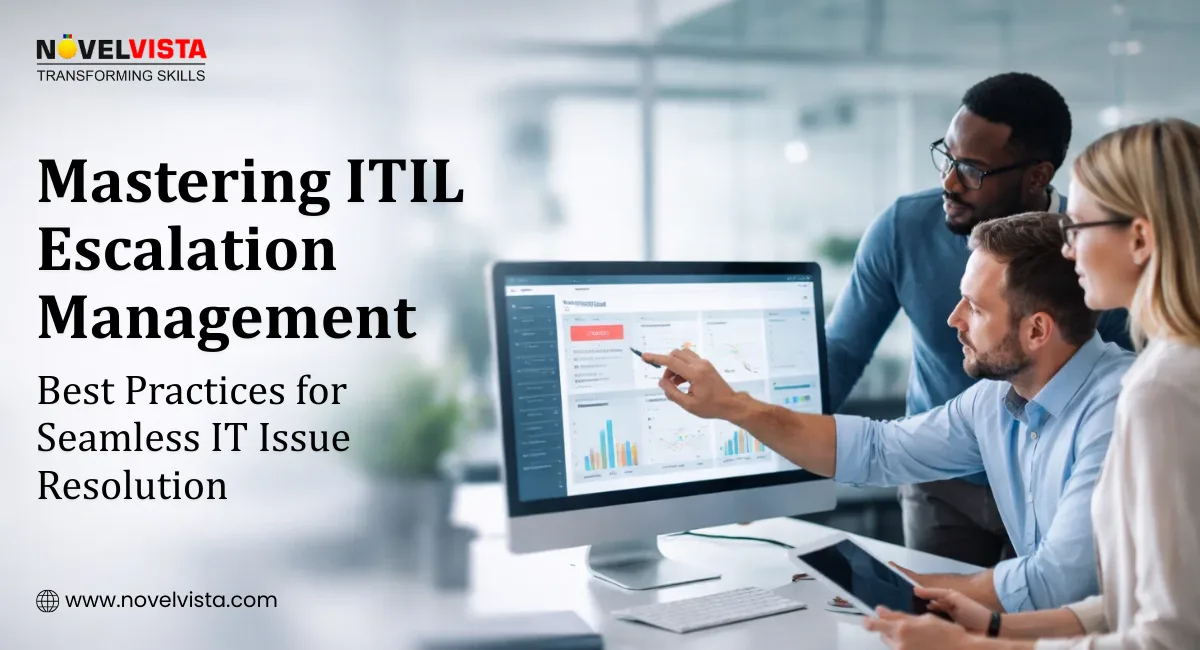
Did you know that nearly 70% of IT service delays are caused by inefficient escalation processes, and organizations lose thousands of dollars per minute during critical downtime? In today’s always-on digital environment, even a minor delay in resolving IT incidents can snowball into major business disruptions.
So, how do high-performing IT teams ensure that issues are resolved quickly, efficiently, and without chaos?
The answer lies in Escalation Management ITIL.
Whether you're a service desk analyst, IT manager, or part of an ITSM team, understanding ITIL Escalation Management is essential. It ensures that the right issues reach the right people at the right time without unnecessary delays or confusion.
In this blog, you’ll learn how to master Escalation Management ITIL, explore best practices, and build a system that drives seamless IT issue resolution.
ITIL Escalation Management refers to the structured process of transferring unresolved incidents or service requests to higher levels of expertise or authority to ensure timely resolution.
Within the ITIL framework, escalation plays a crucial role in incident management, ensuring that no issue remains unresolved due to limitations in knowledge, authority, or time.
There are two main types of escalation in Escalation Management ITIL:
By implementing effective ITIL Escalation Management, organizations can avoid bottlenecks and maintain service continuity.
In modern IT environments, complexity is growing rapidly—cloud infrastructure, distributed systems, and hybrid workplaces all add layers of challenges.
Without proper Escalation Management ITIL, teams often face:
On the other hand, a well-defined ITIL Escalation Management process ensures:
Simply put, Escalation Management ITIL is not just an operational necessity—it’s a strategic advantage.
Understanding escalation types is key to mastering ITIL Escalation Management.
This occurs when an issue requires deeper technical expertise.
Example:
A Level 1 support agent cannot resolve a server outage, so the issue is escalated to a Level 2 or Level 3 technical team.
This type of escalation ensures that complex issues are handled by specialists, improving resolution efficiency.
This involves escalating issues to higher management levels based on urgency or business impact.
Example:
If a critical system outage impacts customers, the issue may be escalated to IT managers or senior leadership.
Hierarchical escalation in escalation management ITIL ensures faster decision-making and resource allocation.
To build a strong escalation management ITIL process, organizations must focus on key foundational elements:
Service Level Agreements (SLAs) and Operational Level Agreements (OLAs) define response and resolution timelines, ensuring accountability.
A well-documented escalation matrix outlines:
Modern ITSM tools automate escalation triggers based on predefined conditions, reducing manual delays.
Clear communication ensures all stakeholders are informed during escalations, minimizing confusion.
Together, these components create a robust ITIL escalation management framework. Explore the ITIL (Version 5) Certification Path to build structured ITSM expertise and accelerate your career growth.
To truly excel in Escalation Management ITIL, organizations must go beyond theory and implement proven best practices.
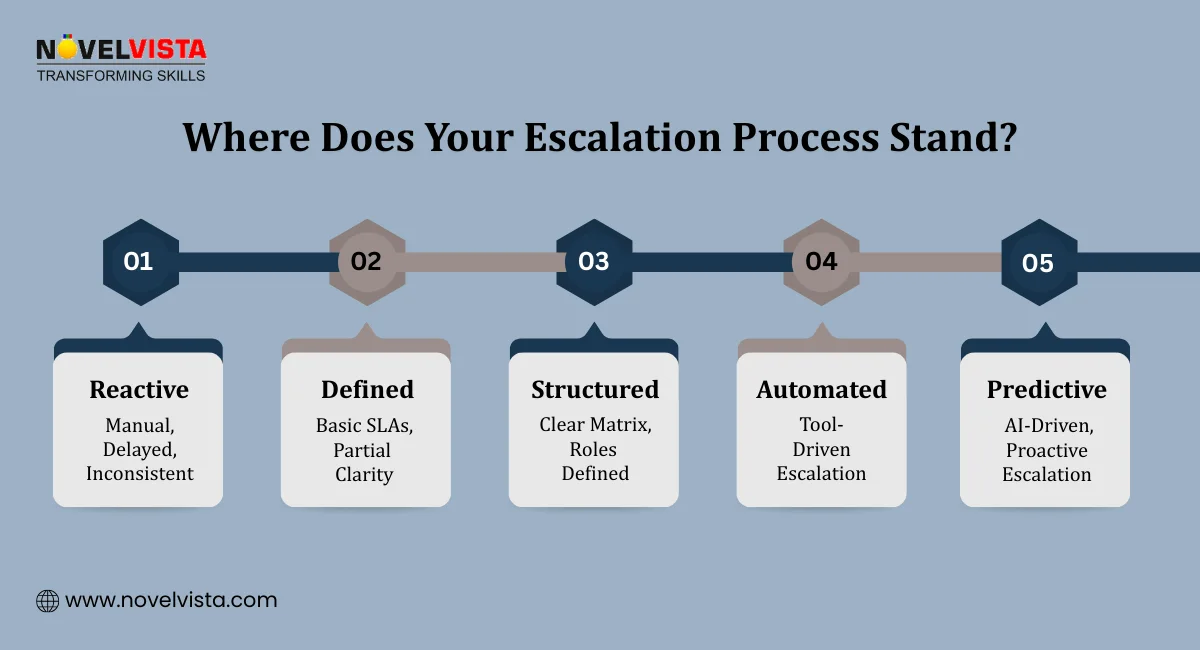
Set specific conditions for escalation, such as:
Automation reduces human error and ensures timely escalation. Tools can trigger alerts when SLAs are at risk.
Ensure that support teams understand:
Keep all stakeholders informed throughout the escalation process to build trust and accountability.
Regularly review escalation data to identify patterns and optimize processes.
Implementing these practices strengthens your ITIL escalation management strategy and enhances service delivery.
Even with a structured approach, organizations often face challenges in escalation management ITIL:
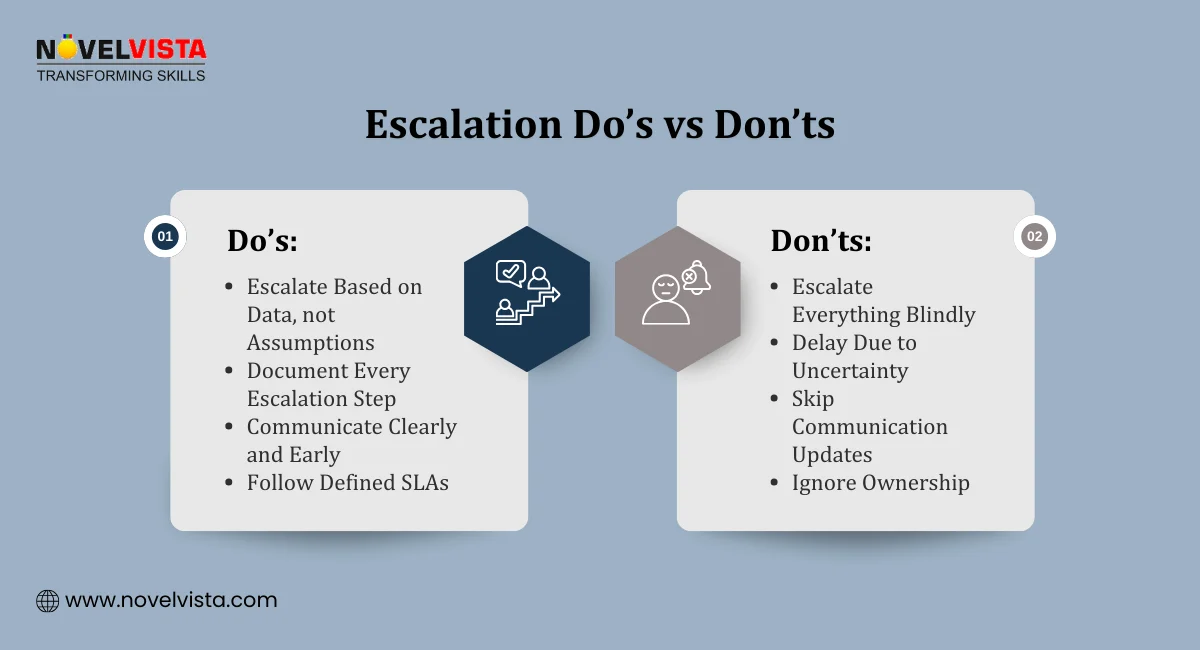
Teams often hesitate or delay escalating issues due to uncertainty or unclear processes. This delay can significantly prolong outages, increase resolution time, and put service commitments at risk.
When responsibilities are unclear, issues often get passed between teams without clear accountability. This results in delays, confusion, and slower resolution times, ultimately impacting service quality and user satisfaction.
Poor communication between teams can lead to misunderstandings and lack of clarity during critical situations. This often slows down decision-making, causes duplication of efforts, and delays overall issue resolution.
Outdated or poorly configured tools can lack automation, real-time alerts, and proper tracking capabilities. This makes it harder to identify, prioritize, and escalate issues efficiently, leading to delays and reduced visibility across teams.
Addressing these challenges is critical for optimizing ITIL escalation management.
Modern IT environments rely heavily on tools to support Escalation Management ITIL.
These tools offer features like:
AI-powered systems can predict potential incidents and trigger proactive escalations, reducing downtime.
Tools like monitoring dashboards and alerting platforms ensure issues are identified and escalated instantly.
Leveraging technology enhances the efficiency of ITIL escalation management.
To ensure continuous improvement, organizations must track performance metrics related to escalation management in ITIL.
Analyzing these metrics helps identify bottlenecks and improve escalation strategies.
In a world where every second of downtime directly impacts revenue, reputation, and customer trust, organizations can no longer afford inefficiencies in incident handling. The difference between average and high-performing IT teams often comes down to how quickly and effectively they respond when things go wrong.
Mastering Escalation Management ITIL (Version 5) empowers teams to move with clarity, speed, and confidence, ensuring that critical issues reach the right expertise without delay. It transforms chaos into control, replacing reactive firefighting with structured, outcome-driven resolution. Get familiar with the ITIL Foundation (Version 5) Exam Syllabus to understand key concepts, structure, and topics required to pass with confidence.
By establishing clear escalation paths, leveraging automation, and continuously refining processes, ITIL Escalation Management becomes more than just an operational function it becomes a strategic enabler of business continuity and service excellence.
Ultimately, organizations that invest in Escalation Management ITIL don’t just resolve incidents faster they build resilient systems, stronger customer trust, and a competitive edge in an always-on digital world.

Ready to elevate your IT service management expertise?
Join NovelVista’s ITIL 5 Foundation Certification Training and gain practical knowledge of modern ITSM practices, real-world incident and escalation handling, and globally recognized credentials. Designed for service desk professionals, IT managers, and aspiring ITSM leaders, this course empowers you to manage services efficiently and drive operational excellence in today’s fast-paced digital environment.
Start your ITIL 5 journey today!
Author Details

Course Related To This blog
ITIL V5 Foundation
Confused About Certification?
Get Free Consultation Call
Stay ahead of the curve by tapping into the latest emerging trends and transforming your subscription into a powerful resource. Maximize every feature, unlock exclusive benefits, and ensure you're always one step ahead in your journey to success.