Category | IT Service Management
Last Updated On 05/06/2026
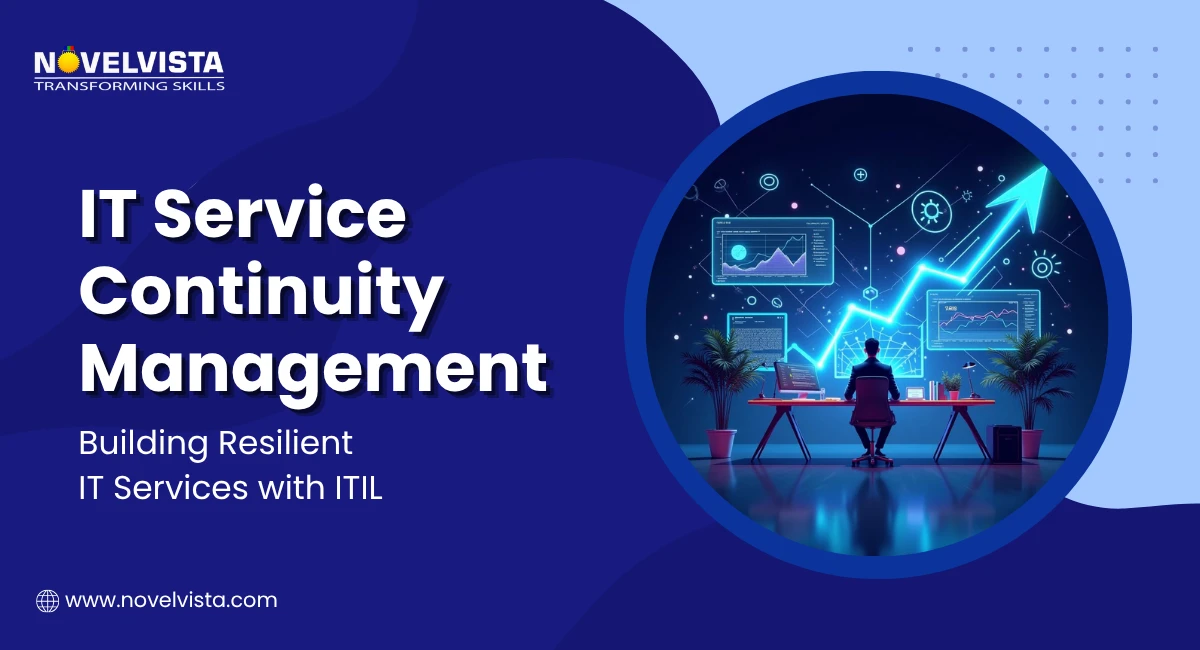
Modern businesses operate in an environment where digital services are no longer just supporting functions, they are the backbone of operations. Whether it is online banking, e-commerce transactions, healthcare systems, cloud applications, or customer support platforms, organizations depend heavily on uninterrupted IT services.
The challenge is that disruptions are inevitable. Cyberattacks, system failures, natural disasters, human errors, and third-party outages can occur at any time. According to industry reports, the average cost of IT downtime can range from thousands to millions of dollars per hour, depending on the size and nature of the organization. Beyond financial losses, downtime can damage customer trust, impact compliance requirements, and weaken competitive positioning.
This raises several important questions:
The answer lies in IT Service Continuity Management.
By implementing a structured IT Service Continuity Plan and aligning with ITIL Service Continuity Management practices, organizations can prepare for disruptions, minimize service interruptions, and maintain business operations even during challenging situations.
IT disruptions can impact revenue, customer trust, and business operations within minutes. In this blog, you'll learn how IT Service Continuity Management helps organizations prepare for disruptions, recover critical services quickly, and build long-term resilience using ITIL Service Continuity Management best practices.
Topic | Summary |
| IT Service Continuity Management | Keeps critical IT services running during disruptions. |
| ITIL's Role | Provides a structured approach to service resilience and recovery. |
| IT Service Continuity Plan | Defines recovery strategies, risks, and response procedures. |
| Benefits | Reduces downtime, improves resilience, and protects business operations. |
| Key Takeaway | Preparation and continuous testing are essential for business continuity. |
IT Service Continuity Management (ITSCM) is the practice of ensuring that IT services can continue operating or be restored within agreed timelines following a disruption.
The primary goal of IT Service Continuity Management is to support overall business continuity by protecting critical IT services and reducing the impact of unexpected events.
Rather than focusing only on recovering technology infrastructure, ITSCM emphasizes maintaining business-critical services that enable organizational operations.
A well-designed IT Service Continuity Plan ensures that organizations are prepared before an incident occurs rather than reacting after the damage is done.
Organizations today face an increasingly complex risk landscape. Digital transformation has introduced new technologies, cloud dependencies, and interconnected systems that can create additional points of failure.
Common threats include:
Threat Type | Potential Impact |
| Cyberattacks | Service outages, data breaches |
| Hardware Failures | Application downtime |
| Natural Disasters | Infrastructure disruption |
| Human Errors | Service interruptions |
| Vendor Failures | Dependency-related outages |
| Network Issues | Reduced service availability |
Without proper IT Service Continuity practices, even minor incidents can escalate into major business disruptions.
For example, if an online retailer experiences a payment system outage during peak sales hours, the consequences extend beyond lost revenue. Customer trust, brand reputation, and future sales opportunities may also be affected.
This is why modern organizations view IT Service Continuity Management as a strategic capability rather than merely a technical process.
ITIL Service Continuity Management provides a structured framework for planning, implementing, and maintaining continuity capabilities within IT services.
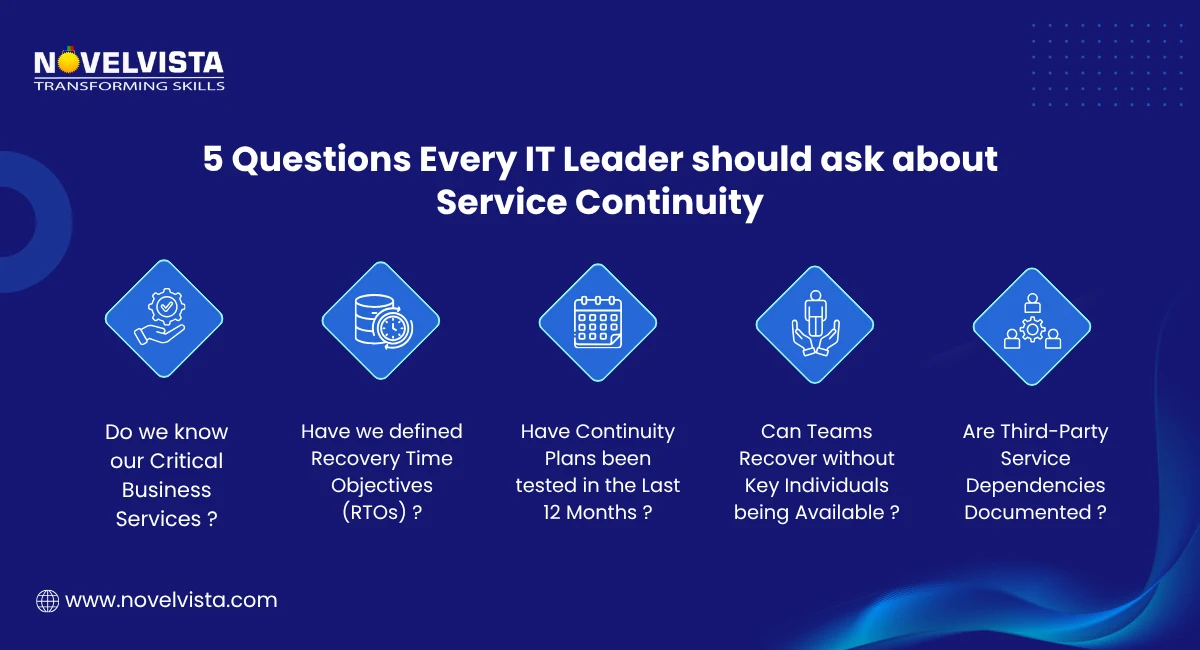
Within the ITIL framework, continuity management aligns IT service recovery objectives with business continuity requirements. The focus is on ensuring that technology services support organizational resilience goals.
For professionals looking to implement continuity and resilience practices effectively, understanding the broader ITIL framework is equally important. Reviewing the ITIL 5 Exam Syllabus can provide valuable insight into the core concepts, service management principles, and practices that support IT Service Continuity Management across modern organizations.
| Focus Area | Purpose |
| Risk Assessment | Identify potential threats |
| Business Impact Analysis | Determine critical services |
| Recovery Planning | Define restoration strategies |
| Testing and Validation | Verify plan effectiveness |
| Continuous Improvement | Enhance resilience over time |
By integrating ITIL Service Continuity principles into organizational processes, businesses can establish repeatable and measurable continuity practices.
An effective IT Service Continuity Plan contains several essential elements that work together to protect services during disruptions.
Business Impact Analysis identifies critical services and evaluates the consequences of service interruptions.
It helps answer questions such as:
The results guide recovery priorities and resource allocation.
Organizations must understand the threats that could affect service availability.
Risk assessment evaluates:
This analysis helps organizations implement preventive controls before incidents occur.
Recovery objectives define acceptable service recovery targets.
Common metrics include:
Metric | Definition |
RTO (Recovery Time Objective) | Maximum acceptable downtime |
RPO (Recovery Point Objective) | Maximum acceptable data loss |
MTD (Maximum Tolerable Downtime) | Longest allowable disruption |
These metrics form the foundation of continuity planning.
Recovery strategies outline how services will be restored.
Examples include:
The chosen strategy depends on business requirements and risk tolerance.
During a disruption, effective communication is critical.
Communication plans should define:
Clear communication reduces confusion and improves response effectiveness.
Implementing IT Service Continuity Management provides significant business and operational advantages.
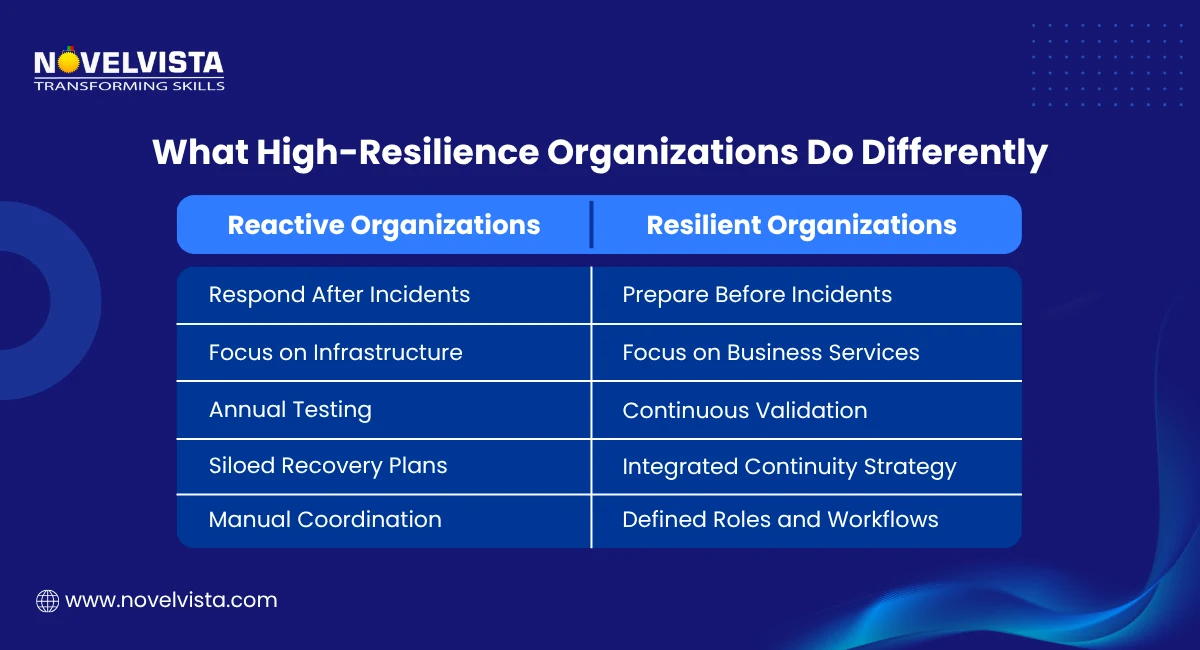
Continuity planning helps organizations recover services faster, reducing operational disruption.
Customers expect reliable services. Consistent availability strengthens confidence and brand reputation.
Many industries require continuity planning as part of compliance frameworks and governance requirements.
Organizations gain visibility into potential threats and can proactively mitigate risks.
Effective continuity planning enables organizations to adapt and recover more efficiently from disruptions.
ITIL Service Continuity Management ensures that IT priorities support overall business objectives.
Building a successful continuity program requires a structured approach.
Determine which services are essential for business operations.
Prioritize services based on:
Analyze threats and vulnerabilities that could affect service availability.
Document findings and prioritize risks based on likelihood and impact.
Establish recovery objectives and performance expectations.
Ensure recovery targets align with business requirements.
Create detailed procedures for:
The IT Service Continuity Plan should be documented, accessible, and regularly updated.
Plans should never remain theoretical.
Organizations should conduct:
Testing reveals weaknesses before real incidents occur.
Continuity management is an ongoing process.
Regular reviews help organizations:
Despite its importance, many organizations struggle with continuity planning.
Without leadership involvement, continuity initiatives often lack resources and strategic alignment.
Failing to identify critical threats can create significant gaps in preparedness.
Continuity plans become ineffective when they do not reflect current infrastructure and business processes.
Many organizations develop plans but rarely validate them through realistic exercises.
Modern IT environments involve cloud providers, vendors, and interconnected systems that increase continuity challenges.
Addressing these issues requires a culture of resilience supported by leadership, governance, and continuous improvement.
As organizations continue adopting cloud computing, artificial intelligence, automation, and hybrid work models, continuity strategies must evolve accordingly.
Emerging trends include:
Organizations that embrace these innovations will be better positioned to maintain service reliability in increasingly complex environments.
The future of IT Service Continuity Management is not just about recovery it is about building systems and processes that can withstand disruption while maintaining business value.
In an era where digital services directly influence customer experience, revenue generation, and operational performance, IT Service Continuity Management has become a business necessity rather than an optional practice. By implementing a comprehensive IT Service Continuity Plan, conducting regular risk assessments, defining recovery objectives, and aligning with ITIL Service Continuity Management principles, organizations can significantly improve resilience and reduce the impact of unexpected disruptions.
Strong ITIL Service Continuity practices enable businesses to maintain service availability, protect critical operations, and recover efficiently when incidents occur. As technology environments continue to evolve, organizations that invest in continuity capabilities will be better prepared to navigate uncertainty and sustain long-term success.

As organizations increasingly prioritize service resilience and business continuity, many professionals consider formal ITIL certification to strengthen their knowledge and career prospects. Before planning your certification journey, it can be helpful to understand the ITIL 5 Cost, including training, examination, and certification-related investments. For professionals looking to strengthen their understanding of ITIL best practices and service resilience,
you can enroll in NovelVista’s ITIL 5 Foundation.
Author Details

Course Related To This blog
ITIL4 Specialist Monitor Support and Fulfil Certification
ITIL4 Specialist Acquiring & Managing Cloud Services
ITIL 4 Specialist Sustainability in Digital & IT
ITIL® 4 Strategic Leader Digital And IT Strategy (DITS)
ITIL® 4 Specialist Drive Stakeholder Value
ITIL® 4 Specialist High Velocity IT
ITIL® 4 Managing Professional Course
ITIL® 4 Strategist Direct, Plan & Improve
ITIL® 4 Specialist Create Deliver & Support
ITIL® 4 Foundation Certification
Confused About Certification?
Get Free Consultation Call
Stay ahead of the curve by tapping into the latest emerging trends and transforming your subscription into a powerful resource. Maximize every feature, unlock exclusive benefits, and ensure you're always one step ahead in your journey to success.