Category | IT Service Management
Last Updated On 04/08/2026
Modern IT environments are under constant pressure to deliver faster, more reliable, and more value-driven services. Yet, despite massive investments in digital initiatives, studies show that nearly 70% of transformation programs fail to achieve their intended outcomes due to unclear strategy, poor execution, or lack of alignment between IT and business goals.
This is where the ITIL Transformation Model in ITIL (Version 5) becomes critical. It is designed not just to manage change, but to ensure that transformation delivers measurable business value, reduces operational risk, and improves service outcomes.
But before diving deeper, let’s address a few simple questions:
Who is this module really for?
Why does transformation need a structured model?
And how does ITIL (Version 5) make it different from traditional ITIL frameworks?
In this blog, we explore the ITIL Transformation Module in ITIL (Version 5) and understand how it enables organizations to manage complex digital change effectively. You’ll learn why traditional transformation efforts often fail and how ITIL (Version 5) introduces a structured, value-driven approach to solve this challenge. The blog breaks down the ITIL Transformation Model, ITIL Transformation Patterns, and ITIL transformation strategy in a simple, practical way. It also explains real-world applications, benefits, and how this module helps IT teams become strategic drivers of business value.
| Area | Key Insight |
| Purpose | Enables structured, value-driven digital transformation |
| Core Idea | Align IT change with business outcomes and continuous improvement |
| Frameworks | ITIL Transformation Model, Patterns, and transformation strategy |
| Model Structure | Governance, Positioning, Execution, Learning layers |
| Patterns | Initiation, Governance, Execution approaches based on context |
| Strategy Focus | Business alignment, KPIs, and value delivery |
| Key Benefits | Better agility, lower failure rates, improved risk control, clear value |
| Outcome | IT evolves into a strategic driver of business growth |
The ITIL Transformation Module in ITIL (Version 5) is a structured framework that guides organizations through end-to-end change initiatives. Unlike traditional ITIL versions that focused heavily on processes, ITIL (Version 5) emphasizes value-driven transformation, adaptability, and AI-enabled decision-making.
This module helps organizations answer a critical question:
“How do we move from our current IT state to a future-ready, value-centric digital enterprise?”
To solve this, the ITIL (Version 5) Transformation Module introduces a holistic approach that combines governance, execution, and continuous learning.
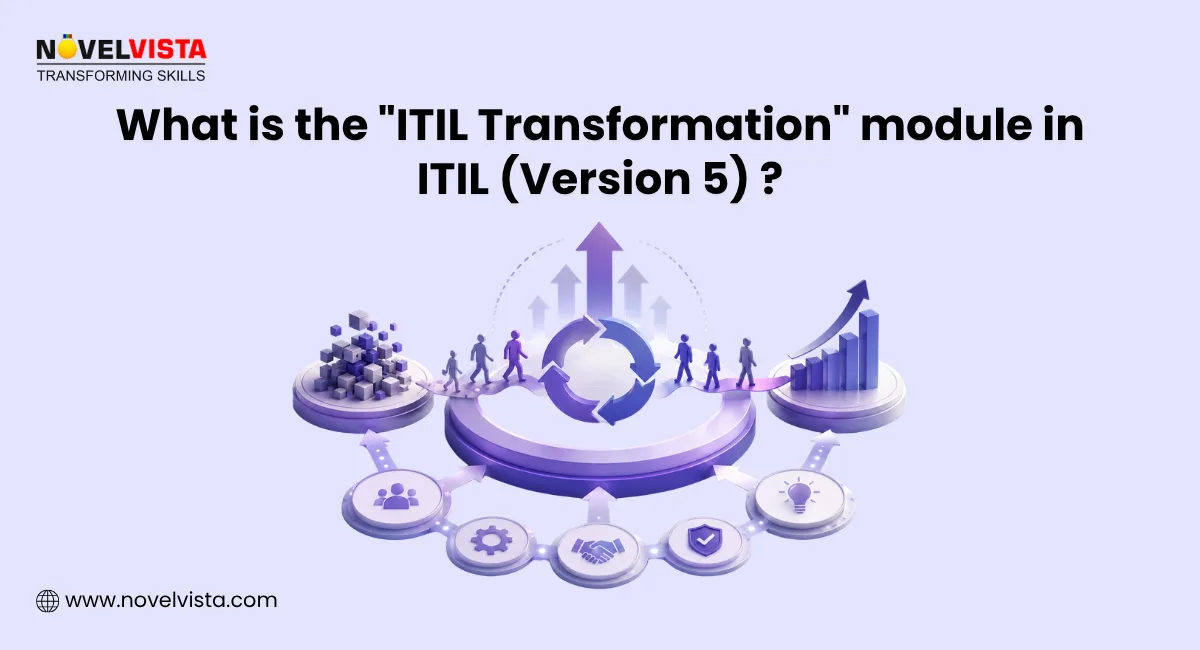
The ITIL Transformation Model in ITIL (Version 5) is designed around four key layers that work together to ensure structured and sustainable transformation. It is not theoretical it is designed to guide decision-making in complex, multi-team enterprise environments.
This layer focuses on initiating and controlling transformation efforts. It ensures alignment between business strategy and IT execution.
Key activities include:
This layer defines where the organization stands today and where it wants to go.
It includes:
This is the operational heart of the transformation model. It typically follows five structured phases:
This final layer ensures transformation is not static. It enables continuous improvement by:
This cyclical approach makes the ITIL (Version 5) Transformation highly adaptive in dynamic IT environments.
One of the most powerful aspects of the framework is the use of ITIL Transformation Patterns. These patterns help organizations apply the right transformation approach based on context and complexity. These patterns are derived from enterprise transformation best practices observed across large-scale ITIL adoption programs.
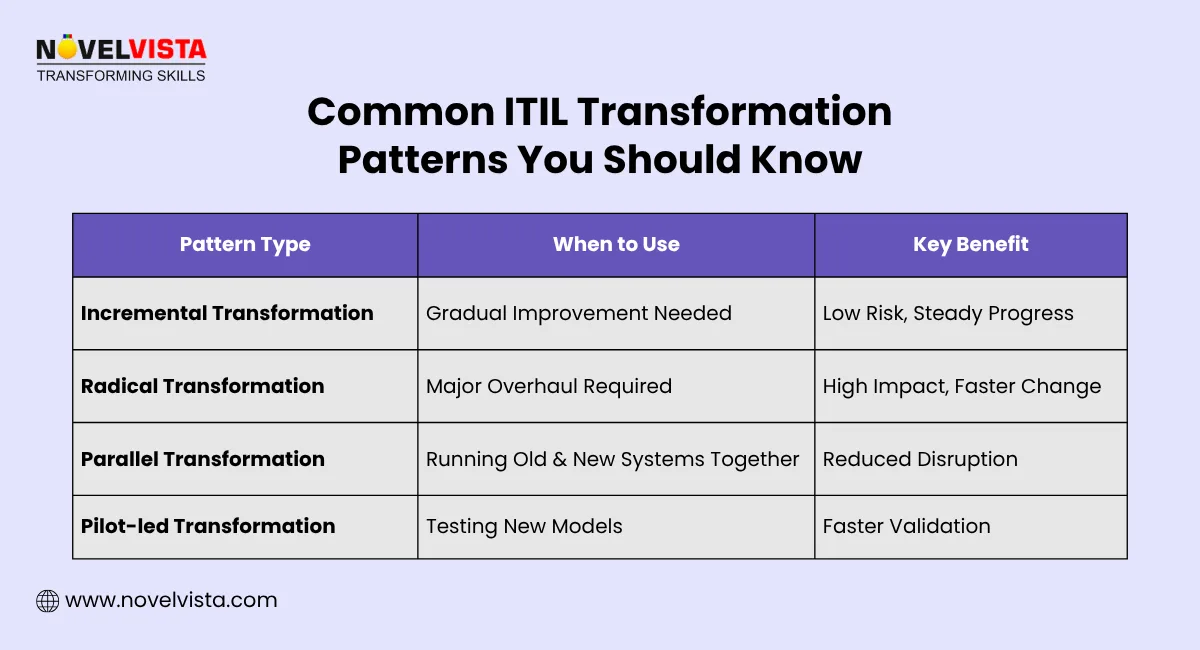
These define how transformation begins:
These ensure transformation stays aligned with enterprise strategy:
These guide how transformation is implemented:
The strength of ITIL Transformation Patterns lies in their flexibility—no single approach fits all organizations.
Unlike traditional IT strategies, the ITIL transformation strategy focuses heavily on value delivery rather than just process optimization.
It ensures that every transformation decision contributes directly to business growth, customer satisfaction, and operational efficiency.
The ITIL (Version 5) Transformation Model introduces several modern enhancements that make it relevant for today’s digital enterprises.
Every initiative is tied to measurable business outcomes rather than isolated IT improvements.
The model adapts based on organizational maturity, culture, and urgency.
AI plays a key role in:
Transformation is treated as an ongoing process, not a one-time project.
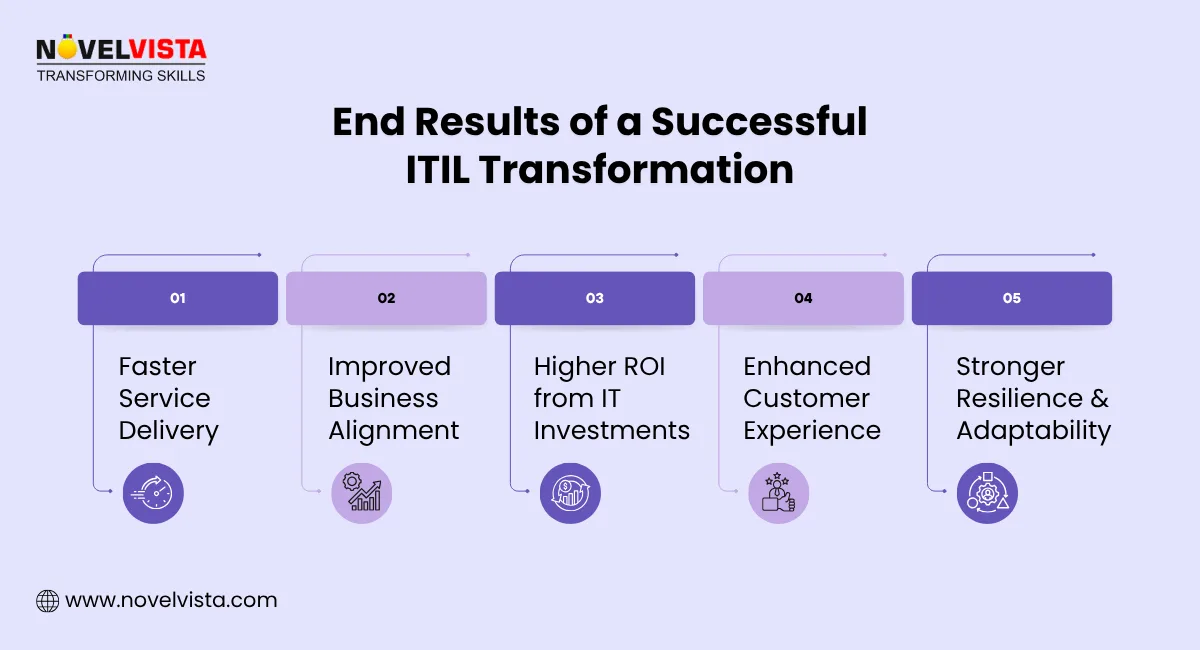
Implementing the ITIL Transformation Module in ITIL (Version 5) offers significant advantages:
Reduced Transformation Failure Rates
By using structured ITIL Transformation Patterns, organizations avoid common pitfalls like misalignment and scope creep. These patterns provide a clear roadmap that aligns transformation efforts with business priorities. As a result, teams reduce ambiguity and execute change initiatives with greater consistency and control.
Improved Agility
The module enables faster adaptation to market changes and technological disruptions. It allows organizations to respond quickly by using flexible transformation approaches instead of rigid processes. This ensures IT systems and services remain relevant in rapidly evolving digital environments.
Clear Business Value Delivery
Every transformation initiative is measured against defined business outcomes. This ensures IT investments are directly linked to tangible organizational benefits such as cost savings, efficiency, or customer satisfaction. It also helps leadership track ROI more effectively.
Better Risk Management
Governance structures ensure risks are identified and mitigated early. The ITIL transformation approach integrates risk assessment at every stage of the lifecycle. This reduces the chances of project failure and improves overall stability during change execution.
Enhanced Collaboration
Cross-functional alignment improves communication between IT and business teams. It breaks down silos and encourages shared ownership of transformation goals. This leads to smoother execution and better decision-making across the organization.
Consider a global enterprise modernizing its IT operations using the ITIL Transformation Module in ITIL (Version 5). They begin with a governance framework to align leadership goals. Next, they assess current IT capabilities and identify gaps in service delivery. For professionals looking to apply these concepts in real-world scenarios, NovelVista’s ITIL Transformation Certification offers a practical pathway to master the ITIL Transformation Model, patterns, and strategy within modern enterprise environments.
Using ITIL Transformation Patterns, they choose an incremental execution module. AI tools are integrated to automate incident detection, reducing downtime by 40%.
Finally, continuous learning cycles help refine the system, ensuring ongoing improvements in performance and reliability.
The ITIL Transformation Module in ITIL (Version 5) goes far beyond being a structured framework; it acts as a strategic foundation for organizations navigating complex digital change. It brings clarity, direction, and consistency to transformation initiatives that would otherwise be fragmented or risk-prone.
By integrating the ITIL Transformation, well-defined ITIL Transformation Patterns, and a focused ITIL transformation strategy, organizations are able to move from reactive change management to proactive, value-driven transformation. This alignment ensures that every initiative is tied directly to measurable business outcomes and long-term enterprise goals.
In today’s environment shaped by AI, automation, and rapid technological disruption, this module plays a critical role in ensuring that IT is no longer just a support function. Instead, it becomes a core driver of innovation, resilience, and competitive advantage.
For professionals, mastering the ITIL (Version 5) Transformation is more than a certification goal; it is a pathway to becoming a strategic leader in modern IT service management and digital transformation.

Join NovelVista’s ITIL (Version 5) Foundation Certification Training and build a strong understanding of modern ITIL practices, transformation frameworks, and value-driven service delivery. Gain practical insights, globally recognized certification, and the confidence to lead IT transformation initiatives in today’s fast-evolving digital landscape.
Start your ITIL transformation journey today!
Author Details

Course Related To This blog
ITIL® 4 Foundation Certification
ITIL V5 Foundation
Confused About Certification?
Get Free Consultation Call
Stay ahead of the curve by tapping into the latest emerging trends and transforming your subscription into a powerful resource. Maximize every feature, unlock exclusive benefits, and ensure you're always one step ahead in your journey to success.