Category | IT Service Management
Last Updated On 01/06/2026
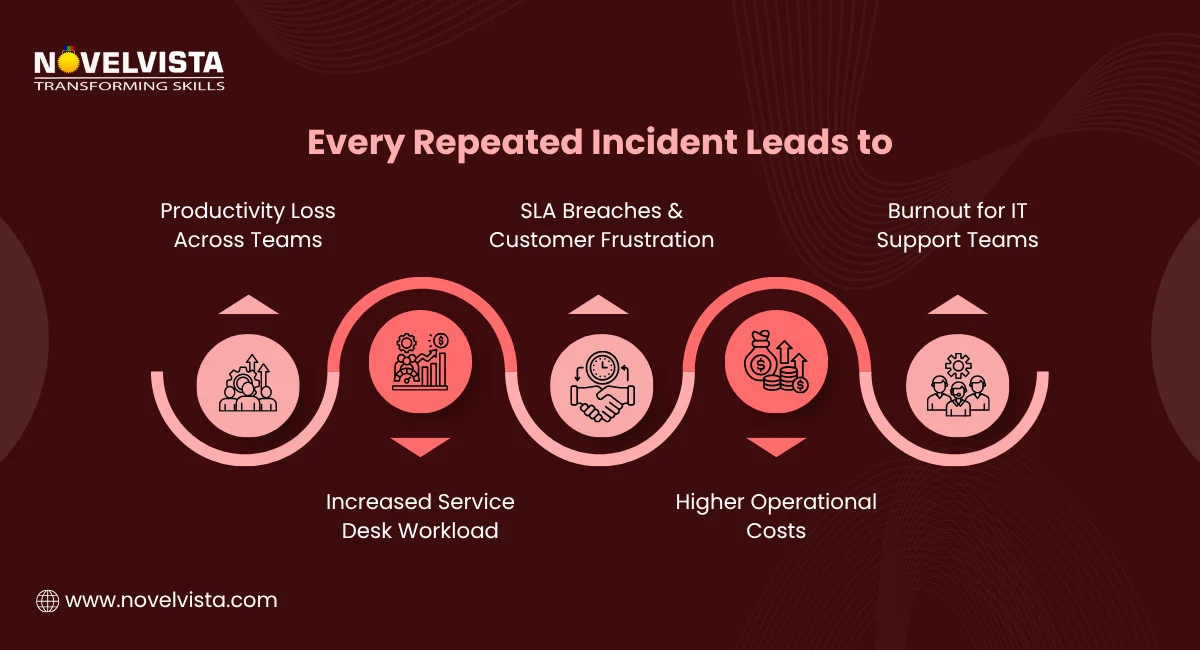
In today’s digital-first business environment, IT downtime is more than just a technical issue. According to recent industry reports, organizations lose thousands of dollars per minute during major IT outages. From banking systems crashing during peak transactions to e-commerce platforms slowing down during festive sales, recurring incidents can directly impact customer trust, employee productivity, and revenue.
But have you ever wondered why the same incidents keep returning even after being fixed multiple times? Why do IT teams often spend more time firefighting issues rather than preventing them? This is exactly where ITIL Problem Management becomes critical.
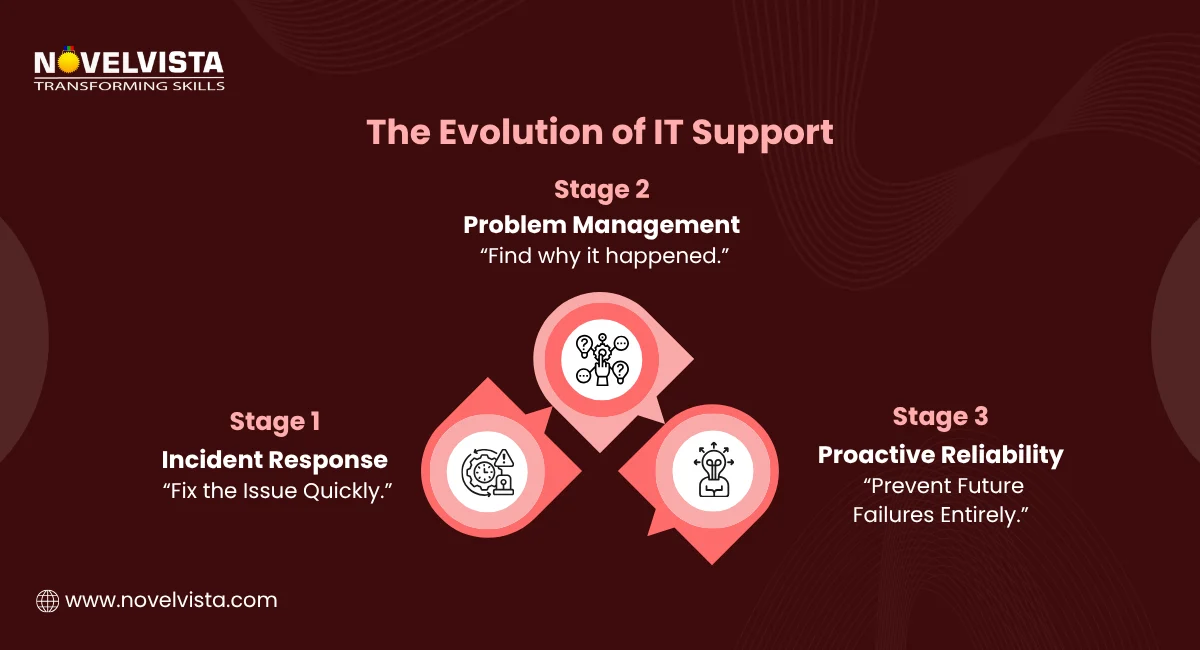
ITIL Problem Management is an IT service management practice designed to identify the root causes of incidents, eliminate recurring disruptions, and manage workarounds. While Incident Management restores service, Problem Management identifies why the issue happened, preventing future failures and reducing business downtime.
Organizations implementing a strong ITIL Problem Management Process often experience fewer recurring incidents, faster issue resolution, improved service availability, and better operational efficiency. Whether you are an IT manager, service desk analyst, DevOps engineer, or ITSM professional, understanding Problem Management ITIL practices can help you create more stable and reliable IT environments.
In this blog, we will explore what ITIL Problem Management is and why it plays a critical role in reducing recurring IT failures and business downtime. You will understand the difference between Incident Management and Problem Management, learn how the ITIL Problem Management Process works, and discover the importance of proactive root cause analysis. We will also cover key concepts like Known Errors, workarounds, Problem Management best practices, and how organizations can improve service stability through effective ITSM practices.
TL:DR
| Topic | What You’ll Learn |
| ITIL Problem Management | Understanding root cause analysis and recurring issue prevention |
| Incident vs Problem | Key differences between incidents and underlying problems |
| Process Flow | Identification, analysis, and resolution stages |
| Reactive vs Proactive | How organizations prevent future disruptions |
| Best Practices | Tips to improve service stability and reduce downtime |
| Benefits | Improved reliability, productivity, and operational efficiency |
Problem Management is a core ITIL practice focused on identifying and removing the root causes of incidents. Instead of simply restoring services temporarily, the goal is to ensure the same issue does not repeatedly impact users or business operations.
In simple terms:
Term | Meaning |
| Incident | An unplanned interruption to a service |
| Problem | The underlying root cause of one or more incidents |
| Workaround | A temporary fix that reduces the impact of incidents |
| Known Error | A documented problem with an identified root cause and workaround |
For example:
The ITIL Problem Management Process helps organizations move from reactive support to proactive service improvement.
Many organizations focus heavily on incident resolution but ignore root cause analysis. This creates a cycle where the same incidents repeatedly occur, increasing operational costs and user frustration.
Here are some reasons why ITIL Problem Management is important:
The biggest advantage of Problem Management ITIL is that it prevents the same failures from happening repeatedly. Instead of treating symptoms, teams resolve the actual cause.
Frequent outages impact customer experience and productivity. Effective ITIL Problem Management ensures more stable and reliable IT services.
Every minute of downtime affects operations. By proactively identifying issues, organizations minimize disruptions and improve business continuity.
Without proper Problem Management, support teams spend excessive time handling repetitive tickets. Root cause elimination frees resources for innovation and optimization.
The ITIL Problem Management Process Flow supports continual service improvement by identifying weaknesses in infrastructure, processes, and configurations.
If you are planning to build a strong understanding of IT service management practices like Incident, Change, and Problem Management, exploring the ITIL 5 Foundation Exam Syllabus can help you understand the core concepts, modules, and certification structure in detail.
To understand the ITIL Problem Management Process, it is important to know the following core concepts.
Many professionals confuse incidents with problems.
Incident Management | Problem Management |
| Focuses on restoring service quickly | Focuses on identifying root causes |
| Reactive in nature | Reactive and proactive |
| Short-term resolution | Long-term prevention |
| Example: Restarting a server | Example: Identifying faulty hardware causing crashes |
Incident Management ensures users can continue working, while Problem Management ensures the issue does not happen again.
A workaround is a temporary solution used until a permanent fix becomes available.
Examples include:
Workarounds reduce immediate impact while investigation continues.
A Known Error is a problem where:
Known Errors are stored in a Known Error Database (KEDB) so support teams can quickly resolve recurring incidents.
The ITIL Problem Management Process operates across a structured lifecycle designed to manage both existing and future threats.
| Phase | Purpose |
| Problem Identification | Detect recurring or significant issues |
| Problem Analysis | Identify root causes and document workarounds |
| Problem Resolution | Implement permanent fixes and close records |
The first stage of the ITIL Problem Management Process is identifying underlying problems.
Problems can be detected through:
For example, if multiple users report slow application performance every Monday morning, the IT team may identify a deeper infrastructure issue.
Problem records are then created with:
Proper prioritization is essential because not all problems require immediate investigation.
This phase focuses on identifying the root cause of the issue.
Several root cause analysis methods are commonly used in Problem Management ITIL:
| Technique | Purpose |
| 5 Whys | Identify cause by repeatedly asking “why” |
| Fishbone Diagram | Analyze contributing factors |
| Kepner-Tregoe Analysis | Structured troubleshooting approach |
| Fault Tree Analysis | Visualize possible failure paths |
For example:
Problem: Database outage
During this stage:
The focus is on long-term prevention rather than temporary restoration.
Once the root cause is identified, teams implement a permanent solution.
This may include:
The resolution often requires Change Enablement approval to minimize risk during implementation.
After successful deployment:
This final stage closes the ITIL Problem Management Process Flow effectively.
An effective Problem Management strategy combines both reactive and proactive approaches.
Reactive Problem Management begins after incidents occur.
The IT team:
Example:
Users continuously report VPN disconnects. Investigation reveals outdated firewall firmware causing instability.
Reactive management helps eliminate already existing problems.
Proactive Problem Management identifies risks before incidents happen.
This involves:
Example:
An organization notices increasing server memory utilization trends and upgrades resources before outages occur.
Proactive Problem Management significantly improves IT reliability and reduces future incidents.
Many organizations struggle to differentiate these practices.
Here is a simple comparison:
Feature | Incident Management | Problem Management |
| Objective | Restore services quickly | Remove root causes |
| Focus | Immediate issue | Underlying problem |
| Approach | Reactive | Reactive & proactive |
| Outcome | Service restored | Future incidents prevented |
| Goal | Minimize downtime | Improve service stability |
Both practices work together within IT service management frameworks.
Problem Management and Change Management are closely connected.
Once a root cause is identified, organizations often require:
These changes must pass through Change Enablement processes to:
Without proper change control, even good fixes can create additional incidents.
Knowledge Management supports ITIL Problem Management by documenting:
This creates a reusable knowledge base that helps support teams resolve incidents faster.
Benefits include:
Service Request Management handles routine user requests like:
Problem Management focuses on non-standard operational failures.
However, both practices contribute to improved service delivery and user satisfaction.
Organizations implementing a mature ITIL Problem Management Process experience several operational advantages.
Benefit | Impact |
| Reduced recurring incidents | Fewer disruptions |
| Faster incident resolution | Better productivity |
| Improved service stability | Higher customer satisfaction |
| Lower operational costs | Reduced firefighting effort |
| Better root cause visibility | Improved decision-making |
| Enhanced team collaboration | Faster troubleshooting |
Problem Management strengthens overall IT governance and service quality.
To maximize the value of Problem Management ITIL practices, organizations should follow proven best practices.
Not every issue requires immediate root cause analysis. Focus on:
Documenting Known Errors and workarounds helps teams resolve incidents more efficiently.
A well-maintained KEDB reduces duplicate troubleshooting efforts.
Analyze:
Data-driven insights help identify hidden risks proactively.
Root cause analysis often requires multiple teams including:
Collaboration improves investigation quality and solution accuracy.
Modern IT environments are highly complex. Automated monitoring tools help detect:
Automation supports proactive Problem Management.
Organizations adopting DevOps practices should align Problem Management with:
This creates faster feedback loops and more resilient systems.
Despite its benefits, organizations often face challenges such as:
Challenge | Impact |
| Lack of root cause analysis skills | Incomplete investigations |
| Poor documentation | Repeated troubleshooting |
| Limited collaboration | Delayed resolutions |
| Reactive culture | Constant firefighting |
| Tool limitations | Poor visibility into problems |
Addressing these challenges requires process maturity, training, and leadership support.
As IT environments become more digital and cloud-driven, Problem Management is evolving rapidly.
Emerging trends include:
Organizations adopting intelligent Problem Management strategies can reduce outages significantly and improve service resilience. As organizations continue adopting advanced ITSM and AI-driven service management practices, professionals looking to grow their expertise should also explore the ITIL 5 Path Explained guide to understand the certification roadmap, career progression, and specialized ITIL learning tracks.
ITIL Problem Management is no longer optional for organizations aiming to deliver stable, efficient, and reliable IT services. Instead of continuously reacting to recurring incidents, businesses must focus on identifying root causes, implementing permanent fixes, and preventing future disruptions.
By understanding what is Problem Management in ITIL, following the ITIL Problem Management Process Flow, and implementing proactive monitoring and root cause analysis, organizations can improve service availability, reduce downtime, and enhance customer satisfaction.

Whether integrated with Incident Management, Change Management, or Knowledge Management, a mature Problem Management ITIL practice creates long-term operational excellence and stronger IT governance.
For professionals looking to strengthen their ITSM knowledge and build expertise in modern ITIL practices, exploring the ITIL 5 Foundation Certification Course can be a valuable next step toward mastering service management frameworks and industry best practices. As businesses continue adopting cloud technologies, automation, and AI-driven operations, effective Problem Management will remain a critical pillar of modern IT service management.
Author Details

Course Related To This blog
ITIL4 Specialist Monitor Support and Fulfil Certification
ITIL® 4 Certification Scheme
ITIL4 Specialist Acquiring & Managing Cloud Services
ITIL 4 Specialist Sustainability in Digital & IT
ITIL® 4 Specialist Drive Stakeholder Value
ITIL® 4 Specialist High Velocity IT
ITIL® 4 Managing Professional Course
ITIL® 4 Strategist Direct, Plan & Improve
ITIL® 4 Foundation Certification
ITIL V5 Foundation
Confused About Certification?
Get Free Consultation Call
Stay ahead of the curve by tapping into the latest emerging trends and transforming your subscription into a powerful resource. Maximize every feature, unlock exclusive benefits, and ensure you're always one step ahead in your journey to success.