Category | IT Service Management
Last Updated On 09/01/2026

When IT support runs without structure, everything feels reactive. Issues get lost, priorities clash, and users keep chasing updates. That’s exactly why an ITIL Ticketing System matters. It creates one clear place to log, track, and resolve every IT issue, without chaos.
In ITIL training sessions, teams often realize that most service delays are not technical failures but ticket handling gaps. Poor categorization, unclear ownership, and missed SLAs repeatedly appear as the root causes during real ITSM simulations.
An effective ITIL Ticket System does more than record problems. It aligns IT support with business priorities using automation, clear ownership, and data-driven decisions. This guide explains how ticketing works in ITIL, the key ticket types, must-have features, and what makes ticketing truly effective in real environments.
An ITIL Ticket System is a structured way of handling IT requests, issues, and changes using ITIL best practices. Each ticket represents a unit of work that follows a defined lifecycle, from logging to closure.
At its core, an ITIL Ticketing System supports:
In ITSM, ticketing is not just a help desk feature. It is the foundation of service operations. Without a structured ITIL Ticket System, processes like incident management, problem management, and change control simply don’t work as intended.
Not all tickets are the same, and treating them the same creates delays and confusion. ITIL Ticket Types exist to help teams respond correctly and consistently.

Correct classification matters because it:
When ITIL Ticket Types are used properly, teams stop firefighting and start managing services in a predictable way. In practical ITIL training labs, incorrect ticket classification is one of the most common causes of SLA breaches. Teams often fix issues quickly but fail audits because tickets were logged under the wrong type.
Let’s look at the most common ITIL Ticket Types used across IT service management.
Incidents are unplanned interruptions to normal service.
Examples include:
The goal is fast restoration. An ITIL Ticketing System ensures incidents are logged quickly, categorized correctly, and prioritized based on business impact.
Service requests are routine and expected user needs.
Typical examples:
These are handled efficiently using predefined workflows. A mature ITIL Ticket System often automates many service requests to reduce manual effort.
Problems focus on the underlying cause of repeated incidents.
Instead of fixing symptoms, problem management aims to:
Problem tickets often link to multiple incident tickets inside an ITIL Ticketing System, helping teams see patterns clearly.
Changes involve controlled modifications to IT services.
Examples include:
Change tickets follow approval workflows to reduce risk. In an ITIL-compliant ticketing System, change records ensure traceability, impact assessment, and proper authorization.
An ITIL-compliant ticketing System is defined by how well it supports processes, not by how flashy it looks.
Key features include:
These features separate a basic tool from a true ITIL-based ticketing System that supports audits, improvement, and business alignment. ITIL-aligned ticketing features are mapped directly to ITIL 4 practices such as Incident Management, Service Request Management, and Change Enablement. Certification audits frequently assess whether tools genuinely support these practices.
Having a tool is not enough. The real value comes from how the ITIL-based ticketing System is used every day.
Here are proven practices that work in real IT environments:
These practices turn an ITIL Ticket System from a tracking tool into a service improvement engine.
Fix SLA breaches at the source. Learn how to classify, prioritize, and route tickets correctly in the first two minutes, so work starts right the first time.
When implemented properly, an ITIL-compliant ticketing System delivers clear business and operational value.
Key benefits include:
These benefits align with outcomes consistently observed during ITIL assessments and service reviews. Organizations that use ticket data for improvement, not just reporting, demonstrate stronger ITSM governance.
Several tools support ITIL practices effectively. The choice depends on scale, budget, and maturity.
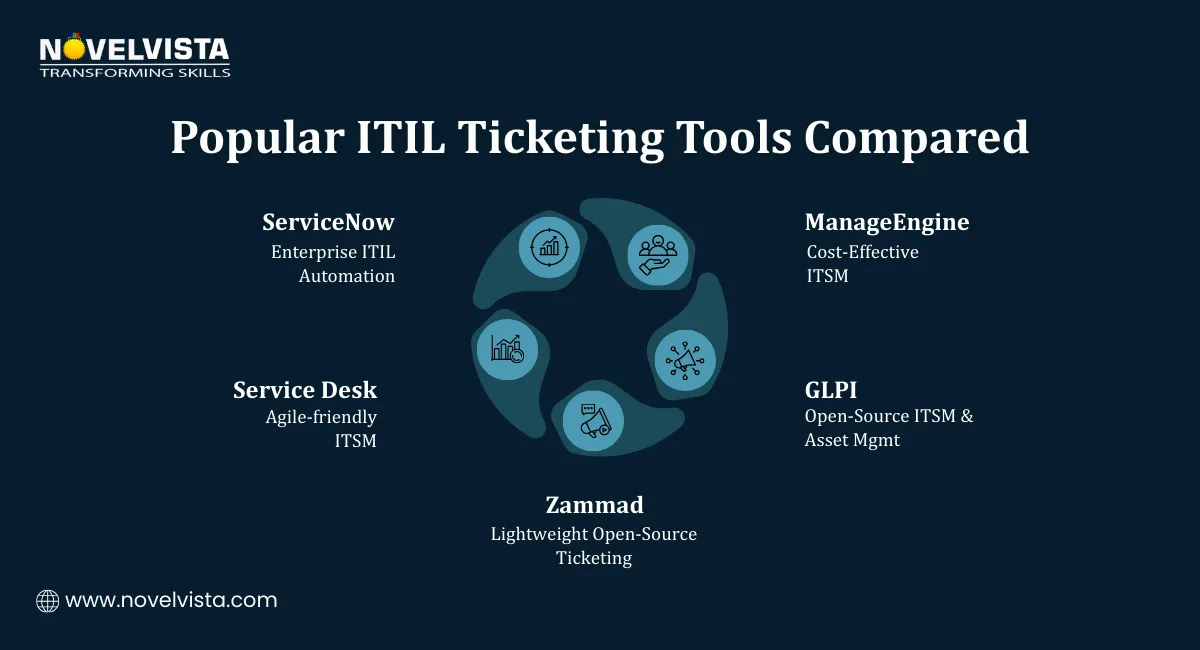
All of these can support an ITIL Ticketing System when configured with the right processes and discipline.
A well-implemented ITIL Ticketing System brings clarity, control, and consistency to IT support. By using the right ITIL Ticket Types, automating workflows, and tracking SLAs, IT teams move from reactive support to structured service management.
An effective ITIL-based ticketing System improves service quality, visibility, and trust between IT and the business. When ticketing is treated as a service improvement enabler, not just a helpdesk tool, it becomes one of the strongest foundations of ITSM success.
Across ITIL Foundation and Practitioner training programs, ticketing is often the first area where learners see immediate improvement after applying ITIL concepts. Small changes in ticket handling usually deliver fast, visible results.

If you want to understand how ticketing fits into the wider ITIL framework, NovelVista’s ITIL 4 Foundation Certification Training is a great next step. The course explains core ITIL concepts, service value thinking, and practical ITSM practices, including incident, request, and change handling. It helps professionals and teams use tools like an ITIL Ticketing System effectively, not just operate them.
Author Details

Course Related To This blog
ITIL4 Specialist Monitor Support and Fulfil Certification
ITIL4 Specialist Acquiring & Managing Cloud Services
ITIL 4 Specialist Sustainability in Digital & IT
ITIL® 4 Strategic Leader Digital And IT Strategy (DITS)
ITIL® 4 Specialist Drive Stakeholder Value
ITIL® 4 Specialist High Velocity IT
ITIL® 4 Strategist Direct, Plan & Improve
ITIL® 4 Specialist Create Deliver & Support
ITIL® 4 Foundation Certification
Confused About Certification?
Get Free Consultation Call
Stay ahead of the curve by tapping into the latest emerging trends and transforming your subscription into a powerful resource. Maximize every feature, unlock exclusive benefits, and ensure you're always one step ahead in your journey to success.