Category | Quality Management
Last Updated On 13/08/2026
Businesses today are under constant pressure to deliver faster services, maintain higher quality standards, and reduce operational costs at the same time. According to industry reports, organizations lose billions every year due to inefficient processes, production delays, defects, and rework. This is exactly why companies across industries are investing heavily in process improvement frameworks.
But how do world-class organizations consistently improve quality while reducing waste?
How do companies like Toyota, Amazon, and General Electric streamline operations without compromising customer satisfaction?
The answer often lies in one proven methodology: Lean Six Sigma.
If you have been searching for “What is Lean Six Sigma,” wondering whether Lean Six Sigma certifications are worth it, or trying to understand how businesses improve operational excellence, this guide covers everything you need to know in 2026.
This blog explores what Lean Six Sigma is, how Lean and Six Sigma methodologies work together, and why they remain essential for operational excellence in 2026. You’ll learn about the DMAIC framework, belt levels, business benefits, key tools, certification paths, and how AI is transforming Lean Six Sigma practices across industries.
| TL;DR | What You’ll Learn |
| Lean Six Sigma Basics | Process improvement & operational excellence |
| DMAIC Framework | The 5-step improvement methodology |
| Belt Levels | White, Yellow, Green & Black Belt roles |
| Business Benefits | Cost reduction, quality improvement & efficiency |
| Tools & Techniques | Kaizen, Pareto Analysis, Fishbone Diagram & more |
| AI + Lean Six Sigma | How automation is shaping modern process improvement |
Lean Six Sigma is a process improvement methodology that combines the waste-reduction principles of Lean with the defect-reduction approach of Six Sigma. Together, these methodologies help organizations improve efficiency, quality, customer satisfaction, and operational performance.
The primary goal of Lean Six Sigma is simple:
Today, Lean Six Sigma is widely used across manufacturing, healthcare, IT, banking, logistics, telecom, and software development industries.
Lean Six Sigma combines two powerful approaches:
Lean Methodology | Six Sigma Methodology |
| Focuses on eliminating waste | Focuses on reducing defects |
| Improves workflow speed | Improves process accuracy |
| Enhances operational efficiency | Uses data-driven decision making |
| Reduces unnecessary activities | Minimizes process variation |
Lean focuses on speed and efficiency, while Six Sigma focuses on quality and consistency. Together, they create a balanced framework for continuous improvement.
This combination of Lean and Six Sigma methodologies helps organizations build scalable and reliable business operations.
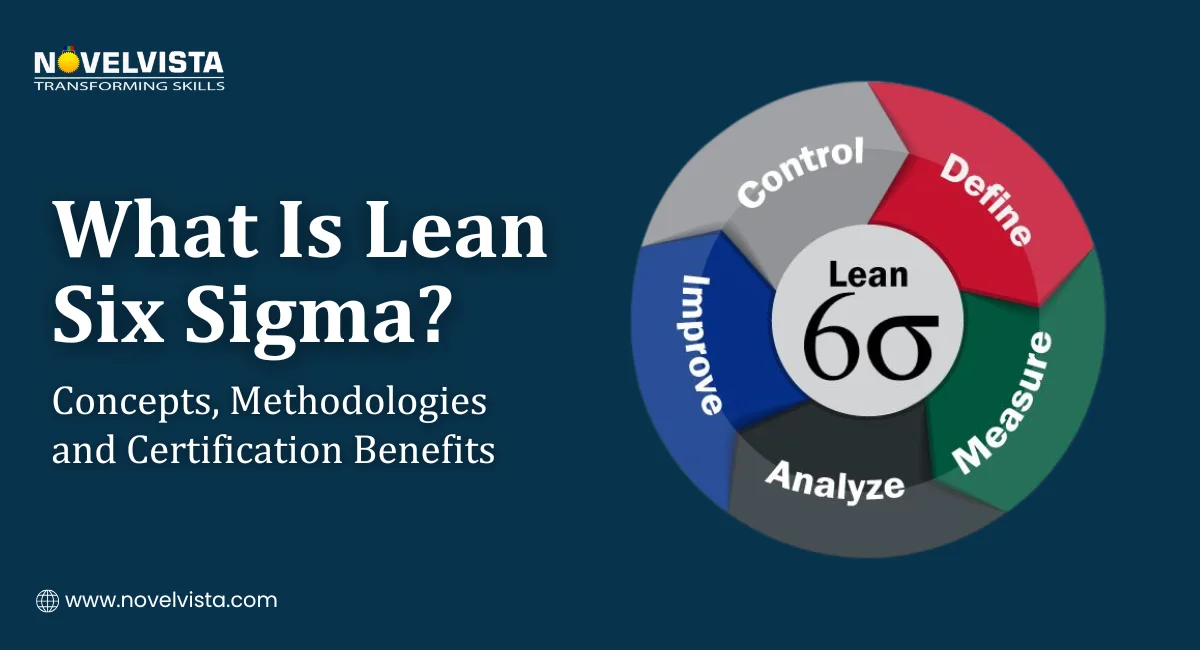
One of the most important concepts in Lean Six Sigma is the DMAIC framework.
DMAIC=Define+Measure+Analyze+Improve+ControlDMAIC = Define + Measure + Analyze + Improve + ControlDMAIC=Define+Measure+Analyze+Improve+Control
DMAIC is a structured five-step process used to improve existing business processes.
| DMAIC Stage | Purpose |
| Define | Identify the business problem |
| Measure | Collect process performance data |
| Analyze | Find root causes of issues |
| Improve | Implement process improvements |
| Control | Maintain long-term improvements |
The DMAIC framework helps organizations solve operational problems systematically instead of relying on assumptions.
Successful Lean Six Sigma implementation depends on several core principles.
Every improvement initiative should improve customer satisfaction, quality, or delivery experience.
Lean Six Sigma emphasizes measurable data instead of opinions or assumptions.
Organizations continuously optimize processes rather than waiting for major failures.
Lean identifies unnecessary activities that consume time, resources, or money.
Standardized workflows improve consistency and reduce operational errors.
These principles make Lean Six Sigma one of the most effective operational excellence frameworks in modern business environments.
Many professionals searching for “What is Six Sigma Certification” are often confused about the certification structure.
Belt Level | Experience Level | Primary Focus |
| White Belt | Beginner | Basic understanding of Lean Six Sigma concepts |
| Yellow Belt | Entry-Level Practitioner | Supporting process improvement projects |
| Green Belt | Intermediate Professional | Leading small to medium-scale improvement initiatives |
| Black Belt | Advanced Expert | Managing complex business transformation projects |
| Master Black Belt | Leadership Level | Driving enterprise-wide Lean Six Sigma strategy and mentoring teams |
These certifications validate process improvement, quality management, and operational excellence skills.
Organizations worldwide continue adopting Lean Six Sigma because of its measurable business impact.
Lean Six Sigma certification benefits also extend to professionals by improving career growth opportunities and salary potential.
Six Sigma is a data-driven methodology focused on reducing process defects and minimizing variation in business operations.
The term “Six Sigma” represents a statistical measurement indicating extremely low defect rates.
In simple terms, Six Sigma aims to achieve near-perfect process performance.
Organizations use Six Sigma methodologies to improve consistency, reliability, and quality outcomes.
Six Sigma is a quality management framework developed to improve business processes by identifying and eliminating causes of defects or inefficiencies.
The methodology became globally popular after companies like Motorola and General Electric successfully implemented it to improve operational performance.
Six Sigma focuses heavily on:
Today, Six Sigma methodologies are used in industries far beyond manufacturing, including IT services, healthcare, software engineering, and finance.
Implementing Six Sigma requires structured planning and leadership support.
Organizations often create dedicated Six Sigma teams led by Green Belts or Black Belts to manage process improvement projects effectively.
Understanding the implementation process is only one part of mastering Six Sigma. If you're preparing for certification interviews or operational excellence roles, exploring common Six Sigma Interview Questions can help you understand how organizations apply these methodologies in real-world business environments.
Six Sigma projects are designed to solve measurable operational problems.
Industry | Example Project |
| Manufacturing | Reducing product defects |
| IT Services | Improving incident response time |
| Healthcare | Reducing patient waiting time |
| Banking | Improving loan processing efficiency |
| Logistics | Optimizing delivery timelines |
Each project focuses on measurable improvements supported by analytics and performance tracking.
Lean Six Sigma explained simply means combining speed with quality.
Lean improves workflow efficiency by eliminating waste, while Six Sigma improves process accuracy by reducing defects.
Together, they create an operational excellence framework that helps organizations:
This is why businesses continue investing in Lean Six Sigma initiatives in 2026.
Understanding Lean Six Sigma belt levels helps professionals choose the right certification path.
Provides foundational knowledge of Lean Six Sigma concepts and terminology. Beginners looking to understand the fundamentals of process improvement can start with a Lean Six Sigma White Belt Certification to build foundational knowledge of Lean and Six Sigma methodologies
Supports improvement projects and understands basic process improvement tools. Professionals aiming to participate in operational excellence initiatives can explore a Lean Six Sigma Yellow Belt Course focused on process improvement tools and project support skills.
Leads smaller projects and performs data analysis and root cause investigations. Those ready to lead improvement projects and perform data-driven analysis can advance through a Lean Six Sigma Green Belt Certification designed for practical business transformation.
Handles complex business transformation initiatives and mentors teams. Experienced professionals managing large-scale quality and operational excellence initiatives can strengthen their leadership expertise with an advanced Lean Six Sigma Black Belt Training program.
These certifications help professionals build expertise in process optimization and operational excellence.
Many professionals ask whether Lean and Six Sigma are the same.
The answer is no.
Lean | Six Sigma |
| Focuses on reducing waste | Focuses on reducing defects |
| Improves speed | Improves accuracy |
| Workflow-oriented | Quality-oriented |
| Eliminates non-value activities | Reduces process variation |
However, modern organizations often combine both methodologies because they complement each other effectively.
This combined approach is known as Lean Six Sigma.
Businesses implementing Lean Six Sigma often achieve measurable operational improvements.
Companies also gain competitive advantages through better operational agility and process optimization.
Customer experience is one of the biggest drivers behind Lean Six Sigma adoption.
Organizations that improve operational quality often see higher customer retention and satisfaction rates.
Lean Six Sigma also improves workplace productivity and employee engagement.
Professionals with Lean Six Sigma certifications are highly valued in operations, IT, quality management, and project management roles.
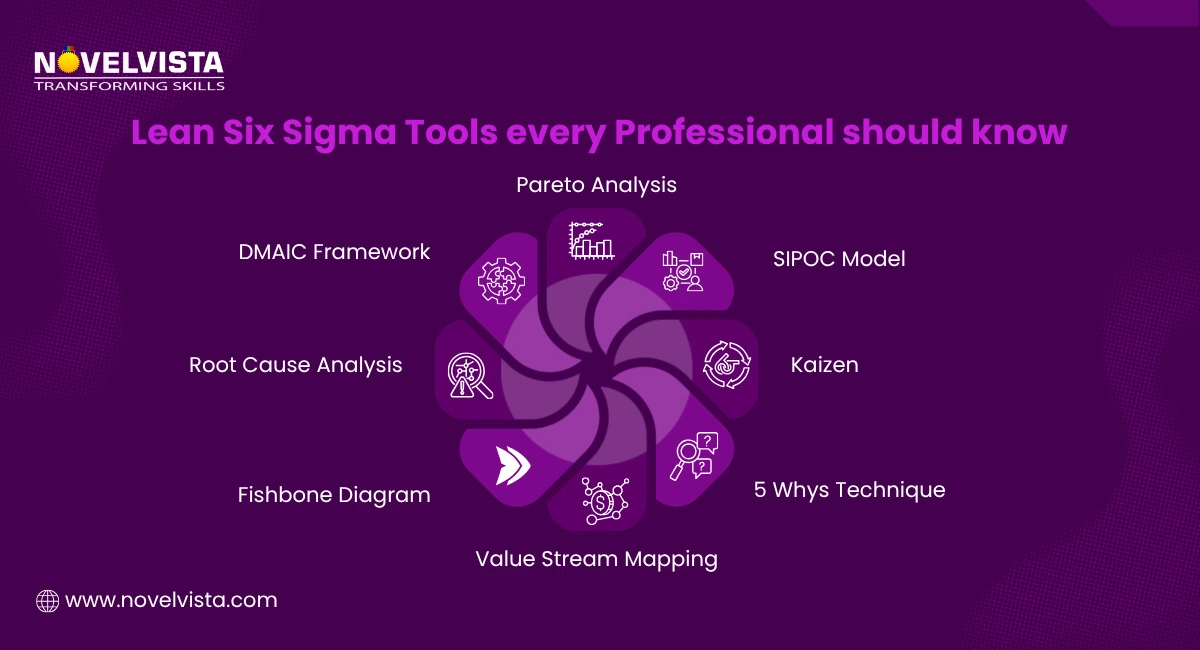
Several powerful tools and techniques are used in Lean Six Sigma projects.
Technique | Purpose |
| Root Cause Analysis | Identify underlying problems |
| Fishbone Diagram | Analyze contributing factors |
| Pareto Analysis | Prioritize major issues |
| Value Stream Mapping | Visualize workflow inefficiencies |
| 5 Whys | Discover process root causes |
| Kaizen | Continuous improvement initiatives |
These techniques help organizations improve efficiency and quality systematically. The effectiveness of Lean Six Sigma largely depends on choosing the right tools for process improvement and root cause analysis. To explore practical applications in greater depth, read our detailed guide on Six Sigma Tools & Techniques used by quality management professionals across industries.
The Lean Six Sigma certification path allows professionals to gradually build expertise.
Certification | Skill Level |
| White Belt | Beginner |
| Yellow Belt | Basic Practitioner |
| Green Belt | Intermediate |
| Black Belt | Advanced |
| Master Black Belt | Strategic Leadership |
Professionals often start with Yellow Belt or Green Belt certifications depending on their experience and career goals.
So the answer to the question what is Lean Six Sigma concept revolves around continuous improvement, operational excellence, and customer satisfaction.
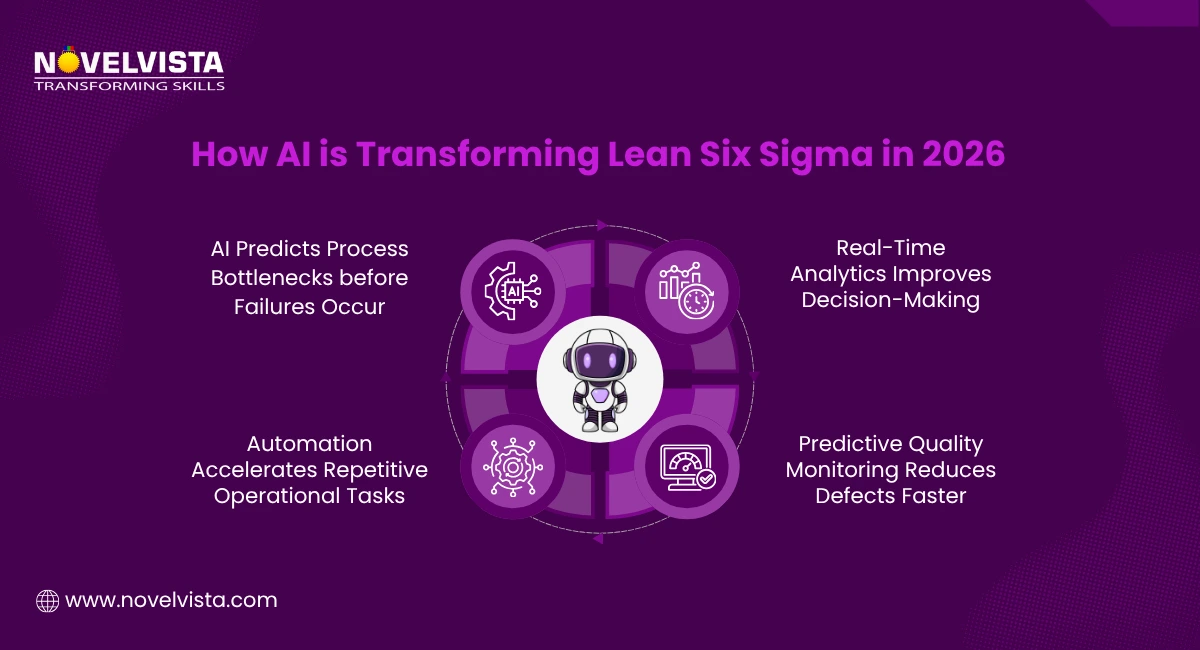
It is not limited to manufacturing anymore. In 2026, Lean Six Sigma is helping organizations modernize digital operations, optimize AI-driven workflows, improve IT service management, and enhance business agility.
As businesses continue facing pressure to improve efficiency while controlling costs, Lean Six Sigma remains one of the most valuable frameworks for sustainable growth.
So, what is Lean Six Sigma? It is one of the most effective business improvement methodologies designed to eliminate waste, reduce defects, improve operational efficiency, and enhance customer satisfaction.
By combining Lean and Six Sigma methodologies, organizations can create faster, smarter, and more reliable business processes.

Whether you are a business leader aiming to optimize operations or a professional exploring process improvement careers, Lean Six Sigma certifications can provide valuable skills that remain highly relevant in 2026 and beyond. Professionals looking to build practical expertise in process optimization and operational excellence can also explore the Lean Six Sigma Green Belt + Black Belt Combo Certification Course designed to help teams and individuals apply these methodologies in real-world business environments.
As industries continue embracing automation, AI, and digital transformation, Lean Six Sigma will play an even bigger role in helping organizations maintain quality, efficiency, and operational excellence.
Author Details

Confused About Certification?
Get Free Consultation Call
Stay ahead of the curve by tapping into the latest emerging trends and transforming your subscription into a powerful resource. Maximize every feature, unlock exclusive benefits, and ensure you're always one step ahead in your journey to success.