Category | Quality Management
Last Updated On 26/06/2026
Artificial Intelligence is transforming the way organizations operate, innovate, and make decisions. According to recent industry reports, more than 75% of businesses are actively using AI in at least one business function, while AI adoption continues to grow across sectors such as healthcare, finance, manufacturing, retail, and technology.
However, as AI systems become more integrated into business operations, organizations face an important challenge: How can they ensure AI is being managed responsibly, ethically, securely, and in compliance with emerging regulations?
This is where ISO 42001 comes into the picture.
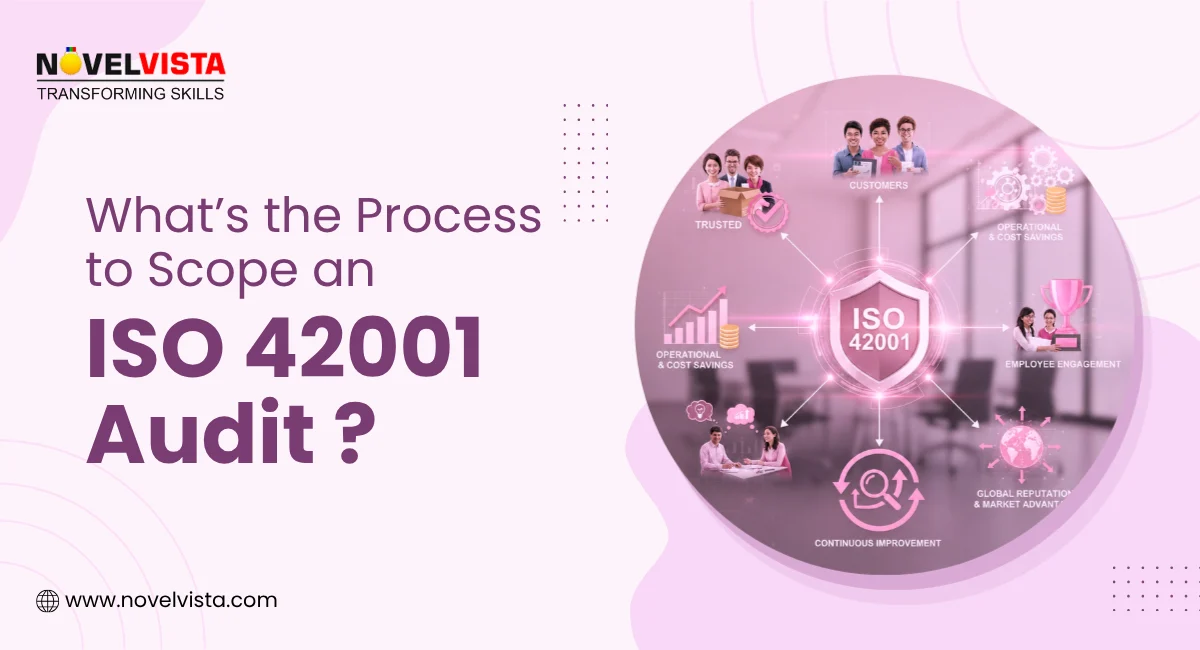
As the world's first international standard for Artificial Intelligence Management Systems (AIMS), ISO 42001 provides organizations with a structured framework to govern AI technologies responsibly. For organizations preparing for certification, one of the most important questions is: what’s the process to scope an ISO 42001 audit?
The scope of an audit determines what AI systems, business units, processes, and activities will be assessed during certification. Defining it correctly is essential because an unclear scope can lead to audit delays, compliance gaps, and increased certification costs.
If you're preparing for ISO 42001 certification, defining the audit scope is one of the most important steps. A well-scoped audit ensures the right AI systems, business functions, stakeholders, and risks are included while avoiding unnecessary complexity. In this blog, you'll learn how to determine audit boundaries, assess AI-related risks, evaluate compliance requirements, and create a clear scope statement that supports successful certification outcomes.
TL;DR
| In This Blog, You'll Learn | Why It Matters |
|---|---|
| What audit scope means in ISO 42001 | Establishes clear boundaries for certification |
| How to identify AI systems and stakeholders | Ensures critical areas are not overlooked |
| Key risk and compliance considerations | Supports responsible AI governance |
| Common scoping mistakes to avoid | Reduces audit delays and compliance gaps |
| Best practices for audit readiness | Improves certification success and audit efficiency |
Before discussing what’s the process to scope an ISO 42001 audit, it's important to understand what audit scope means.
The audit scope defines the boundaries of your Artificial Intelligence Management System (AIMS). It identifies:
A clearly defined scope helps auditors evaluate whether the organization effectively manages AI-related risks, opportunities, governance controls, and compliance requirements.
| Benefit | Impact |
|---|---|
| Clear Boundaries | Prevents confusion during audits |
| Efficient Resource Allocation | Focuses compliance efforts on relevant areas |
| Risk Management | Identifies AI-related risks more effectively |
| Certification Readiness | Reduces audit findings and delays |
| Regulatory Alignment | Supports compliance with emerging AI regulations |
Without a properly defined scope, organizations may unintentionally exclude critical AI systems or include areas that unnecessarily complicate the audit process.
To answer the question, what’s the process to scope an ISO 42001 audit, organizations should follow a structured and risk-based approach.
The first step is creating an inventory of AI systems currently used, developed, or managed by the organization.
This includes:
Organizations should document:
This inventory serves as the foundation for defining the audit scope.
The next stage in what’s the process to scope an ISO 42001 audit is understanding why the organization seeks certification.
Common objectives include:
The scope should align with these business goals.
For example, if an organization wants certification specifically for its AI-powered customer analytics platform, the scope may focus on that service rather than every AI initiative across the company.
Organizations must determine which parts of the business will be included.
Questions to consider include:
Examples of departments commonly included:
| Department | Role in AI Governance |
|---|---|
| IT | Infrastructure management |
| Data Science | AI model development |
| Risk Management | Risk assessments |
| Legal & Compliance | Regulatory oversight |
| Operations | AI deployment and monitoring |
| Security Teams | Data protection and cybersecurity |
Clearly documenting these boundaries helps avoid confusion during the certification process.
A key component of what’s the process to scope an ISO 42001 audit is stakeholder identification.
Stakeholders may include:
ISO 42001 emphasizes understanding stakeholder expectations because AI systems often impact multiple groups.
Organizations should document:
This information influences audit scope and governance controls.
Risk assessment is central to ISO 42001.
Organizations should evaluate:
A risk-based approach helps determine which AI systems require inclusion in the audit.
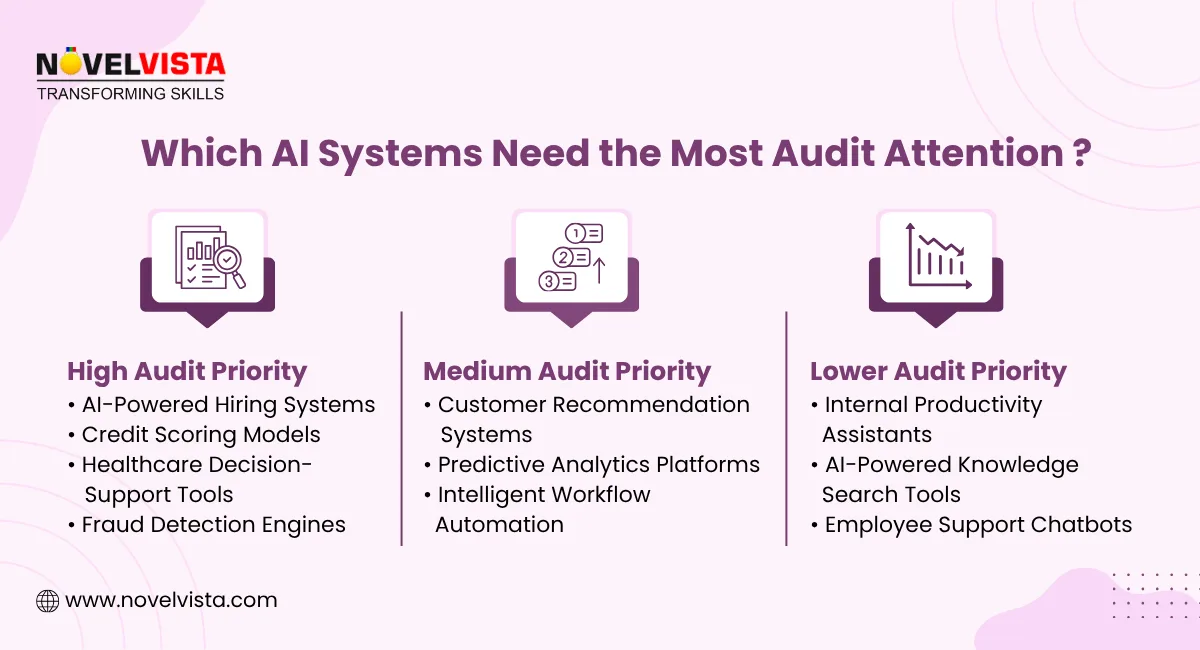
For example, an AI system making hiring recommendations may require more scrutiny than an internal productivity chatbot due to its potential impact on individuals.
When discussing what’s the process to scope an ISO 42001 audit, risk assessment often becomes the deciding factor for scope selection. While risk assessment helps determine which AI systems require greater scrutiny, organizations must also establish clear governance standards for how AI should be designed, deployed, and monitored. Understanding the ISO 42001 Responsible AI Principles can provide deeper insights into fairness, transparency, accountability, and ethical AI practices that support effective audit scoping.
Many organizations rely on external vendors for AI capabilities.
Examples include:
Organizations should assess:
If third-party AI significantly influences business operations, it may need to be considered within the audit scope.
AI governance is rapidly becoming a regulatory priority worldwide.
Organizations should identify:
Examples include:
Regulatory obligations often shape audit boundaries and determine which AI activities require formal oversight.
After completing assessments, organizations should create a formal scope statement.
A well-written scope statement typically includes:
Example:
"The Artificial Intelligence Management System applies to the development, deployment, monitoring, and governance of AI-powered customer engagement solutions operated by the organization's Data Science and IT departments across its headquarters and regional offices."
A clear scope statement simplifies auditor review and certification planning.
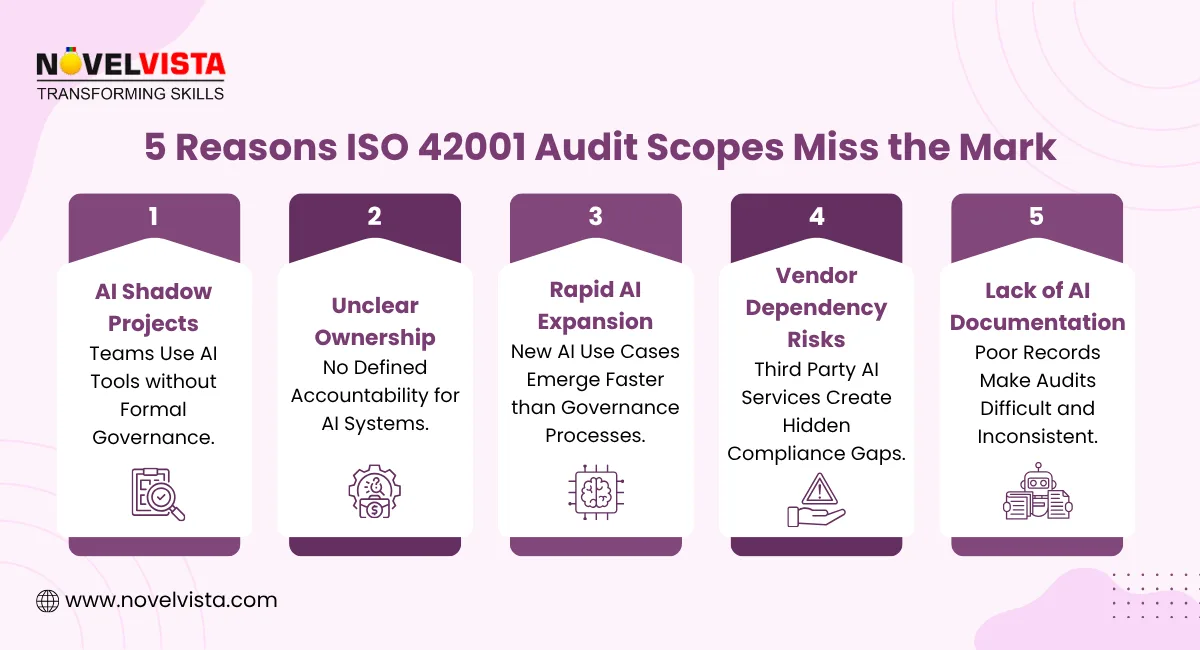
Many organizations encounter difficulties when determining what’s the process to scope an ISO 42001 audit.
Common challenges include:
Trying to include every AI initiative can increase complexity and audit costs.
Without a complete inventory, important AI systems may be overlooked.
Excluding business leaders, legal teams, or technical experts can result in incomplete scope definitions.
External AI providers may introduce risks that impact certification outcomes.
Insufficient records make it difficult to justify audit decisions and demonstrate compliance.
Organizations can improve audit readiness by following these best practices.
Focus first on AI applications with the greatest business or societal impact.
Include:
Keep an updated inventory of all AI systems and their associated risks.
Certification efforts should support broader business objectives rather than become a standalone compliance exercise.
Regular internal reviews help identify scope gaps before certification audits begin.
During certification audits, auditors typically review:
| Audit Focus Area | Evaluation Criteria |
|---|---|
| Scope Definition | Clearly documented boundaries |
| AI Inventory | Complete and accurate records |
| Risk Management | Identification and treatment of AI risks |
| Governance Structure | Roles and responsibilities defined |
| Stakeholder Considerations | Relevant interests addressed |
| Regulatory Compliance | Applicable requirements identified |
Auditors expect evidence that the selected scope accurately reflects the organization's AI activities and associated risks. Once organizations understand how to define and document audit scope, the next step is often preparing teams for certification assessments and auditor interactions. Reviewing common ISO 42001 Exam Questions can help professionals strengthen their understanding of AI governance requirements, audit expectations, and key concepts frequently covered during certification preparation.
As AI adoption continues to accelerate, organizations need structured governance frameworks to manage risks, ensure accountability, and build trust. Understanding what’s the process to scope an ISO 42001 audit is a critical first step toward achieving ISO 42001 certification and demonstrating responsible AI management.
A successful audit scope begins with identifying AI systems, defining organizational boundaries, assessing risks, evaluating stakeholders, reviewing regulatory obligations, and documenting a clear scope statement. By taking a strategic and risk-based approach, organizations can improve audit efficiency, strengthen AI governance, and position themselves for long-term compliance and success.
Whether your organization is just beginning its AI governance journey or preparing for certification, understanding what’s the process to scope an ISO 42001 audit will help create a solid foundation for effective AI management and continuous improvement. For professionals looking to deepen their expertise in AI governance and auditing pursuing specialized ISO/IEC 42001 Lead Auditor training can provide the practical knowledge and audit skills needed to lead AI management system assessments with confidence.
The process involves identifying AI systems, defining organizational boundaries, assessing risks, considering stakeholders, reviewing regulations, and documenting a formal audit scope statement.
Proper scoping ensures auditors evaluate the correct AI systems, departments, and processes while reducing compliance gaps and certification delays.
Organizations should include AI systems that significantly impact business operations, customers, regulatory obligations, or risk management activities.
Yes. If external AI services influence business operations or risk exposure, they should be considered during scope definition and governance reviews.
Organizations should review the scope regularly, especially when introducing new AI systems, expanding operations, or responding to regulatory changes.
Author Details

Course Related To This blog
ISO 42001 Lead Auditor
Confused About Certification?
Get Free Consultation Call
Stay ahead of the curve by tapping into the latest emerging trends and transforming your subscription into a powerful resource. Maximize every feature, unlock exclusive benefits, and ensure you're always one step ahead in your journey to success.