Category | Quality Management
Last Updated On 13/08/2026
Artificial Intelligence is no longer a futuristic concept. Today, organizations across industries rely on AI to automate operations, improve decision-making, enhance customer experiences, and drive innovation. According to recent industry reports, over 80% of enterprises are actively exploring or implementing AI-powered solutions in at least one business function. However, as AI adoption accelerates, concerns around governance, transparency, ethics, accountability, and risk management are becoming increasingly important.
This raises several critical questions:
This is where ISO 42001 comes into the picture.
As the world's first international standard for Artificial Intelligence Management Systems (AIMS), ISO 42001 provides organizations with a structured framework to govern, monitor, and continuously improve their AI systems. While businesses across all sectors can benefit from this standard, certain industries have emerged as early adopters due to their extensive use of AI and growing regulatory requirements.
In this article, we will explore what ISO 42001 is, why it matters, and what sectors are early adopters of ISO 42001. We will also examine the business drivers behind adoption and the benefits organizations gain from implementing this globally recognized standard.
Artificial Intelligence is transforming industries, but with that transformation comes the need for stronger governance, accountability, and risk management. In this blog, we'll explore what ISO 42001 is, why organizations are adopting it, and which sectors are leading the way in implementation. We'll also examine the business drivers behind adoption, the benefits of becoming an early adopter, and what the future of AI governance looks like across industries.
| Key Takeaway | Summary |
|---|---|
| What is ISO 42001? | The world's first international standard for Artificial Intelligence Management Systems (AIMS). |
| Why it Matters | Helps organizations manage AI risks, improve transparency, and support compliance. |
| Early Adopter Industries | Financial Services, Healthcare, Technology, Telecommunications, Government, Manufacturing, and Retail. |
| Main Adoption Drivers | Regulatory requirements, risk management, customer trust, and ethical AI practices. |
| Key Benefits | Better governance, improved compliance, stakeholder confidence, and competitive advantage. |
| Future Outlook | ISO 42001 is expected to become a leading global framework for responsible AI governance. |
ISO 42001 is an international standard designed to help organizations establish, implement, maintain, and continually improve an Artificial Intelligence Management System (AIMS).
The standard provides guidelines for:
| Key Focus Area | Purpose |
|---|---|
| AI Governance | Establish oversight and accountability |
| Risk Management | Identify and mitigate AI-related risks |
| Transparency | Improve explainability and traceability |
| Ethical AI | Promote fairness and responsible use |
| Compliance | Support adherence to regulations |
| Continuous Improvement | Monitor and enhance AI performance |
Unlike technical AI standards that focus solely on algorithms or models, ISO 42001 addresses the organizational processes needed to manage AI responsibly throughout its lifecycle.
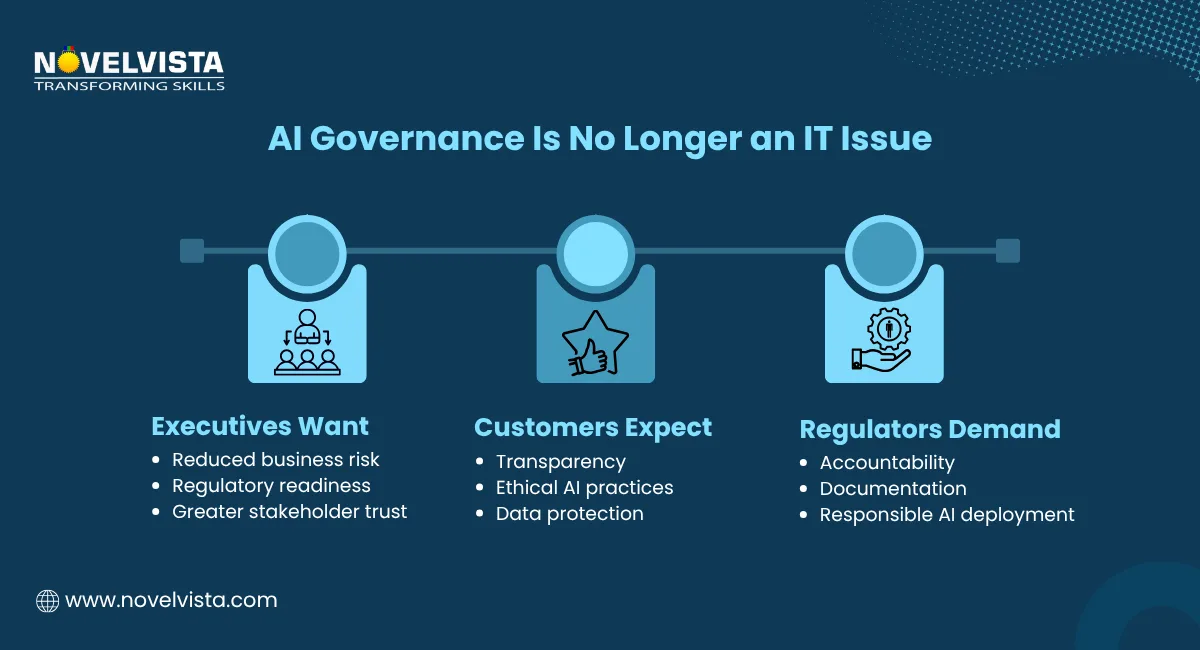
As AI becomes integrated into critical business operations, organizations face increasing pressure from regulators, customers, investors, and stakeholders to demonstrate responsible AI practices.
Some major drivers behind ISO 42001 adoption include:
Governments worldwide are introducing regulations governing AI development and deployment. Organizations need structured frameworks to demonstrate compliance and reduce legal risks.
Customers are becoming more concerned about how AI systems make decisions. Implementing ISO 42001 helps organizations establish transparency and accountability.
AI systems can introduce risks such as:
The standard provides mechanisms to identify and address these risks proactively.
Organizations that demonstrate responsible AI governance can gain stronger customer confidence and differentiate themselves from competitors.
Several industries have emerged as leaders in adopting ISO 42001 due to their heavy reliance on AI technologies and strict regulatory environments.
The financial sector is among the earliest adopters of ISO 42001.
Banks and financial institutions increasingly use AI for:
Because these AI systems directly impact customers' financial well-being, organizations must ensure fairness, transparency, and accountability.
| Business Need | ISO 42001 Benefit |
|---|---|
| Regulatory compliance | Structured governance framework |
| Customer trust | Transparent AI decision-making |
| Risk reduction | Improved AI risk management |
| Audit readiness | Documented AI controls |
Financial institutions recognize that effective AI governance is becoming essential for maintaining regulatory compliance and public trust.
Healthcare organizations are rapidly integrating AI into patient care, diagnostics, medical imaging, drug discovery, and clinical decision support systems.
Examples include:
Given the potentially life-altering impact of AI-driven healthcare decisions, strong governance is critical.
Healthcare providers use ISO 42001 to:
The standard helps organizations balance innovation with patient protection.
Technology companies are among the most active users of artificial intelligence.
From generative AI applications to machine learning platforms and SaaS products, AI increasingly forms the foundation of modern digital services.
Common AI applications include:
As AI becomes embedded into commercial products, technology companies are turning to ISO 42001 to demonstrate responsible AI development practices.
For technology firms, ISO 42001 serves as a framework for scalable and responsible AI governance.
Telecommunications providers rely heavily on AI to manage complex networks and deliver seamless customer experiences.
AI applications include:
These organizations manage vast amounts of customer data, making AI governance a top priority.
Telecom providers implement ISO 42001 to:
As digital infrastructure becomes increasingly AI-driven, governance frameworks become essential.
Governments worldwide are exploring AI to improve public services and operational efficiency.
Examples include:
Because government decisions affect millions of citizens, transparency and accountability are critical.
| Public Sector Objective | ISO 42001 Support |
|---|---|
| Transparency | Documented AI governance |
| Accountability | Defined responsibilities |
| Public trust | Responsible AI oversight |
| Risk management | Structured assessment processes |
Government agencies are increasingly viewing ISO 42001 as a mechanism to support trustworthy AI deployment.
Manufacturers are embracing Industry 4.0 technologies powered by AI and machine learning.
Common use cases include:
While AI creates significant efficiency gains, it also introduces operational and safety risks.
Organizations use ISO 42001 to:
Manufacturing leaders recognize that AI governance is becoming as important as quality management and cybersecurity.
Retailers increasingly leverage AI to deliver personalized customer experiences and improve operational efficiency.
AI applications include:
However, concerns around privacy, bias, and consumer trust are driving the need for stronger AI governance.
Retail organizations implement ISO 42001 to:
This helps retailers maintain customer confidence while expanding AI adoption.
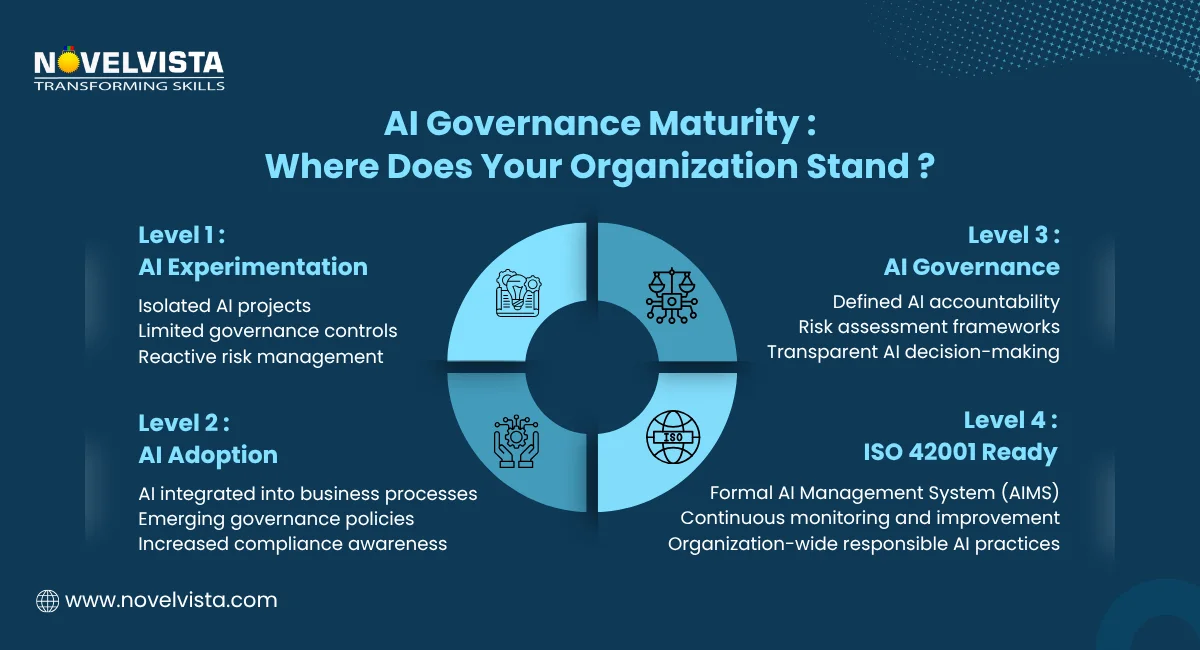
Although industries differ significantly, early adopters of ISO 42001 often share similar characteristics.
| Characteristic | Description |
|---|---|
| High AI Usage | AI supports critical business functions |
| Regulatory Pressure | Industry-specific compliance requirements |
| Customer Impact | AI decisions affect customers directly |
| Data Dependency | Heavy reliance on sensitive data |
| Risk Exposure | Potential legal, ethical, and operational risks |
Organizations with these characteristics often experience the greatest value from implementing AI governance frameworks.
Organizations that implement ISO 42001 early can gain several advantages.
A structured framework helps identify and mitigate AI-related risks before they become major issues.
As AI regulations continue to evolve, organizations with established governance systems are better prepared for compliance.
Demonstrating responsible AI management strengthens confidence among customers, investors, partners, and regulators.
Standardized AI governance processes improve decision-making and accountability across the organization.
Early adoption positions organizations as leaders in responsible and trustworthy AI implementation.
As organizations increasingly pursue ISO 42001 implementation, many professionals are also looking to validate their expertise through certification. If you're preparing for the certification exam, reviewing common ISO 42001 Exam Questions can help you understand the exam structure, key knowledge areas, and the types of scenarios you may encounter during assessment.
While current adoption is concentrated in highly regulated and AI-intensive sectors, ISO 42001 is expected to expand across nearly every industry.
As AI becomes embedded in daily operations, organizations will increasingly need structured governance mechanisms to address:
Much like ISO 27001 became the benchmark for information security management, many experts believe ISO 42001 will become the global standard for AI governance. The growing adoption of ISO 42001 is also creating new career opportunities for AI governance, compliance, and auditing professionals. For those evaluating the career potential of this emerging specialization, exploring the latest ISO 42001 Salary Guide can provide valuable insights into earning potential, job roles, and market demand across industries.
The question of what sectors are early adopters of ISO 42001 highlights an important trend in modern business: organizations are recognizing that successful AI implementation requires more than advanced technology it requires responsible governance.
Industries such as financial services, healthcare, technology, telecommunications, government, manufacturing, and retail are leading the way in adopting ISO 42001 because they face significant AI-related risks, regulatory expectations, and stakeholder scrutiny. By establishing structured AI governance frameworks, these organizations are better positioned to manage risk, ensure transparency, and build trust among customers, regulators, and stakeholders.
As AI adoption continues to accelerate worldwide, implementing ISO 42001 can help organizations strengthen compliance, improve accountability, and create a sustainable foundation for responsible AI innovation. For professionals looking to deepen their expertise in AI governance and certification requirements, pursuing specialized training such as the ISO/IEC 42001 Lead Auditor course from NovelVista can be a valuable step toward leading AI management initiatives with confidence.
Author Details

Course Related To This blog
ISO 42001 Lead Implementer
ISO 42001 Lead Auditor
Confused About Certification?
Get Free Consultation Call
Stay ahead of the curve by tapping into the latest emerging trends and transforming your subscription into a powerful resource. Maximize every feature, unlock exclusive benefits, and ensure you're always one step ahead in your journey to success.