Category | Quality Management
Last Updated On 03/07/2026
Job postings mentioning "AI governance" or "AI compliance" have grown sharply over the past two years, and recruiters are increasingly listing ISO 42001 knowledge as a preferred skill, right alongside ISO 27001 experience. At the same time, certified Lead Auditors specializing in this standard are already reporting strong average salaries, with figures in the United States hovering near 80,000 dollars a year. If you are building a career in AI governance, compliance, or auditing, understanding the ISO 42001 latest version is no longer optional background reading. It is quickly becoming a core credential on your resume.
This blog explains exactly what it means today, what has changed heading into 2026, and how understanding it can shape your learning path, your certification choices, and your career in AI governance.
Before diving in, let's clear up a few basic questions people usually have:
Let's work through each of these step by step.
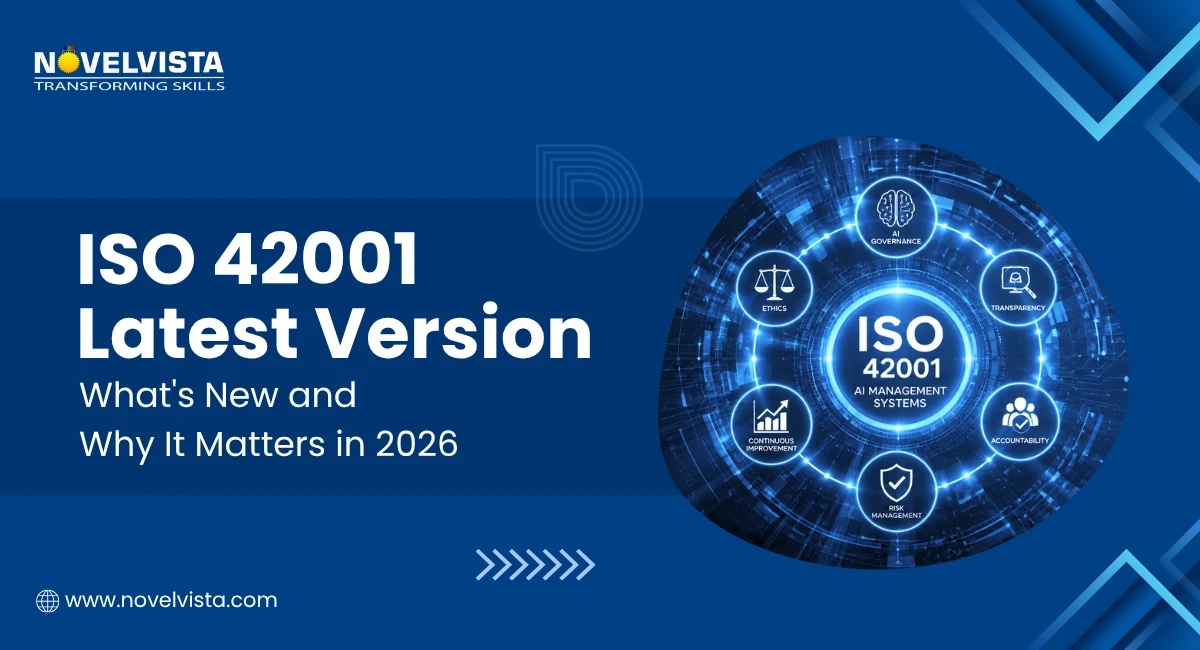
ISO/IEC 42001 is the world's first international management system standard built specifically for artificial intelligence. It gives organizations a structured, auditable way to govern AI systems throughout their lifecycle, using the same Plan-Do-Check-Act cycle that underpins ISO 27001. For you as a learner or professional, this matters because it defines an entirely new specialization: AI Management System (AIMS) auditing and implementation. Just as ISO 27001 created a wave of information security auditors over the last two decades, ISO 42001 is creating a similar wave of demand for AI governance professionals right now.
Here is the key fact to understand before choosing any course or study material: the current and only published edition is ISO/IEC 42001:2023. No new global revision has replaced it. When you come across the term "ISO 42001 latest version" in 2026, it usually refers to one of these:
In short, the ISO 42001 latest version you should be studying right now is still the 2023 edition. What has genuinely evolved is the training ecosystem, the exam content, and the practical expectations around it, which is exactly what you need to track if you are preparing for a certification.
Three trends make this a smart moment to build expertise in the ISO 42001 latest version.
Certification demand is climbing fast. As more companies pursue ISO 42001 compliance, there is a simultaneous surge in demand for professionals who can audit and implement AI management systems, creating openings for Lead Auditors, Lead Implementers, and internal audit specialists.
Regulatory alignment is expanding your value. With the EU AI Act's obligations rolling out progressively through 2026 and 2027, professionals who understand how ISO 42001 maps to legal requirements become far more valuable to employers and consultancies.
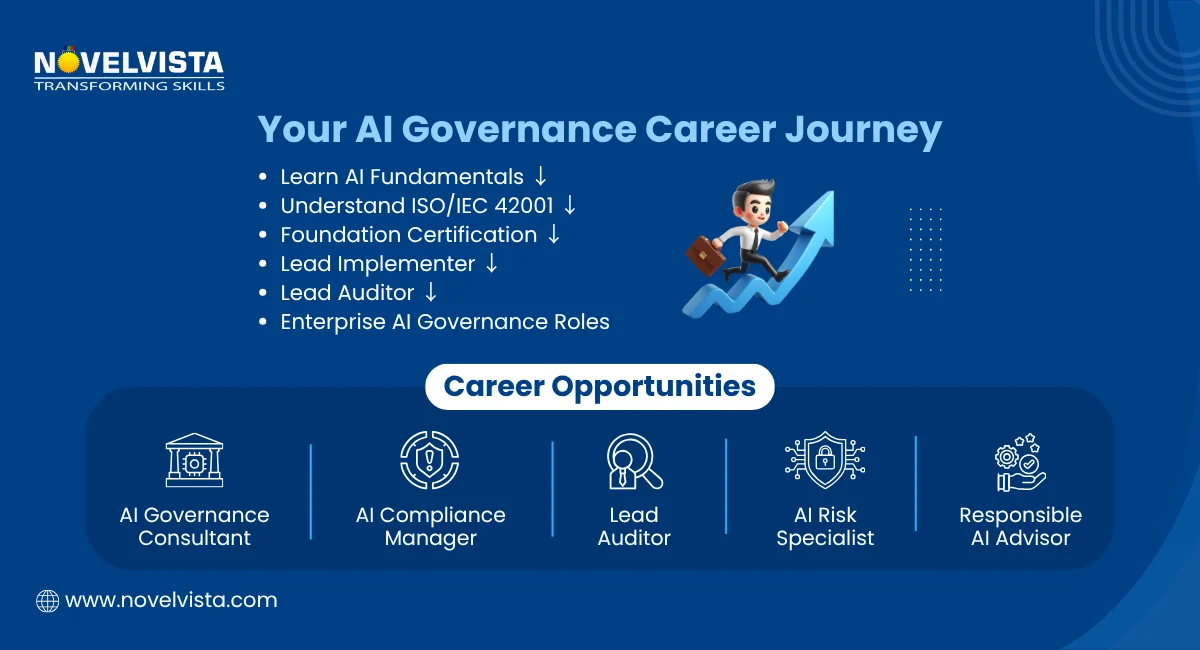
Career paths are diversifying. You are no longer limited to a single job title. Understanding the ISO 42001 latest version can lead toward several distinct roles.
| Career Path | What It Involves |
| Lead Auditor | Plans, conducts, and reports third-party or certification body audits of AI management systems |
| Lead Implementer | Helps organizations build and manage an AIMS from the ground up |
| Internal Auditor | Performs ongoing internal audits within a single organization |
| AI Compliance Manager | Oversees audit readiness, documentation, and internal controls |
| Risk and Governance Consultant | Focuses on AI ethics, bias mitigation, and regulatory alignment |
Regardless of which certification path you choose, every course is built around the same foundation, so understanding this structure now will make any training program easier to follow.
Clauses 4 through 10 form the mandatory backbone of the standard, covering context of the organization, leadership, planning, support, operation, performance evaluation, and continual improvement.
Annex A contains 38 controls across nine control domains. Learning how these controls are selected through risk assessment, and documented in a Statement of Applicability, is a core skill tested in most Lead Auditor and Lead Implementer exams.
Annexes B and C provide implementation guidance and impact assessment mapping. They are informative rather than mandatory, but experienced trainers consistently emphasize them because auditors expect to see this guidance reflected in real control design.
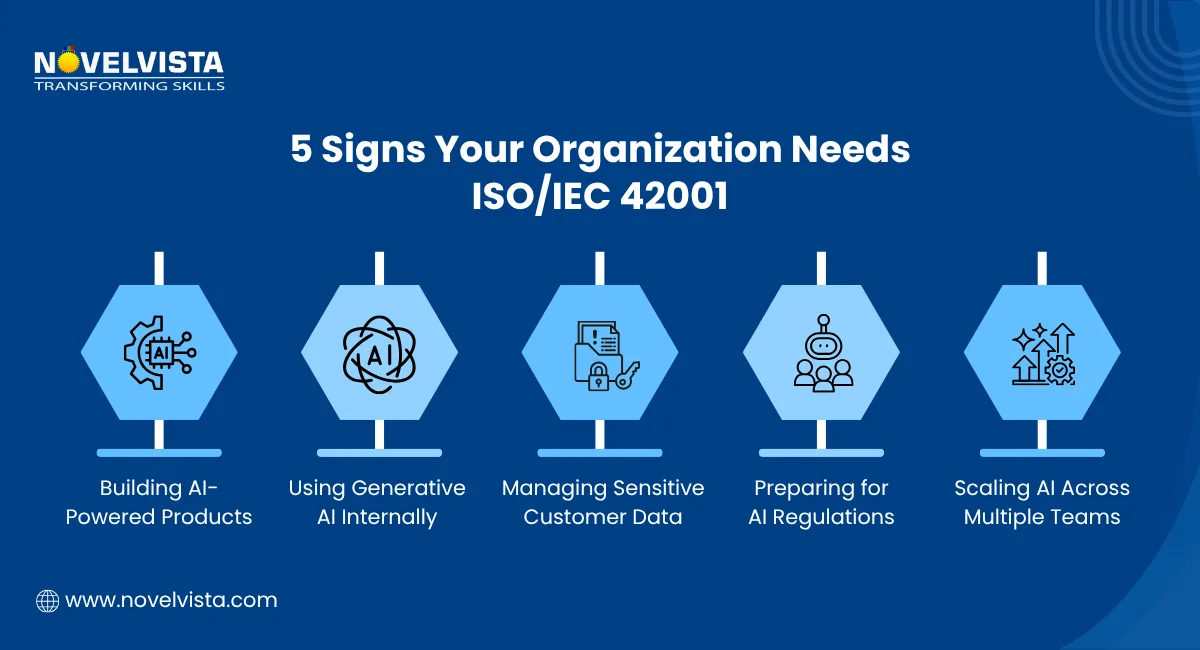
If you are trying to decide where to start, it helps to compare the most common entry points.
| Certification | Best Suited For | Typical Focus |
| Foundation Training | Complete beginners with no prior ISO experience | Basic terminology, structure, and purpose of ISO 42001 |
| Lead Implementer | Professionals who want to build and manage an AIMS | Designing, deploying, and maintaining AI governance systems |
| Lead Auditor | Professionals with an auditing background or ambition | Planning, conducting, and closing compliance audits |
| Internal Auditor | Employees maintaining conformity within one organization | Ongoing internal reviews and documentation checks |
A common and cost-effective path is completing a Lead Implementer course first, since it builds foundational knowledge of the AIMS, before moving on to Lead Auditor training, which several providers explicitly recommend as a prerequisite.
Once you've chosen the certification path that best matches your career goals, the next step is preparing for the exam effectively. Our ISO 42001 Exam Strategy Guide walks you through proven preparation techniques, study priorities, and practical tips to help you approach the certification with confidence.
Passing an exam is only the starting point. To genuinely excel with the ISO 42001 latest version, employers and clients look for a blend of:
Specializing further in areas like bias mitigation or AI ethics can command a premium, since these are still relatively rare skill sets even among certified professionals. Building the right skills is important, but applying them in an exam environment is equally critical. Practicing with realistic ISO 42001 Exam Questions can help you become familiar with the question format, identify knowledge gaps, and improve your confidence before taking the certification exam.
Because ISO standards are reviewed periodically, a future revision to the ISO 42001 latest version is plausible even without a formal announcement yet. To stay ahead of any change, you can:
Keep track of how regional adoptions, like EN ISO/IEC 42001:2026, are being referenced in job postings and tenders

If you are asking what the ISO 42001 latest version is, the answer is straightforward: ISO/IEC 42001:2023 remains the current and only published edition, even as regional adoptions and training materials evolve around it heading into 2026. What has changed is not the standard itself, but the opportunity around it employers are hiring faster than the talent pool can keep up, and early movers in AI governance are the ones building the strongest resumes right now. For anyone serious about building a career in AI governance, auditing, or compliance, the smartest move is to stop researching and start training, and a structured ISO/IEC 42001 Lead Auditor course is one of the fastest ways to turn this knowledge into a recognized, job-ready credential. Whether or not a new revision arrives soon, mastering the ISO 42001 latest version today positions you well for one of the fastest-growing specializations in AI governance.
No. The current edition remains ISO/IEC 42001:2023. Regional versions like EN ISO/IEC 42001:2026 use the same 2023 content rather than adding new requirements.
Most learners begin with a Foundation or Lead Implementer course before moving to Lead Auditor training, since implementer knowledge builds a strong base for auditing skills.
Not necessarily. Many courses are designed for beginners, though some Lead Auditor programs recommend prior knowledge of ISO management systems or completion of a Lead Implementer course first.
The standard helps professionals demonstrate practical skills in documentation, risk management, and oversight that align with EU AI Act obligations, making certified individuals more valuable in compliance roles.
Yes. Demand for AI governance and audit professionals is rising quickly, and certified individuals in this field are reporting strong salaries and growing opportunities across tech, finance, and healthcare.
Author Details

Course Related To This blog
ISO 42001 Lead Auditor
Confused About Certification?
Get Free Consultation Call
Stay ahead of the curve by tapping into the latest emerging trends and transforming your subscription into a powerful resource. Maximize every feature, unlock exclusive benefits, and ensure you're always one step ahead in your journey to success.