Category | Quality Management
Last Updated On 16/01/2026

Every minute of IT downtime costs large organizations an average of $9,000, and in highly digital industries like banking, healthcare, and e-commerce, that number can exceed $15,000 per minute. At the same time, 68% of enterprises report that their IT service disruptions directly impact customer experience, brand reputation, and revenue.
Despite this reality, many enterprises still operate with fragmented IT processes, reactive incident handling, and inconsistent service delivery. This leads to three critical questions:
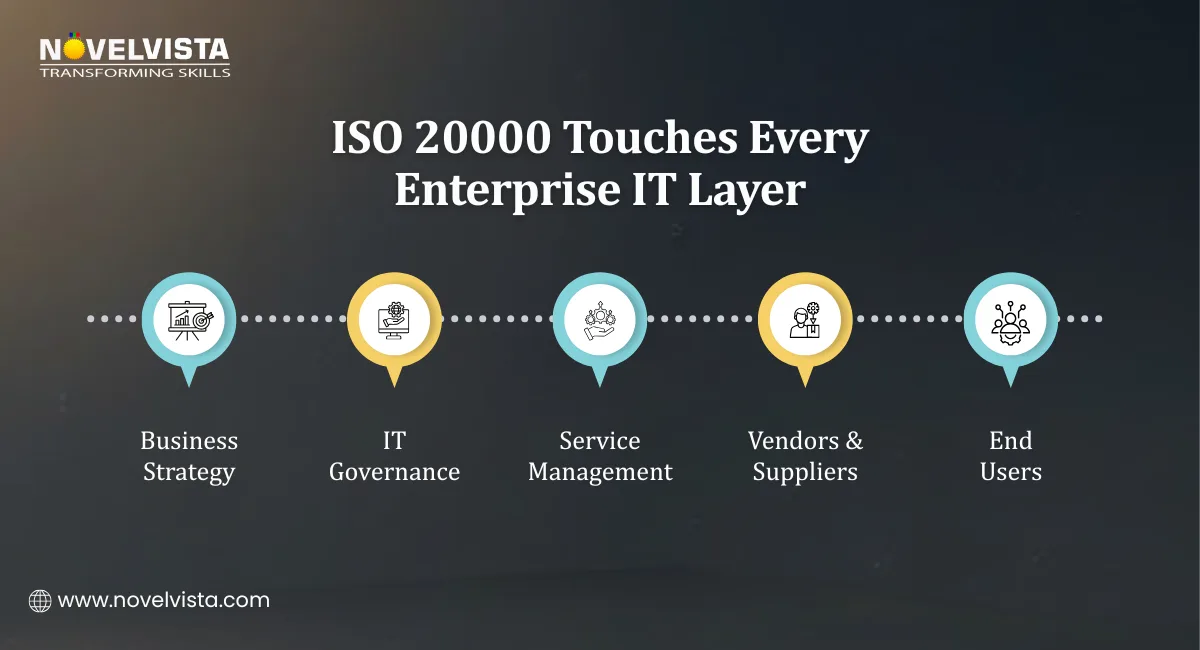
This is where ISO 20000 for enterprises becomes a strategic necessity rather than a compliance checkbox. Designed specifically for IT Service Management (ITSM), it helps organizations standardize, optimize, and continuously improve how IT services are delivered to the business.
For CIOs, IT Heads, Service Managers, and digital transformation leaders, understanding ISO 20000 for enterprises is essential to building resilient, efficient, and business-aligned IT operations.
It is the international standard for IT Service Management (ITSM). It provides a structured framework that ensures IT services are designed, delivered, managed, and improved in a consistent and controlled manner.
Unlike informal or tool-driven IT practices, it requires organizations to implement a formal Service Management System (SMS) that aligns IT operations with business objectives.
In simple terms, it helps organizations move from chaotic IT operations to structured, process-driven, and performance-measured service delivery.
At the heart of the standard is a documented Service Management System that defines policies, processes, roles, and responsibilities. The SMS creates a structured approach to how IT services are planned, delivered, monitored, and improved across the organization. It ensures alignment between business objectives and IT operations while promoting accountability and transparency. This consistency across teams and locations helps organizations maintain reliable and predictable service performance.
The standard requires that new or modified IT services are properly designed, tested, and transitioned into live environments with minimal risk. This ensures that changes are controlled, well-documented, and aligned with business needs before deployment. It helps organizations prevent service disruptions while maintaining quality and continuity of IT operations.
A major strength of the standard is its structured approach to handling incidents, identifying root causes, and managing changes without disrupting business operations. This helps organizations maintain service continuity and quickly resolve issues while minimizing impact on the business.
4. Continual Improvement
The standard is built on a cycle of monitoring, measuring, reviewing, and improving IT services—ensuring long-term operational excellence. This structured approach helps organizations identify service gaps, track performance trends, and implement corrective actions effectively. Over time, it enables teams to enhance efficiency, reduce recurring issues, and continuously align IT services with evolving business needs.
Senior leadership must actively support the standard by providing direction, resources, and accountability for IT service performance. This ensures that IT initiatives are aligned with business goals and receive the necessary backing for successful implementation.
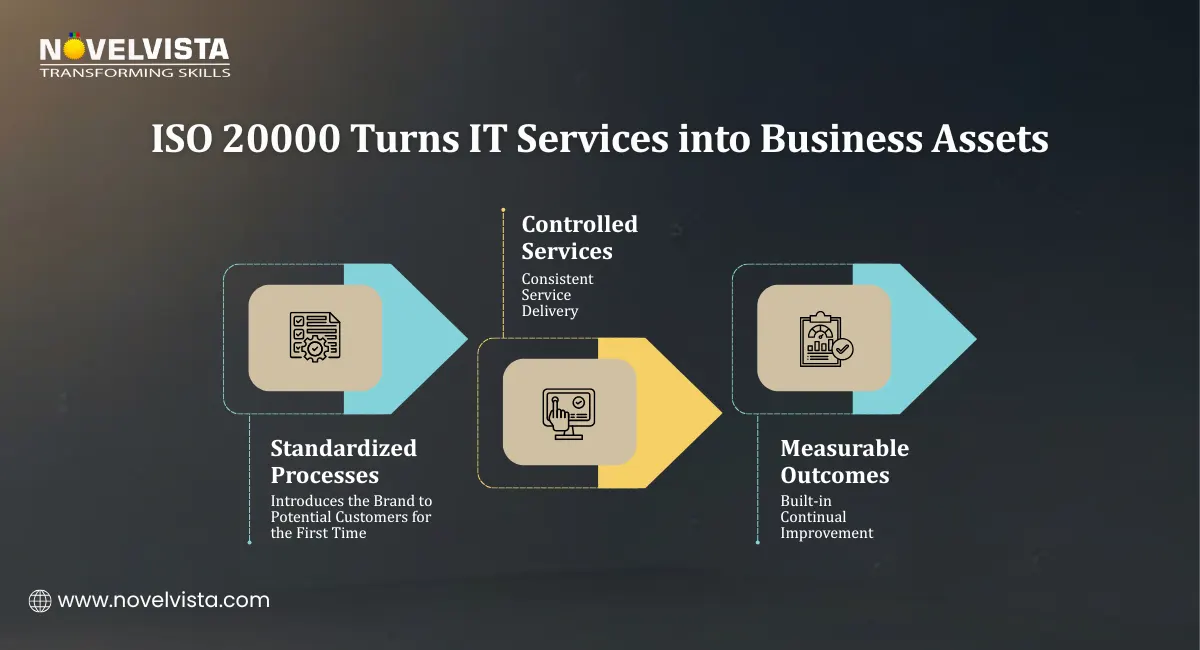
Enterprises implementing ISO 20000 for enterprises experience fewer service outages, better system stability, and predictable performance. This is achieved through standardized processes, proactive monitoring, and structured incident management across IT operations. As a result, businesses benefit from more dependable services, reduced business disruptions, and stronger trust from internal and external stakeholders.
By standardizing processes, ISO 20000 for enterprises minimizes human errors, miscommunication, and uncontrolled changes. It introduces clear governance, documented workflows, and formal approval mechanisms that reduce uncertainty in IT operations. This helps enterprises prevent service failures, strengthen control over changes, and create a more predictable and secure operational environment.
Organizations following the ISO 20000 standard consistently achieve higher Service Level Agreement (SLA) compliance, leading to improved customer satisfaction and trust.
Clients, partners, and regulators view the ISO 20000 standard as proof of mature and well-governed IT operations, demonstrating reliability and professional service management.
The ISO 20000 standard provides clear documentation, traceability, and accountability—making audits smoother, more transparent, and easier to defend.
By reducing incidents, downtime, and repetitive troubleshooting, ISO 20000 for enterprises delivers measurable financial savings. It helps organizations eliminate process redundancies, streamline service operations, and optimize the use of IT resources. Over time, this leads to lower operational costs, better budget control, and a stronger return on investment for enterprises.
With clear processes and responsibilities, IT teams spend less time firefighting and more time on innovation and improvement. Well-defined roles reduce confusion, duplicate work, and unnecessary escalations across service teams. This allows IT to focus on proactive problem-solving, automation, and value-driven initiatives that support business growth.
ISO 20000 for enterprises helps enterprises allocate people, tools, and budgets more effectively. It provides clear visibility into service demand, workload distribution, and performance metrics across IT operations. This enables leaders to make smarter resource decisions, reduce wastage, and align investments with business priorities.
The standard emphasizes performance metrics, enabling leaders to make informed investment and operational decisions. It ensures that service performance, costs, and risks are continuously measured and analyzed using clear KPIs. This data-driven approach helps enterprises prioritize improvements, justify IT spending, and align service outcomes with business objectives.
Beyond immediate benefits, ISO 20000 for enterprises builds a resilient IT ecosystem that supports digital transformation and business growth. It strengthens service governance, enhances operational maturity, and prepares organizations to adapt to new technologies and changing business needs. Over the long term, this creates a stable, scalable, and future-ready IT environment that continuously delivers value to the enterprise.
ITIL provides best practices
ISO 20000 provides a certifiable standard
ISO 27001 focuses on information security
ISO 20000 focuses on service management excellence
Transform IT from reactive to proactive.
Improve service reliability and efficiency.
Show measurable business value and ROI.
Executive sponsorship is critical for the successful adoption of ISO 20000. It signals organization-wide priority and commitment.
Assess current ITSM maturity against the standard’s requirements. Identify process gaps, risks, and improvement areas before implementation.
Standardize service management processes across departments. Ensure consistent ways of working and clear ownership across teams.
Equip IT teams with knowledge of IT service management principles and best practices. Promote understanding of roles, responsibilities, and process adherence across the organization.
Solution: Clear communication, leadership support, and stakeholder engagement.
Solution: Simplify workflows and leverage automation tools.
Solution: Align ITSM tools with ISO 20000 for enterprises requirements.
Solution: Establish clear governance and accountability structures.
In a digital-first world, adopting ISO 20000 is no longer optional—it is a strategic imperative. It transforms IT from a reactive support function into a proactive driver of business value. By improving service reliability, reducing risk, and enabling data-driven decision-making, organizations can operate smarter and build stronger trust with customers and stakeholders. Enterprises that implement this standard are better positioned for innovation, resilience, and long-term success in today’s complex and fast-evolving digital landscape.
Moreover, it fosters a culture of accountability, continual improvement, and operational excellence across IT teams. Organizations gain not just compliance, but measurable efficiency, cost savings, and a competitive edge in delivering high-quality IT services.

Join NovelVista’s ISO/IEC 20000:2018 Lead Auditor Certification Course and Training and gain practical auditing skills, real-world service management insights, and globally-recognized credentials. Designed for IT leaders and ITSM professionals, this course helps you confidently lead audits and drive service excellence in modern digital environments.
Start your ISO 20000 auditor journey today!
Author Details

Course Related To This blog
ISO 20000:2018 Lead Auditor
Confused About Certification?
Get Free Consultation Call
Stay ahead of the curve by tapping into the latest emerging trends and transforming your subscription into a powerful resource. Maximize every feature, unlock exclusive benefits, and ensure you're always one step ahead in your journey to success.