Category | DevOps
Last Updated On 08/01/2026
Software outages are no longer rare events; they are business-critical failures. According to industry reports, over 90% of enterprises experience at least one significant outage annually, and the average cost of downtime can range from $5,600 to over $9,000 per minute. In a world where users expect applications to be fast, available, and error-free 24/7, reliability is no longer optional.
This is exactly where SRE in software development comes into the picture.
But what does SRE really mean? Is it only for large tech companies? And who should actually care about it, developers, operations teams, or business leaders?
You’re in the right place.
This blog breaks down SRE development in simple terms, explains how it works in real projects, and shows the measurable impact it has on modern software teams.
To understand SRE meaning in software development, let’s start with its origin.
Site Reliability Engineering (SRE) was first introduced by Google to solve a growing problem: how to scale systems without sacrificing reliability. Instead of treating operations as a reactive support function, Google embedded reliability directly into engineering.
In simple terms, SRE in software development is the practice of using software engineering principles to design, operate, and improve reliable systems.
Unlike traditional operations teams that rely heavily on manual processes, SRE software development focuses on:
An SRE doesn’t just fix outages; they design systems so failures have minimal impact.
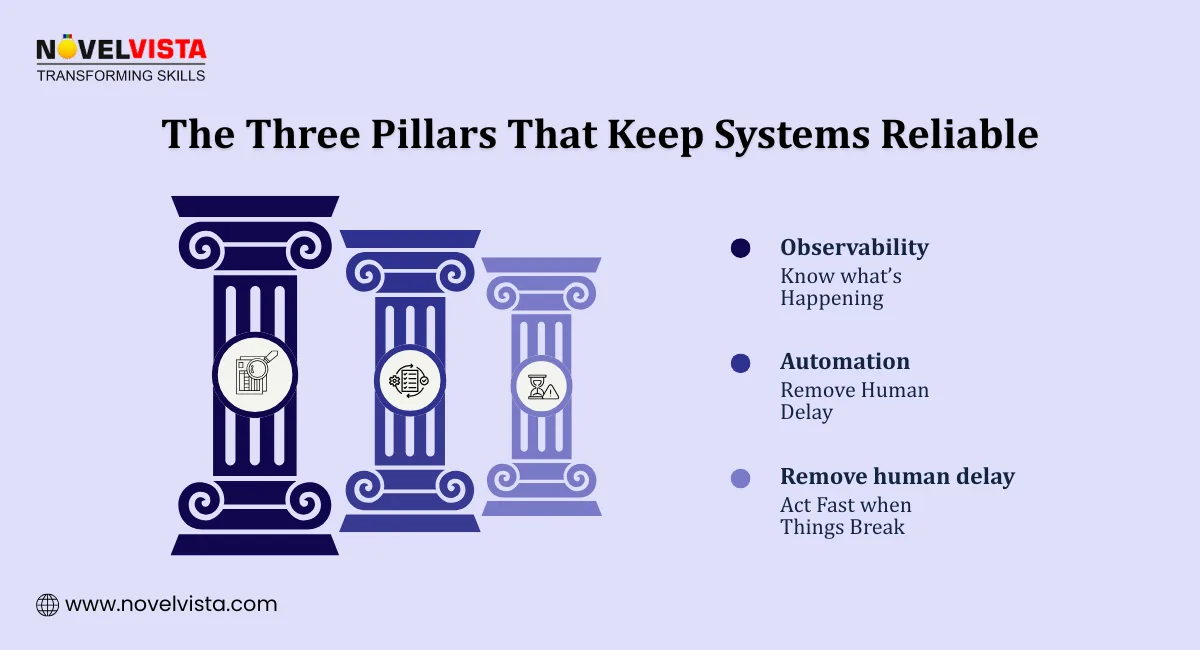
Today’s applications are complex. Microservices, cloud platforms, containers, APIs, and CI/CD pipelines have increased deployment speed, but they’ve also increased failure points.
This is where SRE development becomes critical.
Without SRE practices:
By embedding SRE in software development, organizations gain:
Reliability is no longer just an IT metric; it directly affects revenue, customer trust, and brand reputation.
One of the most common questions is whether SRE software development is just another name for DevOps.
The answer: they are related, but not the same.
DevOps focuses on breaking silos between development and operations through collaboration and faster delivery. SRE, on the other hand, introduces formal reliability engineering practices backed by metrics.
Think of it this way:
Many organizations successfully use SRE as an implementation of DevOps principles, especially at scale. Understanding the differences between SRE vs Software Engineer roles can help you decide which path aligns best with your career goals in software development.
At the heart of sre development are a few powerful principles that guide decision-making.
SLIs are measurable signals such as latency, error rate, or availability that indicate system health. In SRE, SLIs provide real-time visibility into how services are actually performing for users. They help teams detect issues early and base decisions on data rather than assumptions.
SLOs define acceptable performance targets, such as “99.9% availability per month.” Within SRE development, SLOs set clear reliability expectations that guide prioritization and release decisions. They ensure teams focus on delivering a consistent user experience instead of chasing perfection.
Error budgets allow teams to balance innovation and stability by defining how much failure is acceptable. In SRE software development, error budgets create a safety margin that supports faster deployments without risking reliability. When the budget is consumed, teams pause feature work and focus on system improvement.
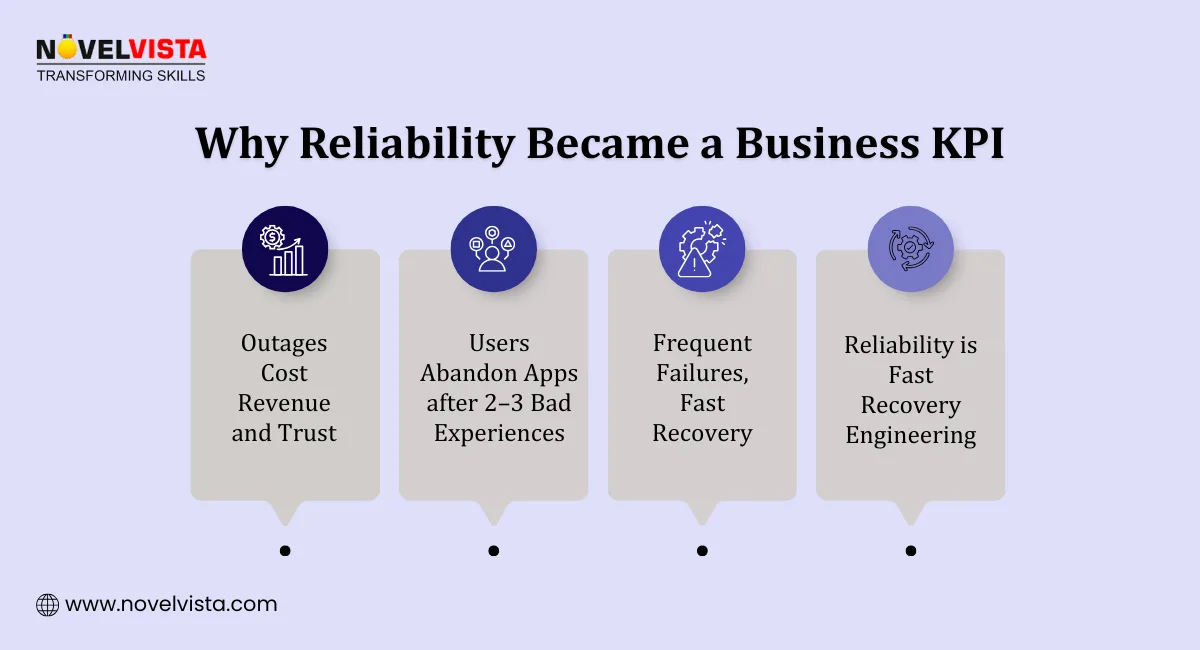
Manual tasks don’t scale in modern, distributed systems. SRE emphasizes automation to eliminate human error, speed up incident response, and improve consistency. Automation frees engineers to focus on reliability engineering instead of repetitive operational work.
These principles transform reliability from a vague goal into a measurable engineering discipline.
To put theory into action, software development relies on several proven SRE practices.
SRE teams design monitoring systems that reveal not just what failed, but why it failed. In SRE, observability provides deep insight into system behavior, dependencies, and performance trends. It helps teams move from reactive alerts to proactive reliability improvements.
Failures are expected in complex systems. What matters is how quickly teams respond and recover. SRE software development relies on clear escalation paths, well-defined runbooks, and automated responses. This approach minimizes downtime while maintaining confidence during high-pressure incidents.
Instead of blaming individuals, SRE teams analyze incidents to improve systems and processes. Within SRE development, postmortems focus on learning, documentation, and long-term prevention. This culture encourages transparency and continuous improvement across teams.
Anticipating growth ensures systems can handle increased traffic without performance degradation. In SRE in software development, capacity planning uses historical data and forecasts to prevent overload. It ensures scalability without compromising reliability or user experience.
Together, these practices create resilient systems that can handle real-world unpredictability.
Organizations that adopt SRE in software development see tangible benefits.
Companies using mature SRE development practices often report fewer critical incidents and faster recovery times, even during peak loads.
One of the biggest misconceptions is that SRE is only for operations engineers.
In reality, SRE is valuable for:
Getting started with SRE development doesn’t require mastering everything at once. It begins with learning Linux, networking, and cloud fundamentals, followed by understanding monitoring and incident response in real systems. As you practice automation using scripts and CI/CD pipelines and study real failure case studies, the principles of SRE in software development start to connect. Gradually, these skills come together to build a strong, reliability-focused mindset. Knowing SRE roles and salaries helps you plan a career in SRE and see its growth potential.
As software becomes more critical to business success, reliability can no longer be an afterthought. SRE in software development provides a structured, engineering-driven approach to building systems that users can trust.
By combining automation, metrics, and continuous improvement, SRE development helps teams innovate without fear and scale without chaos.
Whether you’re building applications, managing platforms, or leading teams, mastering SRE in software development is no longer optional; it’s essential for the future of software engineering.
If you’re ready to take your career to the next level and master SRE in software development, consider enrolling in NovelVista’s SRE Foundation and SRE Practitioner Certification Course. This program helps you become an SRE who prevents outages rather than reacts to them, teaching practical skills in Golden Signals, SLOs, SLIs, incident response, and automation. Designed for developers, DevOps engineers, and tech leaders, it equips you with hands-on knowledge to implement SRE development practices effectively and grow your reliability-focused career.
Start your SRE journey today and transform the way your organization builds and operates reliable systems!

Author Details

Confused About Certification?
Get Free Consultation Call
Stay ahead of the curve by tapping into the latest emerging trends and transforming your subscription into a powerful resource. Maximize every feature, unlock exclusive benefits, and ensure you're always one step ahead in your journey to success.