Category | DevOps
Last Updated On 28/05/2026
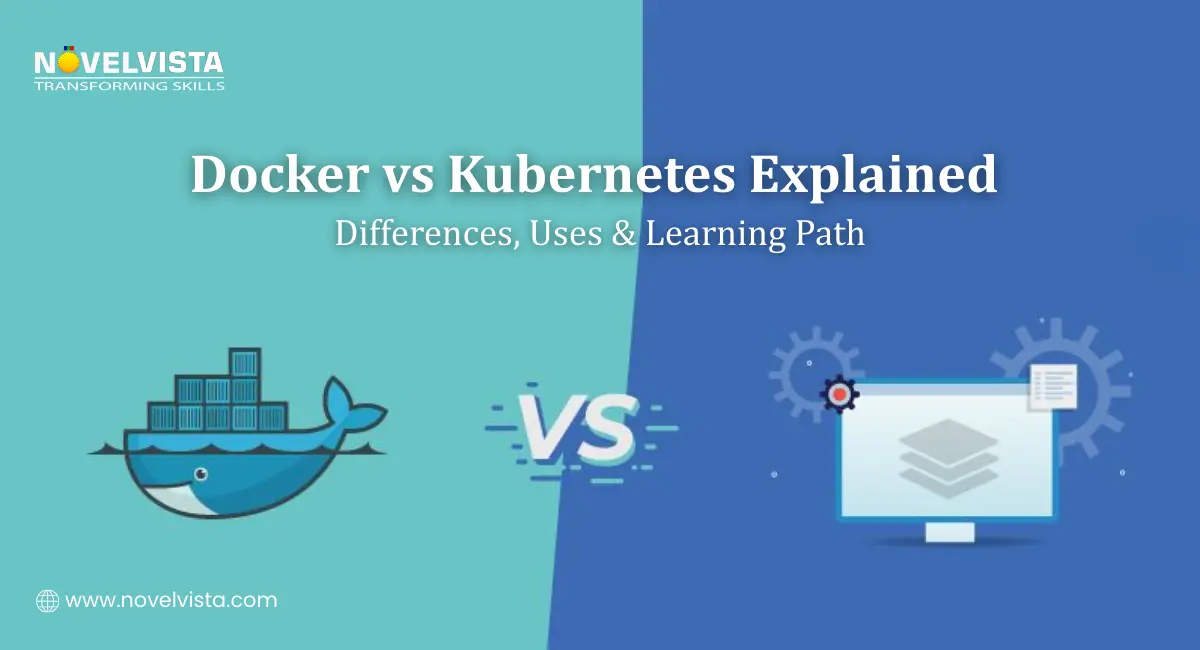
You don’t really need more tools. You need clarity. That’s why this guide exists: Docker vs Kubernetes explained without confusion, hype, or unnecessary complexity.
When people compare Docker vs Kubernetes, they often treat them as competitors. They’re not. Docker builds and runs containers. Kubernetes manages and scales them. Simple.
This article breaks down what each tool does, where they fit, which one to learn first, and how they work together in modern cloud-native systems.
|
Topic |
Docker |
Kubernetes |
|
Core Role |
Containerization |
Orchestration |
|
Scope |
Single host |
Multi-node clusters |
|
Scaling |
Manual / Swarm |
Automatic |
|
Best For |
Dev, testing, small apps |
Production, microservices |
|
Market Adoption |
87%+ container share |
92% orchestration share |
Both markets are growing rapidly:
(Source: Mordore Inntelligence)
In over 200+ container and Kubernetes training sessions delivered to DevOps and cloud teams, we’ve observed that nearly 70% of learners initially misunderstand Docker and Kubernetes as competing tools rather than complementary layers.
What Is Docker? Docker is a containerization platform that packages applications and all their dependencies into portable images.
Instead of saying “it works on my machine,” Docker ensures it works everywhere.
With Docker, developers can:
Docker powers about 75% of containers running on Linux systems and continues to dominate container runtime adoption.
In the broader discussion of Docker vs Kubernetes, Docker handles packaging and execution at the application level.
It’s ideal for:
Docker keeps environments consistent from development to staging.
What Is Kubernetes? Kubernetes (often called K8s) is an open-source orchestration platform that manages containerized applications across clusters of machines.
If Docker builds containers, Kubernetes organizes and controls them.
Kubernetes manages:
Backed by major cloud providers like AWS, Azure, and Google Cloud, Kubernetes has reached about 96% enterprise adoption, with around 80% of organizations running it in production.
When comparing Docker vs Kubernetes, Kubernetes steps in when systems grow beyond a single host.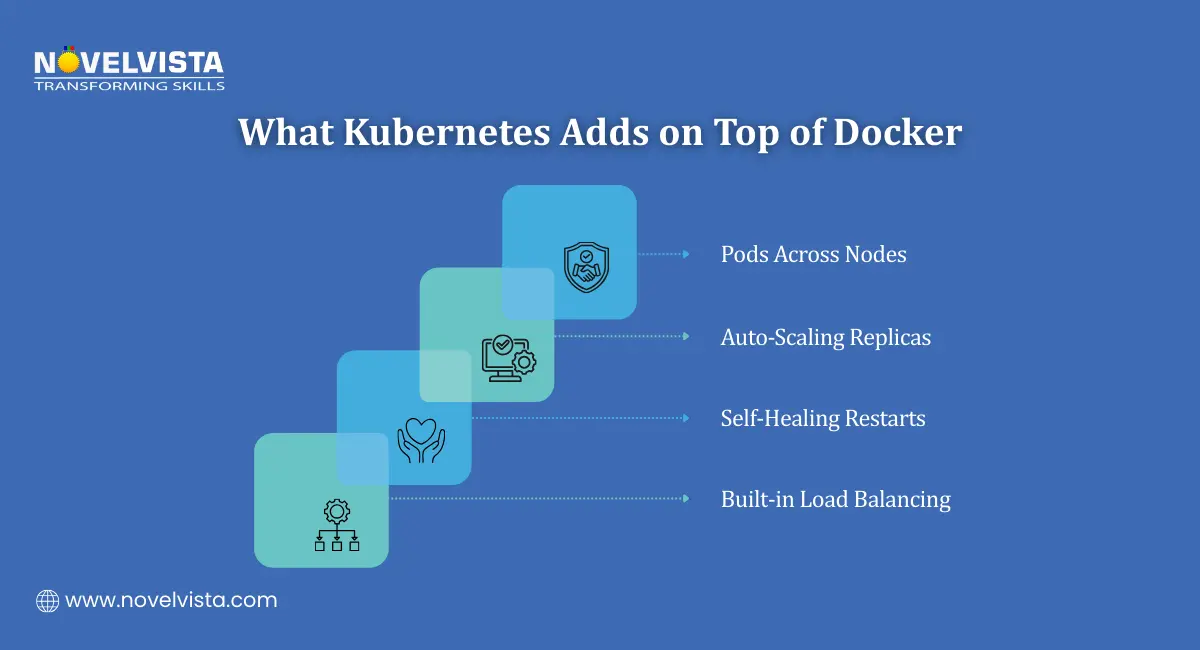
The question often asked is: Docker or Kubernetes which is better?
The honest answer depends on your use case.
Docker is better for:
Kubernetes is better for:
In real-world enterprise setups, it’s rarely Docker vs Kubernetes as a choice. It’s Docker inside Kubernetes.
In real deployment environments we support, teams begin with Docker for application packaging, and typically adopt Kubernetes once workloads exceed 3–5 production services or require automated scaling.
So if someone asks again, “Docker or Kubernetes which is better?” the practical answer is: both, but at different stages.
To remove confusion, let’s clearly outline the Key Differences Between Kubernetes and Docker.
|
Characteristic |
Docker |
Kubernetes |
|
Core Function |
Container runtime |
Orchestration platform |
|
Scope |
Single machine |
Multi-node cluster |
|
Scaling |
Manual or Swarm-based |
Automatic scaling |
|
Self-Healing |
Manual/scripted |
Automatic |
|
Load Balancing |
Basic |
Advanced built-in |
|
Learning Curve |
Easier |
Steeper |
These Key Differences Between Kubernetes and Docker show why they are not substitutes. One runs containers. The other manages container fleets.
Understanding these differences helps clarify the ongoing debate around Docker vs Kubernetes.
This is where confusion usually clears up.
When thinking about Docker vs Kubernetes: When to Use What?, remember:
Across enterprise setups we’ve observed, Docker is used in nearly 100% of development environments, while Kubernetes adoption increases significantly once high availability and uptime targets exceed 99.5%.
This is one of the most common beginner questions: Should You Learn Docker or Kubernetes First?
Start with Docker. Always.
Before you can orchestrate containers, you need to understand:
Learning Docker first builds the foundation. Jumping straight into Kubernetes without container basics usually creates confusion.
So if you're still wondering, Should You Learn Docker or Kubernetes First? the answer is simple: Docker first, Kubernetes next.
A practical roadmap looks like this:
This progression makes the Docker vs Kubernetes learning curve smoother and more logical.
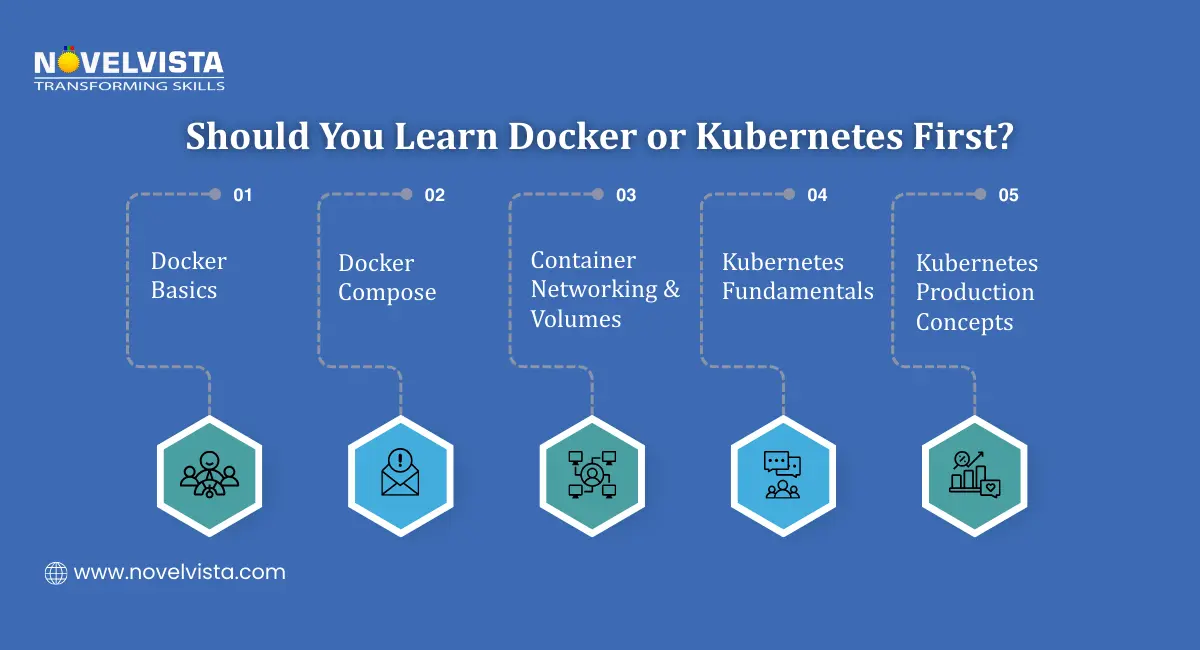
Here’s a structured path that works well for most professionals.
Focus on:
This stage builds confidence and practical container knowledge.
Learn to:
This prepares you for orchestration concepts.
Move to:
At this stage, the difference in Docker vs Kubernetes becomes clear. Docker runs containers. Kubernetes organizes them.
Deepen your skills with:
Hands-on practice is essential. Use:
This progression reflects how over 60% of cloud-native teams structure onboarding internally, starting with container basics before moving into orchestration layers.
Follow a structured 12-week plan to build Docker foundations, progress into Kubernetes orchestration, and develop practical container skills required for real-world deployments.
In modern cloud-native systems, the debate around Docker vs Kubernetes is no longer about choosing one. It’s about understanding how they integrate.
Here’s how they typically work together:
This workflow shows why the conversation about Docker vs Kubernetes should focus on collaboration, not competition.

At this point, Docker vs Kubernetes explained becomes very clear.
Rather than asking which one to choose, the smarter question is when to use each and how to master them in sequence.
Understanding Docker vs Kubernetes at this level helps you design better systems, make smarter architecture decisions, and plan your learning path effectively.
The insights shared here are drawn from structured DevOps training programs, enterprise implementation case discussions, and current industry adoption patterns rather than theoretical comparisons.
If you’re ready to move beyond basics and build strong orchestration expertise, NovelVista’s Kubernetes Professional Certification Training provides structured, hands-on learning. The program covers cluster architecture, deployments, scaling strategies, troubleshooting, and real-world production scenarios. It is designed for professionals who want practical confidence in managing containerized applications at scale and strengthening their cloud-native career path.
Author Details

Confused About Certification?
Get Free Consultation Call
Stay ahead of the curve by tapping into the latest emerging trends and transforming your subscription into a powerful resource. Maximize every feature, unlock exclusive benefits, and ensure you're always one step ahead in your journey to success.