Category | DevOps
Last Updated On 10/12/2025

You know that moment when a system goes down and everyone starts guessing what broke, who touched what, and how long it’ll take to fix? That’s usually when teams realise how much they rely on a solid SRE Lead. And honestly, that’s where things get interesting — because this role isn’t just about fixing outages. It’s about making sure fewer outages happen in the first place.
This blog gives you a clear and friendly breakdown of what an SRE Lead really does, what skills matter, what responsibilities companies expect, how salaries look across regions, and how to prepare for SRE Lead interview questions without feeling lost.
As companies scale microservices, distributed systems, and cloud-native platforms, the demand for a skilled SRE Lead has exploded. They bridge development and operations, work with SLOs and error budgets, improve reliability, reduce toil, and bring order to all the chaos that modern systems create.
Let’s walk through what this role looks like in the real world.
A clean SRE Lead job description usually feels like a long wishlist from engineering managers. But when you break it down, the expectations become much easier to understand. Companies want someone who can guide reliability for the whole organisation while keeping systems fast, stable, and predictable.
Here’s the simplified version of what most companies look for:
You’ll set clear SLOs, error budgets, and reliability goals that match the company’s product needs. This includes deciding what “healthy” actually means for each service and shaping a roadmap to get there.
A big part of the SRE Lead job description is removing repetitive manual work. You drive automation projects that free engineers from tedious tasks so they can focus on higher-value improvements.
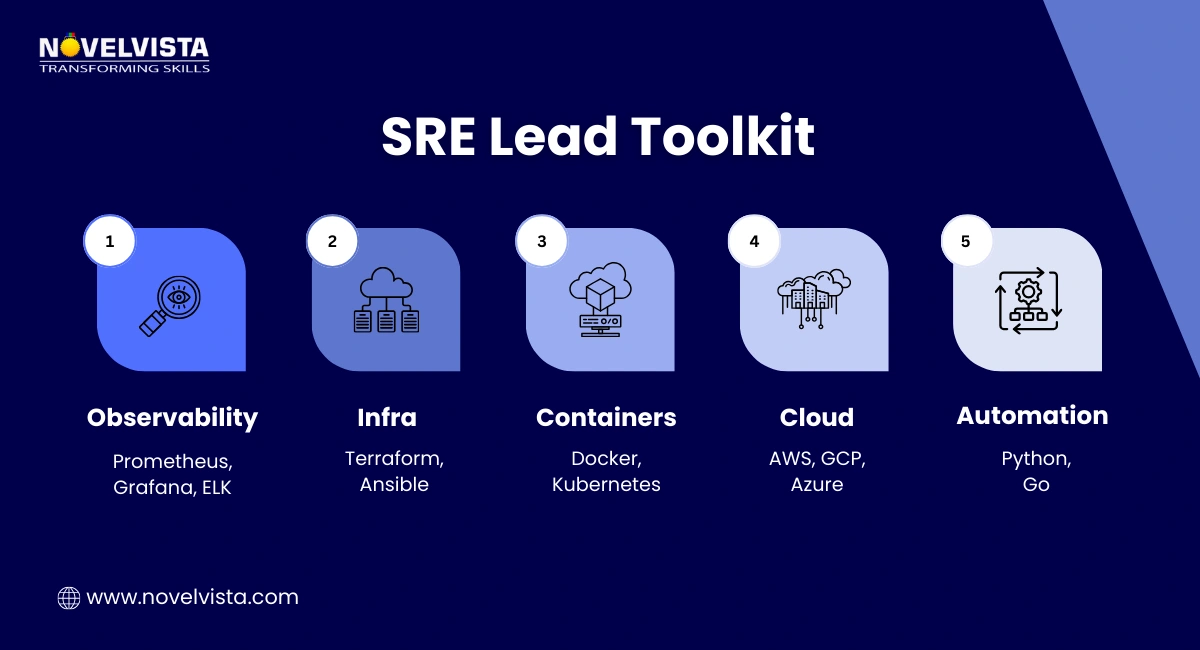
Tools like Prometheus, Grafana, and ELK don’t just monitor systems — they help teams understand behaviour and patterns. An SRE Lead chooses the right mix, builds dashboards, and ensures signals make sense.
When things break, you guide the response, keep communication clear, calm the chaos, and make sure learning happens through blameless postmortems.
You study workloads, predict traffic, and help teams scale without wastage. Companies depend on the Lead SRE to avoid surprises during peak loads.
Better pipelines mean safer releases. You work on rollback strategies, deployment checks, quality gates, and everything that reduces production risks.
A strong SRE Lead works with devs, ops, architects, and security teams to shape stable and scalable services. You make sure reliability isn’t something people remember only during outages.
The responsibilities outlined reflect industry standards for SRE leadership roles at top tech companies. These duties are informed by SRE frameworks used by Google, Microsoft, and other leading organizations, ensuring alignment with proven reliability practices.
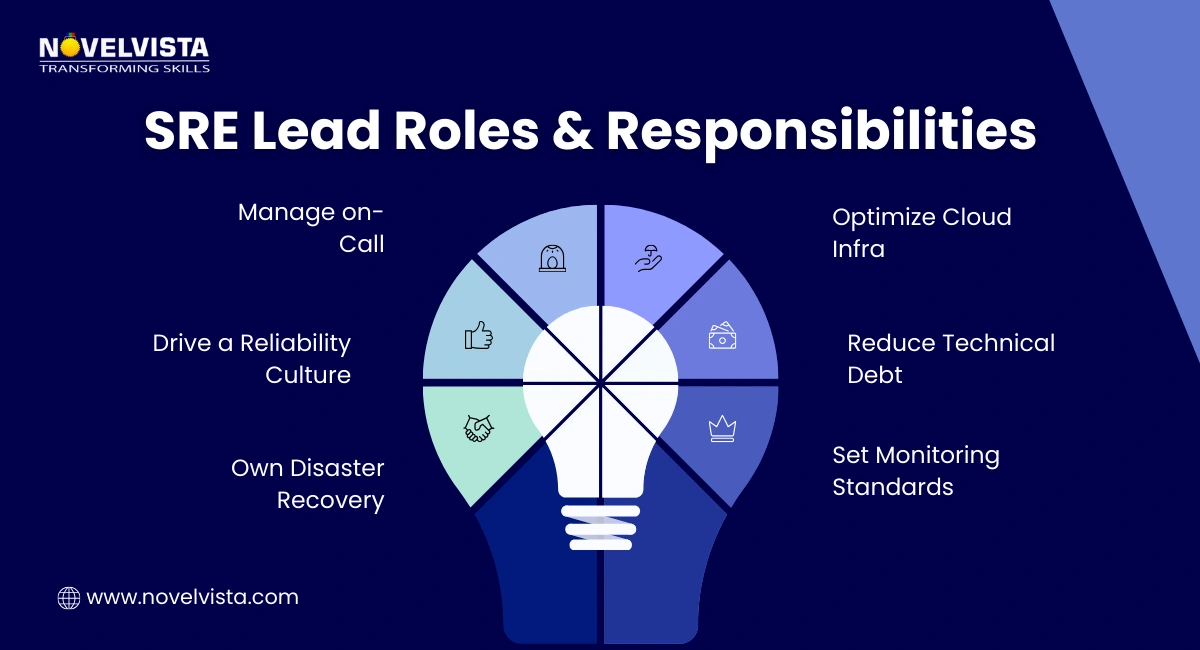
Let’s go deeper into the everyday and strategic duties companies rely on. These define what a Lead SRE handles on a regular basis:
Get a clean, practical daily checklist
to stay ahead of incidents, dashboards, escalations,
and team leadership, without burning out.
A strong SRE Lead blends deep technical skill with empathy, leadership, calm thinking, and a strong sense of responsibility. Let’s break them into two parts.
The technical and leadership skills highlighted are drawn from real SRE lead job requirements and our experience running SRE workshops. They are grounded in what top-performing SRE teams actually use to maintain reliability at scale.
Level up your SRE career. Read our blog on essential SRE Lead skills to stay ahead and excel in reliability, leadership, and cloud operations.
Money isn’t everything, but let’s be honest — it matters when you put years into building reliability skills. A Lead SRE engineer salary reflects the impact this role creates for modern tech companies. Since businesses depend on stable platforms, they’re ready to pay well for someone who can keep things running smoothly.
Here’s a simple look at what the market usually offers:
Companies in the US offer some of the highest packages for this role. Big tech, fintech, AI-led firms, and hyper-growth startups often push salaries even higher with bonuses and stock options. (Source: Glassdoor)
Indian organisations now treat reliability as a core priority. This means stronger budgets for SRE functions and better salary bands for experienced engineers transitioning into SRE Lead roles. (Source: Glassdoor)
FAANG-level firms and global product companies offer premium pay because their systems deal with millions of users, strict uptime requirements, and huge scale.
Several factors shape a Lead SRE engineer salary, including:
Companies pay well because a stable, reliable system directly impacts revenue. That’s why the role holds high value across industries.
Curious about SRE Lead salaries and growth potential? Check out our blog to see what top SRE Professionals earn and how you can plan your career path in site reliability engineering.
Growing into an SRE Lead happens step by step. Most people follow a journey that looks like this:
You start by learning on-call basics, debugging, monitoring tools, scripting, and automation.
You take ownership of services, improve pipelines, handle bigger incidents, and design systems with reliability in mind.
This is where you move from “fixing systems” to “leading reliability.” You start planning roadmaps, mentoring teams, and shaping architecture decisions.
Some helpful certifications along the journey include:
The career progression from junior SRE to lead reflects widely recognized SRE career frameworks and certifications (like SRE Practitioner Certification). This guidance aligns with industry-recognized milestones for professional growth.
The role is exciting, but it also comes with challenges that test both technical and leadership skills. Here are some of the common roadblocks:
Teams want to ship fast, but reliability needs slow and steady planning. You help teams find a middle ground so users stay happy and features keep moving.
Many organisations rely on manual tasks that slow down progress. You Lead automation efforts that reduce workload and free engineers for meaningful work.
Different teams work differently. You create shared tools, templates, and guidelines that make reliability easier for everyone.
Each cloud provider behaves differently. You help teams build setups that stay stable and predictable no matter where workloads run.
Without solid dashboards, alerts, and logs, teams fly blind. You design systems that show what’s happening, where issues start, and how to fix them.
Solutions often include error budgets, chaos engineering, automated runbooks, and self-service platforms — all guided by the SRE Lead.
If you enjoy solving problems, improving systems, guiding teams, and shaping how technology stays reliable, the SRE Lead role opens a powerful path. It offers strong growth, great pay, and chances to influence how entire organisations operate. With the right mix of technical depth and leadership skills, you can grow into this role smoothly and confidently.
The conclusions and recommendations are backed by real-world SRE implementations and best practices observed across companies of all sizes. Following these methods supports informed career decisions and operational excellence.
If you’re planning to grow into a strong SRE lead, the best move you can make right now is learning the right principles with expert guidance. NovelVista’s SRE Foundation and SRE Practitioner courses help you build real reliability skills with hands-on practice, clear explanations, and industry-aligned training. Whether you’re just entering SRE or aiming for a senior role, these programs give you the structure and confidence to move ahead.
NovelVista’s SRE courses combine theoretical knowledge with hands-on lab experience. Learners gain real-world skills in reliability engineering, incident management, and cloud-native operations under expert guidance, ensuring credibility and readiness for advanced SRE roles.

Author Details

Confused About Certification?
Get Free Consultation Call
Stay ahead of the curve by tapping into the latest emerging trends and transforming your subscription into a powerful resource. Maximize every feature, unlock exclusive benefits, and ensure you're always one step ahead in your journey to success.