Category | DevOps
Last Updated On 28/05/2026

Cloud computing is no longer an emerging trend it is the backbone of modern business. Today, over 90% of enterprises run critical workloads in the cloud, and container adoption has surged by more than 300% in just five years. Behind this massive shift toward cloud-native infrastructure stands one powerful technology: Kubernetes. From startups scaling overnight to global enterprises managing millions of users, Kubernetes has become the standard for orchestrating containerized applications at scale.
Open almost any DevOps or cloud engineering job portal in 2026, and you’ll see one skill appearing again and again Kubernetes. Why? Because organizations are no longer just deploying applications; they are building resilient, automated, and highly scalable systems. And they need engineers who can design, manage, and optimize those systems with confidence.
So who is this guide for?
If you’re asking yourself how to become a Kubernetes Engineer in 2026, what technical skills truly matter, which certifications employers value, and what kind of salary growth you can expect, you’re in the right place. This step-by-step roadmap will take you from foundational knowledge to job-ready expertise, helping you build a future-proof career in one of the most in-demand domains in tech.
Let’s begin.
Before diving into the roadmap, let’s understand the role.
A Kubernetes Engineer is responsible for designing, deploying, managing, and scaling containerized applications using Kubernetes clusters. They ensure applications run smoothly, securely, and efficiently across cloud or on-premise environments.
Typical responsibilities include:
In 2026, Kubernetes engineers are not just “cluster managers.” They are cloud-native architects who bridge development and operations.
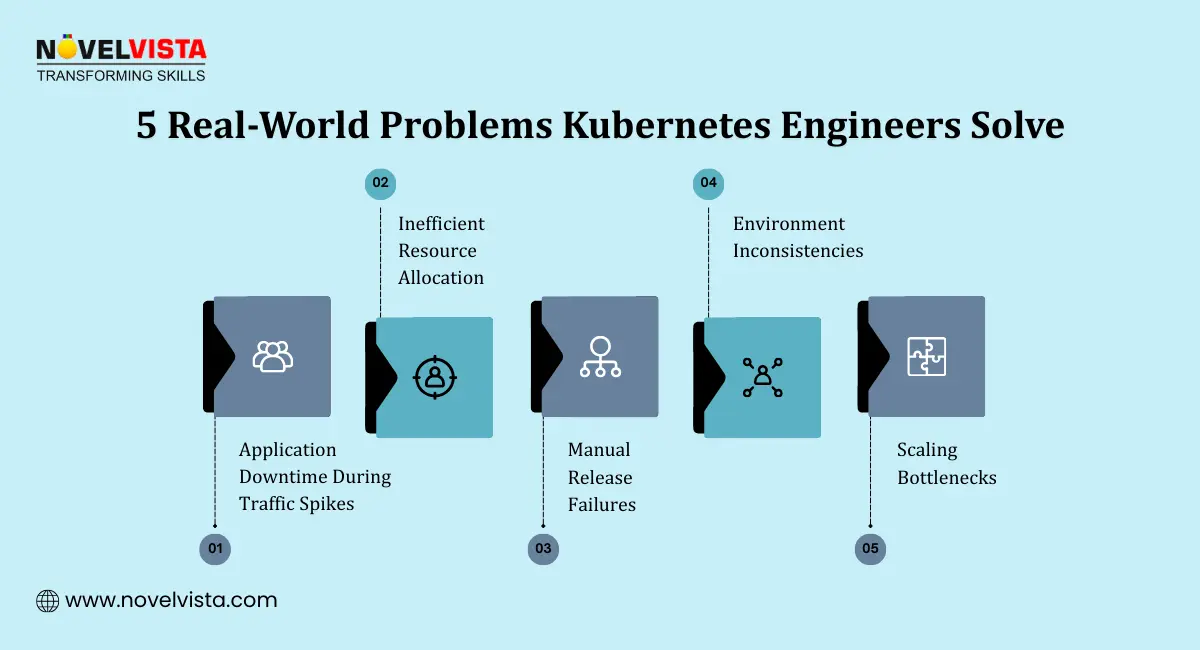
Before mastering Kubernetes, you need solid fundamentals.
Kubernetes environments typically run on Linux systems, so a strong grasp of Linux fundamentals is essential. You must understand file systems, process management, shell scripting, and system permissions to manage and troubleshoot clusters effectively. Strong Linux knowledge helps you automate tasks, secure nodes, and handle production environments with confidence.
Kubernetes heavily relies on networking concepts like IP addressing, DNS, load balancing, and TCP/IP to ensure smooth communication between pods, services, and external users. Without strong networking basics, understanding Kubernetes services, cluster networking, and ingress controllers can quickly become confusing and difficult to troubleshoot.
Kubernetes orchestrates containers, and Docker is the most popular container platform used to build and run them. You should learn building Docker images, writing Dockerfiles, managing containers, and working with container registries to develop strong container fundamentals. If you're serious about following a Kubernetes Career Roadmap for Beginners, mastering these container basics is absolutely non-negotiable.
Now comes the core step in becoming a Kubernetes Engineer, mastering the essential components such as Pods, Nodes, Clusters, Deployments, Services, ConfigMaps, and Secrets. You must understand how scaling works, how rolling updates function, and how Kubernetes ensures high availability in production environments. Practice by creating clusters using Minikube or Kind, deploying applications, scaling workloads, and managing namespaces. Hands-on practice is critical because reading theory alone will not prepare you for real-world Kubernetes engineering roles.
In 2026, Kubernetes rarely runs in isolation. It integrates deeply with cloud platforms and DevOps pipelines.
Most organizations use managed Kubernetes services such as:
Understanding cloud-native Kubernetes environments makes you more employable.
Learn how Kubernetes works with:
Automating deployments is a key responsibility of a Kubernetes Engineer.
Tools like Terraform and Helm help automate cluster setup and application deployment.
If you want to follow the Kubernetes Career Roadmap for Beginners effectively, cloud integration skills are essential.
The difference between an average candidate and a job-ready Kubernetes Engineer is hands-on experience. You should build projects such as deploying a microservices-based application, setting up monitoring using Prometheus and Grafana, implementing auto-scaling, and creating secure namespaces. Upload your projects to GitHub, as employers value practical exposure far more than theoretical knowledge alone.
One of the most common questions is: What are the kubernetes certifications required for job roles?
The most recognized certifications include:
While certifications alone won’t guarantee a job, they validate your expertise and improve your resume credibility.
If you're serious about following a Kubernetes Career Roadmap for Beginners, at least one certification is highly recommended.
Let’s talk about what truly motivates many professionals — salary.
The Kubernetes Engineer Salary in 2026 continues to rise due to high demand and limited skilled professionals.
Average global salary ranges:
In India, the Kubernetes Engineer Salary in 2026 ranges between ₹12 LPA to ₹35 LPA depending on experience and certifications.
Factors influencing salary:
The market strongly favors professionals who combine Kubernetes with security and automation expertise.
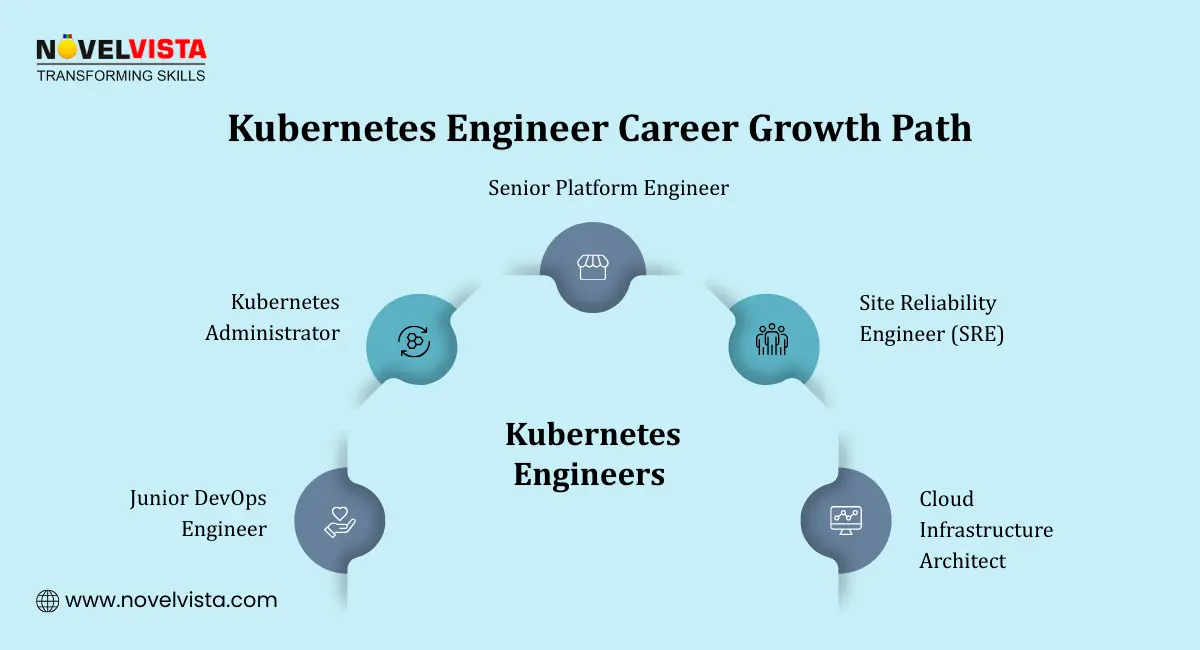
If you’re starting from scratch, here’s a practical roadmap:
This structured Kubernetes Career Roadmap for Beginners ensures you develop both theoretical and practical skills.

Avoid these mistakes to accelerate your journey toward becoming a Kubernetes Engineer.
The demand for Kubernetes professionals is not just growing it is accelerating at a pace few other technologies can match. As organizations adopt cloud-native architectures, transition to microservices, and automate deployments at scale, the need for skilled Kubernetes Engineers continues to surge. This is no longer a niche skill; it is a core capability powering modern infrastructure.
If you commit to this Kubernetes Career Roadmap for Beginners, strengthen your fundamentals, gain real hands-on experience, and earn the right kubernetes certifications required for job roles, you position yourself for long-term career growth in a future-proof domain. The rising Kubernetes Engineer Salary in 2026 clearly reflects how valuable these skills have become across industries.
The opportunity is real but it belongs to those who take action. Learn consistently. Build real projects. Solve real problems. Start today, stay disciplined, and keep improving.
Ready to become a job-ready Kubernetes Engineer in 2026?
Join NovelVista’s Kubernetes Training & Certification Course and gain practical cluster management experience, real-world deployment skills, and industry-recognized credentials aligned with current market demands. Designed for aspiring DevOps engineers, cloud professionals, and IT practitioners, this program helps you master container orchestration, automation, cloud integration, and the kubernetes certifications required for job roles all through guided, expert-led learning.
Take the next step toward boosting your Kubernetes Engineer Salary in 2026 and building a future-proof cloud career.
Start your Kubernetes engineering journey today!
Author Details

Confused About Certification?
Get Free Consultation Call
Stay ahead of the curve by tapping into the latest emerging trends and transforming your subscription into a powerful resource. Maximize every feature, unlock exclusive benefits, and ensure you're always one step ahead in your journey to success.