Category | AGILE and SCRUM
Last Updated On 25/06/2026

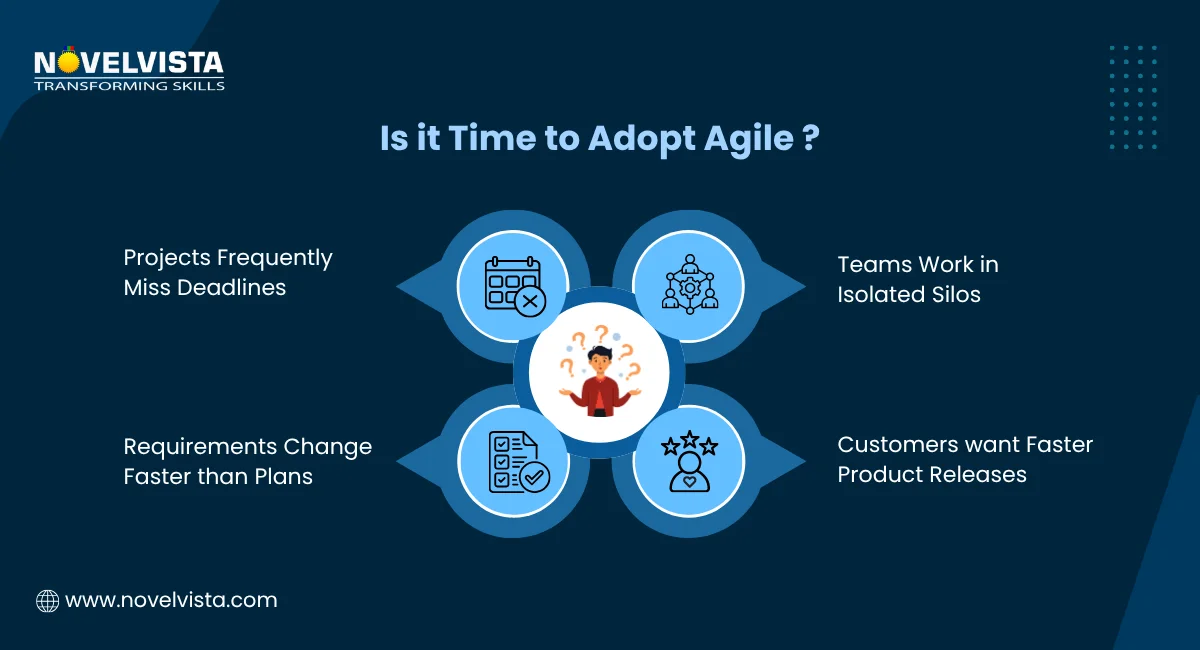
What happens when a project's requirements change halfway through development? What if customer expectations shift just weeks before launch? Or worse, what if your team spends months building a solution only to discover it no longer meets business needs?
These are challenges that organizations face every day. In an era where market conditions evolve rapidly, customer demands change constantly, and innovation cycles grow shorter, traditional project management approaches often struggle to keep pace. In fact, studies have consistently shown that projects with greater flexibility and stakeholder collaboration are more likely to meet business objectives and deliver customer value.
The answer lies in Agile Methodology.
According to recent industry reports, organizations that adopt agile practices experience faster project delivery, improved collaboration, and higher customer satisfaction compared to traditional project management approaches. Agile has become the preferred framework for businesses seeking adaptability and continuous improvement in an increasingly dynamic marketplace.
But what is agile methodology? How does it work? Why do organizations across industries rely on it? And what are the agile methodology steps that help teams achieve better outcomes?
This comprehensive guide explores the principles, frameworks, benefits, and implementation of agile project management while helping you understand how modern organizations leverage the agile development methodology to drive innovation and business success.
Before exploring its benefits, it is important to understand what is agile methodology.
Agile methodology is a project management and product development approach that focuses on iterative progress, collaboration, customer feedback, and continuous improvement. Instead of completing an entire project before gathering feedback, Agile breaks work into smaller, manageable increments called iterations or sprints.
Each sprint delivers a functional component of the product, allowing teams to collect feedback and make adjustments throughout the project lifecycle.
The core objective of agile methodology is to deliver value quickly while remaining adaptable to changing business requirements.
Traditional Project Management | Agile Methodology |
| Fixed requirements | Flexible requirements |
| Sequential execution | Iterative development |
| Limited customer involvement | Continuous customer feedback |
| Changes are difficult | Changes are encouraged |
| Long delivery cycles | Frequent deliveries |
| Extensive documentation | Working solutions prioritized |
This flexibility is one of the key reasons why agile methodology has become the preferred choice for modern organizations.
The agile methodology emerged in 2001 when a group of software development experts introduced the Agile Manifesto. The manifesto established four fundamental values that continue to guide Agile teams today:
These principles shifted the focus from strict project control toward adaptability, collaboration, and customer-centric delivery.
The agile methodology is built upon several principles that help teams remain efficient and responsive.
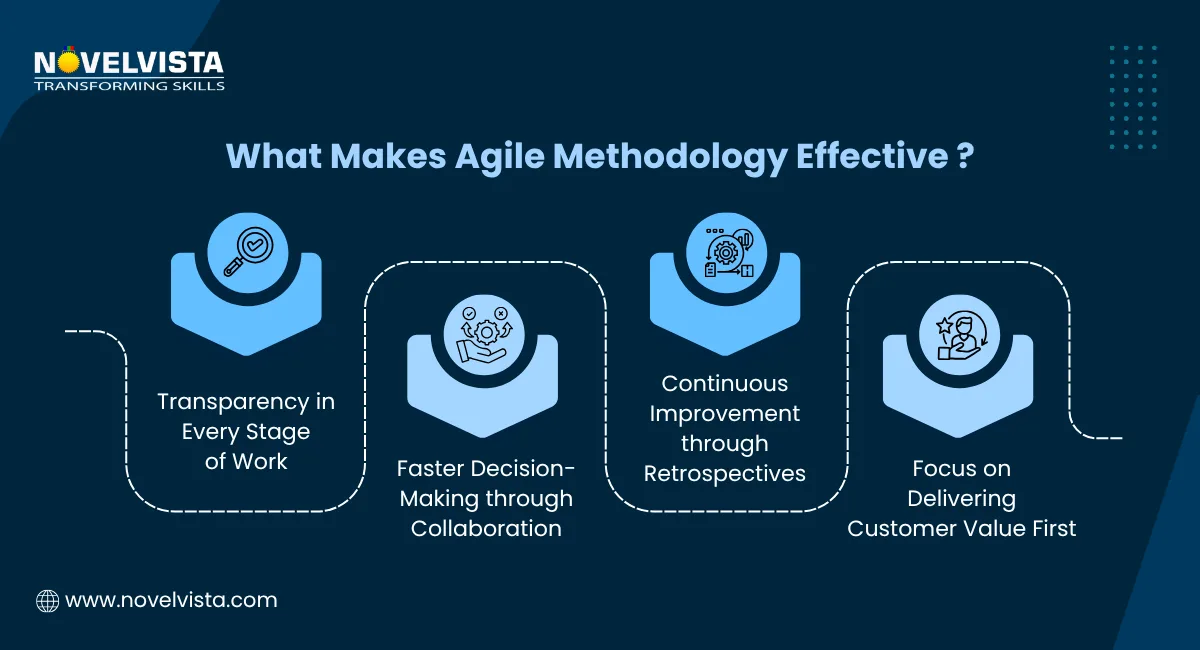
Customers are involved throughout the project lifecycle. Their feedback helps shape product improvements and ensures the final solution meets expectations.
Teams regularly evaluate performance and identify opportunities for improvement through retrospective meetings.
Instead of waiting months for project completion, teams deliver incremental value through short development cycles.
Cross-functional teams work closely together, promoting knowledge sharing and faster decision-making.
Changing requirements are viewed as opportunities rather than obstacles.
These principles make agile methodology particularly effective in environments where change is frequent and innovation is essential.
The agile development methodology focuses on delivering software and products through incremental releases rather than large-scale deployments.
In traditional development models, teams often spend months designing, developing, and testing before launching a product. This approach increases the risk of building features that customers may not actually need.
The agile development methodology reduces this risk by introducing:
As a result, teams can identify issues earlier and adapt their solutions based on real-world feedback.
One of the most popular Agile frameworks is the agile scrum methodology.
Scrum provides a structured framework that enables Agile teams to manage work efficiently through short development cycles known as sprints.
Typically, a sprint lasts between one and four weeks and focuses on delivering a specific set of features or objectives. If you're new to Agile and wondering whether Scrum is only meant for software developers, that's a common misconception. Scrum is used by professionals across industries, including marketing, HR, operations, and finance. To understand the framework in simple terms, explore our detailed guide on Scrum for Non-Techies, which breaks down Scrum concepts without technical jargon.
Role | Responsibility |
| Product Owner | Defines priorities and manages requirements |
| Scrum Master | Facilitates the Scrum process and removes obstacles |
| Development Team | Builds and delivers the product |
The agile scrum methodology helps organizations improve visibility, collaboration, and productivity while maintaining flexibility.
The scrum agile methodology is widely used across industries because it provides a balance between structure and adaptability.
A typical Scrum workflow includes:
This cycle continues until the project goals are achieved.
Organizations ranging from startups to global enterprises use the scrum agile methodology to accelerate innovation and improve customer satisfaction.
Understanding the agile methodology steps can help organizations successfully implement Agile practices.
Clearly establish project goals, business objectives, and customer expectations.
Develop a list of features, tasks, and requirements that need to be completed.
Select backlog items for the upcoming sprint and define deliverables.
Team members collaborate to develop, test, and complete assigned work.
Short daily meetings help identify progress, challenges, and next actions.
The team demonstrates completed work and gathers stakeholder feedback.
The team evaluates what went well and identifies areas for improvement.
These agile methodology steps create a continuous cycle of learning and improvement that drives long-term project success.
Organizations continue adopting agile methodology because of its proven business advantages.
Incremental releases allow organizations to launch products more quickly.
Frequent feedback ensures customer needs remain at the center of development efforts.
Cross-functional teamwork improves communication and knowledge sharing.
Problems are identified and resolved earlier in the project lifecycle.
Teams can quickly adapt to changing market conditions and business priorities.
Continuous testing and iterative improvements lead to more reliable outcomes.
Although agile methodology offers significant benefits, implementation is not always straightforward.
Teams accustomed to traditional methods may struggle to adapt to Agile practices.
Successful Agile transformation requires active executive sponsorship.
Without effective collaboration, Agile processes can lose effectiveness.
Organizations often underestimate the importance of Agile education and coaching.
Addressing these challenges early increases the likelihood of successful adoption.
Organizations looking to maximize Agile success should follow these best practices:
By following these practices, teams can unlock the full value of agile methodology while creating a culture of innovation and adaptability. As Agile adoption continues to grow across organizations, professionals with Scrum knowledge are increasingly in demand. Whether you're preparing for a Scrum Master role, Agile Coach position, or project management interview, reviewing common Agile Scrum Interview Questions can help you strengthen your understanding of Agile concepts and improve your confidence during interviews.
The agile methodology has transformed how modern organizations manage projects, develop products, and deliver customer value. By emphasizing collaboration, adaptability, and continuous improvement, Agile enables teams to respond effectively to changing business requirements while maintaining productivity and quality.
Whether you are exploring what is agile methodology for the first time or looking to improve your existing processes, adopting the agile development methodology can help your organization accelerate delivery, enhance customer satisfaction, and remain competitive in a rapidly evolving market.

Frameworks such as the agile scrum methodology and scrum agile methodology provide practical structures for implementation, while the agile methodology steps offer a proven roadmap for achieving project success. For professionals looking to build practical Agile expertise and validate their skills, pursuing an Agile Scrum Master certification can provide a strong foundation for leading Agile teams and initiatives effectively.
As businesses continue embracing digital transformation, Agile remains one of the most effective approaches for managing complexity, fostering innovation, and delivering continuous value.
Agile methodology is a project management approach that focuses on iterative development, customer collaboration, and continuous improvement. It helps teams deliver value faster while adapting to changing requirements.
Traditional project management follows a sequential process, while agile methodology uses iterative cycles and continuous feedback. Agile allows greater flexibility and faster delivery.
Agile scrum methodology is a framework within Agile that organizes work into short sprints. It uses defined roles, events, and practices to improve collaboration and project delivery.
The key agile methodology steps include project vision, backlog creation, sprint planning, sprint execution, review, and retrospective. These steps support continuous improvement and value delivery.
The agile development methodology helps organizations reduce risk, improve product quality, accelerate releases, and respond quickly to customer feedback and market changes.
Author Details

Course Related To This blog
Agile Project Management
Certified Agile ITSM Manager (CAISM)
Agile Product Management
Certified Agile Scrum Product Owner
Certified Agile Service Manager
Confused About Certification?
Get Free Consultation Call
Stay ahead of the curve by tapping into the latest emerging trends and transforming your subscription into a powerful resource. Maximize every feature, unlock exclusive benefits, and ensure you're always one step ahead in your journey to success.