Category | Quality Management
Last Updated On 10/02/2026
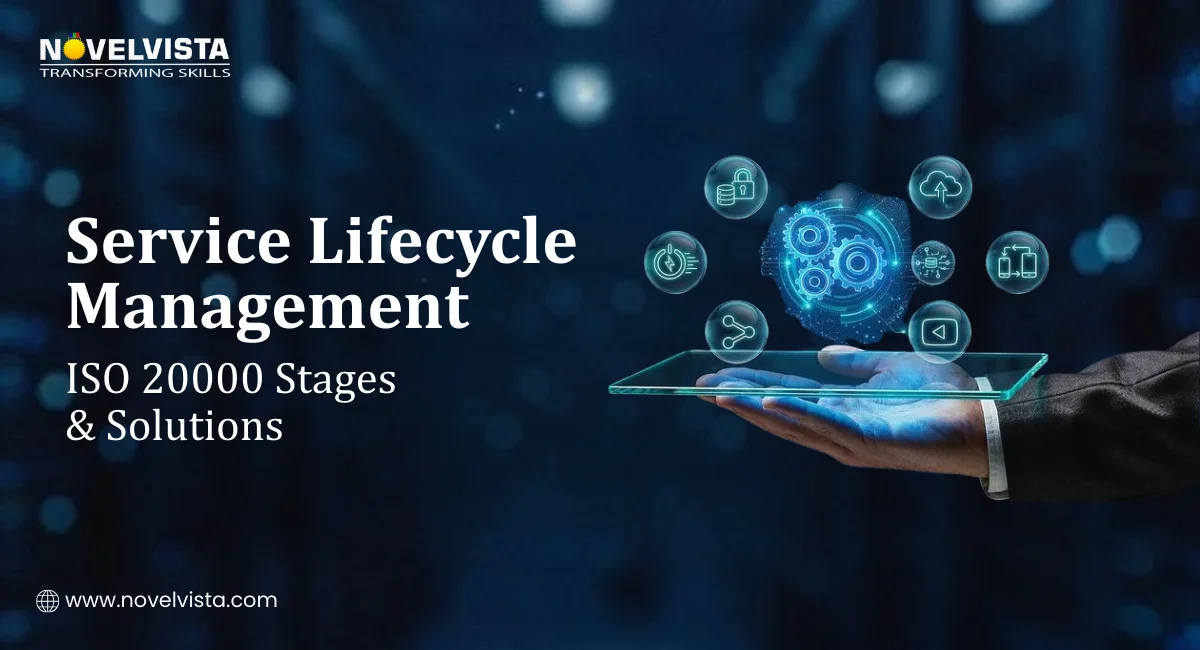
Services rarely fail because of technology alone. They fail because they were rushed into production, poorly handed over, or never reviewed after launch. That’s exactly where service lifecycle management comes in. It brings control to how services are planned, built, delivered, and improved end-to-end.
In ISO 20000 Lead Auditor training sessions, lifecycle gaps are one of the most common issues discussed. Many participants describe environments with strong operations but weak planning or transition controls, exactly the imbalance this guide is designed to address.
This guide explains what is service lifecycle management, how ISO 20000 structures it, and why auditors care deeply about lifecycle discipline. If you’ve seen strong operations but weak audits, this will connect the dots.
ISO 20000 formalizes the service management lifecycle through a structured Service Management System (SMS). This system ensures services are controlled, measured, and improved in a repeatable way.
At the heart of this lifecycle is PDCA (Plan–Do–Check–Act):
Plan services based on business and risk requirements
Do implement and operate them consistently
Check performance, KPIs, and compliance
Act to improve weak areas and prevent recurrence
The service management lifecycle is not linear. It loops continuously, which is exactly what auditors expect to see.
ISO 20000 also aligns well with:
ISO 9001 for quality management
ISO 27001 for information security
This alignment allows organizations to show integrated governance instead of siloed controls, something auditors strongly favor when reviewing service lifecycle management maturity.
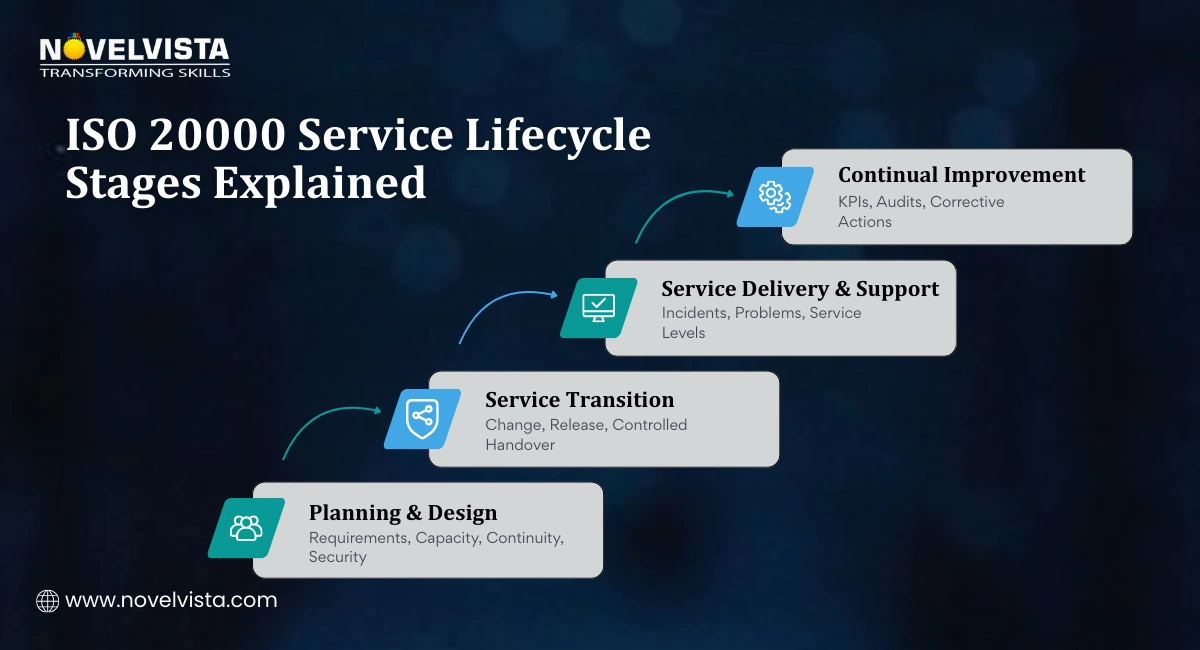 ISO 20000 does not support fragmented processes. It expects a complete, end-to-end service lifecycle management approach that covers all stages.
This stage defines what the service must achieve.
During classroom case studies, weak service design is one of the most frequent root causes behind later nonconformities. When requirements, risks, and ownership are unclear at this stage, auditors often find repeated issues downstream.
Transition is where many services break.
ISO 20000 expects evidence that services move from design to live use in a controlled way. Weak transition control is a common audit finding in service lifecycle management reviews.
For a deeper understanding beyond the basics, explore our in-depth blog on Service Transition to see how planning, testing, and change control work together to deliver stable, low-risk releases.
This is the most visible stage of the service management lifecycle.
Strong operations alone are not enough. Auditors look for proof that delivery and support are connected to earlier lifecycle decisions.
No service stays perfect.
This stage closes the loop and proves that service lifecycle management is active, not static.
Lifecycle stages are not just operational checkpoints. They are strategic controls.
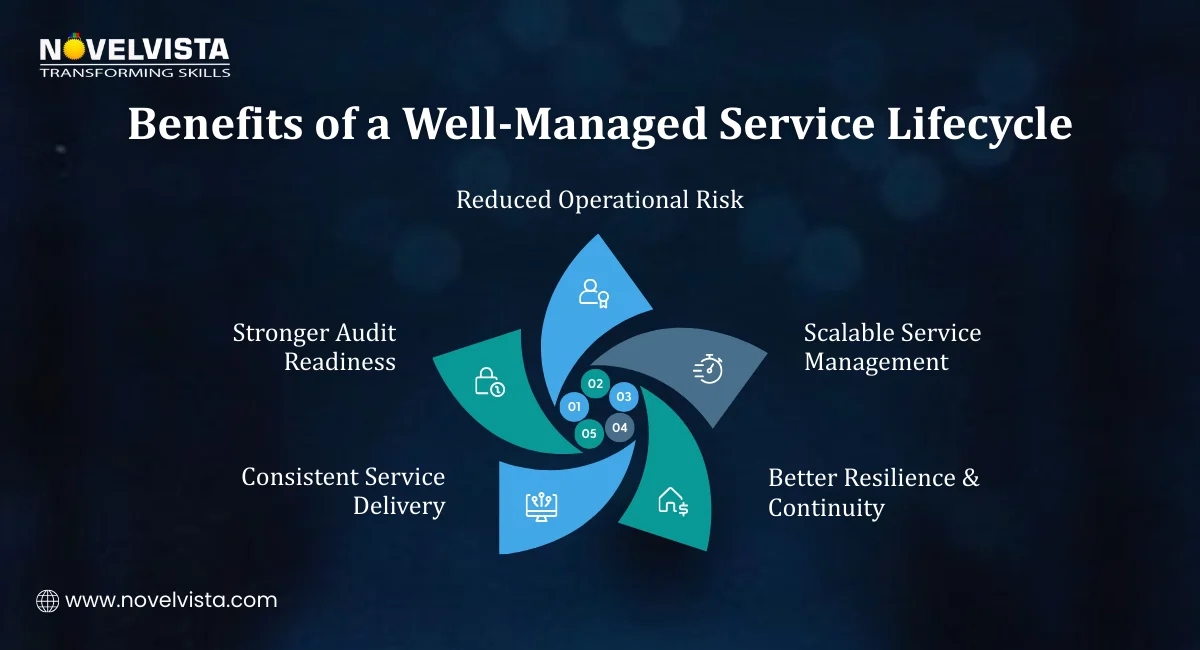 Structured service lifecycle management:
For many organizations, the service management lifecycle becomes an IT quality benchmark, similar to how ISO 9001 is used for business processes.
Lifecycle discipline is a core expectation across ISO-based management systems. In ISO 20000 audits, consistent lifecycle control is often viewed as a maturity indicator, similar to how process ownership is assessed in ISO 9001 audits.
Frameworks define what to do. Tools help teams do it consistently. That’s where service lifecycle management solutions come into play.
These solutions support execution across the full lifecycle, from planning and transition to delivery and improvement. They bring data, processes, and people onto one shared view.
A strong service lifecycle management setup ensures:
Asset data flows into service decisions
Warranty and SLA commitments are visible
Operational issues feed back into design and improvement
DEX Platforms: Focus on real-time data access across after-sales and service chains. Multiple modules support lifecycle visibility from deployment to support.
Syncron: Uses AI to connect operational silos, improve service revenue, and optimize performance across complex service networks.
Siemens – Teamcenter: Integrates PLM, CRM, and asset data, helping close feedback loops between design, operation, and improvement.
PTC / IFS: Strong focus on uptime, parts management, and field service optimization, especially for asset-heavy environments.
These service lifecycle management solutions don’t replace ISO 20000 processes. They support them.
A modern platform supports the service management lifecycle end-to-end, not just operations.
Common capabilities include:
Market feedback consistently shows that organizations using lifecycle-aligned platforms improve ITSM efficiency, audit traceability, and service consistency when governance is in place.
Clear the confusion between ISO 20000 and ITIL lifecycles. Understand how a certifiable standard and a best-practice framework align, differ, and work together, without audit mistakes.
From an audit perspective, service lifecycle management is about evidence, not intent.
Lead auditors evaluate whether:
All lifecycle stages are covered, from planning through improvement
PDCA is applied, not just documented
KPIs are defined, tracked, and reviewed
Processes support business objectives, not just IT convenience
Auditors expect to see the service management lifecycle working as a system. Strong operations alone are not enough if design, transition, or improvement are weak. The lifecycle assessment is about traceability. Auditors are trained to follow a service backward, from incidents to design decisions, to verify whether lifecycle controls are genuinely connected.
Even mature organizations struggle with lifecycle balance.
Common gaps include:
These gaps often lead to nonconformities because service lifecycle management becomes fragmented instead of controlled.
Tool selection should always follow lifecycle needs, not the other way around.
When choosing a platform:
A platform should enable the service management lifecycle, not dictate it.
Service lifecycle management is not just about tools or processes. It’s about structured control across the life of every service. ISO 20000 provides the discipline that turns services into managed assets, planned carefully, transitioned safely, delivered consistently, and improved continuously.
The lifecycle principles explained here are aligned with real audit scenarios used in ISO 20000 Lead Auditor programs. They reflect how certification bodies assess service maturity, not just how standards are written
Lifecycle-driven platforms act as enablers, but the Service Management System remains the foundation. When both work together, audit readiness and service reliability naturally follow.
If you want to assess, audit, and improve service lifecycle management with confidence, NovelVista’s ISO 20000 Lead Auditor Certification Training is the right next step. The course builds a deep understanding of lifecycle controls, PDCA application, audit evidence, and real-world assessment techniques. It’s designed for professionals who want to move beyond theory and lead ISO 20000 audits with clarity and authority.
Author Details

Course Related To This blog
ISO 20000:2018 Lead Auditor
Confused About Certification?
Get Free Consultation Call
Stay ahead of the curve by tapping into the latest emerging trends and transforming your subscription into a powerful resource. Maximize every feature, unlock exclusive benefits, and ensure you're always one step ahead in your journey to success.