Category | Quality Management
Last Updated On 16/05/2026
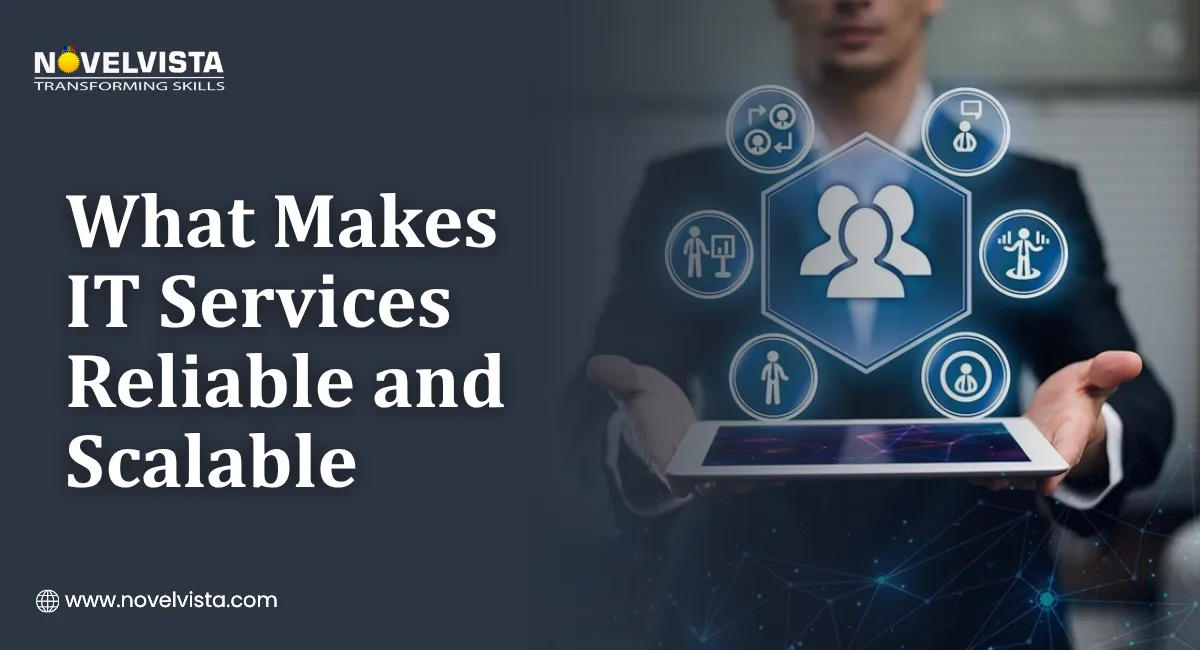
What happens when your IT systems fail at the exact moment your customers need them the most? In today’s always-on digital economy, even a few minutes of disruption can trigger lost revenue, frustrated users, and long-term reputational damage. At the same time, businesses are under constant pressure to grow handling more users, more data, and more complex workloads than ever before. This is where Reliable IT Services and Scalable IT Services become mission-critical.
Yet, many organizations still struggle to strike the right balance. Systems that are stable today may fail under tomorrow’s demand, while highly scalable environments can become unpredictable without strong foundations of IT Service Reliability. The challenge isn’t just building systems that work it’s building systems that continue to perform consistently as they evolve.
So, what truly defines reliability and scalability in modern IT environments? And how can organizations design systems that deliver both without driving up costs or complexity?
Whether you’re an IT professional, DevOps engineer, cloud architect, or business decision-maker, understanding IT Scalability and reliability is key to staying competitive. In this blog, we’ll explore what makes IT services dependable, adaptable, and ready for the future while uncovering practical strategies to help you build resilient, high-performing systems.
Reliable IT Services refer to systems that consistently perform as expected without failures or interruptions. At its core, IT Service Reliability is about ensuring that applications, networks, and infrastructure are always available and functioning optimally.
While reliability ensures stability, Scalable IT Services ensure growth. IT Scalability is the ability of a system to handle increasing workloads without compromising performance.
In today’s digital-first world, businesses often face sudden spikes in demand think e-commerce during festive sales or streaming platforms during major events. Without Scalable IT Services, systems can crash under pressure. While scalability defines the system’s ability to handle growth, elasticity ensures that resources are dynamically adjusted in real time, preventing over-provisioning and reducing unnecessary expenses.
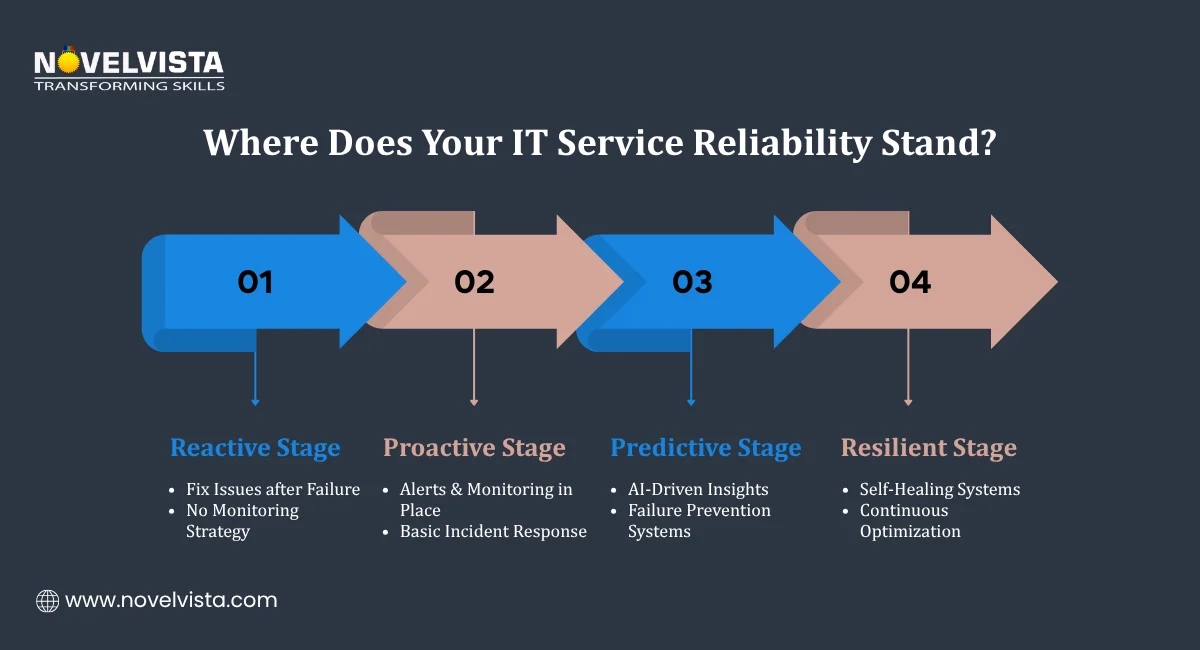
To achieve strong IT Service Reliability, organizations must focus on several foundational elements.
To achieve strong IT Service Reliability, organizations must focus on several foundational elements.
Design systems with redundancy so that if one component fails, another takes over. This ensures uninterrupted service delivery. To meet industry benchmarks like 99.9% (Three Nines) availability, organizations must adopt Multi-Availability Zone (AZ) or Multi-Region deployments. These strategies ensure that even if an entire data center goes offline, services continue running seamlessly from another location making them critical for truly Reliable IT Services.
Continuous monitoring helps detect issues before they escalate. Tools that provide real-time alerts enable faster resolution and reduce downtime.
A solid disaster recovery plan ensures data and services can be restored quickly in case of failure, minimizing business impact.
Security breaches can severely impact reliability. Implementing robust security measures ensures systems remain trustworthy and compliant.
By incorporating these architectural strategies along with operational best practices, businesses can significantly strengthen their Reliable IT Services framework and maintain consistent performance even under failure conditions.
By focusing on these pillars, businesses can significantly enhance their Reliable IT Services framework.
Achieving IT Scalability requires a combination of modern technologies and strategic planning.
Cloud platforms allow businesses to scale resources up or down based on demand, making them ideal for Scalable IT Services.
Automation reduces manual intervention and ensures consistent scaling processes.
Breaking applications into smaller, independent services allows for easier scaling of individual components.
Load balancers distribute traffic evenly across servers, preventing overload and ensuring smooth performance.
These factors play a crucial role in building efficient Scalable IT Services that adapt to changing business needs.
It’s easy to assume that reliability and scalability are interchangeable, but they serve different purposes.
However, they are deeply interconnected. A system that scales but frequently crashes is ineffective, just as a reliable system that cannot handle increased demand becomes a bottleneck.
The key is to strike a balance. Organizations must design systems that are both Reliable IT Services and Scalable IT Services to ensure long-term success.
Building systems that excel in both reliability and scalability requires adopting modern practices.
DevOps practices promote collaboration between development and operations teams, leading to faster deployments and improved reliability.
Regular testing ensures systems perform well under different conditions, enhancing both IT Service Reliability and IT Scalability.
Pro Tip: Establishing these pillars is easier when following an international framework. The ISO 20000 Cost Guide provides a financial roadmap for aligning these reliability goals with your operational budget while supporting the development of Reliable IT Services and Scalable IT Services.
Understanding future demand helps organizations prepare infrastructure accordingly.
AI-driven insights can predict potential failures and optimize resource allocation.
By implementing these best practices, businesses can create robust Reliable IT Services while ensuring seamless scalability.
Despite the benefits, achieving both reliability and scalability comes with challenges.
Older systems often lack the flexibility required for modern Scalable IT Services, especially when burdened with accumulated technical debt outdated code, quick fixes, and inefficient design choices that slow down innovation. Many legacy applications are built as monolithic architectures, where all components are tightly integrated into a single system. This makes scaling inefficient because even if only one feature experiences high demand, the entire application must be duplicated or scaled. As a result, organizations face higher costs, reduced agility, and increased complexity when trying to achieve effective IT Scalability.
Scaling infrastructure can become expensive if not managed properly.
Managing multiple interconnected systems increases operational complexity.
Addressing these challenges requires strategic planning and continuous improvement. A well-structured ISO 20000 Exam Guide can help professionals strengthen their understanding of IT Service Reliability and IT Scalability while preparing for certification success.
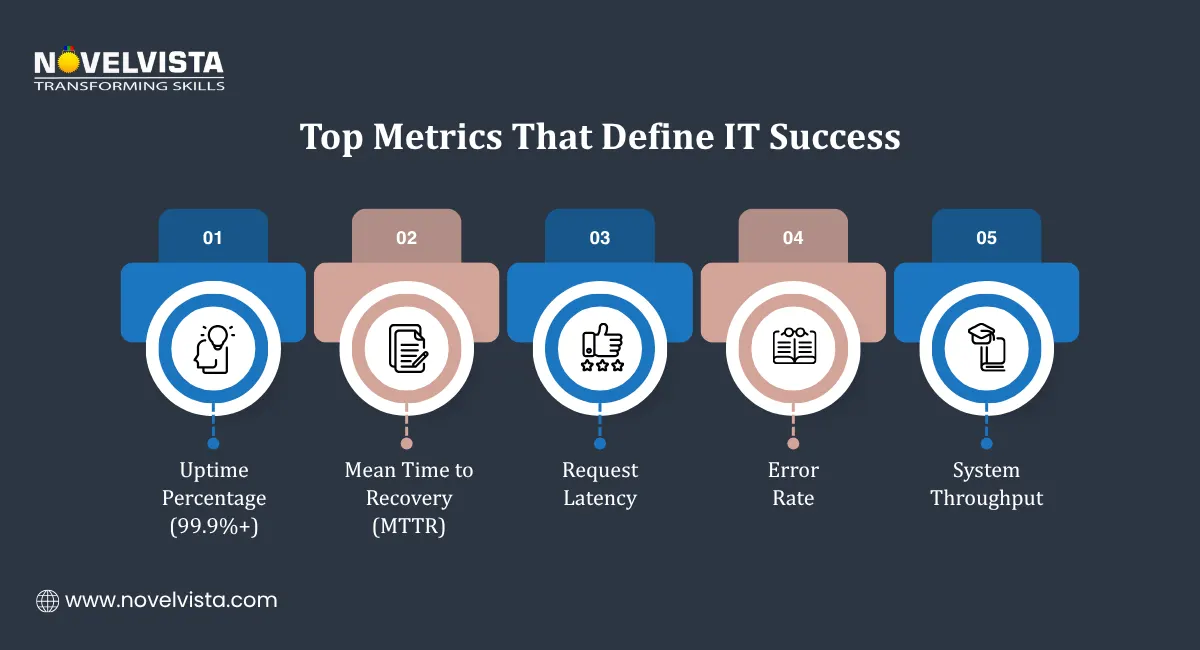
In a world where digital performance directly defines business success, Reliable IT Services and Scalable IT Services are no longer just technical goals they are strategic imperatives. IT Service Reliability builds the foundation of trust by ensuring systems are always available, consistent, and resilient. At the same time, IT Scalability empowers organizations to expand առանց friction, handle unpredictable demand, and continuously innovate.
The real competitive advantage lies in combining both. Organizations that successfully align reliability with scalability don’t just prevent failures they create systems that evolve, adapt, and perform under any condition. This means fewer disruptions, faster growth, and a stronger ability to meet customer expectations in real time.
As technology continues to advance, businesses must move beyond traditional approaches and embrace cloud-native architectures, automation, and intelligent monitoring. The future belongs to those who can build IT ecosystems that are not only stable today but also ready for tomorrow’s challenges. By prioritizing both Reliable IT Services and Scalable IT Services, organizations position themselves to lead not just survive in the digital era.
Ready to take your expertise in Reliable IT Services and Scalable IT Services to the next level?
Join NovelVista’s ISO/IEC 20000:2018 Lead Auditor Certification Training and gain hands-on auditing skills, practical insights into IT Service Reliability, and globally recognized credentials. Designed for IT leaders, auditors, and ITSM professionals, this course equips you to assess, improve, and ensure high-performing IT services in modern digital environments.
Start your journey toward mastering IT service excellence today!

Author Details

Course Related To This blog
ISO 20000:2018 Lead Auditor
Confused About Certification?
Get Free Consultation Call
Stay ahead of the curve by tapping into the latest emerging trends and transforming your subscription into a powerful resource. Maximize every feature, unlock exclusive benefits, and ensure you're always one step ahead in your journey to success.