Category | Quality Management
Last Updated On 15/05/2026
In 2025, AI-powered cybersecurity platforms were responsible for detecting nearly 70% of enterprise threats. Yet, research also revealed a troubling gap up to 40% of incidents were either misclassified or completely missed due to opaque AI decision-making.
This is the paradox modern security teams face.
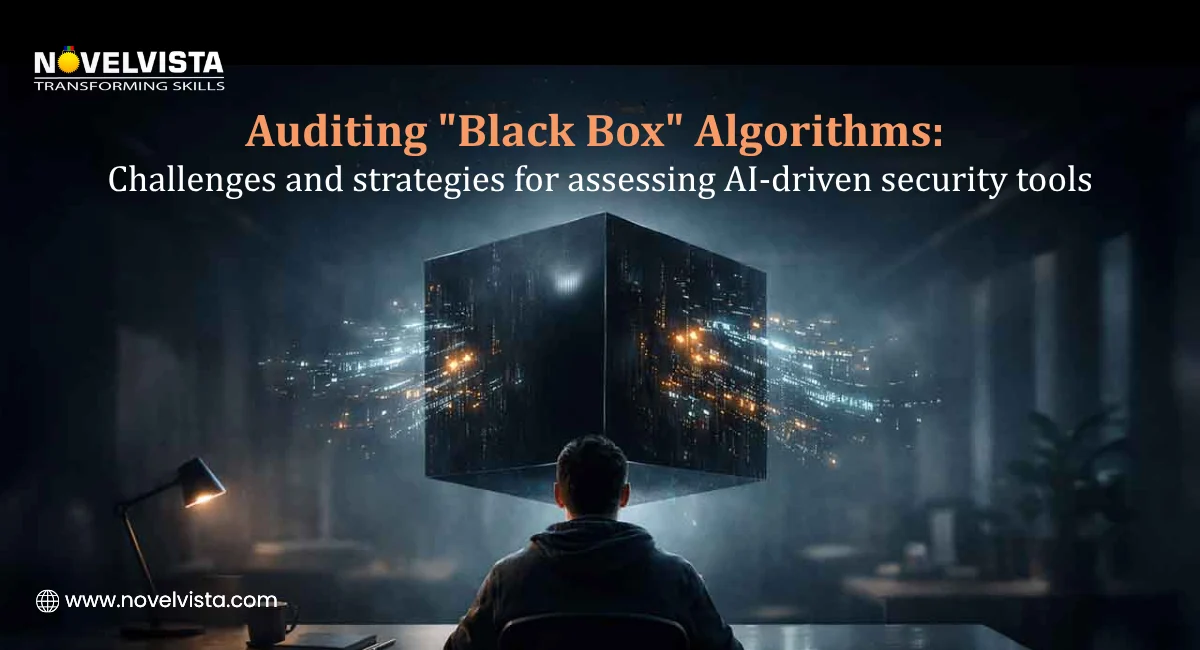
On one hand, AI-driven tools promise speed, scale, and automation. On the other, their “black box” nature makes them difficult to trust, validate, and audit. This is where auditing black box AI-driven security tools becomes not just important but essential.
Black box AI security tools include systems like AI-powered SIEMs, anomaly detection engines, behavioral analytics platforms, and automated threat response tools. These systems operate using complex machine learning models whose internal logic is either hidden or too complex to interpret..
As AI systems take on high-stakes roles in cybersecurity, traditional auditing approaches are no longer enough. You cannot rely solely on rule-based validation you need behavioral insights, data-centric validation, and structured frameworks.
In this blog, we’ll explore the biggest challenges in auditing black box AI-driven security tools, practical strategies to overcome them, and key frameworks including ISO/IEC 27001 that help ensure trustworthy and secure AI deployments.
Section | Key Takeaway |
| What It Is | AI security tools with complex, non-transparent decision-making |
| Why It Matters | High detection rates, but risks due to unclear AI decisions |
| Key Challenges | Lack of explainability, adversarial attacks, model drift, data risks |
| Audit Approach | Shift from rule-based testing to behavioral validation |
| Core Strategy | Use a defense-in-depth auditing approach |
| Key Methods | Adversarial testing, data audits, continuous monitoring, HITL |
| Role of ISO/IEC 27001 | Ensures data security, access control, and risk management |
| Frameworks | NIST AI RMF, OWASP AI Guide, ISO 42001, ISO 27001 |
| Bottom Line | Build trust through testing, monitoring, and governance |
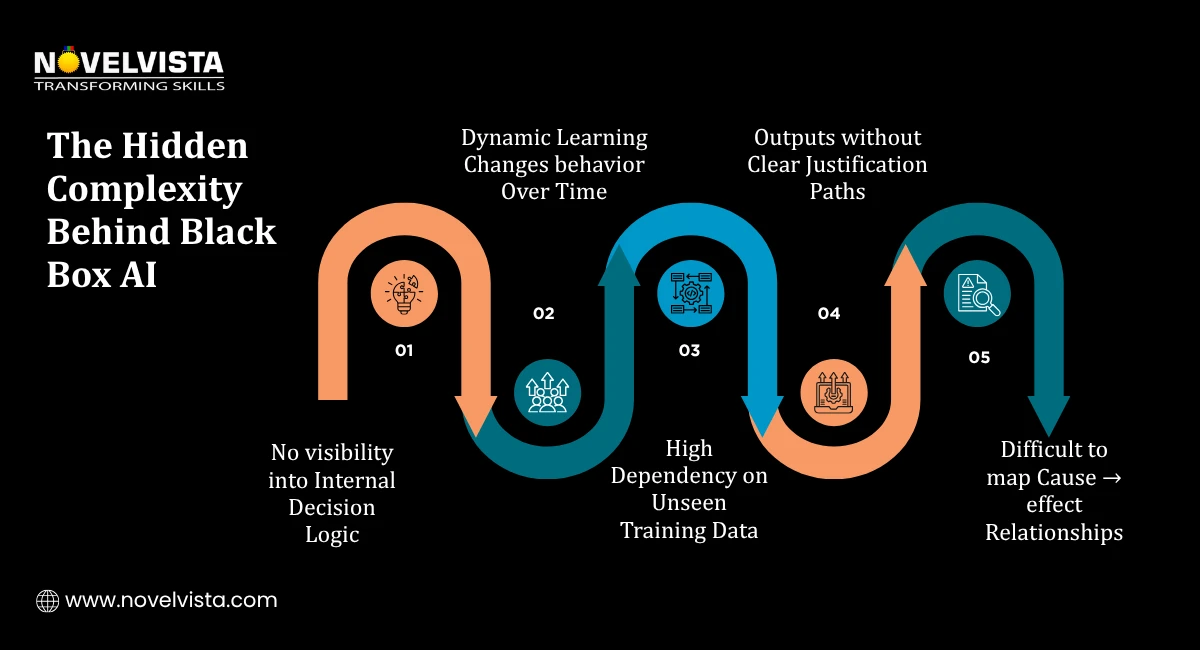
One of the most critical issues in auditing black box AI-driven security tools is the lack of transparency. When an AI system flags a threat or fails to detect one it often cannot explain its reasoning.
This creates major accountability challenges, especially in regulated environments where audit trails and justification are mandatory.
AI models are highly susceptible to adversarial manipulation. Attackers can craft inputs specifically designed to bypass detection systems.
Examples include:
This makes auditing far more complex compared to traditional systems.
AI systems are not static. Over time, their performance may degrade due to evolving threat landscapes a phenomenon known as model drift.
Without continuous validation, organizations may rely on tools that silently become ineffective.
AI tools depend heavily on data. If training datasets include sensitive or regulated information, organizations may face compliance risks.
Standards like ISO/IEC 27001 play a key role here by ensuring that data handling, access controls, and risk management processes are properly enforced. Before implementing stronger security and AI auditing practices, it’s essential to evaluate the ISO 27001 certification cost to plan your investment and compliance strategy effectively.
AI models often involve thousands of variables and parameters, making it nearly impossible to trace individual decisions.
This complexity reinforces the need for external validation methods when auditing black box AI-driven security tools.
| Aspect | Traditional Security Tools | AI Security Tools |
| Transparency | High | Low (black box) |
| Testing Approach | Rule-based | Behavioral & probabilistic |
| Vulnerabilities | Known exploits | Adversarial & unknown |
| Stability | Predictable | Dynamic (model drift) |
| Compliance | Easier | Data-dependent |
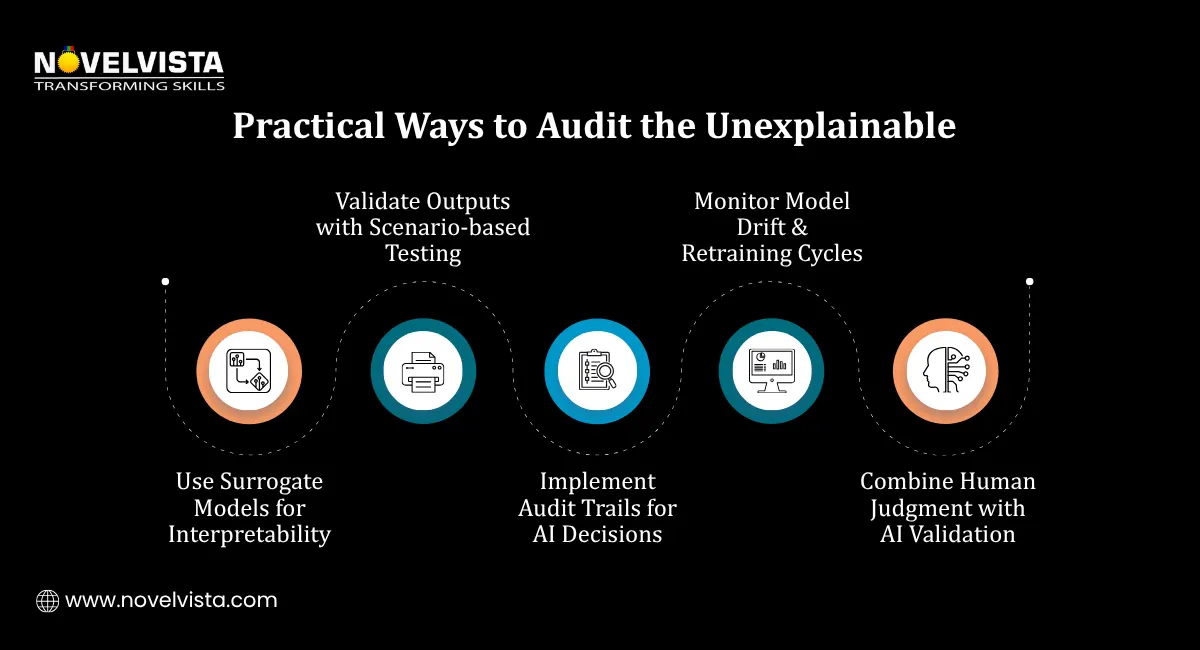
To overcome these challenges, organizations must adopt a defense-in-depth approach to auditing black box AI-driven security tools.
Adversarial Input Testing
Introduce manipulated inputs such as obfuscated malware or malformed network packets to evaluate system resilience.
Red Team Exercises
Simulate real-world attacks to test how AI systems respond to advanced evasion techniques or prompt injection attempts.
Model Extraction Mapping
Assess whether attackers can reverse-engineer your AI model through APIs or repeated queries.
Data Provenance Audit
Verify the origin, quality, and diversity of training data. Ensure it is free from bias or poisoning risks.
Concept Drift Assessment
Continuously compare real-time performance with baseline metrics to detect degradation.
Explainability Techniques
Use tools like SHAP or LIME to identify which features influence decisions, even if the internal model remains opaque.
This approach is critical for effective auditing black box AI-driven security tools, as it focuses on outcomes rather than internal logic.
Continuous Monitoring
Track system outputs in real time. Sudden anomalies such as a spike in false positives should trigger alerts.
Human-in-the-Loop (HITL)
Ensure that high-impact decisions, like blocking traffic or shutting down systems, involve human validation.
Vendor Due Diligence
Evaluate third-party AI vendors carefully. Review certifications, testing methodologies, and compliance standards such as ISO/IEC 27001.
A simplified workflow for auditing black box AI-driven security tools includes:
This layered approach improves trust, resilience, and accountability.
To strengthen governance and standardization, organizations should align with established frameworks when auditing black box AI-driven security tools.
Provides a structured approach to managing AI risks through governance, mapping, measurement, and ongoing monitoring.
Focuses on identifying AI-specific vulnerabilities such as adversarial attacks, model evasion, and data poisoning.
ISO/IEC 42001 is designed specifically for AI governance. It helps organizations implement responsible AI practices, manage risks, and ensure continuous improvement.
ISO/IEC 27001 complements AI-specific frameworks by ensuring strong information security management.
It helps organizations:
Together, ISO 27001 and ISO 42001 provide a comprehensive foundation for secure and trustworthy AI auditing. While strengthening AI governance, organizations must also address Common Challenges While Implementing ISO 27001, such as defining clear controls, managing documentation, and aligning security practices with evolving risks.
| Framework | Focus Area | Strengths | Best Use Case |
| NIST AI RMF | AI risk management | Flexible & comprehensive | Enterprise AI governance |
| OWASP AI Guide | AI security testing | Practical insights | Security teams |
| ISO 42001 | AI management | AI-specific controls | AI-driven organizations |
| ISO 27001 | Information security | Proven security framework | Compliance & data protection |
Auditing black box AI-driven security tools is not about forcing full transparency it’s about building trust through structured validation, continuous monitoring, and strong governance.
By combining adversarial testing, behavioral auditing, and frameworks like ISO/IEC 42001 and ISO/IEC 27001, organizations can ensure that their AI systems are both effective and secure.
The next step is simple: start auditing your AI security tools today. Run red team exercises, monitor outputs, and validate decisions.
As regulatory pressure increases and AI adoption grows, organizations that invest early in auditing black box AI-driven security tools will be better positioned to maintain trust, compliance, and long-term resilience.

Ready to strengthen your information security foundation?
Join NovelVista’s ISO 27001 Certification Training and gain essential knowledge of Information Security Management Systems (ISMS), risk management, and core security controls. Designed for beginners, IT professionals, and aspiring auditors, this course helps you understand how to protect organizational data and align with global security standards.
Start your ISO 27001 learning journey today!
Author Details

Course Related To This blog
ISO 9001:2015 Lead Auditor Training and Certification
Confused About Certification?
Get Free Consultation Call
Stay ahead of the curve by tapping into the latest emerging trends and transforming your subscription into a powerful resource. Maximize every feature, unlock exclusive benefits, and ensure you're always one step ahead in your journey to success.