Category | Quality Management
Last Updated On 14/05/2026
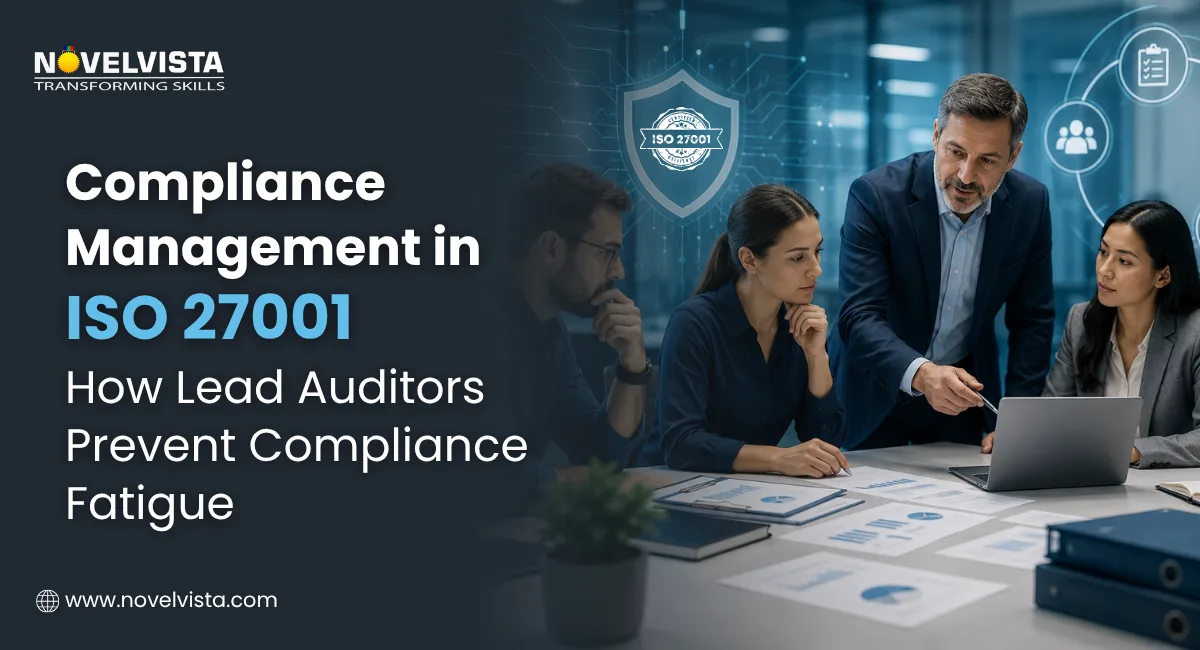
Here is a number that should stop every information security professional in their tracks: according to industry research, organizations that manage multiple regulatory frameworks spend an average of 40,000 hours per year on compliance-related activities. Yet, despite this staggering investment of time and effort, nearly 60% of security teams report that their staff experience significant burnout specifically tied to audit cycles. That is not compliance working. That is compliance management breaking down.
So ask yourself this: Is your organization actually becoming more secure with every audit, or is it simply becoming better at surviving them? Are your teams building genuine resilience, or are they running on adrenaline every time a certification deadline appears on the calendar?
These questions point directly to one of the most underappreciated problems in the ISO 27001 world today, which is compliance fatigue. It is the slow erosion of motivation, accuracy, and strategic thinking that happens when compliance management becomes a repetitive, manual, and largely disconnected exercise from everyday business operations.
This blog explores how ISO 27001 Lead Auditors help organizations reduce compliance fatigue and build sustainable compliance management practices. You will learn practical strategies like automation, centralized evidence management, control mapping, and risk-based auditing that improve audit readiness while reducing team burnout. We will also see how modern compliance approaches strengthen both security posture and operational efficiency.
| Topic | Summary |
| Compliance Fatigue | Burnout caused by repetitive audit and compliance activities |
| Key Solution | Continuous, automated compliance management |
| Lead Auditor Role | Improves audit readiness and reduces operational stress |
| Main Strategies | Automation, control mapping, centralized evidence, risk-based audits |
| End Result | Stronger security culture with lower compliance burden |
Compliance fatigue is the organizational and individual exhaustion that results from the ongoing burden of meeting regulatory and certification requirements. In the context of ISO 27001, it typically manifests when compliance management is treated as a periodic project rather than a continuous business function.
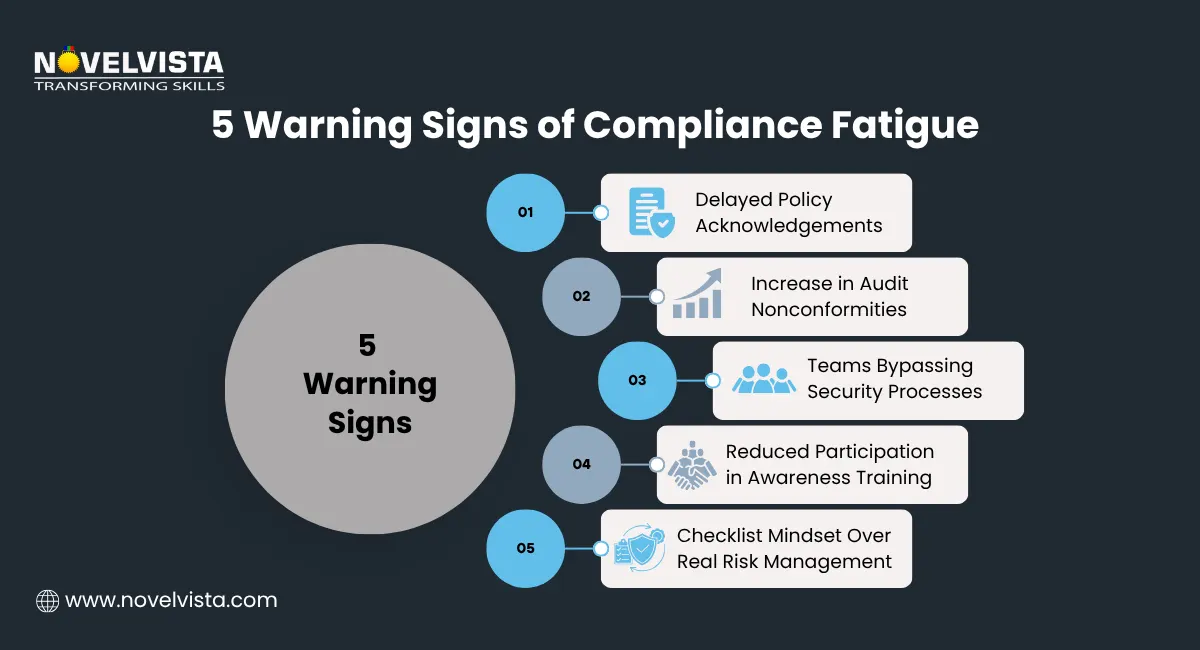
The symptoms are recognizable. Teams rush to collect evidence in the weeks before an external audit. Employees receive the same data requests from multiple departments because there is no centralized repository. Controls are documented on paper but rarely verified in practice. Risk assessments are completed once a year, then filed away until the next cycle. The result is an Information Security Management System (ISMS) that looks complete on the surface but lacks operational depth.
The consequences extend beyond team morale. When managing compliance fatigue is not taken seriously, organizations face increased audit findings, higher remediation costs, and in some cases, loss of certification. More critically, the security posture that ISO 27001 is designed to build starts to hollow out, leaving the organization exposed to the very risks the framework was meant to address.
The single most effective strategy Lead Auditors deploy for managing compliance fatigue is eliminating the annual evidence-collection scramble. Tools such as Vanta and OneTrust can automate up to 80% of evidence collection, providing real-time visibility into control failures rather than retrospective snapshots.
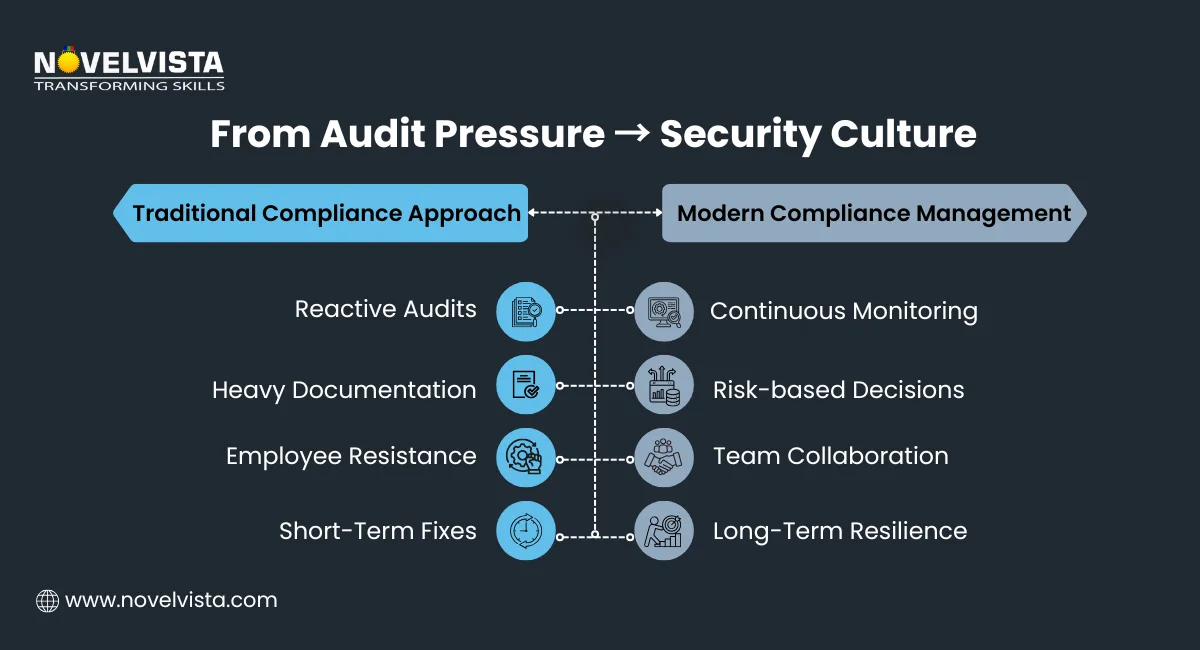
This shift fundamentally changes the nature of compliance management. Instead of a frantic sprint, teams maintain a steady pace of monitoring throughout the year. Control failures are surfaced immediately, remediated quickly, and documented automatically. When an external audit arrives, the evidence is already organized, timestamped, and mapped to the relevant ISO 27001 controls.
Organizations that fail to streamline compliance management often end up increasing both operational workload and certification expenses over time. Understanding where these hidden costs come from is critical for building a sustainable ISMS strategy. Explore our detailed guide on ISO 27001 Certification Cost to learn how organizations can optimize certification investments while reducing audit inefficiencies.
| Approach | Evidence Collection | Control Visibility | Team Burden |
| Traditional (Annual) | Manual, reactive | Retrospective | High (audit season spikes) |
| Continuous Monitoring | Automated, proactive | Real-time | Low (distributed year-round) |
| Hybrid | Partially automated | Near real-time | Moderate |
One of the most immediate sources of compliance fatigue is the repetitive data request. Operational teams are asked, often by multiple departments simultaneously, to provide the same documentation for different assessments. This duplication wastes time, breeds resentment, and erodes trust in the compliance management process.
Lead Auditors address this by designing a centralized evidence repository, a single, tagged, and searchable library of compliance artifacts that can be reused across internal audits, external certifications, and regulatory assessments. When a piece of evidence is collected once and properly categorized, it becomes available for multiple purposes without requiring the producing team to act again.
This approach also improves audit readiness. Rather than assembling documentation under pressure, teams point auditors to a repository that is already organized by control domain, annex, and assessment type.
A critical insight that experienced Lead Auditors bring to compliance management is this: risk is not a once-a-year problem, and treating it as one is precisely what creates compliance fatigue.
ISO 27001 requires organizations to conduct risk assessments at planned intervals and whenever significant changes occur. In practice, many organizations interpret this as an annual exercise disconnected from operational decision-making. Lead Auditors push back on this interpretation. Instead of scheduling a dedicated risk review season, they embed risk identification directly into the processes the business already runs every day, including:
Many organizations operating under ISO 27001 also need to satisfy requirements from frameworks such as NIST CSF, CIS Controls, SOC 2, or industry-specific regulations. Without deliberate control mapping, these overlapping frameworks multiply the compliance burden. Teams answer similar questions multiple times because no one has mapped the common threads.
Lead Auditors who understand how to prevent compliance fatigue approach this systematically. They create a control mapping matrix that identifies where ISO 27001 Annex A controls intersect with other framework requirements. A single piece of evidence or control activity is then allowed to satisfy multiple requirements simultaneously, reducing the total work required to maintain compliance across frameworks.
| ISO 27001 Control | NIST CSF Mapping | CIS Control Mapping | Shared Evidence |
| A.8.1 (Asset Management) | ID.AM | CIS 1 & 2 | Asset inventory records |
| A.9.4 (Access Control) | PR.AC | CIS 5 & 6 | Access review logs |
| A.12.6 (Vulnerability Mgmt.) | DE.CM | CIS 7 | Scan reports |
| A.16.1 (Incident Mgmt.) | RS.RP | CIS 17 | Incident logs |
This kind of rationalization is one of the most powerful tools available for managing compliance fatigue at scale.
Traditional internal audit programs attempt to cover the entire ISO 27001 control set within a fixed cycle. While thorough in theory, this approach generates significant fatigue when audits feel repetitive and disconnected from real operational risks.
Lead Auditors are increasingly moving toward targeted, scenario-driven methodologies. Instead of exhaustive reviews, they concentrate each audit cycle on:
The outcome is compliance management that feels purposeful rather than procedural. Findings carry more weight, recommendations are more actionable, and audit fatigue drops because the work is clearly connected to real security outcomes.
Ambiguity about who owns what is one of the most reliable drivers of compliance fatigue. Without clear ownership, evidence collection defaults to whoever responds fastest, typically the most conscientious person available, not the most appropriate one. Over time, this concentrates burnout in a small group.
Lead Auditors address this by establishing role-based control ownership across the entire ISO 27001 framework. Each control is assigned to a specific role with documented responsibilities covering:
The ability to design sustainable compliance systems, rationalize controls, and reduce audit fatigue comes from a deep understanding of ISO 27001 auditing principles and real-world implementation practices. If you want to strengthen your expertise as a security professional or aspiring auditor, read our guide on Mastering ISO 27001 Lead Auditor and discover the core concepts, certifications, and skills required to lead modern compliance programs effectively.
The organizations that manage compliance fatigue most effectively are those that have fundamentally reframed what compliance management means. It is not a periodic exercise designed to satisfy an external auditor. It is an ongoing operational capability that keeps the business secure, demonstrates trustworthiness to customers and partners, and enables informed risk decision-making at every level of the organization.
ISO 27001 Lead Auditors who understand this distinction bring more than technical knowledge to their work. They bring a systemic view of how compliance management can either drain an organization or strengthen it, and they design their programs accordingly.
Compliance management under ISO 27001 does not have to be exhausting. Managing compliance fatigue is an active discipline, one that requires deliberate system design, the right tools, clear accountability, and a shift away from reactive audit cycles toward continuous operational integration.
Lead Auditors who master these strategies become more than certifiers. They become architects of security cultures where compliance management is embedded, sustainable, and genuinely connected to reducing risk. If your organization is feeling the weight of audit fatigue, the solution is not to work harder during certification season. It is to build the kind of compliance management infrastructure that makes certification season unremarkable.

Ready to build that foundation from the ground up?
NovelVista's ISO/IEC 27001 Foundation Certification Training gives you the practical knowledge, real-world frameworks, and globally recognized credentials to lead compliance management with confidence. Designed for security professionals and aspiring Lead Auditors, this course equips you to move beyond checkbox compliance and drive genuine information security excellence in your organization.
Start your ISO 27001 journey today.
Author Details

Course Related To This blog
ISO 27001:2022 Lead Auditor
Confused About Certification?
Get Free Consultation Call
Stay ahead of the curve by tapping into the latest emerging trends and transforming your subscription into a powerful resource. Maximize every feature, unlock exclusive benefits, and ensure you're always one step ahead in your journey to success.