Category | Quality Management
Last Updated On 04/02/2026
According to industry reports, nearly 60% of IT service disruptions are traced back to poor governance and leadership decisions, not technology failures. Another study shows that organizations with strong leadership involvement in IT service management are 40% more likely to meet their SLAs consistently. These numbers highlight a reality many teams learn the hard way—tools and processes alone do not ensure service excellence.
This is where leadership roles in ISO 20000 become critical. ISO/IEC 20000 is not just a framework for managing incidents or changes; it is a management system that demands visible leadership, accountability, and direction. Without leadership commitment, ISO 20000 often turns into a documentation exercise rather than a living service management system.
So, who is this really for? Is it only for senior executives? Or is it relevant for service managers and IT leaders on the ground? And more importantly, what does leadership actually look like in day-to-day ISO 20000 operations?
This blog answers those questions by breaking down the leadership roles and responsibilities in ISO 20000 in a clear, practical, and realistic way.
Leadership in ISO/IEC 20000 is defined less by authority and more by accountability. The standard expects leaders to establish direction, ensure alignment with business goals, and actively support the Service Management System (SMS).
Unlike traditional IT frameworks that focus heavily on operational roles, ISO 20000 places leadership responsibility squarely at the management level. Leaders are expected to:
Define service management policies
Ensure objectives are measurable and aligned
Promote a service-focused culture across the organization
This shift ensures that IT services are not run in isolation but are integrated into the overall business strategy.
Strong leadership roles in ISO 20000 play a direct role in how effectively IT services are delivered and sustained. When leadership is actively involved, service management becomes consistent, decisions are made faster, risks are addressed early, and teams feel supported in meeting service objectives. This level of engagement positively impacts customer satisfaction and drives continual improvement across the service lifecycle. On the other hand, weak leadership roles in ISO 20000 often result in reactive service management, unclear ownership during incidents, and repeated audit nonconformities. ISO 20000 recognizes that most service failures are not caused by a lack of technical capability, but by leadership gaps such as unclear priorities, insufficient resources, and ineffective communication—all of which directly affect IT service success.
The ISO 20000 leadership requirements, primarily outlined in Clause 5, are designed to ensure that management is not disconnected from service performance.
At a practical level, leadership is expected to:
Establish and approve service management policies
Ensure service objectives are aligned with business goals
Assign roles, responsibilities, and authorities clearly
Support the effectiveness of the SMS
These requirements are intentionally broad, allowing organizations flexibility while still holding leadership accountable for outcomes.
ISO 20000 top management roles extend far beyond approving budgets or simply attending audit meetings. The standard expects top management to show visible and ongoing commitment by integrating ISO 20000 requirements into business processes, ensuring adequate resources are available, supporting service improvement initiatives, and clearly communicating the importance of service management across the organization. Auditors often look for practical evidence that top management understands service performance metrics and actively participates in service reviews, rather than only signing off on reports.
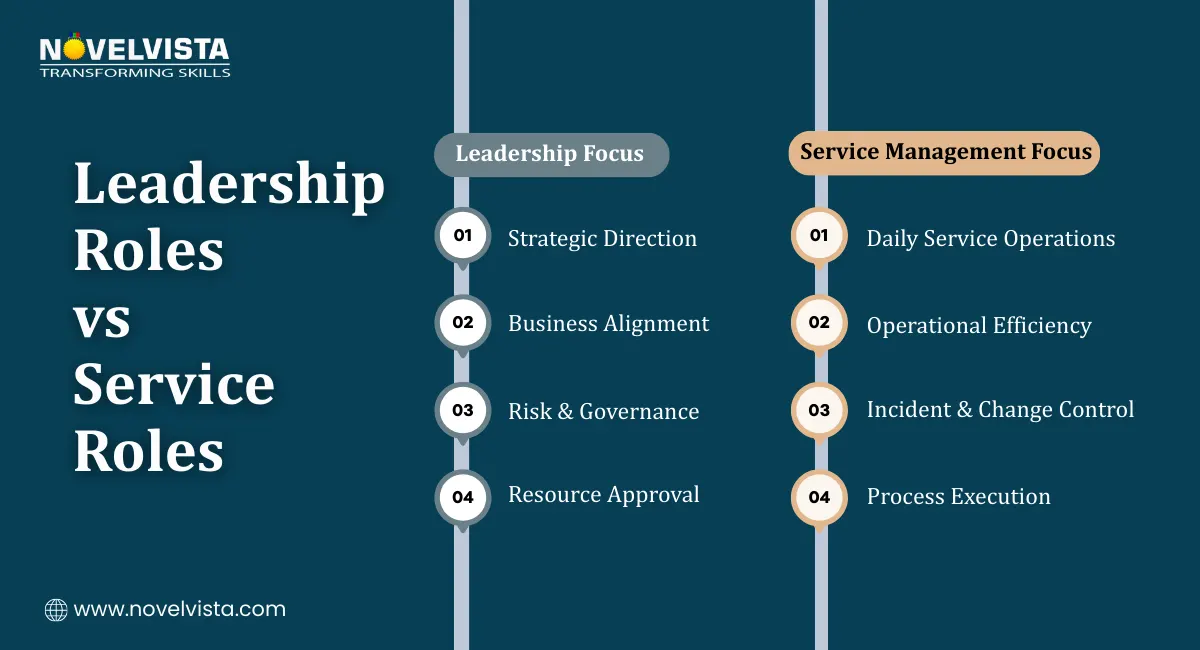
While strategy is important, ISO 20000 leadership responsibilities are also deeply operational. Leaders are expected to remove barriers that prevent effective service delivery.
In daily operations, this means:
Ensuring teams have the right skills and tools
Supporting incident escalation decisions
Encouraging collaboration between IT and business units
Addressing recurring service issues at the root cause level
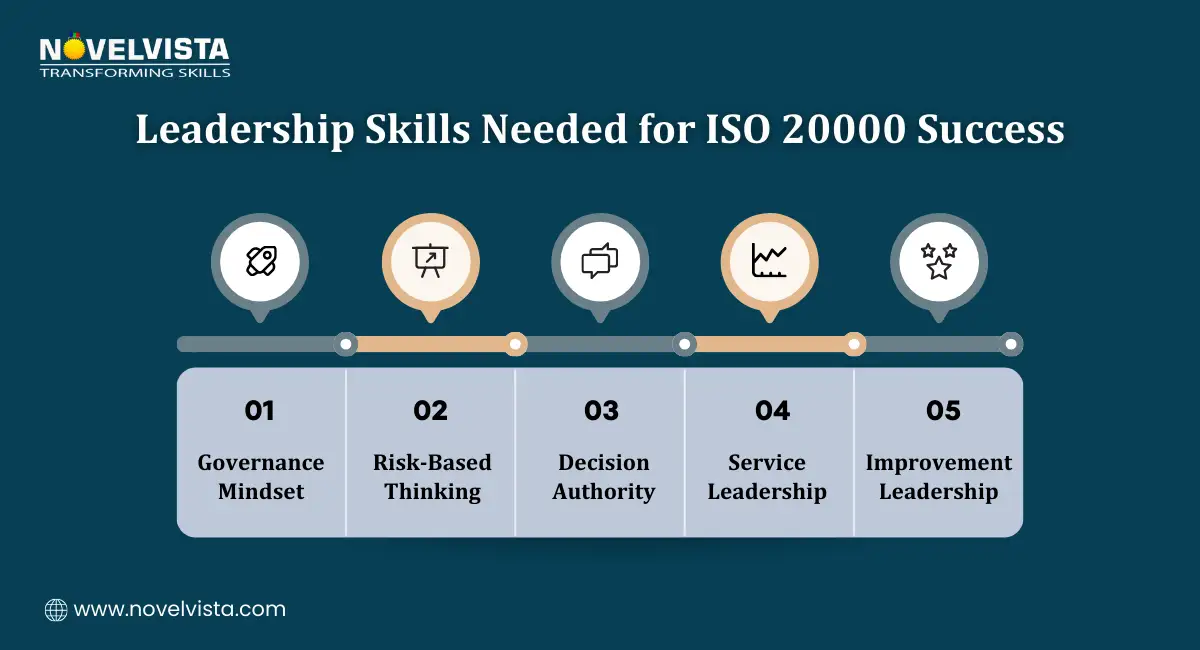
Risk-based thinking is a core principle of modern ISO standards, and leadership in ISO 20000 plays a critical role in applying it effectively. Leaders are responsible for identifying and evaluating service risks related to capacity, suppliers, and changes, and for making informed decisions during service disruptions. By balancing cost, risk, and service quality, strong leadership in ISO 20000 ensures that potential risks are addressed early, rather than being ignored until they escalate into incidents.
Continual improvement in ISO 20000 depends heavily on leadership support, clear prioritization, and consistent follow-through. Leaders drive improvement by reviewing service performance metrics, learning from incidents and customer feedback, supporting corrective and preventive actions, and encouraging innovation in service delivery. Organizations where leadership actively champions continual improvement in ISO 20000 typically demonstrate higher service maturity and stronger audit outcomes.
Even well-intentioned leaders can undermine ISO 20000 success through common mistakes, such as:
Treating ISO 20000 as an IT-only initiative
Delegating all responsibility without oversight
Focusing on certification rather than service quality
Being visible only during audits
These gaps often surface during external audits as leadership-related nonconformities.
Strengthening leadership roles in ISO 20000 does not require complex changes. Simple, consistent actions can make a significant difference:
Participate in service management reviews
Ask questions about service performance, not just costs
Support teams during major incidents
Align service objectives with business priorities
These actions signal commitment and reinforce a service-oriented culture.
In an era where IT services directly impact customer trust and business continuity, leadership can no longer remain distant from service management. The leadership roles and responsibilities in ISO 20000 ensure that service excellence is driven from the top and sustained across the organization. For a deeper understanding of the concepts discussed in this blog, exploring ISO 20000 Interview Questions with Answers can help reinforce leadership expectations, audit readiness, and practical service management knowledge. Strong leadership transforms ISO 20000 from a compliance exercise into a strategic advantage. Organizations that embrace leadership accountability not only perform better in audits but also deliver more reliable, customer-focused IT services in the long run.

To translate leadership understanding into practical capability, structured learning plays a crucial role. If you are looking to strengthen your expertise in leadership roles and responsibilities in ISO 20000 and apply them confidently during audits, a focused certification can make a real difference. NovelVista’s ISO/IEC 20000:2018 Lead Auditor Certification Training is designed for IT leaders and ITSM professionals who want hands-on auditing skills, real-world service management insights, and a globally recognized credential. The course helps you move beyond theory, enabling you to lead ISO 20000 audits effectively and drive service excellence in today’s complex digital environments.
Author Details

Course Related To This blog
ISO 20000:2018 Lead Auditor
Confused About Certification?
Get Free Consultation Call
Stay ahead of the curve by tapping into the latest emerging trends and transforming your subscription into a powerful resource. Maximize every feature, unlock exclusive benefits, and ensure you're always one step ahead in your journey to success.