Category | Quality Management
Last Updated On 16/05/2026
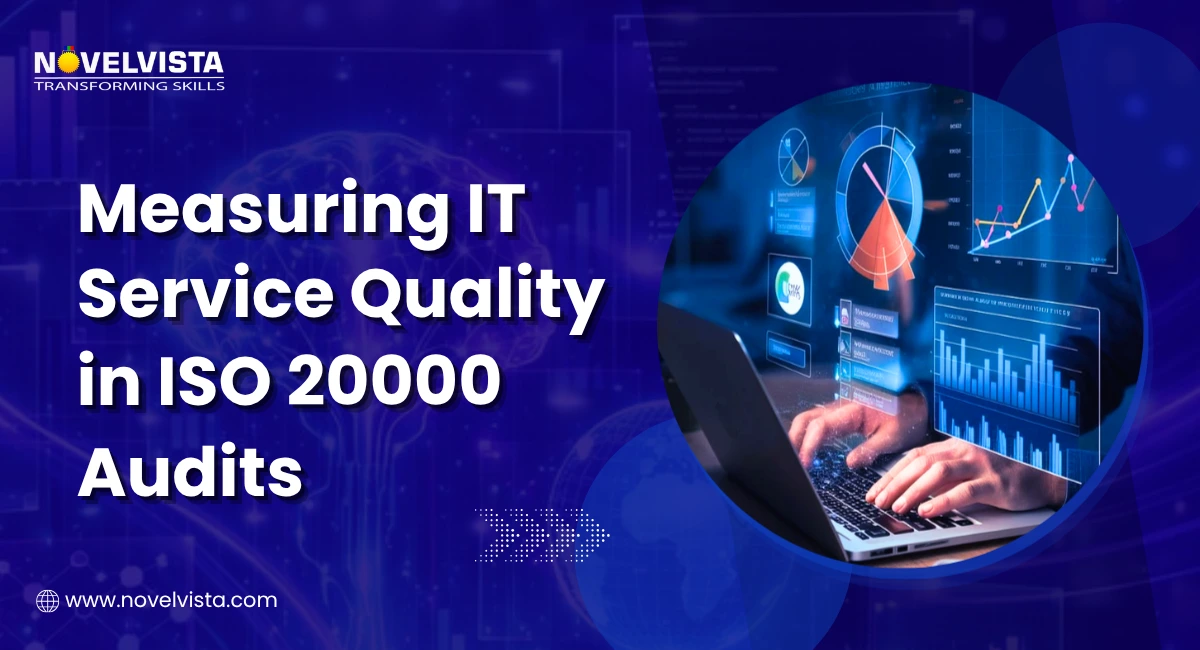
What happens when your systems go down for just a few minutes?
According to recent studies, the average cost of IT downtime is around $5,600 per minute. For large enterprises, that number can escalate to hundreds of thousands per hour. Beyond financial loss, downtime erodes customer trust, damages brand reputation, and disrupts business continuity.
Now consider this:
If these questions resonate, this blog is for you.
Whether you are an IT manager, service delivery professional, or someone preparing for ITSM certifications, understanding IT service quality is essential. At its core, IT service quality measures how effectively IT services meet or exceed user expectations. It focuses on reliability, responsiveness, and customer satisfaction.
But measuring IT service quality alone is not enough. Organizations need a structured, auditable framework to ensure consistency and continuous improvement. This is where ISO 20000 comes into play.
In this blog, we explore what truly defines IT service quality and why it is critical for modern businesses. You’ll understand the key dimensions like reliability, responsiveness, and assurance, along with the most important metrics used to measure performance. We also connect these concepts to ISO 20000, showing how it provides a structured framework for consistent service excellence. Finally, we cover practical strategies to help organizations improve and sustain high IT service quality.
Section | Key Takeaway |
| IT Service Quality Importance | Poor service quality leads to downtime, revenue loss, and poor user experience |
| Core Dimensions | Reliability, responsiveness, assurance, empathy, and tangibles define service quality |
| Key Metrics | Uptime, MTTR, FCR, change success rate, and impacted user minutes |
| ISO 20000 Role | Provides a structured, auditable framework for IT service management |
| Business Benefits | Better performance, reduced risks, improved customer satisfaction |
| Improvement Strategies | Define KPIs, align stakeholders, monitor continuously, and use feedback loops |
| Final Insight | IT service quality must evolve from reactive fixes to proactive, standardized excellence |
In a digital-first world, businesses rely heavily on IT systems for daily operations, customer interactions, and decision-making. Poor IT service quality directly impacts productivity, revenue, and customer satisfaction.
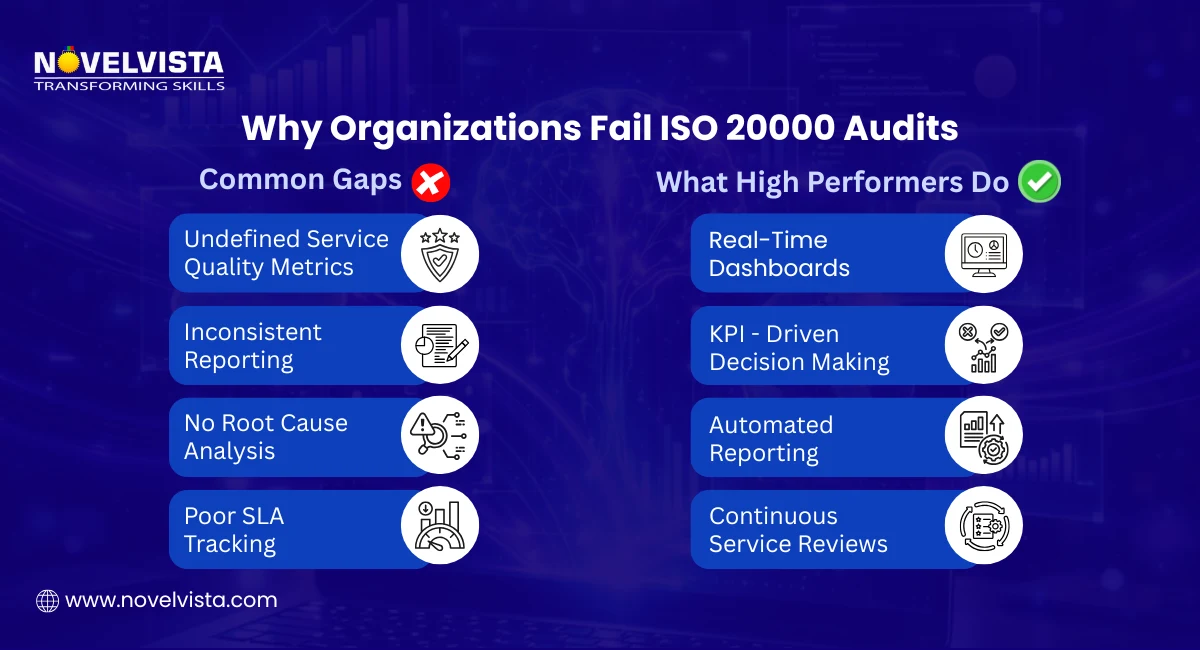
High IT service quality ensures:
Organizations that prioritize IT service quality gain a competitive advantage by delivering reliable and efficient services.
To improve IT service quality, organizations must understand its foundational dimensions. These dimensions provide a holistic view of service performance and user experience.
Reliability refers to the ability of IT services to perform consistently and accurately. Systems should be available when needed and function without errors.
This aligns with ISO 20000’s service availability management (Clause 8.2), ensuring systems meet agreed uptime targets.
Responsiveness measures how quickly IT teams react to incidents and service requests. Faster response times lead to higher user satisfaction.
ISO 20000 supports this through incident and service request management (Clause 8.2.1), emphasizing timely resolution.
Assurance builds trust and confidence in IT services. It reflects the competence, security, and professionalism of the IT team.
This dimension aligns with ISO 20000’s information security management (Clause 8.3.4), ensuring services are secure and reliable.
Empathy focuses on understanding user needs and providing personalized support. It ensures users feel valued and heard.
ISO 20000 highlights this through customer relationship management processes (Clause 7.2).
Tangibles refer to the physical and technical aspects of IT services, such as tools, dashboards, and infrastructure.
This connects to service asset and configuration management (Clause 8.2.5) in ISO 20000.
Together, these dimensions form the backbone of IT service quality and provide a structured way to evaluate performance.
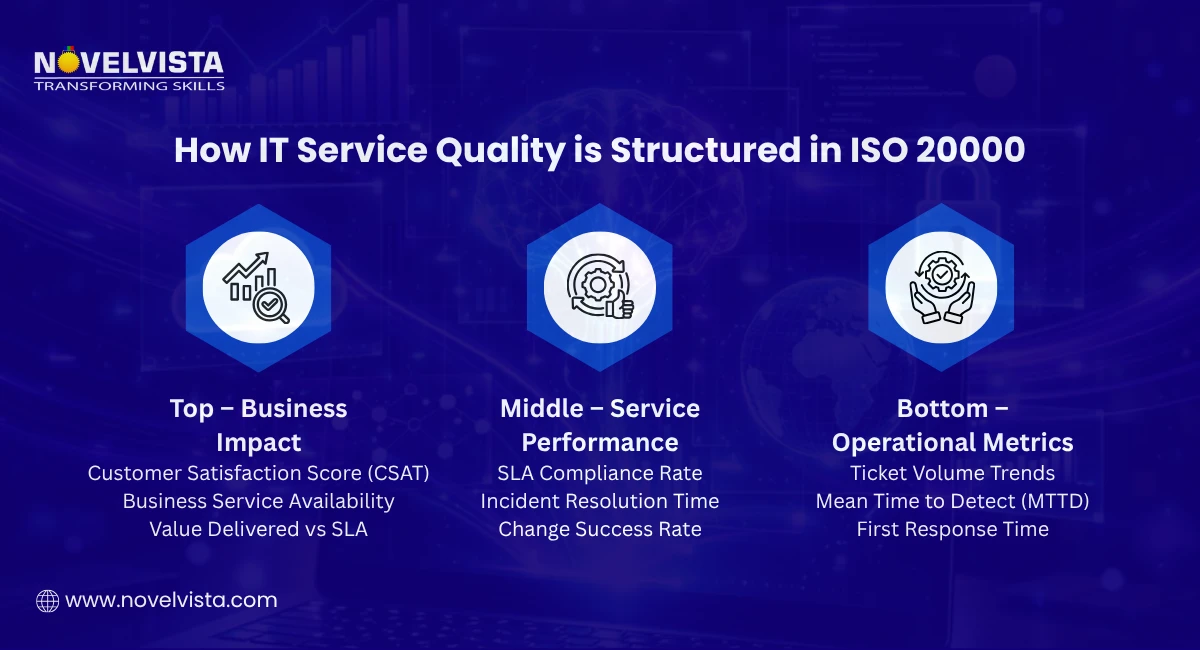
Measuring IT service quality requires clearly defined metrics. These KPIs help organizations track performance, identify gaps, and improve services.
Below are some essential metrics aligned with ISO 20000:
| Metric | Description | ISO 20000 Connection | Target Benchmark |
| Uptime/Availability | Percentage of system availability | Clause 8.2.3 | 99.9%+ |
| MTTR (Mean Time to Resolve) | Average time to resolve incidents | Clause 8.2.1 | < 4 hours |
| FCR (First-Contact Resolution) | Issues resolved on first interaction | Clause 8.2.2 | 70–80% |
| Change Success Rate | Successful IT changes | Clause 8.5.2 | 95%+ |
| Impacted User Minutes | User impact of outages | Clause 8.2.4 | < 1% |
These metrics are critical for evaluating IT service quality measurement and ensuring compliance with service level agreements (SLAs).
For example:
By continuously tracking these metrics, organizations can improve IT service quality and deliver better outcomes.
While metrics provide insights, organizations need a structured framework to standardize processes. ISO 20000 offers exactly that.
ISO 20000 is based on the Plan-Do-Check-Act (PDCA) cycle:
ISO 20000 directly supports IT service quality by aligning processes with measurable outcomes:
Organizations implementing ISO 20000 often experience:
Industry reports suggest that certified organizations achieve 20–30% faster incident resolution times, significantly improving IT service quality.
Pro Tip: An effective ISO 20000 Exam guide can help you understand key concepts, metrics, and frameworks needed to improve and audit IT service quality with confidence.
Improving IT service quality requires a proactive and systematic approach. ISO 20000 provides a strong foundation for continuous improvement.
Set clear and measurable service quality benchmarks aligned with business goals. Define SLAs and KPIs to track performance effectively.
Ensure alignment between IT teams and business stakeholders. Clearly define service requirements and expectations to avoid misunderstandings.
Continuous Monitoring
Regularly monitor IT service quality metrics such as uptime, MTTR, and customer satisfaction. Use dashboards and reporting tools to track performance in real time.
Collect feedback from users and stakeholders. Use this data to refine processes and improve service delivery.
ISO 20000’s continual improvement clause (Clause 10.2) ensures that organizations continuously enhance IT service quality. Understanding the ISO 20000 Lead Auditor Syllabus is essential for mastering audit principles, service quality metrics, and compliance requirements needed to evaluate and improve IT service management systems.
In today’s fast-paced digital environment, IT service quality is no longer optional—it is a critical business requirement.
By focusing on key dimensions such as reliability, responsiveness, and assurance, and by tracking essential metrics, organizations can significantly improve their service performance.
ISO 20000 takes IT service quality to the next level by providing a structured, auditable framework that ensures consistency and continuous improvement.
As emerging technologies like AI-driven incident management and automation reshape IT operations, organizations that prioritize IT service quality will be better positioned for future success.
Now is the time to assess your current IT service management practices, align them with ISO 20000, and start building a culture of excellence.

If you’re serious about improving IT service quality and mastering ISO 20000 audits, the right training can make all the difference.
Join NovelVista’s NovelVista ISO/IEC 20000:2018 Lead Auditor Certification Training and gain hands-on auditing expertise, real-world IT service management insights, and globally recognized credentials. This program equips you with practical skills to plan, conduct, and lead ISO 20000 audits effectively, while helping organizations improve service quality and compliance.
Start your journey toward becoming a certified ISO 20000 Lead Auditor!
Author Details

Course Related To This blog
ISO 20000:2018 Lead Auditor
Confused About Certification?
Get Free Consultation Call
Stay ahead of the curve by tapping into the latest emerging trends and transforming your subscription into a powerful resource. Maximize every feature, unlock exclusive benefits, and ensure you're always one step ahead in your journey to success.