Category | Quality Management
Last Updated On 25/12/2025
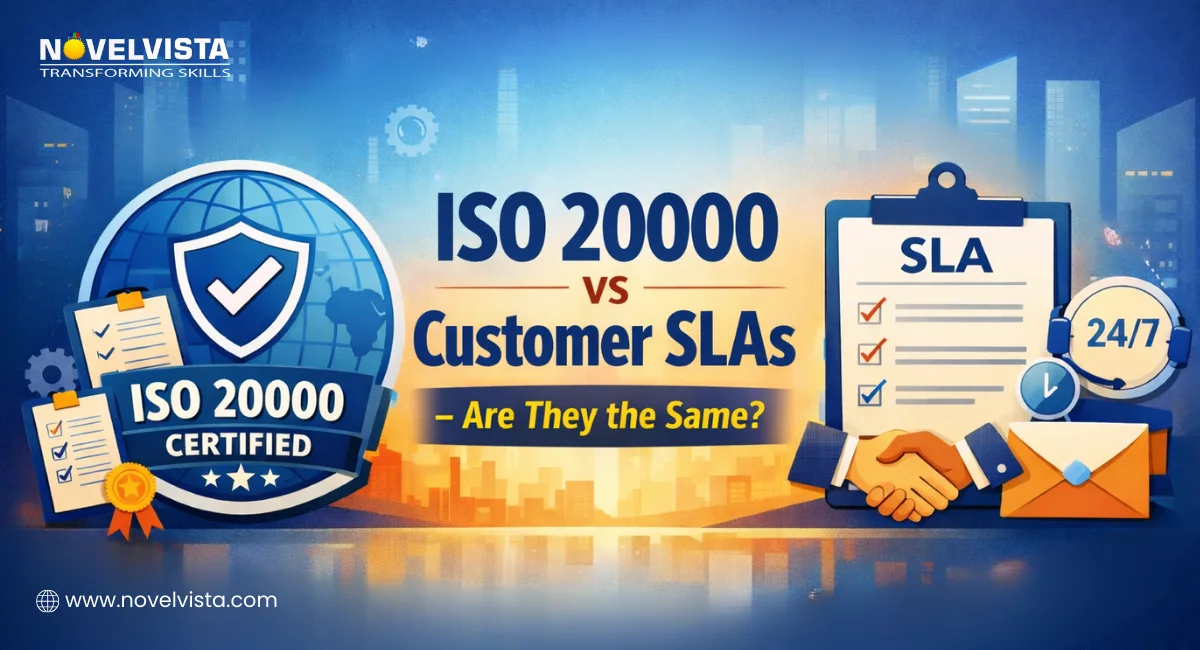
Many organizations mix up ISO 20000 and Customer SLAs, and that confusion often leads to weak service governance, unrealistic expectations, and audit challenges. ISO 20000 builds a structured IT Service Management framework, while Customer SLAs define service performance commitments to clients. They sound related, but they serve different purposes and work best when aligned. This guide explains the differences, how they support each other, the real-world impact, and why this topic matters for ITSM teams and auditors.
This guide is built on real experience working with organizations that manage complex service environments, handle demanding SLAs, and prepare for ISO 20000 certification and audits. The insights shared come from real implementation scenarios, audit observations, and hands-on ITSM governance work, not just textbook theory.
ISO 20000 is an international IT Service Management System (SMS) standard that helps organizations design, deliver, manage, and continually improve IT services in a structured way.
It covers the complete lifecycle of services, including:
The focus here is governance, repeatability, and maturity. When we talk about ISO 20000 vs Customer SLAs, ISO 20000 acts as the backbone that makes it possible to consistently achieve SLA commitments without relying only on firefighting or manual effort.
Dive Deeper to know about the ISO 20000 Standard in our comprehensive blog: ISO 20000 Standard Explained
Customer SLAs are formal service commitments made to customers. Unlike ISO 20000, SLAs are contractual, measurable, and directly tied to delivery expectations. They clearly define what the customer should receive and what happens if commitments are not met.
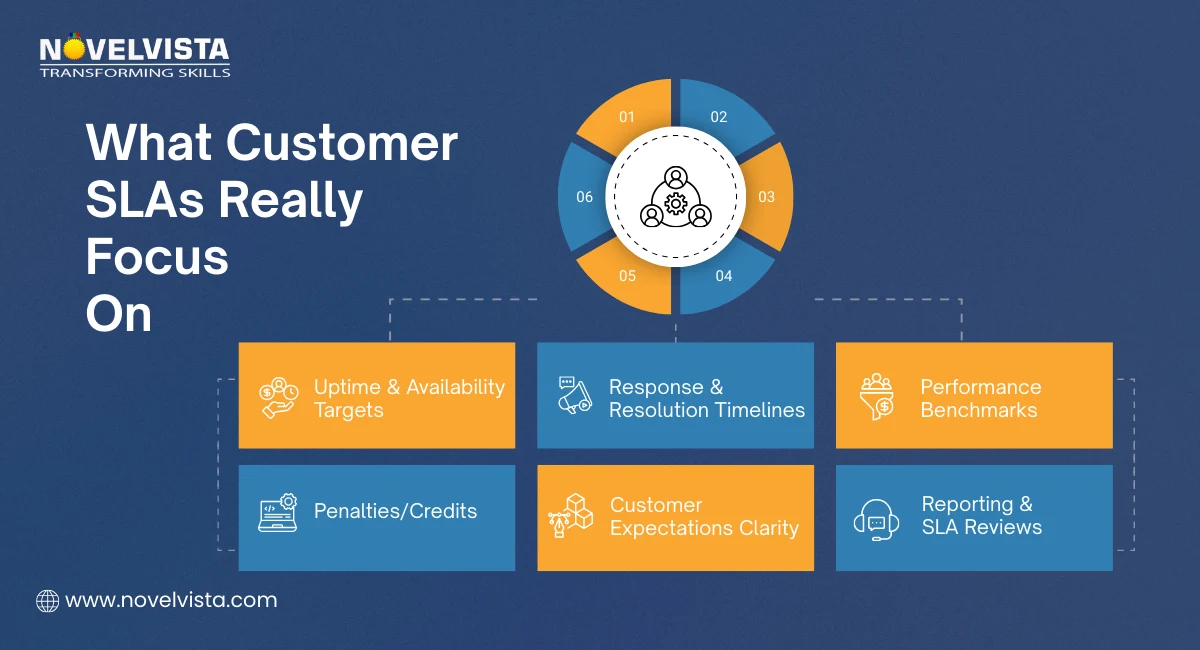 Typical SLA elements include:
These insights reflect years of working with customer contracts, SLA frameworks, and performance governance in live IT environments. Many organizations have leveraged these practices during ISO 20000 implementations, internal audits, and certification journeys to build stronger SLA assurance and customer trust. This is a key clarity point in the ISO 20000 vs Customer SLAs discussion.
To avoid confusion, here’s the simple comparison:
Aspect |
ISO 20000 |
Customer SLAs |
| Nature | Certifiable ITSM standard | Legal customer contract |
| Scope | Full SMS lifecycle, including Service Level Management | Specific measurable service commitments |
| Focus | Process maturity, governance, and continual improvement | Delivery outcomes, uptime, performance |
| Output | Compliance proof through audits | Performance proof through KPI results |
Clear takeaway: ISO 20000 and Customer SLAs are not the same. They are different but complementary. ISO 20000 builds the system; SLAs measure the results customers care about.
This is where ISO 20000 and Customer SLAs truly connect. ISO 20000 includes strong Service Level Management expectations, ensuring SLAs are realistic, monitored, and continually improved.
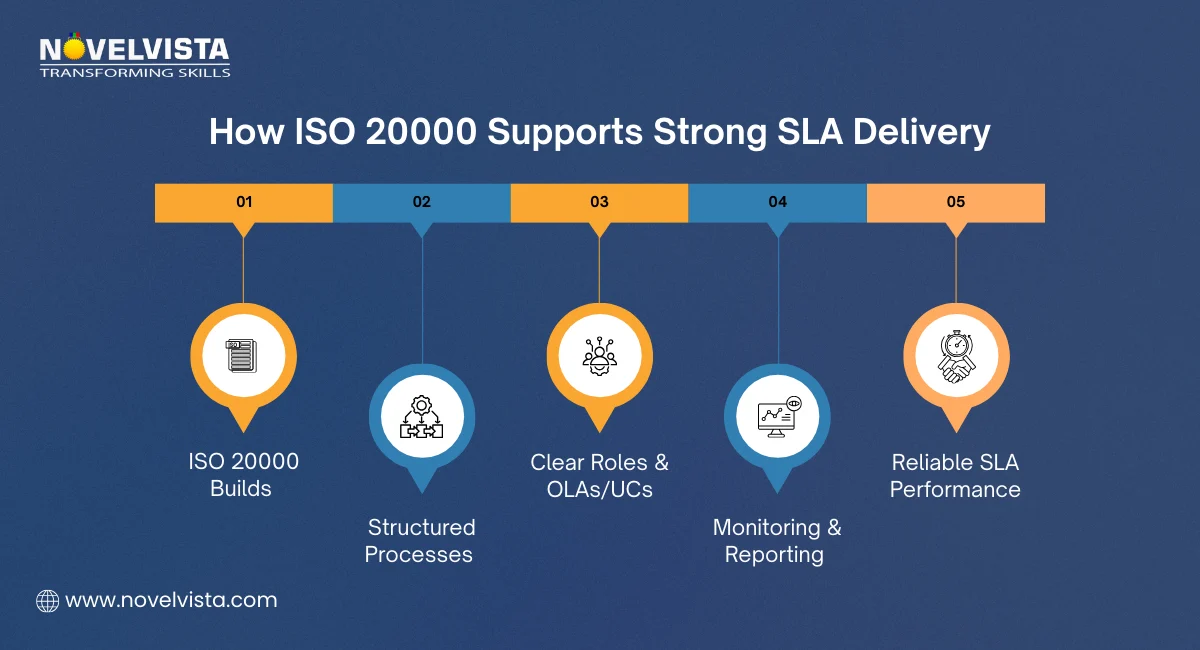 It supports SLA success through:
This is why organizations that understand ISO 20000 vs Customer SLAs build stronger reliability, fewer disputes, and better trust.
When organizations align ISO 20000 and Customer SLAs, service delivery becomes more predictable, measurable, and trusted. Here are some key benefits:
Stronger SLA compliance and predictable delivery: ISO 20000 builds structured processes, so SLA commitments are supported by real controls instead of luck or individual effort.
Reduced incidents and better stability: Better change control, problem management, and capacity planning reduce service disruptions that usually cause SLA breaches.
Higher trust and transparency with customers: Clear governance plus measurable SLA results help customers see how professional services are managed.
Better accountability: ISO 20000 defines roles, responsibilities, and ownership, while SLAs define expectations, so accountability is always visible.
More data-driven decision making: Performance reviews and SLA reports provide real insight into trends, risks, and improvement opportunities.
Improved business relationships: Customers feel assured when services are backed by both a global ITSM standard and strong contractual commitments.
Learn how to align SLAs with OLAs and supplier contracts
the right way. Fix service level gaps, reduce audit findings,
and make SLAs work in real operations.
If you want ISO 20000 and Customer SLAs to truly support each other, alignment should be structured and intentional. Here’s how organizations usually do it:
Organizations should not create SLAs in isolation. They must be developed within a clear Service Level Management framework so that they align with ITSM capability, service scope, and available resources instead of being unrealistic documents.
Every SLA commitment to customers should connect with internal team agreements and supplier Underpinning Contracts. This ensures that every target promised externally is supported internally with responsibility and capability.
Real-time monitoring, dashboards, and automated reports help track uptime, response times, resolution timelines, and service performance. This makes SLA management proactive instead of reactive firefighting.
SLA trends, breaches, risks, and achievements should always be presented during management reviews. This ensures leadership involvement, strategic decisions, and continuous improvement rather than short-term SLA firefighting.
Must Know: The difference between SLA vs SLO vs SLI
When assessing ISO 20000 vs Customer SLAs, lead auditors do not check only documents. They look for real alignment, performance, and outcomes.
Auditors generally expect to see:
This perspective is shaped by real lead auditor experience and audit-driven learning. Organizations often ask, “Do auditors look at SLAs?” and the answer is yes, but they look deeper than documents. The points shared here reflect how auditors practically assess alignment between ISO 20000 frameworks and SLA performance in certification and surveillance audits.
For aspiring auditors, understanding ISO 20000 vs Customer SLAs is a powerful skill. It helps move beyond just checking documents to truly evaluating whether services deliver value in real life.
This understanding helps auditors:
It proves that the organization is not only certified but also genuinely capable of delivering consistent service performance to customers.
Many organizations misunderstand how ISO 20000 and Customer SLAs connect, which often leads to gaps and nonconformities. Here are some common issues auditors frequently notice:
So, are ISO 20000 vs Customer SLAs the same? No. They serve different but complementary purposes. ISO 20000 provides the structured ITSM system, governance, and continual improvement foundation. Customer SLAs define measurable promises, expectations, and accountability. When both work together, organizations deliver predictable, trusted, and high-performing IT services.
Everything shared in this guide is aligned with globally accepted ISO 20000 practices and real SLA governance experience seen in audit environments. The goal is to help Lead Auditors clearly understand how ISO 20000 and Customer SLAs connect, where they differ, and how their alignment strengthens service reliability, audit confidence, and overall ITSM maturity.
If you want to understand ISO 20000 at a deeper level, especially from an audit and governance perspective, NovelVista’s ISO 20000 Lead Auditor Certification Training Course is a great step forward. It helps professionals learn how to review SLAs, assess ITSM maturity, validate compliance, and evaluate real service performance with confidence. This is ideal for consultants, auditors, managers, and anyone aiming to grow in ITSM leadership roles.
Author Details

Course Related To This blog
ISO 20000:2018 Lead Auditor
Confused About Certification?
Get Free Consultation Call
Stay ahead of the curve by tapping into the latest emerging trends and transforming your subscription into a powerful resource. Maximize every feature, unlock exclusive benefits, and ensure you're always one step ahead in your journey to success.