Category | Quality Management
Last Updated On 29/04/2026
Did you know that elite IT teams deploy code up to 200 times more frequently while maintaining significantly lower failure rates? This is the power of DevOps. At the same time, organizations worldwide are doubling down on structured frameworks like ISO 20000 to ensure governance, compliance, and consistent service quality.
But here’s the real question:
Can speed and control truly coexist?
For auditors, this is no longer a theoretical debate; it’s a daily challenge.
As DevOps accelerates delivery cycles and automates workflows, traditional audit approaches struggle to keep up. Static documentation, periodic reviews, and manual checks are being replaced by real-time data, continuous pipelines, and automated controls. This shift makes understanding ISO 20000 and DevOps not just important but essential.
If you're an:
You’ve likely asked:
The answer lies in effective ISO 20000 DevOps integration a model where agility and accountability don’t compete, but complement each other.
In this blog, we’ll break down how this integration is transforming the audit landscape, what auditors must focus on, and how you can stay ahead in a world where compliance is continuous and speed is non-negotiable.
Before diving deeper, it’s important to clarify the basics.
ISO 20000 is an international standard for IT Service Management (ITSM). It ensures that organizations deliver consistent, high-quality IT services aligned with business needs. It emphasizes structured processes, documentation, and continual improvement.
On the other hand, DevOps is a cultural and technical movement that promotes collaboration between development and operations teams. It focuses on:
While ISO 20000 prioritizes control and governance, DevOps emphasizes speed and flexibility.
At first glance, they may seem contradictory. However, DevOps in ISO 20000 environments is not only possible it’s increasingly essential.
Modern organizations cannot afford to choose between speed and stability. They need both.
This is where ISO 20000 DevOps integration plays a vital role.
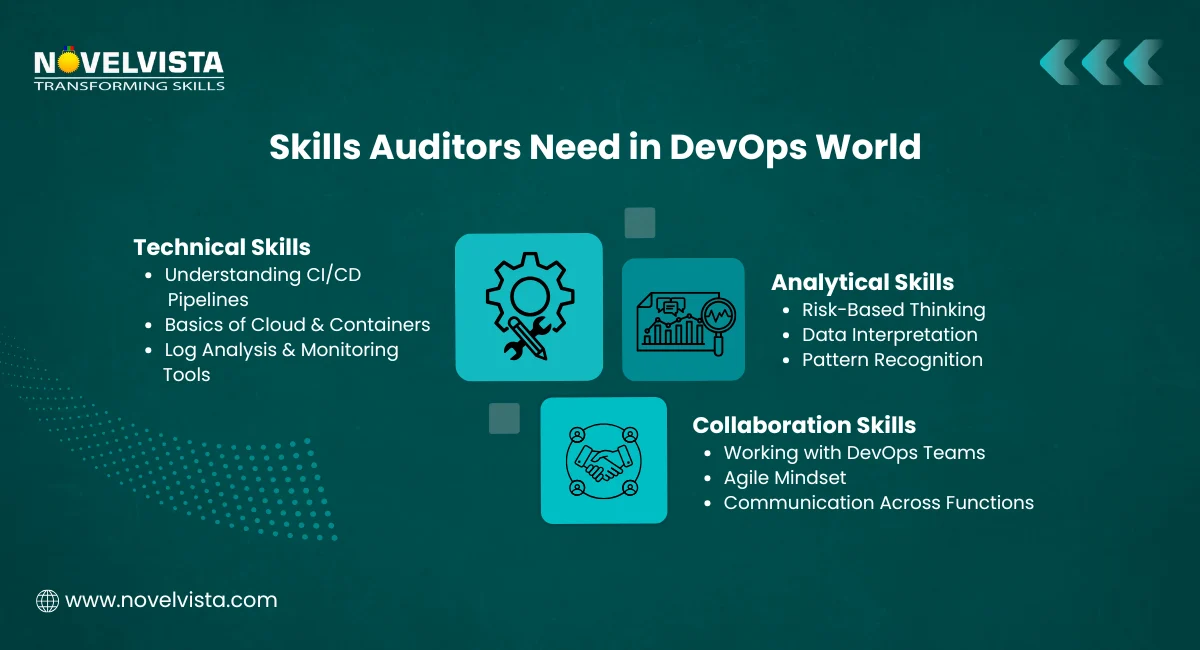
For auditors, this integration means evaluating not just compliance but also how effectively organizations balance agility with accountability.
To audit effectively, you must understand how DevOps differs from traditional ITSM.
ISO 20000 is strongly process-driven, with clearly defined workflows, roles, and responsibilities to ensure consistency and compliance. In contrast, DevOps is culture-driven, focusing on collaboration, shared ownership, and continuous improvement across teams. In ISO 20000 and DevOps environments, auditors must evaluate not just processes, but how effectively teams work together to deliver value.
Traditional audits under ISO 20000 rely heavily on documented policies, procedures, and manual records as evidence of compliance. However, in DevOps, most evidence is generated automatically through logs, CI/CD pipelines, and monitoring dashboards. When assessing DevOps in ISO 20000, auditors need to shift from static documentation to validating automated, real-time data sources.
ISO 20000 emphasizes controlled environments with formal approvals and risk management practices to ensure service stability. DevOps, on the other hand, prioritizes speed, frequent releases, and rapid iterations while embedding controls within automation. In ISO 20000 DevOps integration, the challenge for auditors is to ensure that speed does not compromise compliance, but instead enhances it through built-in safeguards.
Understanding these differences is crucial when evaluating ISO 20000 and DevOps environments.
When DevOps practices are implemented, the auditing landscape shifts significantly.
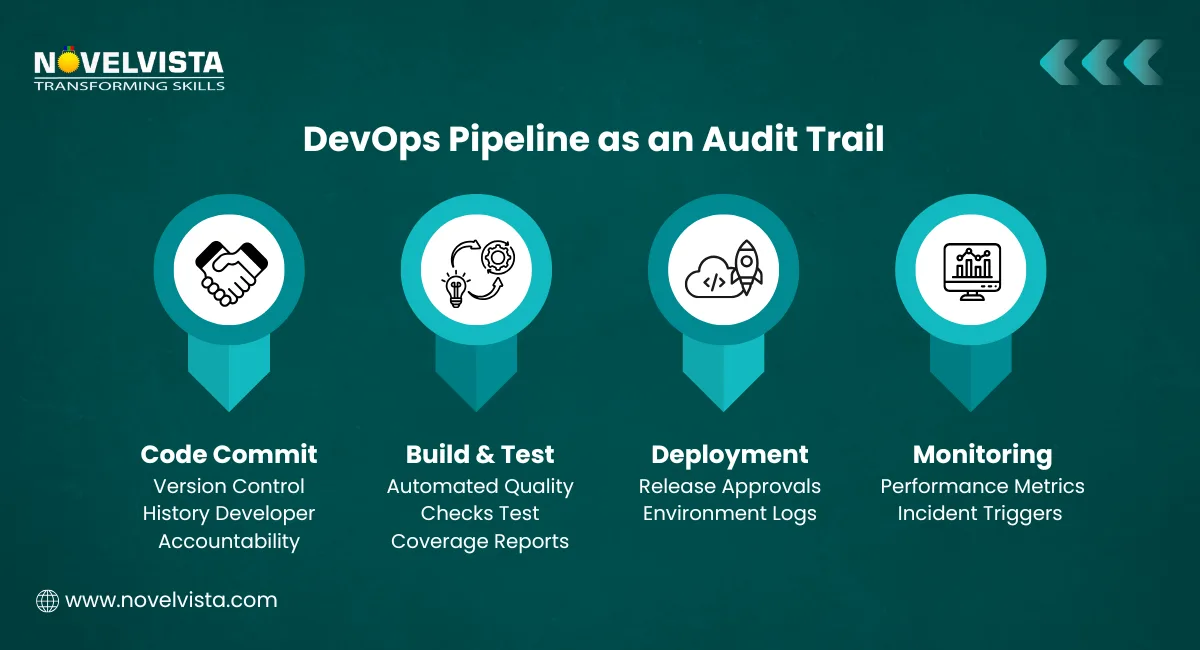
Instead of periodic releases, DevOps uses CI/CD pipelines. Auditors must review:
Controls are embedded into tools rather than documented manually. For example:
Testing and validation happen earlier in the development cycle, reducing risk.
Auditors now rely on:
This evolution makes DevOps in ISO 20000 environments more transparent but also more complex to audit.
Auditing DevOps environments requires a shift in focus. Here are the critical areas to examine.
In DevOps, changes happen frequently. Auditors should verify:
Even in fast environments, compliance with ISO 20000 must be maintained.
DevOps emphasizes quick detection and resolution.
Auditors should evaluate:
Traditional CMDBs may not fully apply in dynamic environments.
Instead, look for:
Security is integrated into DevOps as DevSecOps.
Key audit points include:
These areas are central to any ISO 20000 audit DevOps assessment. To effectively plan your ISO 20000 and DevOps journey, it’s equally important to understand the financial aspect here’s a detailed look at the ISO 20000 Cost Guide to help you budget and prepare strategically.
While beneficial, integration is not without challenges.
DevOps teams rely on automation rather than traditional documentation, which can confuse auditors.
Teams may resist audit processes, viewing them as barriers to speed.
Multiple tools (CI/CD, monitoring, security) make it difficult to track evidence.
Organizations may struggle to demonstrate compliance in real time.
Understanding these challenges helps auditors adapt their approach to ISO 20000 and DevOps environments.
To succeed in modern environments, auditors must evolve their strategies.
Instead of checking documentation alone, evaluate:
Use data from:
Familiarity with tools like Git, Jenkins, or Kubernetes is essential for effective audits.
Engage with DevOps engineers to understand workflows rather than imposing rigid checks.
These practices ensure effective ISO 20000 DevOps integration auditing.
The future of auditing is continuous, automated, and intelligent.
AI tools will analyze logs and detect anomalies in real time.
Compliance checks will be embedded into pipelines, ensuring ongoing readiness.
Security will become an integral part of DevOps and ISO 20000 frameworks.
As technology evolves, auditors must continuously adapt to stay relevant in the world of ISO 20000 and DevOps.
The convergence of ISO 20000 and DevOps is no longer optional it is redefining how modern IT service management operates. Organizations are moving beyond the trade-off between speed and control, proving that with the right approach, both can coexist and even strengthen each other.
For auditors, this evolution demands more than minor adjustments. It calls for a shift in mindset from checklist-based auditing to insight-driven evaluation. It requires a deeper understanding of automation, CI/CD pipelines, and integrated controls, along with the ability to interpret real-time evidence rather than relying solely on static documentation. As you strengthen your understanding of ISO 20000 and DevOps, having a clear ISO 20000 Exam guide can help you confidently prepare for certification and apply audit principles in real-world environments.
Effective ISO 20000 DevOps integration empowers organizations to deliver faster, more resilient services while maintaining strong governance and compliance. At the same time, it challenges traditional audit practices, pushing professionals to rethink how assurance is achieved in dynamic environments.
By embracing these changes and focusing on outcomes, transparency, and continuous validation, auditors can play a critical role in ensuring that DevOps in ISO 20000 environments remains both agile and compliant. Those who adapt will not just keep up with change they will lead it.

Ready to take your expertise in ISO 20000 and DevOps to the next level?
Join NovelVista’s ISO/IEC 20000:2018 Lead Auditor Certification Training and build the practical skills needed to audit modern, DevOps-driven environments with confidence. This program goes beyond theory—equipping you with real-world auditing techniques, hands-on insights into ISO 20000 DevOps integration, and the ability to evaluate dynamic, automated systems effectively.
Whether you're an auditor, ITSM professional, or compliance leader, this course prepares you to handle evolving challenges in DevOps in ISO 20000 environments while maintaining strong governance and compliance.
Start your journey toward becoming a future-ready auditor today!
Author Details

Course Related To This blog
ISO 20000:2018 Lead Auditor
Confused About Certification?
Get Free Consultation Call
Stay ahead of the curve by tapping into the latest emerging trends and transforming your subscription into a powerful resource. Maximize every feature, unlock exclusive benefits, and ensure you're always one step ahead in your journey to success.