Category | Quality Management
Last Updated On 16/01/2026
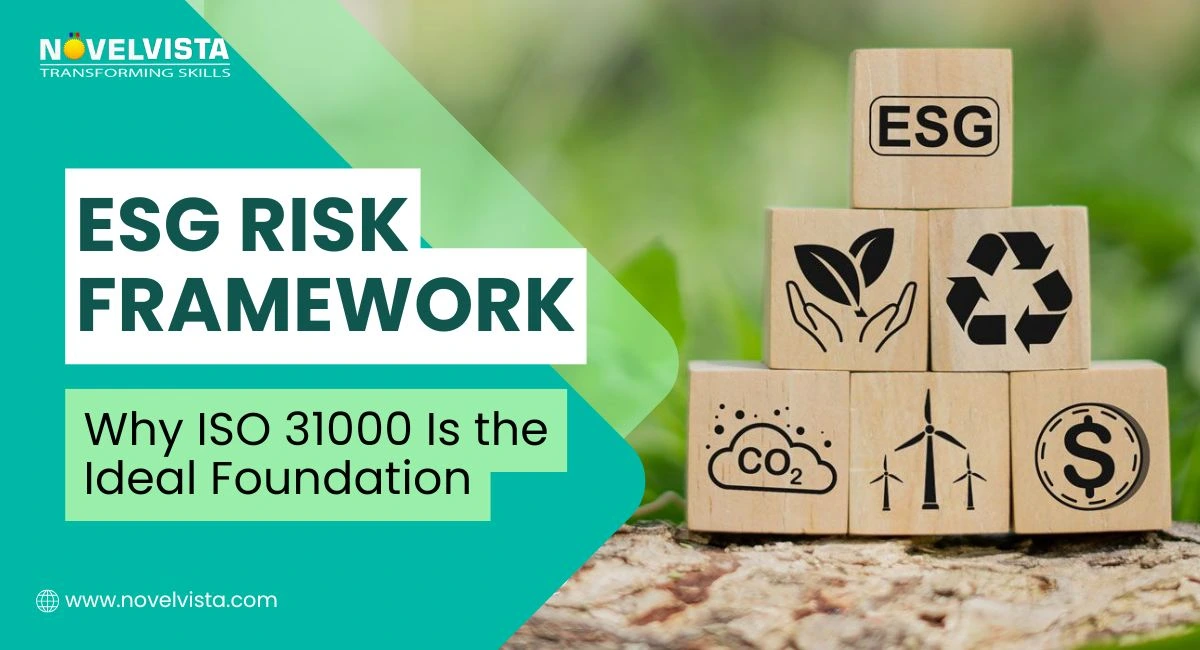
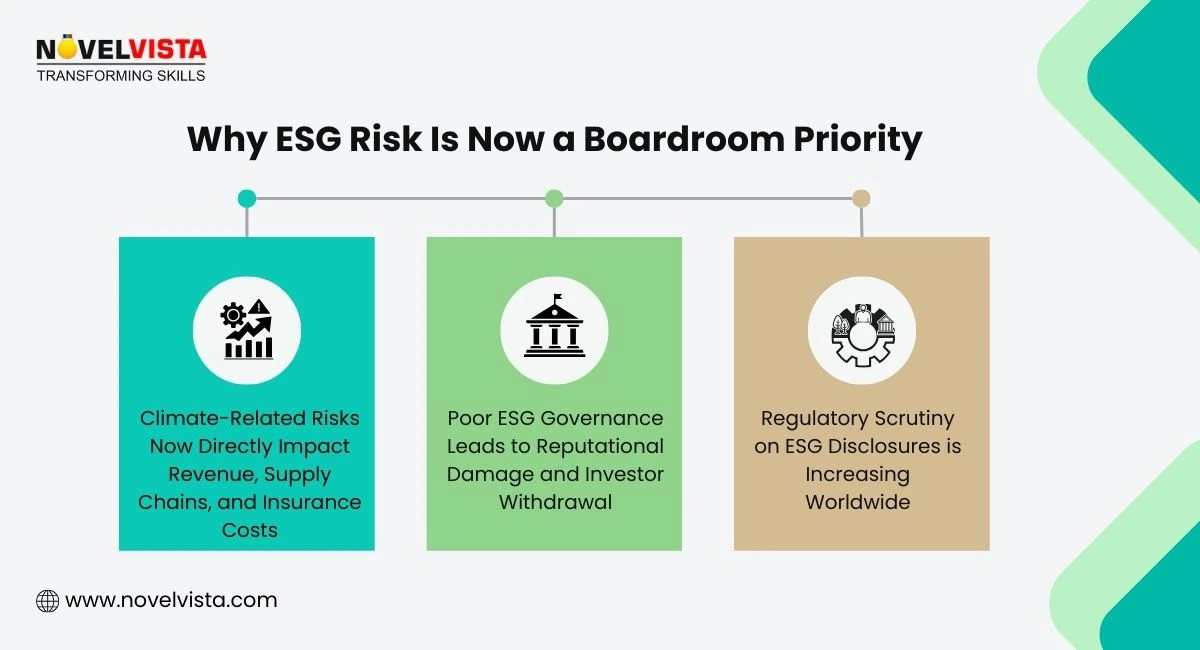
Environmental, Social, and Governance (ESG) risks are no longer distant or theoretical. According to global studies, over 60% of enterprise value today is influenced by ESG-related factors, while regulatory penalties and reputational losses linked to ESG failures continue to rise each year. Climate-related disruptions, labor violations, data ethics issues, and governance failures have already wiped billions off market valuations worldwide.
Despite this, many organizations still treat ESG as a reporting or compliance exercise rather than a core risk discipline. This gap is exactly where a structured ESG risk framework becomes essential.
So, who really needs an ESG risk framework?
Why does ISO 31000 matter when managing ESG risks?
And how does risk-based ESG management strengthen long-term business resilience?
To answer these questions, organizations must move beyond fragmented ESG initiatives and adopt globally recognized risk management principles. This is where ISO 31000 provides a powerful and practical foundation for ESG risk management.
An effective framework management approach is relevant across industries and roles. It is particularly valuable for:
As ESG accountability expands, these stakeholders increasingly require structured methods to identify, assess, and manage ESG risks consistently.
ESG risk refers to the potential negative impact of environmental, social, and governance factors on an organization’s objectives, performance, and reputation.
Environmental risks include climate change impacts, carbon emissions, energy usage, water scarcity, and waste management. These risks directly affect operations, supply chains, and regulatory compliance.
Social risks involve labor practices, workplace safety, diversity and inclusion, human rights, and community relations. Failures in these areas can result in legal action, workforce instability, and reputational damage.
Governance risks focus on leadership ethics, transparency, regulatory compliance, data protection, and board effectiveness. Weak governance often amplifies environmental and social risks rather than controlling them.
These risks are deeply interconnected. A robust ESG risk assessment framework helps organizations recognize ESG risks as systemic rather than isolated issues.
An ESG risk framework is a structured system that enables organizations to identify, evaluate, prioritize, and manage ESG-related risks in a consistent and measurable way.
Unlike ad-hoc ESG initiatives, a formal framework connects ESG risks to governance structures, controls, and decision-making processes. It ensures that ESG risks are assessed with the same rigor as financial or operational risks.
Effective ESG risk framework management emphasizes accountability, continuous monitoring, and integration with enterprise-wide risk practices—moving ESG from intention to execution.
ISO 31000 is an internationally recognized standard that provides principles and guidelines for effective risk management. Its flexibility and principles-based design make it especially suitable for ESG applications.
Unlike checklist-based ESG models, ISO 31000 focuses on how risks are managed rather than prescribing fixed controls. This aligns naturally with ESG, where risks vary by industry, geography, and stakeholder expectations.
By linking ESG risks with enterprise risk management (ERM), ISO 31000 ensures ESG considerations are embedded into strategic planning, governance, and performance management rather than treated as standalone activities. The ESG risk framework is built on ISO 31000 principles, ensuring ESG risks are managed in a structured, consistent, and business-aligned way.
When applied to ESG, ISO 31000 strengthens the framework through several core principles:
These principles ensure ESG risk management remains dynamic, relevant, and value-driven.
Organizations begin by defining internal and external ESG drivers such as regulatory requirements, investor expectations, market pressures, and strategic objectives. Establishing this context ensures the ESG framework aligns with business goals and stakeholder priorities.
Material ESG risks are systematically identified across operations, products, and supply chains to capture all potential exposures. This step strengthens the framework by ensuring environmental, social, and governance risks are recognized early. A structured framework helps avoid gaps that could lead to compliance or reputational failures.
Risks are evaluated based on their likelihood and potential impact on business objectives and stakeholders. Using an ESG risk assessment framework allows organizations to prioritize high-impact ESG risks consistently.
Organizations select appropriate risk responses such as mitigation, control, transfer, or acceptance based on risk severity and tolerance levels. This phase embeds ESG considerations directly into operational and strategic decisions.
ESG performance is tracked through defined KPIs, internal audits, and structured disclosures to measure risk effectiveness. Regular monitoring and review help identify changes in ESG exposure and control performance. This ongoing process keeps the ESG risk framework relevant, adaptive, and aligned with evolving regulatory and stakeholder expectations.
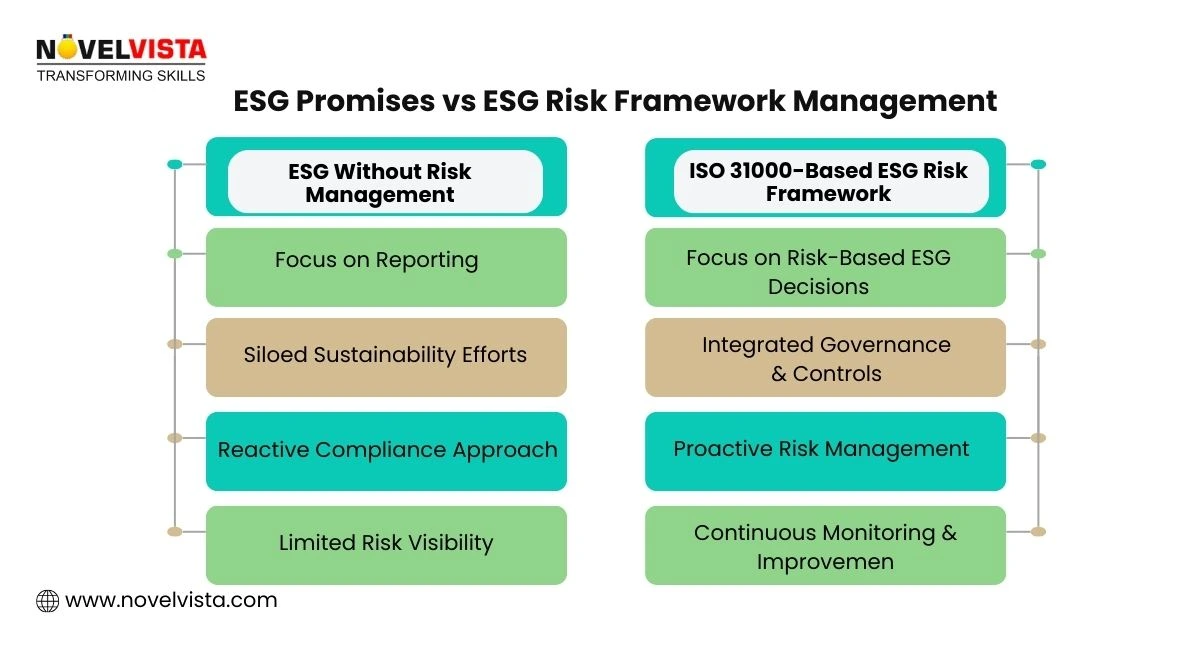
True value emerges when ESG risk framework management is aligned with corporate strategy. This involves linking ESG risks to financial performance, operational resilience, and long-term growth objectives.
Leadership commitment and strong governance structures are essential. When ESG risks are embedded into ERM systems, organizations gain clearer visibility, stronger accountability, and better-informed decisions.
Many organizations face similar challenges when implementing an ESG risk framework, including:
ISO 31000 helps overcome these challenges by providing a unified, adaptable structure that aligns stakeholders around shared risk principles.
In manufacturing, ESG risk frameworks help manage climate and supply chain risks.
In financial services, they strengthen governance and ethical oversight.
Technology firms use them to address social responsibility and data governance challenges.
Across industries, supply chain assessments benefit from a structured framework. To understand how this ESG risk framework works in practice, it is important to start with what ISO 31000 is and why it serves as the foundation for effective ESG risk management.
As ESG expectations continue to rise, fragmented initiatives and reactive compliance are no longer enough. Organizations need a structured ESG risk framework that brings clarity, consistency, and accountability to how ESG risks are identified and managed. Built on ISO 31000, this approach transforms ESG from a reporting obligation into a strategic risk discipline.
By strengthening governance, enhancing resilience, and integrating ESG with enterprise risk management, ISO 31000 enables organizations to make confident, future-ready decisions. An ISO 31000-based ESG risk framework is not just about meeting expectations—it is about protecting value, building trust, and enabling sustainable long-term growth.
Join NovelVista’s ISO 31000 Risk Manager Certification Training and gain practical skills to design, implement, and manage an effective ESG risk framework aligned with global best practices. This course equips professionals with real-world risk assessment techniques, governance integration strategies, and ISO 31000 principles essential for managing ESG risks across modern organizations.
Designed for risk managers, ESG professionals, auditors, and business leaders, the program helps you make confident, risk-informed decisions that drive sustainability and long-term value.
Start your ISO 31000 risk management journey today:

Author Details

Confused About Certification?
Get Free Consultation Call
Stay ahead of the curve by tapping into the latest emerging trends and transforming your subscription into a powerful resource. Maximize every feature, unlock exclusive benefits, and ensure you're always one step ahead in your journey to success.