Category | IT Service Management
Last Updated On 04/08/2026
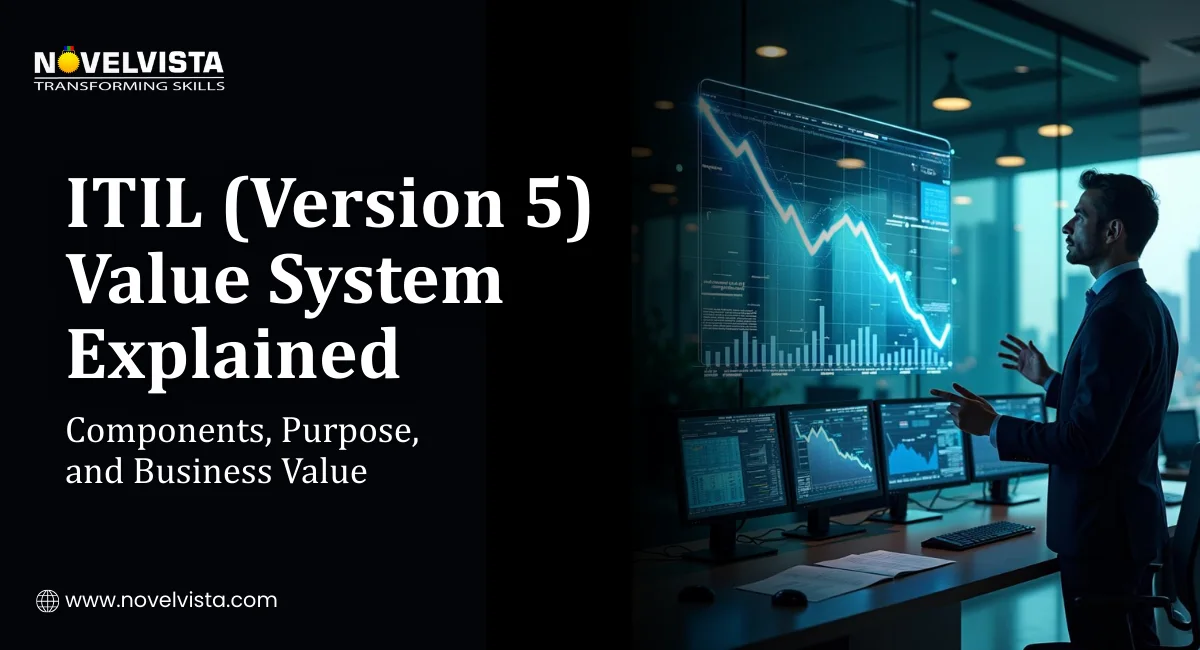
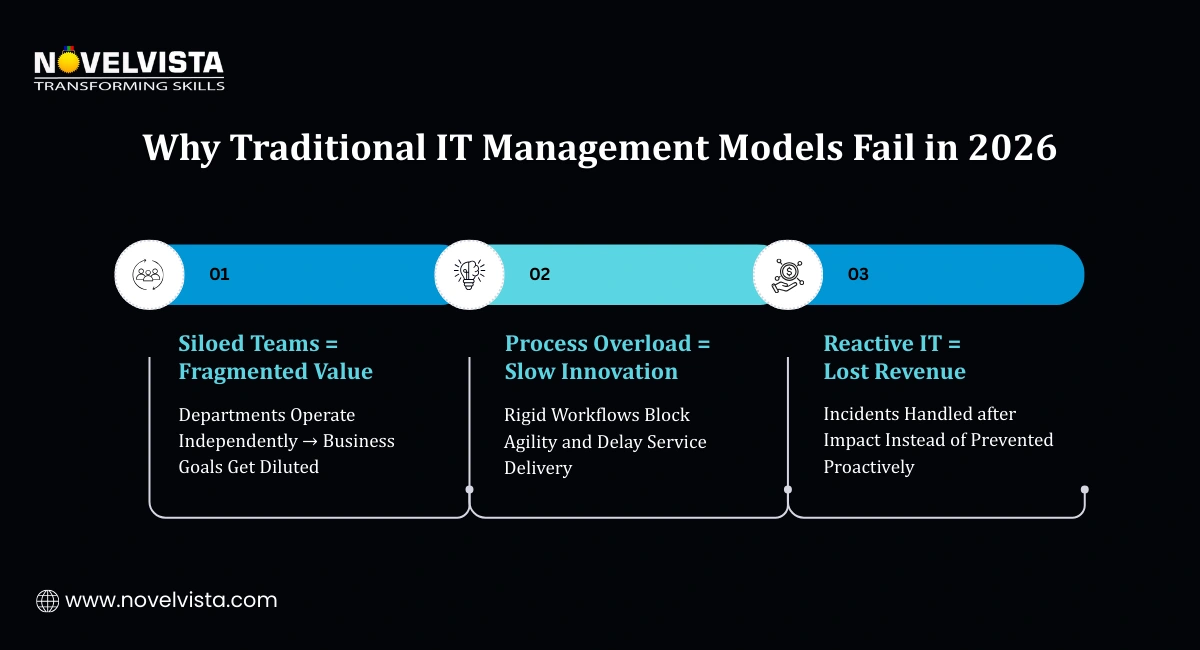
Digital transformation is accelerating at an unprecedented pace. According to global IT research, over 70% of organizations report that misalignment between IT and business objectives leads to delays, cost overruns, and customer dissatisfaction. Nearly 60% of service disruptions occur due to poor process integration and unclear accountability.
So here’s the big question:
If you are an IT manager, service delivery professional, DevOps engineer, CIO, or aspiring ITSM professional, understanding the ITIL (Version 5) Value System is critical.
The ITIL 5 Value System provides a structured yet flexible model that ensures every IT activity contributes to value creation. It connects governance, practices, principles, and improvement into one cohesive operating model designed for modern digital enterprises.
Let’s break it down step by step.
The ITIL 5 Value System is a comprehensive framework that explains how all organizational components work together to enable value creation through IT-enabled services. Unlike earlier versions that focused mainly on processes, the ITIL 5 Value System emphasizes value co-creation, stakeholder collaboration, agility and adaptability, and integration with Agile, DevOps, and Lean practices. Rather than acting as a rigid process manual, it provides a holistic service management approach that aligns governance, practices, and continual improvement. At its core, the system transforms demand and opportunities into measurable business value.
Opportunity & Demand → Valuable Outcomes
This transformation is what makes ITIL 5 Value Creation practical and measurable.
Understanding the ITIL 5 Value System Components is essential to grasp how the framework operates. The system consists of five interconnected elements:
These are universal recommendations that guide decision-making at every level. Examples include:
These principles ensure flexibility and adaptability across different industries.
Governance ensures that organizational objectives are translated into direction and oversight.
It defines:
Without governance, value creation becomes inconsistent and fragmented.
The Service Value Chain is the operational heart of the ITIL (Version 5) Value System.
It includes six key activities:
Each activity transforms demand into value in a structured manner.
ITIL 5 defines 34 management practices grouped into:
Examples include Incident Management, Change Enablement, Problem Management, and Service Level Management.
These practices operationalize strategy and enable measurable performance.
No system is complete without continuous enhancement.
Continual improvement ensures:
Together, these ITIL 5 Value System Components form an integrated ecosystem rather than isolated silos.
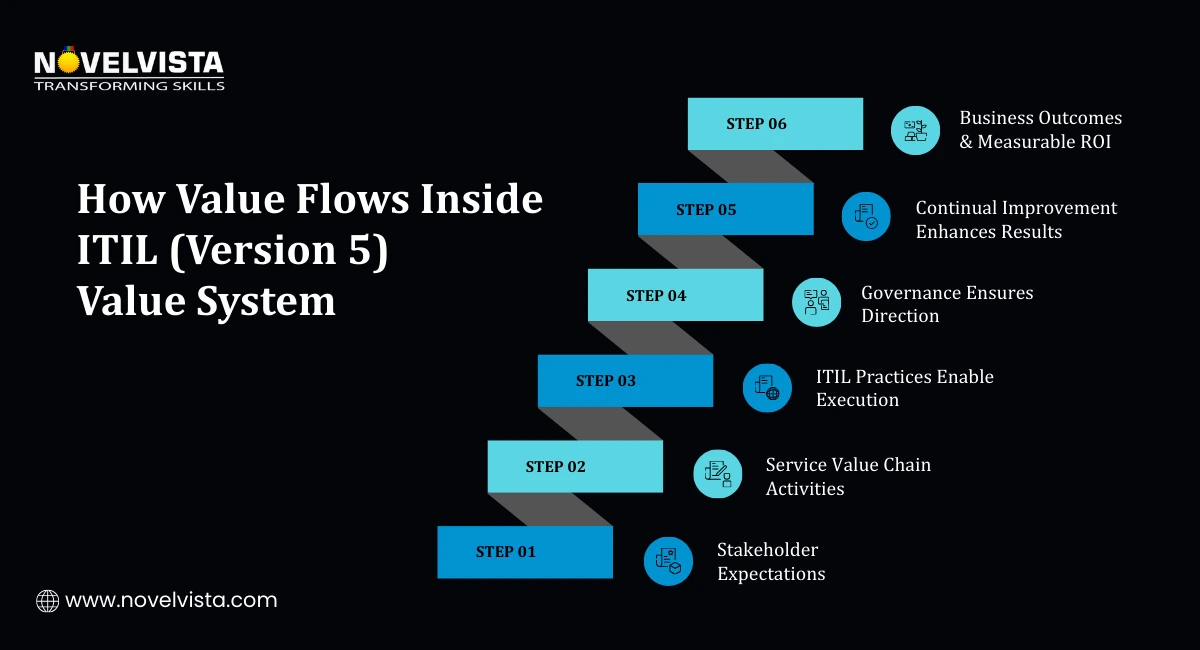
Understanding the Purpose of ITIL (Version 5) Value System goes beyond memorizing components. It answers the strategic “why.”
The primary goal is to ensure that IT services directly support business objectives. Every activity must contribute to measurable outcomes.
Value is not delivered unilaterally. It is co-created through collaboration between service providers and consumers.
This perspective shifts IT from a support function to a strategic partner.
Modern enterprises require adaptability. The Purpose of ITIL (Version 5) Value System includes fostering iterative improvement and responsiveness to change.
Through governance and structured practices, risks are proactively managed rather than reactively addressed.
Organizations integrating cloud computing, AI, automation, and DevOps need a framework that unifies innovation with control.
That’s precisely where the ITIL (Version 5) Value System delivers strategic advantage.
The concept of ITIL (Version 5) Value Creation is central to the framework, as it explains how value is systematically generated from demand. In this model, stakeholders present demand or opportunity, which is processed through the Service Value Chain. ITIL practices support the execution of activities, while governance provides direction and oversight. At the same time, guiding principles influence decision-making, and continual improvement refines outcomes to ensure sustained and measurable value.
The result?
Value delivered in the form of improved services, customer satisfaction, and business growth.
Imagine an e-commerce company experiencing frequent website outages.
Using ITIL (Version 5) Value Creation:
Outcome: Increased customer trust and revenue growth.
This structured yet flexible approach is why the ITIL (Version 5) Value System is highly relevant in modern enterprises. The ITIL Foundation (Version 5) Exam Syllabus outlines the core concepts, Value System components, guiding principles, and service management practices required to successfully pass the certification exam.
Adopting the ITIL 5 Value System delivers measurable business impact.
Streamlined processes reduce redundancy and improve service reliability.
Governance frameworks enhance visibility and accountability.
Services align more closely with stakeholder expectations.
Proactive risk identification lowers service disruption incidents.
Organizations leveraging ITIL (Version 5) Value Creation innovate faster while maintaining control.
Technology is no longer just infrastructure, it is the backbone of business strategy. The ITIL 5 Value System ensures that IT investments translate into business value, teams operate with clarity, change is managed effectively, and innovation and governance coexist in a balanced and controlled manner. In a world driven by digital services, organizations that understand and implement ITIL (Version 5) Value System Components position themselves for sustainable growth, operational resilience, and long-term success. When comparing ITIL 4 vs ITIL (Version 5), the focus shifts from foundational service management concepts to a more evolved, value-driven system designed to enhance agility, governance, and measurable business outcomes.
The ITIL 5 Value System is far more than a conceptual framework; it is a strategic operating model designed to connect IT performance directly to business success. In an era where technology defines competitiveness, organizations cannot afford disconnected processes or reactive service management.
By mastering the ITIL 5 Value System Components, understanding the true Purpose of ITIL 5 Value System, and enabling structured ITIL 5 Value Creation, businesses can shift IT from a support function to a strategic growth engine. This transformation leads to stronger governance, faster innovation, measurable outcomes, and sustained stakeholder trust.
In today’s digital economy, value alignment is no longer optional, it is essential.
The real advantage lies not in knowing about the ITIL 5 Value System, but in implementing it with clarity, commitment, and consistency.

Join NovelVista’s ITIL 5 Foundation Certification Training and gain a clear, practical understanding of ITIL 5 Value System Components, the Purpose of ITIL 5 Value System, and structured ITIL (Version 5) Value Creation. Designed for IT managers, service delivery professionals, DevOps teams, and aspiring ITSM leaders, this course equips you with actionable knowledge, industry best practices, and globally recognized credentials to confidently align IT with business strategy.
Don’t just understand the framework, learn how to implement it effectively and drive measurable business value.
Start your ITIL 5 Certification journey today!
Author Details

Course Related To This blog
ITIL® 4 Foundation Certification
ITIL V5 Foundation
Confused About Certification?
Get Free Consultation Call
Stay ahead of the curve by tapping into the latest emerging trends and transforming your subscription into a powerful resource. Maximize every feature, unlock exclusive benefits, and ensure you're always one step ahead in your journey to success.