Category | DevOps
Last Updated On 19/02/2026

Imagine being at the forefront of ensuring that critical systems never fail, enabling millions of users to rely on your creations every day. SRE engineer skills has emerged as a powerhouse discipline in tech, blending software engineering with IT operations to keep systems scalable, reliable, and high-performing. However, with the massive growth of this field comes a tough challenge: how do you get started in SRE?
If you're finding yourself stuck in a rut, facing career stagnation, skill gaps, or missing out on promotions, you might be wondering how to break free. The good news? site reliability engineer skills are growing rapidly worldwide, particularly in 2025, and they offer high salaries and career advancement.
The solution lies in SRE certification, which offers a structured path to advanced skills, industry recognition, and ultimately, career fulfilment. This guide explores the essential skills, requirements, and pathways that will set you up for success as an SRE.
The skills required for an SRE engineer are demanding and a combination of technical expertise and practical tools to ensure systems are robust, scalable, and efficient. Below are the core technical skills and tools every SRE needs to master:
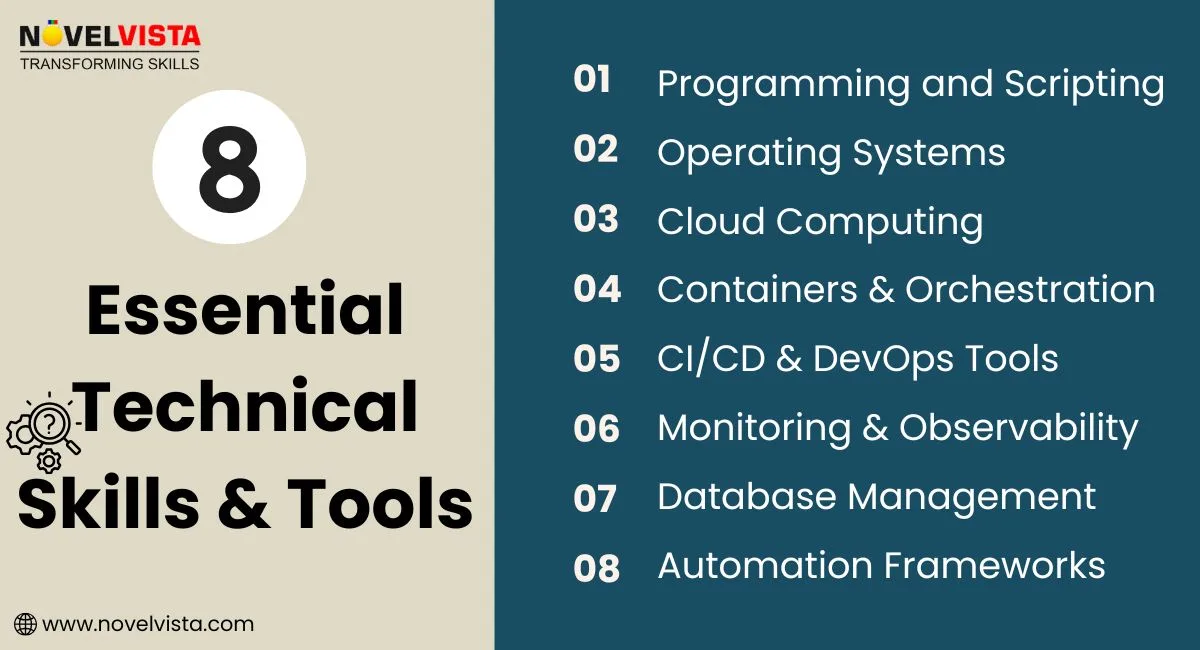
As an SRE, automation is key to reducing toil and ensuring system reliability. You’ll need proficiency in scripting languages like Python, Go, or Ruby to automate tasks, create tooling, and manage configuration.
Skills Needed:
A strong understanding of Linux/Unix systems is essential, as these are the backbone of many cloud environments and containers in modern tech stacks. SREs need to troubleshoot system issues, manage resources, and configure servers.
Skills Needed:
Familiarity with cloud platforms like AWS, Azure, or Google Cloud is essential for an SRE. These platforms provide the infrastructure for deploying, managing, and scaling applications in distributed environments. Understanding cloud services is critical for optimizing system performance and reliability.
Skills Needed:
As cloud-native applications become more prevalent, understanding containerization tools like Docker and managing containerized workloads with Kubernetes is crucial. These tools enable SREs to deploy, scale, and manage applications more efficiently.
Skills Needed:
SREs work closely with DevOps teams to streamline the continuous integration and delivery (CI/CD) pipeline. This means familiarity with tools like Jenkins, GitLab CI, or CircleCI to automate testing, integration, and deployment is essential.
Skills Needed:
SREs are responsible for monitoring system health and performance using tools like Prometheus, Grafana, or ELK Stack (Elasticsearch, Logstash, Kibana). These tools help in tracking performance metrics, logging errors, and detecting anomalies.
Skills Needed:
A strong understanding of databases is crucial, as SREs need to manage both SQL and NoSQL systems. You’ll need to be proficient in database optimization and performance tuning to ensure they scale effectively.
Skills Needed:
Automating repetitive tasks is at the core of the site reliability engineer's skills. You’ll need to be proficient with frameworks that facilitate automation and help reduce manual intervention in system management.
Skills Needed:
While technical expertise is critical in Site Reliability Engineering, success also relies heavily on soft skills and other key personal qualities. As an SRE, you’ll often work with teams across development, operations, and other departments. Here are some essential SRE engineer requirements and qualities that make SREs stand out:
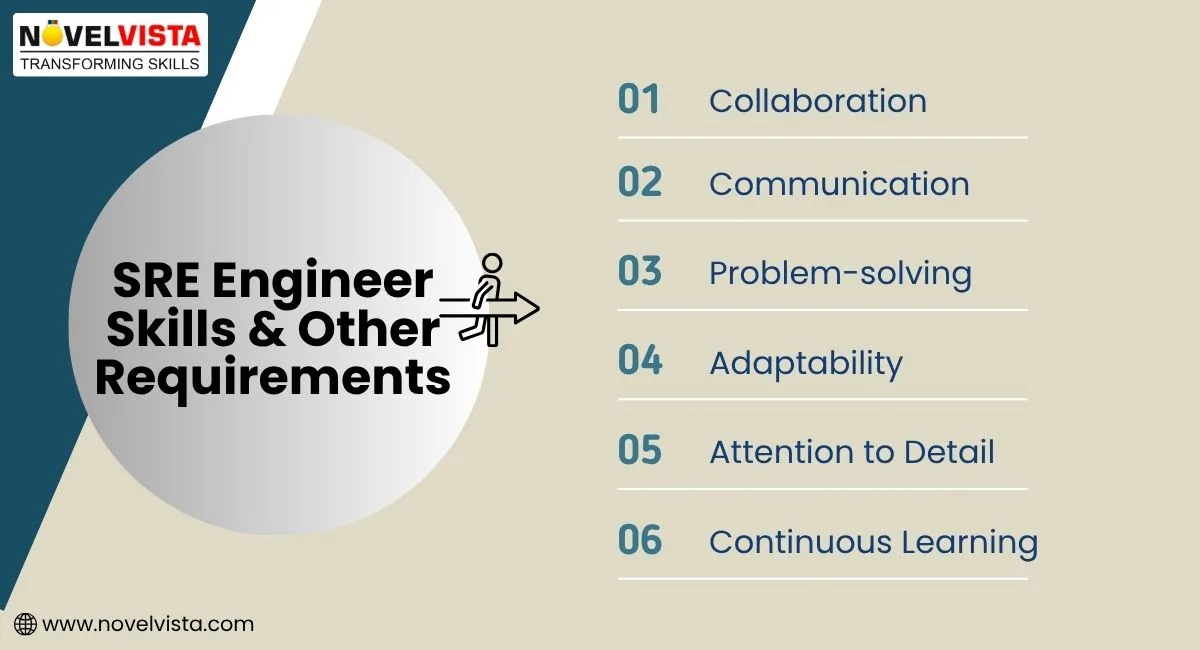
To become a successful SRE, there are several ways to gain SRE engineer skills, and experience required for the role. Here’s a breakdown of the key areas to focus on:
While a formal computer science, IT, or engineering degree is not always required, it provides a strong foundation for understanding core concepts in systems engineering, cloud computing, databases, and networking. Many SREs have backgrounds in software engineering, DevOps, or systems administration.
Certifications help validate your skills and can give you a competitive edge. Some valuable certifications for SREs include:
Several online platforms and bootcamps offer SRE-focused training. NovelVista provides SRE certification courses that cover technical skills and practical tools like Prometheus, Grafana, Kubernetes, and CI/CD.
The field of SRE is constantly evolving with new tools, technologies, and methods. As an SRE, you must be committed to continuous learning to stay relevant. Regularly attending webinars, reading books, joining forums, and participating in conferences will keep you up to date with the latest advancements.
Site reliability engineer skills are in high demand globally. As companies increasingly rely on cloud-based systems, the need for highly available, scalable, and reliable systems grows. Major tech giants such as Google, Amazon, and Netflix already have dedicated SRE teams to ensure the reliability of their vast infrastructure.
According to Global Market Insights, the DevOps market surpassed USD 8 billion in 2022 and is expected to expand at a compound annual growth rate (CAGR) of 20% from 2023 to 2032, fueled by the increasing demand to shorten software development cycles and speed up delivery.
According to Payscale, the salary for Site Reliability Engineers is competitive across industries. On average, an SRE in the United States earns around $128,065 per year, while in India, salaries for SREs range from ₹1,556,308 annually, depending on experience and location.
In India, SRE role requirements are seeing rapid growth, especially in Bangalore, Hyderabad, and Mumbai, which are hubs for the IT industry. As more companies embrace cloud-native infrastructures, the demand for SRE professionals will only continue to rise. India offers great potential for career growth in this field, with many tech companies adopting SRE principles to ensure reliability at scale.
Start your SRE career with a clear, practical plan—one day at a time.
The best way to learn SRE is by doing. Whether through internships, personal projects, or working in a DevOps role, gaining hands-on experience will allow you to apply the technical skills you’ve learned. Start with small projects like setting up Kubernetes clusters or implementing CI/CD pipelines to gain practical experience.
Showcase SRE engineer skills through a portfolio of projects you’ve worked on. Whether it’s open-source contributions, personal infrastructure projects, or case studies from your work experience, having a portfolio will give you a competitive edge when applying for jobs.
Building a network of SRE professionals is invaluable. Attend SRE meetups, LinkedIn groups, and tech conferences to connect with peers and potential mentors who can guide you in your career.
As you gain experience, you can progress into higher site reliability engineer skills requirements, such as Senior SRE, SRE Manager, or SRE Lead. Many SREs eventually move into more specialized SRE role expectations like Cloud Architect or Site Reliability Consultant.
Evernote’s SLO Story
Evernote, a cross-platform app serving over 220 million users, manages more than 12 billion pieces of information across 750+ MySQL instances. To improve engineering velocity without sacrificing service quality, Evernote adopted SLOs as part of a broader technology revamp.
Previously, operations and development teams worked in silos, often clashing over production stability versus feature delivery. After experimenting with “You wrote it, you run it” and “We run it for you” models, Evernote shifted to an SLO-centric SRE approach.
This model embraces the differences between operations and development while aligning both teams toward shared goals. Using error budgets and SLOs, teams make objective, data-driven decisions, increasing reliability and enabling faster, customer-focused product development—demonstrating how SLOs can transform service management.
(Source: Google SRE)

To start your career as an SRE, follow these steps:
Site Reliability Engineering (SRE) is a rewarding and high-demand field with a clear path to career growth. By acquiring the right mix of site reliability engineer skills, expertise, and certifications, you can build a successful SRE career, whether in India or globally. NovelVista’s SRE certification courses provide the perfect structure and support to help you navigate this journey with confidence.
Author Details

Confused About Certification?
Get Free Consultation Call
Stay ahead of the curve by tapping into the latest emerging trends and transforming your subscription into a powerful resource. Maximize every feature, unlock exclusive benefits, and ensure you're always one step ahead in your journey to success.