Category | DevOps
Last Updated On 10/12/2025

Most SRE tools fail—not because they’re bad, but because teams use them wrong. Let’s fix that. If you’ve ever wondered why your systems break even after endless monitoring, or why downtime always finds a way to sneak in, you’re not alone. That’s exactly where an SRE engineer steps in.
An SRE engineer (Site Reliability Engineer) is the person who makes sure your applications stay reliable, scalable, and fast — no matter how large or complex they get. They work behind the scenes as system guardians, automation experts, and incident managers, ensuring that technology performs without interruptions.
From cloud-native startups to Fortune 500 enterprises, SRE engineers have become the backbone of digital reliability. Based on real industry reports, organizations with mature SRE practices experience 40% fewer outages and 60% faster recovery times. We’ve seen this trend firsthand across multiple IT transformation projects where SRE-led automation directly improved uptime and deployment success rates.
In this guide, you’ll explore essential SRE tools, pricing insights, failure reasons, success strategies, and expert tips to build a reliable, future-ready operations ecosystem.
Before you start exploring the career path, it’s important to understand the SRE engineer meaning. In simple words, an SRE engineer applies software engineering practices to IT operations. Their job is to use code to solve operational problems — whether it’s automating a deployment, reducing system load, or preventing a crash before it happens.
The philosophy of Site Reliability Engineering revolves around three main principles:
The SRE framework isn’t just a job description — it’s a discipline rooted in engineering excellence. It merges Google’s Site Reliability Engineering principles with modern DevOps practices, emphasizing error budgets, SLOs, and observability. Every top-performing SRE team today follows these standards, aligning reliability metrics with business KPIs to ensure that performance goals drive real customer value.
So, what is an SRE engineer actually responsible for day-to-day? Their work touches every part of a system’s lifecycle — from designing scalable infrastructure to handling on-call incidents when things go wrong.
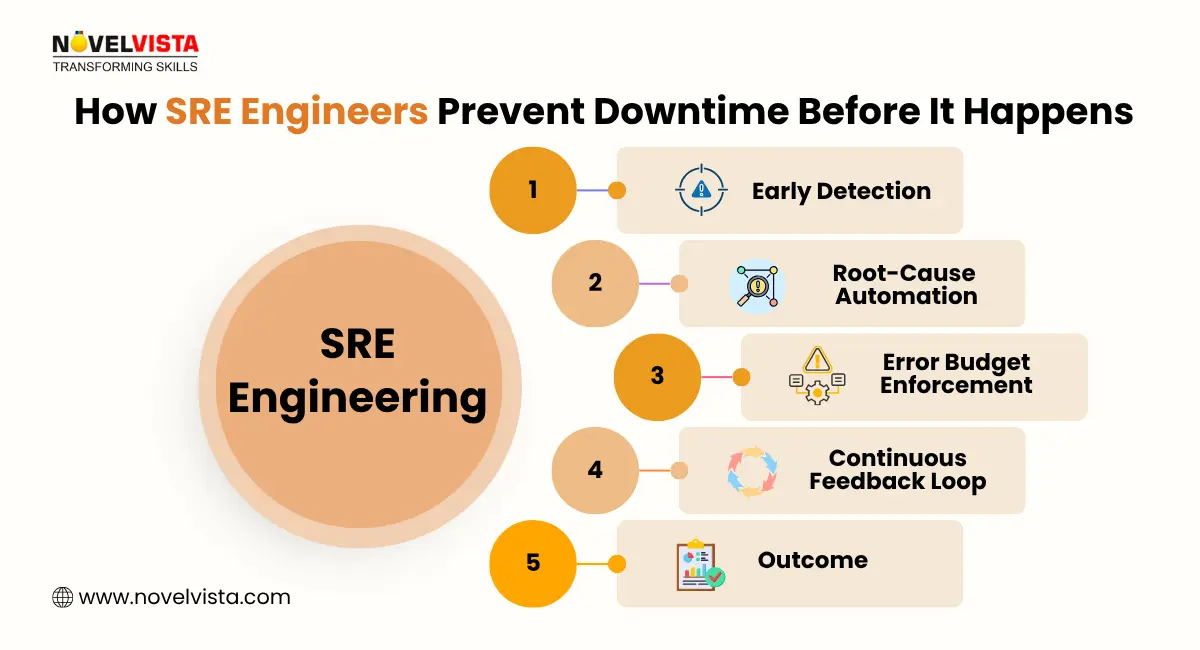
Here’s what their core responsibilities typically include:
In short, SRE engineers act as the safety net between innovation and reliability. They don’t just fix problems; they design systems so that problems rarely happen in the first place.
Get a complete knowledge about what does an SRE engineer do? In our comprehensive guide on SRE Roles and Responsibilities.
One of the most exciting things about being an SRE engineer is the flexibility to work across industries. From fintech to cloud providers, from e-commerce giants to healthcare startups — every company that runs digital systems needs reliability experts.
Here’s how SRE responsibilities differ slightly across sectors:
No matter the industry, the demand for SRE engineer jobs continues to rise as companies adopt cloud-native systems and microservices. This trend is only expected to accelerate through 2026 and beyond.
To succeed in this role, an SRE engineer needs both developer and operator skills — a rare combination that makes them highly valuable.
Here are the most essential technical skills you’ll need to master:
An SRE engineer who combines these tools with a solid understanding of DevOps culture becomes a powerful asset to any tech-driven organization.
If you’re planning to build a career as an SRE engineer, the opportunities in 2026 look stronger than ever. Companies across the globe — from startups to Fortune 500 giants — are hiring SREs to make their systems more reliable and efficient.
Most professionals enter the SRE field from roles like system administrator, DevOps engineer, or cloud engineer. From there, they grow into advanced positions such as Senior SRE, Reliability Architect, or Engineering Manager.
The typical growth journey looks something like this:
As businesses migrate to hybrid and multi-cloud environments, SRE engineer jobs are expanding beyond traditional tech companies. By 2026, every digital product — whether a mobile app, healthcare platform, or online payment system — will rely on SRE expertise to keep things running smoothly.
Check Out: SRE Jobs and Career Guide: How to Land Your Job in the Very First Attempt
Now, let’s talk about what everyone’s curious about — the SRE engineer salary in 2026.
The pay scale for SREs is among the highest in IT, thanks to their technical depth and business impact. Here’s a general breakdown based on region and experience:
Experience Level |
Average Salary (USD) |
Average Salary (INR) |
Entry-Level (0–2 years) |
$85,000 – $100,000 |
₹10 – ₹14 LPA |
Mid-Level (3–5 years) |
$110,000 – $135,000 |
₹18 – ₹25 LPA |
Senior-Level (6+ years) |
$140,000 – $180,000+ |
₹28 – ₹40 LPA |
These SRE engineer salary figures are drawn from Glassdoor, Payscale, and LinkedIn Salary Insights as of Q1 2026. The compensation range may vary based on geography, certification level, and tool proficiency. We always recommend verifying current salary data through official employer listings and PMI or DevOps Institute reports for the latest updates.
You might wonder — what makes SRE engineers different from DevOps engineers or system administrators? The answer lies in their mindset.
While DevOps focuses on collaboration and automation, SRE goes one step further — it treats operations as a software problem. Instead of manually fixing outages, SRE engineers build systems that automatically detect, prevent, and recover from failures.
Their work philosophy is rooted in these principles:
Because of this unique mix of engineering and operations thinking, SRE engineers bring measurable improvements to uptime, release speed, and team efficiency. They don’t just “keep the lights on” — they help the entire organization innovate safely.
If you’re looking to start your journey, there are plenty of places to explore SRE engineer jobs online. Here are some of the best platforms:
To stand out, focus on building a resume that showcases reliability-focused achievements — like reducing incidents, automating processes, or improving SLAs. Real-world metrics make a huge difference.
The future of SRE engineers looks incredibly promising. As systems grow more complex, companies are relying on smarter automation and AI-driven tools to manage reliability.
Here are some major trends shaping the SRE engineer jobs landscape in 2026:
These trends prove that the SRE engineer meaning is evolving — it’s no longer just about fixing systems but designing intelligent, self-healing ones. Continuous learning, certifications, and staying updated with new cloud tools will be the key to long-term success.
Also Read: The Future of SRE: Trends, Challenges, and what next in 2026

The world runs on software, and SRE engineers are the ones who keep that software running reliably. Their role combines coding, automation, and problem-solving — making them some of the most valuable tech professionals today.
Whether you’re just starting or looking to move into a senior reliability role, the opportunities are endless in 2026. Focus on mastering your skills, earning relevant certifications, and gaining hands-on experience — because reliability is the new speed.
Ready to move from theory to practice?
Take the next step with NovelVista’s SRE Foundation and SRE Professional Certification Courses. Learn from industry experts, get hands-on with real-world tools, and gain the skills companies actually look for. Start your SRE journey today and open doors to high-paying global roles — both in India and abroad.
Enroll Now with NovelVista and turn your reliability skills into a rewarding career.
Author Details

Confused About Certification?
Get Free Consultation Call
Stay ahead of the curve by tapping into the latest emerging trends and transforming your subscription into a powerful resource. Maximize every feature, unlock exclusive benefits, and ensure you're always one step ahead in your journey to success.