Category | DevOps
Last Updated On 06/01/2026
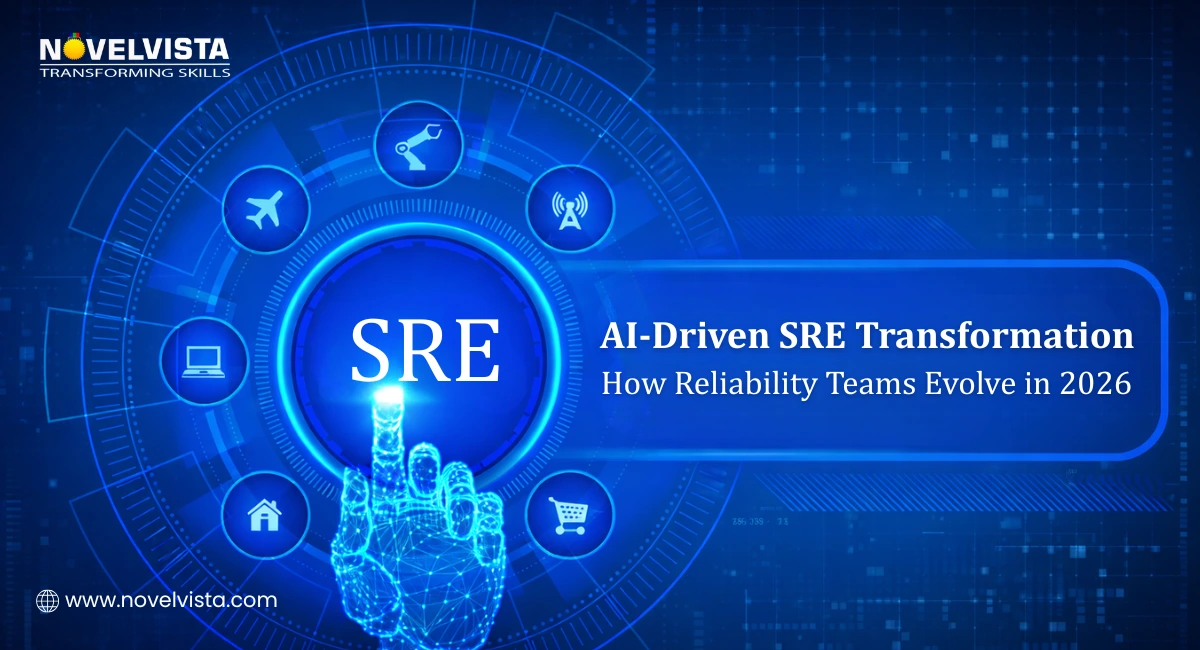
On-call rotations are getting heavier. Alerts keep firing, incidents feel repetitive, and systems are growing more complex every quarter. Many reliability teams are stuck reacting instead of improving. This is exactly why AI-driven SRE transformation is becoming a serious priority as we move into 2026.
This shift is not about replacing SRE practices. It’s about changing how teams detect problems, respond to incidents, and plan for growth, using AI to move from constant firefighting to calm, predictive reliability work.
This pressure is forcing a deeper SRE transformation. Teams are realizing that traditional automation alone is not enough anymore. AI is now stepping in to analyze signals, predict risks, and support faster decisions.
During hands-on SRE workshops, we see teams struggle most with repetitive incidents and noisy alerts. Once AI-based anomaly detection is introduced in controlled environments, engineers spend less time reacting and more time improving reliability design, which is a clear sign of healthy SRE transformation.
Get a clear, phase-by-phase plan to adopt AI in SRE.
Reduce alert fatigue, prevent incidents early, and scale reliability, without losing human control.
At a simple level, AI-driven SRE transformation means applying machine learning and intelligent automation to core SRE activities, monitoring, incident response, capacity planning, and reliability improvement.
From a training perspective, the biggest misconception is that AI replaces SRE judgment. In reality, effective AI-driven SRE transformation strengthens core practices like SLIs, SLOs, and error budgets by making them easier to observe, analyze, and act on at scale.
This is the next phase of SRE transformation, not a replacement of SRE fundamentals. SLIs, SLOs, error budgets, and observability still matter. AI simply helps teams apply these principles faster and at scale.
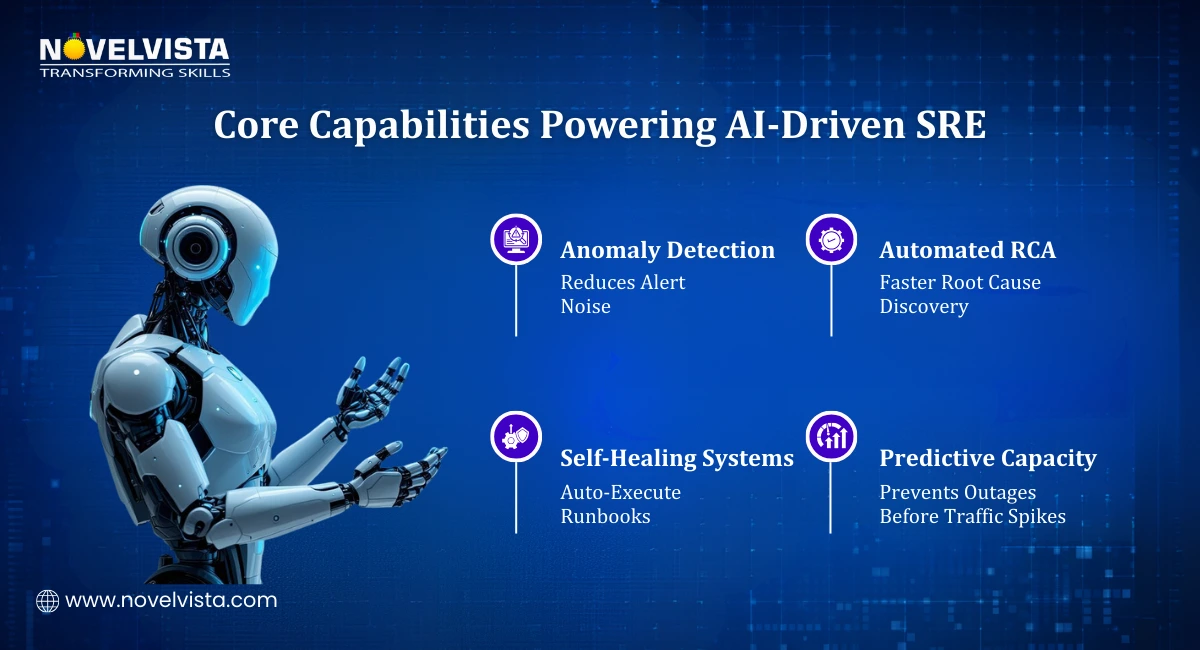
Behind modern reliability teams sits a new engine made of AI-powered capabilities. These are the building blocks driving real SRE transformation in production environments.
Capability |
Impact on SRE Operations |
Anomaly Detection |
Learns normal system behavior and filters alert noise, helping teams focus only on signals that truly matter. |
Automated RCA |
Analyzes logs, metrics, and traces together to identify likely root causes in minutes instead of hours. |
Self-Healing Systems |
Executes approved runbooks automatically, scaling resources or restarting services without waiting for human action. |
Predictive Capacity |
Forecasts demand trends early, preventing outages caused by sudden traffic spikes or resource exhaustion. |
These capabilities allow AI-driven SRE transformation to deliver real value without increasing risk when applied carefully.
No team jumps directly into advanced AI systems. Successful SRE transformation happens in stages, based on readiness and trust.
Teams focus on:
This stage builds reliability, discipline, and shared understanding.
AI begins supporting daily work:
This is where AI-driven SRE transformation starts delivering visible relief.
Teams operate with confidence and control:
Industry-wide SRE maturity assessments show that teams skipping foundational stages often struggle with AI adoption later. Successful AI-driven SRE transformation depends heavily on disciplined observability, clean data, and defined reliability goals before advanced automation is introduced.
At this level, SRE transformation feels natural, not risky, because governance and human oversight are already in place.
As teams move deeper into SRE transformation, several clear patterns are shaping how reliability work will look in 2026.
These trends show that AI-driven SRE transformation is about smarter systems, not blind automation.
Curious how AI agents are changing reliability engineering? Read our blog on Agentic AI in SRE to understand how autonomous systems support monitoring, decision-making, and service stability.
Moving into AI-driven SRE transformation works best when teams follow a phased approach instead of rushing into automation.
Phase |
Focus Areas |
Start |
Use AI in read-only mode to observe anomalies and patterns without taking action. |
Scale |
Introduce low-risk automation with strong rollback controls and approvals. |
Mature |
Deploy agentic AI systems with governance, audit trails, and continuous learning. |
These SRE transformation patterns are drawn from real training environments where AI tools are tested in sandboxed and production-like setups. The focus is always on safe adoption, measurable outcomes, and learning from failures before scaling automation.
AI is changing what SREs actually do day to day. The role is shifting as SRE transformation matures.
This evolution shows how AI-driven SRE transformation reshapes careers, not just tooling.
Successful SRE transformation depends on how well technology works together, not how many tools teams collect.
The goal is integration, not complexity.
Want to see how SRE teams are modernizing operations with AI? Read our blog on How SRE Teams Use AIOps to understand real use cases, benefits, and operational impact.
Technology alone does not guarantee success. Real SRE transformation requires changes in how teams think and work.
Without these shifts, even the best AI tools fall short.
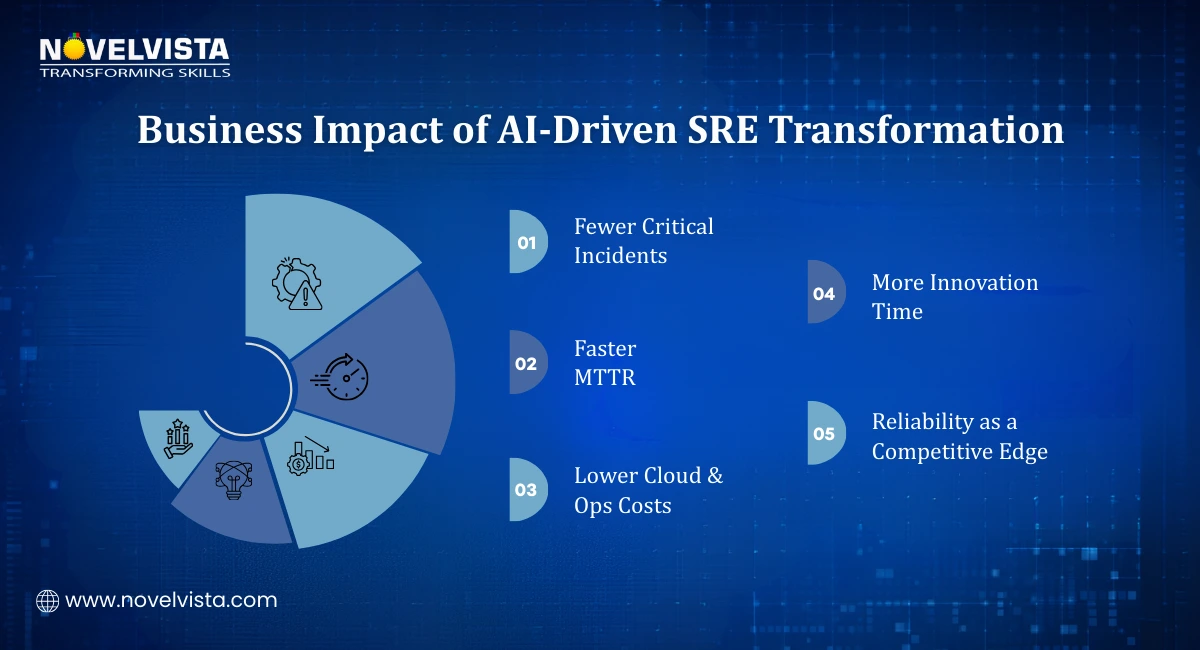
When done right, AI-driven SRE transformation delivers measurable business value.
This is where SRE transformation stops being an internal initiative and becomes a business strength.
The future of reliability engineering is not fully automated; it’s intelligently supported. AI-driven SRE transformation helps teams predict issues, act faster, and reduce toil while keeping human judgment at the center. Successful SRE transformation blends AI capabilities with engineering discipline, governance, and trust.
This perspective is shaped by working closely with SRE teams, learning to balance automation, AI, and engineering judgment, showing that sustainable reliability comes from disciplined systems, not unchecked automation.
Teams that prepare now will be ready for 2026 and beyond.
If you want to be part of this shift, the right skills matter. NovelVista’s SRE Foundation and SRE Practitioner Certification programs help professionals master reliability principles, observability, and modern SRE practices. To complement this, the Generative AI Professional Certification equips you with practical AI knowledge to design, govern, and apply intelligent systems responsibly. Together, these programs prepare you to lead AI-powered reliability teams with confidence.
Author Details

Confused About Certification?
Get Free Consultation Call
Stay ahead of the curve by tapping into the latest emerging trends and transforming your subscription into a powerful resource. Maximize every feature, unlock exclusive benefits, and ensure you're always one step ahead in your journey to success.