Category | DevOps
Last Updated On 04/12/2025
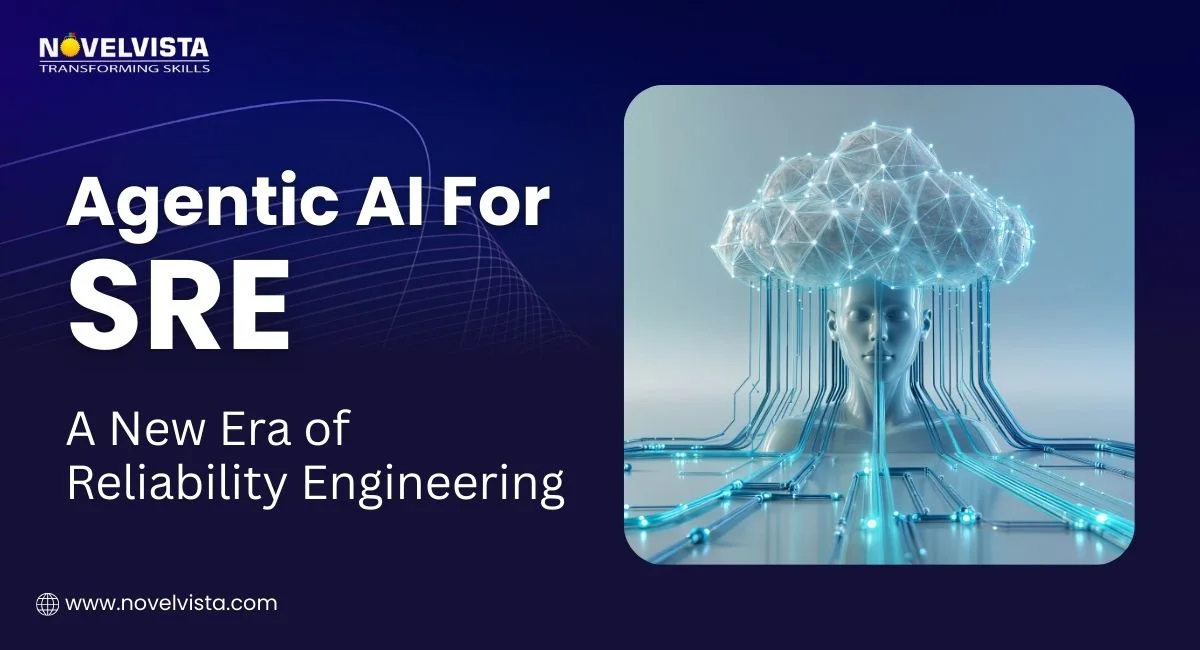
The last few years have brought a major shift in how Site Reliability Engineering operates. Systems are getting more distributed, observability data is ballooning, and incident volumes continue to rise as architectures become increasingly service-dense. A 2024 engineering survey found that nearly 63% of SREs reported burnout mainly due to repetitive operational tasks and constant firefighting.
This is the environment in which Agentic AI for SRE is emerging — not as a futuristic concept, but as a practical evolution of AI-powered operations. Unlike traditional AI assistants that simply respond, agentic systems can reason, plan, and act within defined guardrails.
With that, let’s explore what agentic ai for sre really means and why it’s becoming one of the most important developments in reliability engineering.
Agentic AI refers to AI systems that can autonomously assess situations, make decisions, and execute tasks without step-by-step human input. In SRE, agentic ai sre systems interpret patterns across logs, metrics, and traces while understanding the context behind alerts and anomalies. They can run multi-step workflows like runbooks, take safe and reversible actions, and provide clear summaries of what they did and why. Unlike traditional automation that depends on rigid logic, sre agentic ai adapts to real-time conditions and selects the best response based on available data. This shift is happening because systems now generate more telemetry than humans can manually analyze, incident correlation has grown more complex, and AI reasoning models have improved. As a result, agentic ai for sre serves as an additional, supportive operational layer—enhancing engineers rather than replacing them.
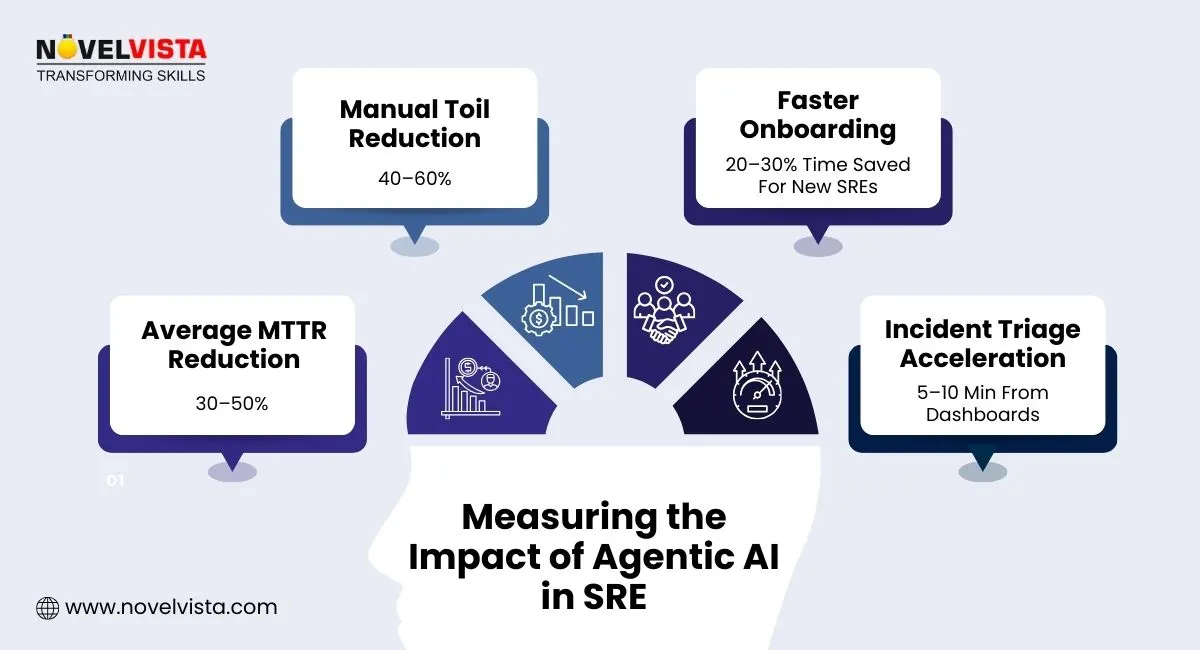
Agentic AI significantly speeds up the early stages of incident handling by correlating signals across logs, metrics, events, and error messages, running reasoning steps to identify likely root causes, summarizing what changed, and highlighting historical patterns or similar incidents. This is one of the most practical and widely adopted uses of agentic ai for sre today. Instead of spending 20–40 minutes navigating multiple dashboards, engineers receive a structured, accurate starting point within minutes.
A major source of toil in SRE teams is repeatedly performing the same actions during outages. Agentic AI can autonomously execute known and safe runbooks.
Examples include:
Unlike static automation, agentic sre agents decide when and whether these runbooks should be executed based on real-time telemetry.
The strongest validation of agentic ai for sre comes from real organizations using it today.
Major cloud platforms have introduced agent-based assistants within their reliability and observability tools, and early internal case studies shared through public engineering blogs and product documentation show practical gains. Teams report reducing 30–45-minute investigations to about 5–10 minutes, along with faster cross-log correlation and clearer early-stage diagnostics during outages. These improvements reflect the growing maturity of agentic ai for sre solutions now being used in production environments.
Ecolab has shared how Azure’s agentic features helped reduce effort in initial problem classification, root-cause investigation, and manual data gathering. Their reliability teams reported lower MTTR and reduced operational overhead, illustrating how agentic ai sre systems can effectively support traditional enterprise environments.
Enterprises in finance, retail, SaaS, and manufacturing have reported practical benefits from agentic ai for sre, including reduced mean-time-to-diagnose, fewer recurring incidents, lower on-call toil, and more consistent operational responses. These improvements are incremental but meaningful, reflecting real-world gains rather than theoretical or exaggerated claims. This is exactly where the role of an SRE engineer becomes critical, translating complex systems into predictable, measurable reliability outcomes.
The most effective implementations combine human judgment with AI-driven support.
This division allows engineers to operate at a higher strategic level without being bogged down by operational noise.
Faster diagnostics with practical, ready-to-use workflows
Real SRE use cases demonstrating Agentic AI in action
Templates and checklists to cut toil and boost reliability instantly
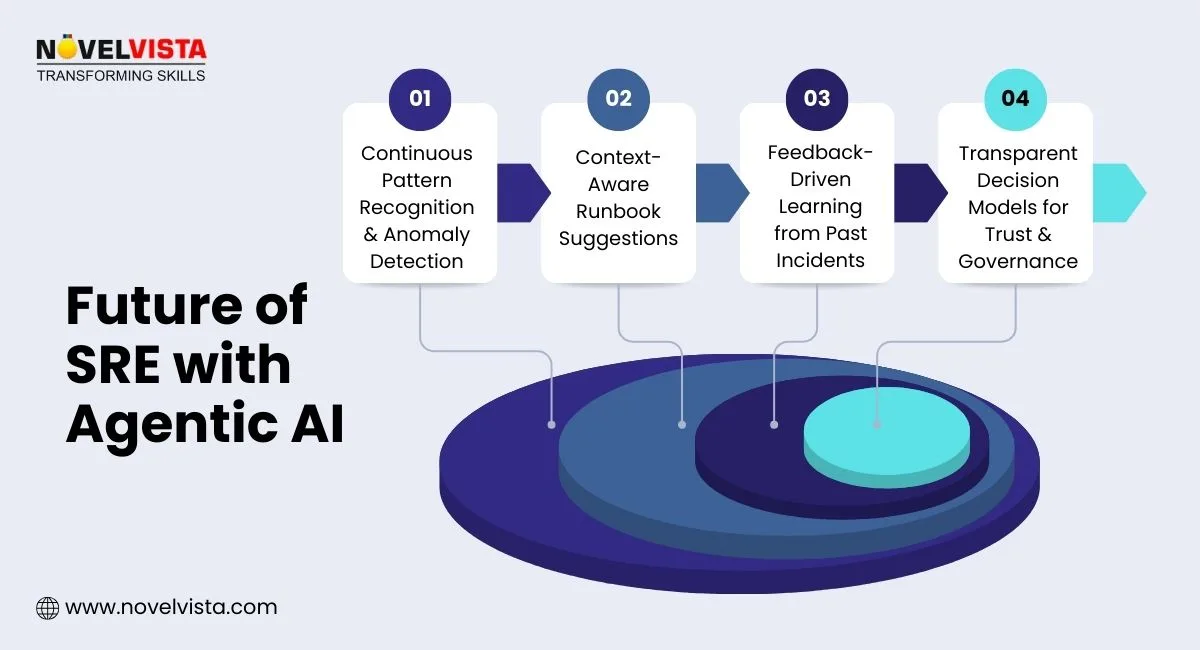
Every practical deployment of agentic ai for sre includes:
This is essential for operational safety in real production environments.
Early adopters of agentic ai sre have reported clear benefits in reducing operational load. Teams experience lower toil from repetitive tasks, faster triage during incidents, and smoother onboarding for new SREs. By minimizing context switches and manual effort, agentic ai for sre helps engineers focus on higher-value work while improving overall efficiency.
Organizations using agentic ai for sre have seen improvements in reliability metrics, including lower MTTR, more consistent handling across incident types, clearer post-incident reviews, and fewer repeated failures. These gains come from better visibility, faster access to relevant data, and structured AI reasoning, offering practical enhancements rather than fully autonomous or “self-healing” systems.
The rise of agentic ai for sre marks a significant shift in how reliability teams operate. It doesn’t promise fully autonomous systems or the elimination of downtime, but it enhances SRE capabilities by reducing repetitive effort, speeding up incident diagnosis, improving observability, and bringing structure to chaotic situations. As adoption grows, SRE work can focus more on prevention, architecture, and resilience, with agentic AI serving as a reliable operational partner that helps teams stay efficient and focused on high-impact engineering.
If you’re looking to deepen your expertise in site reliability and take a proactive approach to managing complex systems, consider advancing your skills with NovelVista’s SRE Foundation Training & Certification. Designed for DevOps professionals, engineers, and IT reliability enthusiasts, it equips you with the knowledge to implement best practices, optimize workflows, and enhance system reliability across your organization.
Start your SRE journey today!
Author Details

Confused About Certification?
Get Free Consultation Call
Stay ahead of the curve by tapping into the latest emerging trends and transforming your subscription into a powerful resource. Maximize every feature, unlock exclusive benefits, and ensure you're always one step ahead in your journey to success.