Category | AI And ML
Last Updated On 08/01/2026
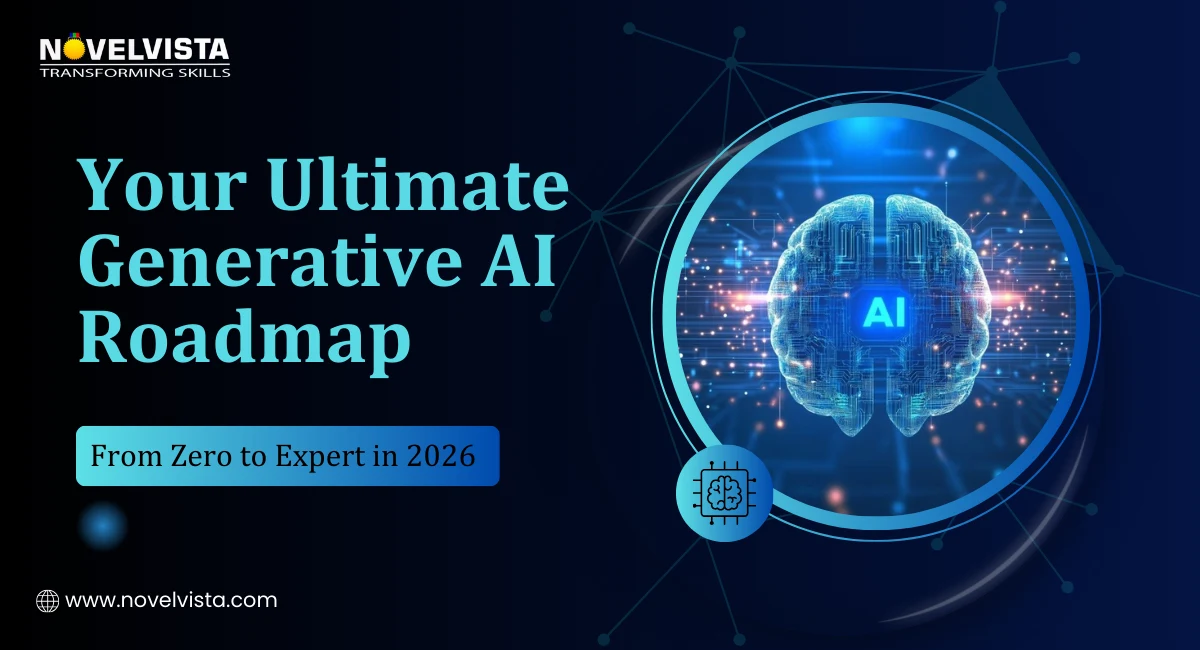
A lot of people want to build an AI career, but most get stuck wondering what to learn, where to start, and which skills actually matter. That’s exactly where a clear Generative AI roadmap helps. With a structured Generative AI roadmap 2026, you avoid confusion, stop wasting time on random tutorials, and follow a simple path that actually leads from learning to earning.
Many of the learners trained in our Generative AI programs start exactly where you are now – confused about what to learn and overwhelmed by tools. After guiding thousands of professionals across IT, data, and business roles, this roadmap is shaped by what truly helps them transition from curiosity to capable Generative AI practitioners in a structured, confidence-building way.
In this guide, you’ll get a practical roadmap for generative AI, milestones to track your growth, tools to learn, projects to build, and a full journey covering Generative AI from beginner to expert. Whether you are new to AI or already working in tech, this Generative AI roadmap gives you clarity, confidence, and direction.
Before jumping into tools and coding, it is important to understand what Generative AI really is and why it matters. Generative AI is all about systems that create content, text, images, code, video, chatbots, and business workflows. Today, almost every industry wants these capabilities, which is why following a structured Generative AI roadmap matters so much.
Here’s how this guide helps you:
If you want clarity, focus, and a real path to becoming skilled, stay with this roadmap.
The strongest Generative AI roadmap always begins with strong basics. Without fundamentals, even the best AI tools feel confusing. So your Generative AI skills roadmap starts here:
Skill |
Recommended Resources |
Timeline |
| Python, Pandas, NumPy | freeCodeCamp, CodeBasics | 4 weeks |
| Machine Learning Basics | Andrew Ng | 4 weeks |
| Statistics & Probability | Khan Academy | Parallel learning |
Why this matters:
Once these basics are steady, the journey becomes exciting.
Now you move from basics to the real Generative AI skills roadmap. This is where AI starts feeling practical, powerful, and meaningful.
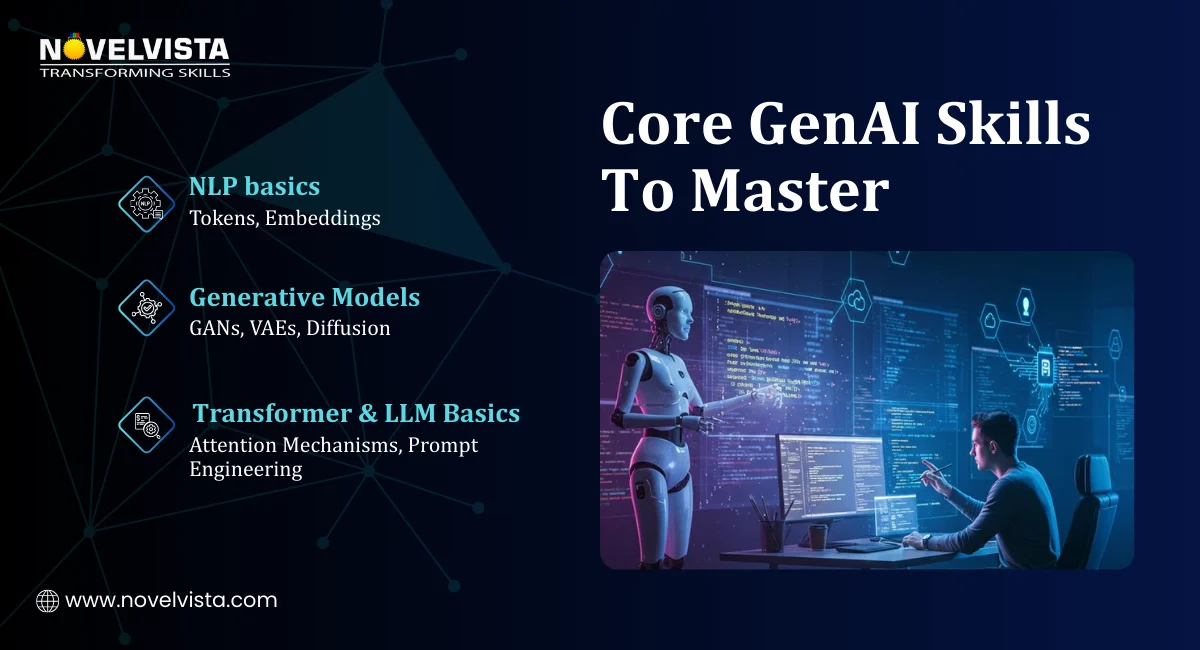 Core skills to focus on:
This is the stage where your knowledge becomes useful, your confidence grows, and your Generative AI roadmap starts feeling powerful. These skills align directly with what industry teams expect today. While training working professionals, we consistently see organizations prioritizing NLP understanding, transformer knowledge, and generative model capability because these shape real project performance. That’s why this stage focuses on the skills companies actually use, not just what looks trendy.
Want a simple breakdown of how tokenization protects data? Read our blog on Tokenization Explained to understand how it works, where it’s used, and why businesses rely on it for secure transactions.
This stage turns knowledge into skill. Here, your Generative AI roadmap moves from theory to action.
Tool |
Purpose |
| Hugging Face | Access and manage AI models easily |
| LangChain / LangGraph | Build real Generative AI applications |
| OpenAI / Claude APIs | Create real solutions and smart workflows |
| Pinecone / Vector DBs | Implement RAG systems |
At this point, your Generative AI learning path shifts into real-world building. You stop learning only concepts and start creating something real, something usable, and something employers value.
Now you are ready to move towards the Generative AI expert roadmap territory. This is where professionals differentiate themselves.
Advanced Area |
Practical Project |
| RAG Systems | Enterprise-level Q&A chatbot |
| Agentic AI | Autonomous task-performing AI agents |
| LLMOps | Deploying and maintaining AI systems |
| Prompt Engineering | Creating automation workflows |
This is where you truly transform from learner to serious professional. Your Generative AI from beginner to expert journey becomes visible in your skills, projects, and confidence.
Now your Generative AI roadmap 2026 moves toward real career opportunities. This phase is about choosing where you want to position yourself and aligning your skills accordingly.
Role-wise specialization clarity
Role |
Focus Area |
ML Engineer |
Fine-tuning, pipelines, LLMOps, scalable deployment |
AI Product Manager |
Business alignment, strategy, and AI feature planning |
GenAI Developer |
End-to-end app building, workflow automation, UX + AI integration |
This part of the Generative AI roadmap turns learning into an opportunity. It shapes your Generative AI skills roadmap into a focused professional pathway instead of random learning.
If you want your Generative AI career roadmap to turn into real interviews, your portfolio matters a lot more than just theory. Build projects people can actually use and understand.
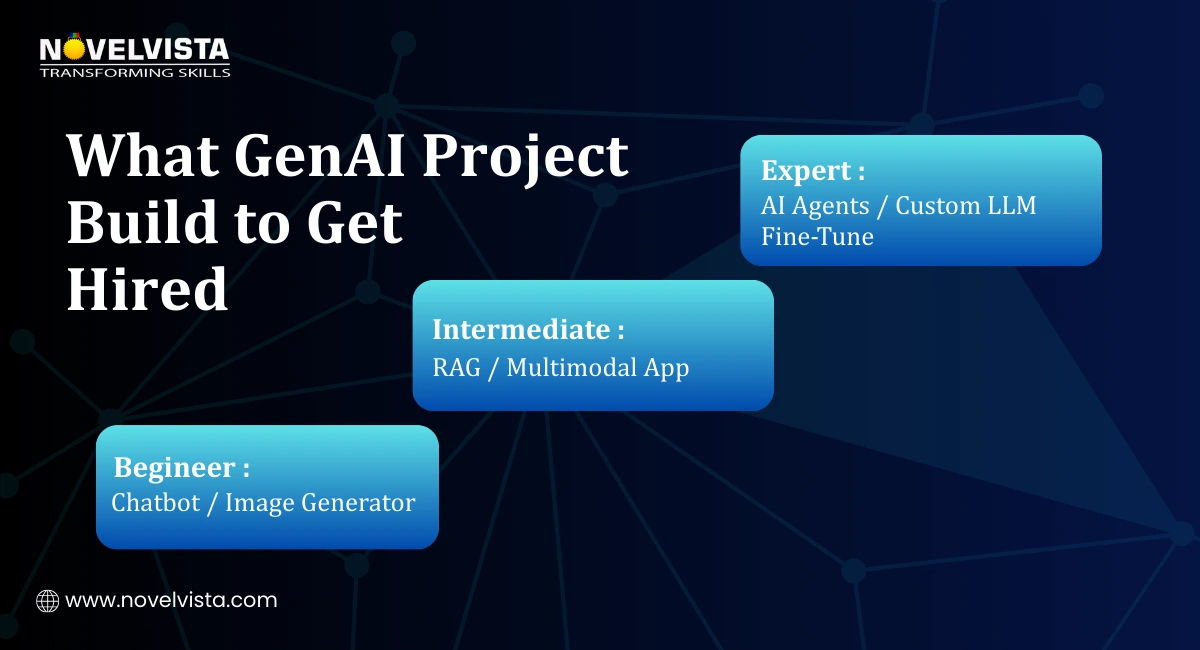
Recruiters and hiring managers repeatedly share that practical Generative AI portfolios carry more weight than theory alone. This is why our training programs emphasize real, deployable projects, because they prove capability, problem understanding, and readiness to work on real business AI solutions.
The Generative AI roadmap 2026 is shaped by upcoming shifts in technology and business adoption. Knowing what’s ahead keeps you future-ready.
These trends shape how you grow and stay ahead in your roadmap for generative AI.
Understand the exact skills the AI-driven workplace demands. Identify gaps, plan smart upskilling, and build a future-ready skill mix—without chasing hype.
Your background does not limit you. The Generative AI roadmap works differently for different professionals.
Background |
Recommended Focus Track |
| Developers | Fine-tuning, LLMOps, API engineering |
| Creatives | Midjourney, RunwayML, and content AI tools |
| Non-Tech | No-code AI tools, AI workflow integration |
This keeps the Generative AI learning path practical for everyone.
Certifications help employers trust your skills faster and make your Generative AI career roadmap more credible.
Certification |
Impact |
| Machine Learning Certification – NovelVista | Strong hiring preference |
| Google ML Engineer | Industry credibility |
| GenAI Professional Programs – NovelVista | Faster job readiness |
Get ahead in the AI race, read our blog on the Best Generative AI Certification in 2026 to discover top programs, career benefits, and the right qualification to boost your AI journey.
If you want your journey of Generative AI from beginner to expert to stay consistent, follow a simple weekly learning style.
Track your growth on GitHub or Kaggle to strengthen your Generative AI roadmap 2026 journey.
This isn’t just another guide. It’s a clear Generative AI roadmap that helps you move step-by-step from basics to professional expertise. With clarity, consistency, and the right learning decisions, this Generative AI roadmap 2026 can truly open global roles, strong salaries, and real career impact. Start small, stay steady, build projects, and let your Generative AI expert roadmap shape your future.
This roadmap is shaped using insights from live workshops, enterprise training programs, feedback from hiring teams, and real learner success stories. The goal is not just to explain Generative AI; it is to give you a path that genuinely builds capability, improves confidence, and helps you move toward meaningful AI roles.
If you want structured guidance, real-world projects, and expert mentoring to speed up your Generative AI roadmap, Generative AI Professional Certification through NovelVista is a strong next move. It focuses on practical skills, enterprise-ready learning, and hands-on execution so you can confidently move ahead in your Generative AI career roadmap with clarity and confidence.
Author Details

Course Related To This blog
Generative AI Certification
Confused About Certification?
Get Free Consultation Call
Stay ahead of the curve by tapping into the latest emerging trends and transforming your subscription into a powerful resource. Maximize every feature, unlock exclusive benefits, and ensure you're always one step ahead in your journey to success.