Category | AI And ML
Last Updated On 22/07/2026
| Synopsis: Agentic AI tools are software platforms and frameworks that enable autonomous AI agents to reason, plan, interact with external systems, and execute multi-step tasks independently. This guide on the Best Agentic AI Tools in 2026 explores the leading platforms transforming AI automation, including LangChain, LangGraph, CrewAI, AutoGen, n8n, Flowise, and enterprise-grade AI agent systems. |
| TL;DR | Summary |
| What is Agentic AI? | AI systems that can reason, plan, and automate tasks autonomously. |
| Top Tools | LangChain, LangGraph, CrewAI, AutoGen, n8n, and Flowise. |
| Enterprise Platforms | Salesforce Agentforce, Copilot Studio, and ServiceNow AI Agents. |
| Key Benefit | Smarter AI automation with memory, tool usage, and multi-step execution. |
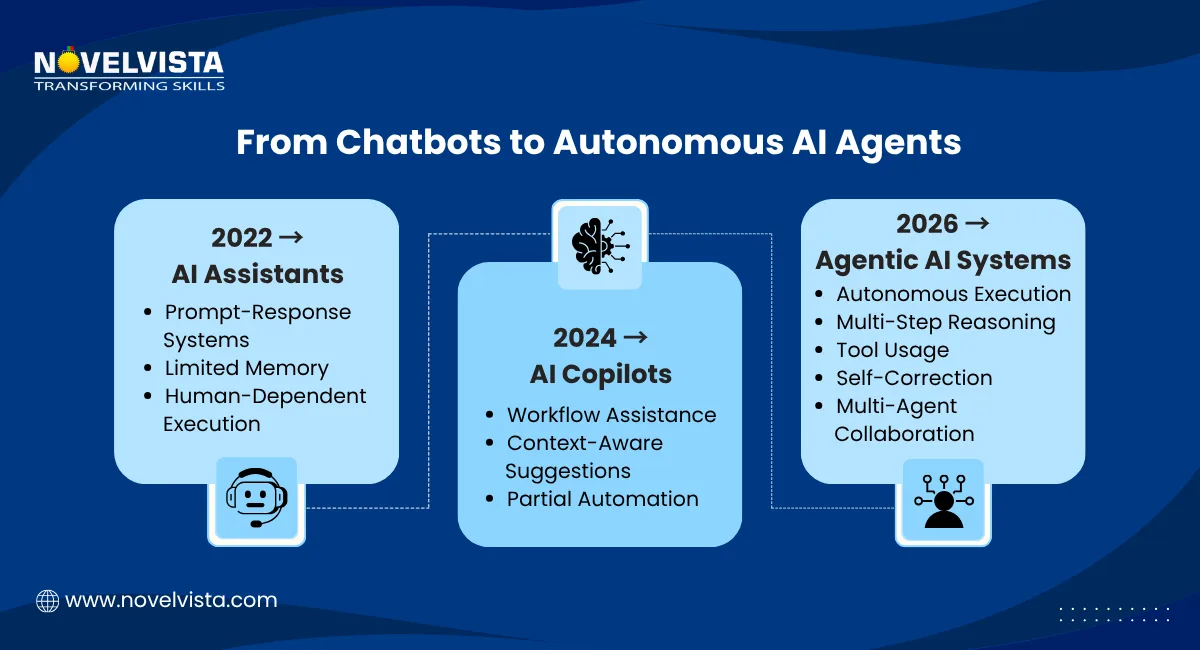
Artificial intelligence has evolved rapidly over the last few years, but 2026 marks a major turning point. Traditional AI systems could answer questions, generate text, or summarize data but they still depended on constant human prompts. Today, agentic AI tools are changing that model completely.
Instead of waiting for instructions step-by-step, modern AI agents can plan tasks, make decisions, interact with software systems, and adapt dynamically. Imagine telling an AI system: “Find outdated blog posts from last year, update statistics, optimize SEO headings, and prepare them for publishing.” An autonomous AI agent can execute the entire workflow with minimal supervision.
This shift is why businesses are investing heavily in agentic AI across operations, software development, IT support, marketing, and customer service. According to multiple industry reports, enterprise AI automation spending is expected to cross billions globally by the end of 2026, with AI agent tools becoming a core part of digital transformation strategies.
So, what exactly are agentic AI tools?
Agentic AI tools are software platforms or frameworks that enable autonomous AI agents to reason, plan, interact with external systems, and complete multi-step tasks independently.
In this complete guide, you’ll explore the best agentic AI tools 2026 has to offer for developers, enterprise teams, and non-technical professionals. We’ll also compare platforms like LangChain, CrewAI, AutoGen, LangGraph, n8n, and enterprise AI agent platforms in detail.
To understand why agentic AI tools are so powerful, it’s important to understand the infrastructure behind them. Most modern AI agent tools rely on three foundational layers.
At the center of every agentic system is a large language model (LLM). Models like GPT-4, Claude, and Gemini provide the reasoning engine that allows agents to interpret goals and decide what actions to take.
Unlike standard chatbots, agentic AI tools can break a goal into smaller tasks, prioritize actions, and evaluate results dynamically. For example:
All of this can happen autonomously through AI agent orchestration.
This reasoning capability is what separates autonomous AI agents from traditional automation systems.
The second layer connects the AI agent to external systems. This is where agentic AI becomes operationally useful.
Modern AI agent tools integrate with:
| Integration Type | Examples |
| Business Platforms | Salesforce, Slack, Jira |
| Databases | PostgreSQL, MongoDB |
| APIs | CRM APIs, payment gateways |
| File Systems | Google Drive, SharePoint |
| Communication Tools | Teams, Email, WhatsApp |
The emerging standard enabling this connectivity is the Model Context Protocol (MCP). MCP simplifies how AI agents access tools, APIs, and real-world systems securely.
Without integrations, AI is just conversational. With integrations, it becomes actionable.
Another major advancement in AI tools is persistent memory.
Traditional chatbots forget context after a session. Agentic systems maintain both:
This memory layer enables long-running AI workflows such as:
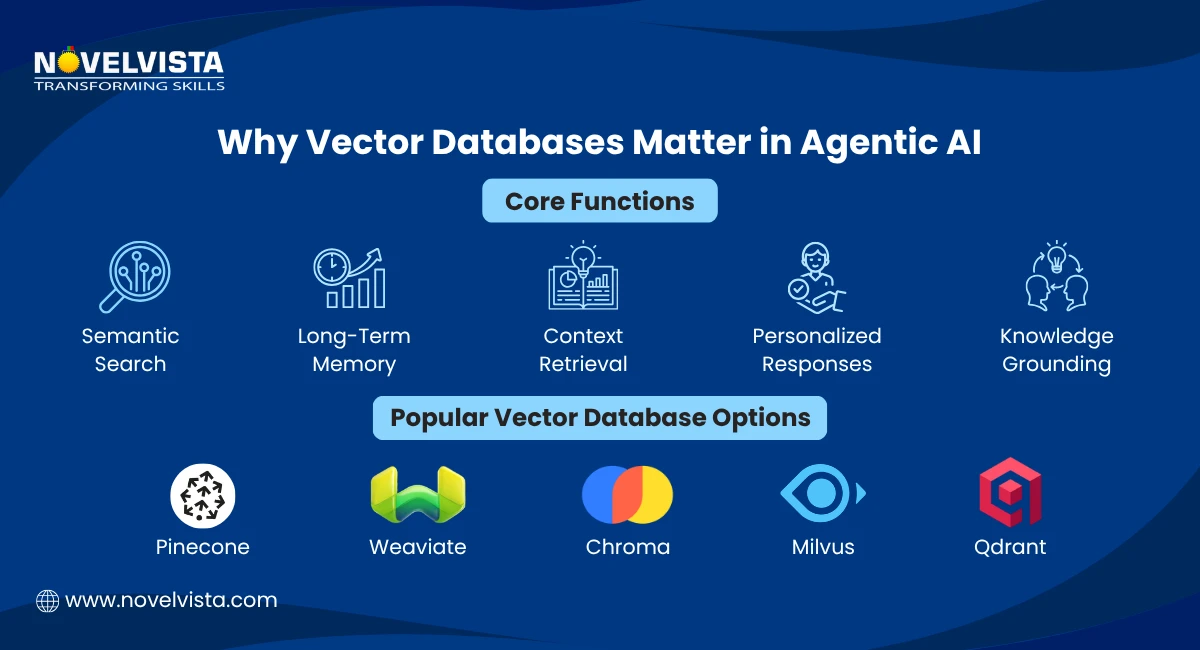
Technologies like vector databases, embeddings, and AI agent memory & planning systems make this possible. To understand how these systems operate at scale, it’s also important to explore the underlying agent workflows, reasoning layers, memory systems, and orchestration pipelines that power them. Read our detailed guide on Agentic AI Architecture to understand how autonomous AI agents are designed and deployed in real-world enterprise environments.
Developers are driving much of the innovation in autonomous AI agents, and several frameworks now dominate the ecosystem.
LangChain is one of the most widely adopted frameworks in the agentic AI ecosystem. It enables developers to build modular AI applications using chains, agents, memory systems, and tool integrations.
The biggest strength of LangChain is flexibility. Developers can combine LLMs, APIs, retrieval systems, vector databases, and tools into custom workflows.
Key capabilities include:
LangChain is best suited for developers comfortable with Python and backend engineering. It is widely used for enterprise AI assistants, knowledge systems, and workflow automation.
For teams building highly customized AI tools, LangChain remains a foundational framework.
LangGraph extends LangChain by introducing graph-based workflow orchestration.
Traditional AI workflows are linear. LangGraph allows branching logic, retries, loops, persistent state, and long-running execution.
This makes it ideal for:
For example, an AI compliance agent might:
LangGraph maintains workflow state throughout the process.
Among the best agentic AI tools 2026 offers for developers, LangGraph is especially important for enterprise-grade orchestration.
CrewAI focuses on role-based multi-agent systems.
Instead of a single AI agent performing every task, CrewAI allows multiple specialized agents to collaborate together.
For example:
| Agent Role | Responsibility |
| Research Agent | Collects data |
| Writing Agent | Drafts content |
| Reviewer Agent | Checks quality |
| SEO Agent | Optimizes keywords |
This structure closely mirrors human teamwork.
CrewAI is becoming highly popular because businesses increasingly need collaborative autonomous AI agents rather than isolated AI workflows.
The framework is lightweight, developer-friendly, and ideal for content automation, research systems, software workflows, and operations.
For organizations exploring multi-agent systems, CrewAI is among the most practical AI agent tools available today.
Microsoft developed AutoGen, now evolving into AG2, as a framework for conversational agent collaboration.
Unlike workflow-first systems, AutoGen focuses on communication-driven orchestration where agents interact through structured conversations.
This approach is highly effective for:
AutoGen agents can debate solutions, validate outputs, and coordinate tasks through conversation patterns.
One major advantage is strong enterprise integration potential, especially within Microsoft ecosystems.
For developers building advanced conversational AI agent tools, AutoGen is one of the most sophisticated options available.
Not every organization has Python developers or AI engineers. Fortunately, modern no-code agentic AI tools make automation accessible to business users as well.
n8n combines workflow automation with AI-powered agents in a visual drag-and-drop interface.
Users can automate workflows connecting:
The biggest advantage of n8n is flexibility combined with accessibility.
It is especially popular among:
Because n8n is open-source and self-hostable, organizations also gain more control over security and infrastructure.
For teams looking for scalable AI workflow automation tools without deep coding knowledge, n8n is among the best agentic AI tools 2026 provides.
Gumloop simplifies agent creation even further.
Instead of coding workflows manually, users can describe automation goals in natural language. Gumloop converts those instructions into operational AI workflows.
Its Slack integration is particularly powerful. Teams can trigger AI agents simply by tagging them in conversations.
Popular use cases include:
For non-technical business teams adopting AI agent tools quickly, Gumloop significantly lowers the barrier to entry.
Flowise offers a visual interface for building LangChain-powered AI agents.
Users can create workflows visually while still leveraging advanced capabilities such as:
Flowise is especially attractive for organizations wanting:
It provides an excellent bridge between no-code usability and developer flexibility.
Choosing the right agentic AI platform depends on your technical expertise, business goals, infrastructure, and workflow complexity.
If You Need | Best Tool |
| No-code automation | n8n |
| Multi-agent collaboration | CrewAI |
| Enterprise orchestration | LangGraph |
| Microsoft ecosystem integration | Copilot Studio |
| CRM-native AI workflows | Salesforce Agentforce |
| Conversational AI agents | AutoGen |
| Open-source visual builder | Flowise |
| Flexible custom development | LangChain |
Choosing the right agentic AI tool depends on your technical expertise, business goals, and workflow complexity. For beginners, no-code platforms like n8n and Flowise are excellent starting points because they offer visual interfaces and require minimal coding. If you're building enterprise-grade AI automation, platforms like Microsoft Copilot Studio, Salesforce Agentforce, and ServiceNow AI Agents provide strong governance, integrations, and scalability. For multi-agent workflows, CrewAI and AutoGen are among the best choices due to their collaborative agent architecture. If your focus is Retrieval-Augmented Generation (RAG), LangChain and Flowise are widely used for building RAG pipelines, memory systems, and AI applications connected to vector databases.
Now that you understand which tools fit different business and technical needs, the next step is learning how to build expertise in autonomous AI systems systematically. Explore our complete Agentic AI Roadmap to understand the skills, frameworks, tools, and learning path professionals need to become industry-ready in agentic AI and AI agent orchestration.
Learn to build and scale AI agents
Explore LangChain, CrewAI & Agentic RAG
Discover real-world enterprise AI workflows
Large enterprises require governance, scalability, compliance, and integration with existing enterprise systems. Several enterprise-grade agentic AI platforms now dominate this market.
Salesforce introduced Agentforce to bring autonomous AI agents directly into CRM workflows.
Agentforce can automate:
The biggest advantage is native Salesforce ecosystem integration.
Organizations already operating heavily within Salesforce gain immediate access to customer context, workflows, and automation pipelines.
This makes Agentforce one of the most enterprise-ready agentic AI tools available today.
Microsoft Copilot Studio enables enterprises to build AI agents deeply integrated with Microsoft products.
Agents can operate within:
The platform emphasizes low-code development and enterprise governance.
For organizations standardized on Microsoft infrastructure, Copilot Studio offers one of the easiest adoption paths into AI agent tools.
ServiceNow is integrating agentic AI heavily into ITSM and enterprise workflow management.
Its AI agents support:
ServiceNow’s biggest advantage is enterprise governance and auditability, critical for regulated industries.
As enterprise AI adoption accelerates, ServiceNow is positioning itself as a leader in operational AI agents. While understanding frameworks and platforms is essential, seeing how businesses are actually implementing autonomous AI systems provides even deeper clarity. Explore these real-world Agentic AI Examples across customer service, IT operations, marketing automation, healthcare, and enterprise workflows.
Below is a side-by-side comparison of the best agentic AI tools 2026 professionals are using.
Tool | Best For | Technical Level | Open Source | Pricing Model | Key Frameworks |
| LangChain | Flexible AI agent logic | Advanced | Yes | Free/Open-source | Chains, RAG, Tool Calling |
| LangGraph | Stateful workflows | Advanced | Yes | Free/Open-source | Graph orchestration |
| CrewAI | Multi-agent systems | Intermediate | Yes | Free/Open-source | Role-based agents |
| AutoGen / AG2 | Conversational agents | Advanced | Yes | Free/Open-source | Conversational orchestration |
| n8n | AI workflow automation | Beginner–Intermediate | Yes | Freemium | Visual automation |
| Gumloop | Business automation | Beginner | No | Subscription | Natural-language workflows |
| Flowise | No-code AI builders | Beginner–Intermediate | Yes | Free/Open-source | LangChain visual builder |
| Salesforce Agentforce | CRM AI automation | Enterprise | No | Enterprise subscription | Salesforce ecosystem |
| Microsoft Copilot Studio | Microsoft AI agents | Enterprise | No | Subscription | Microsoft 365 |
| ServiceNow AI Agents | ITSM automation | Enterprise | No | Enterprise pricing | IT workflow automation |
For developers, LangGraph and CrewAI are among the strongest choices for advanced orchestration and multi-agent systems. For non-technical teams, n8n and Gumloop provide accessible entry points into AI automation. Enterprises already invested in Salesforce or Microsoft ecosystems benefit significantly from Agentforce and Copilot Studio.
The rise of agentic AI tools is redefining how businesses approach automation, productivity, and decision-making in 2026. Unlike traditional AI systems that rely heavily on human prompts, modern AI agent tools can reason, plan, execute tasks, and collaborate across workflows with minimal supervision. From developer-focused frameworks like LangChain, LangGraph, CrewAI, and AutoGen to no-code platforms such as n8n and Flowise, the agentic AI ecosystem is expanding rapidly across every industry.
For enterprises, platforms like Salesforce Agentforce, Microsoft Copilot Studio, and ServiceNow AI Agents are making autonomous AI a core part of digital operations. At the same time, open-source innovation is enabling startups, developers, and business teams to build scalable AI workflows faster than ever before.
As organizations continue investing in autonomous AI agents, professionals who understand AI agent orchestration, RAG pipelines, vector databases, and multi-agent systems will be in high demand. Choosing the best agentic AI tools 2026 offers depends on your technical expertise, business goals, and infrastructure requirements but one thing is clear: agentic AI is no longer experimental. It is becoming the foundation of next-generation enterprise automation.
For professionals wanting structured, hands-on learning, the NovelVista Agentic AI Certification covers LangChain, LangGraph, AutoGen, RAG systems, and practical AI agent orchestration workflows.
Author Details

Confused About Certification?
Get Free Consultation Call
Stay ahead of the curve by tapping into the latest emerging trends and transforming your subscription into a powerful resource. Maximize every feature, unlock exclusive benefits, and ensure you're always one step ahead in your journey to success.