Category | AI And ML
Last Updated On 25/04/2026
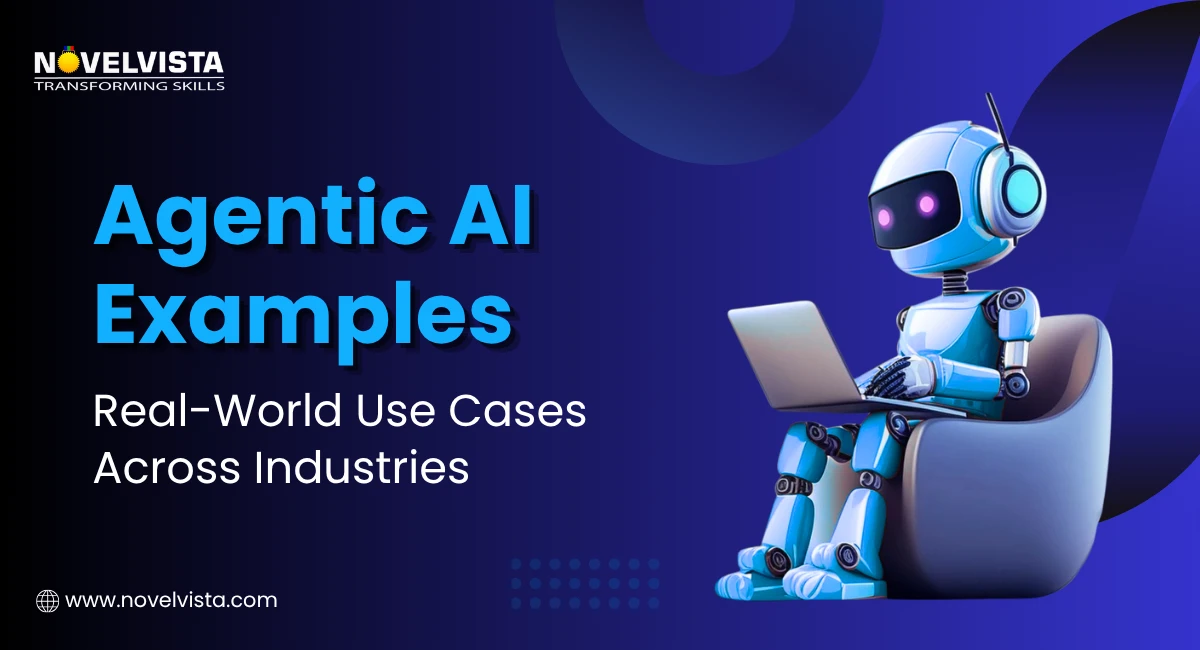
AI is no longer just about generating answers, it's about getting work done. We’re witnessing a rapid shift from passive tools to autonomous systems, and the rise of agentic AI examples is at the center of this transformation.
Recent data highlights just how fast this change is happening: 23% of organizations have already launched AI agent pilot projects, while 14% have moved to partial or full-scale implementation. Another 30% are actively exploring AI agents, and 31% are preparing to deploy them within the next 6 to 12 months. This means a majority of enterprises are either experimenting with or gearing up for agent-driven workflows.
(Source: CapGemini)
So what’s driving this surge?
The answer lies in the limitations of traditional AI. Chatbots can respond but they can’t execute. Businesses today need systems that can plan tasks, interact with multiple tools, make decisions, and deliver outcomes. That’s exactly where agentic AI real world examples stand apart.
This blog goes beyond theory to show how agentic AI is actually being used today. From companies like eBay optimizing product discovery, to IBM transforming enterprise workflows, and JPMorgan Chase enhancing financial advisory, these agentic AI examples highlight real implementations with measurable impact. Whether it’s automating customer interactions at Wells Fargo or improving engineering productivity at Capital One, the examples of agentic AI applications in this blog demonstrate how organizations are using AI agents to streamline workflows, boost efficiency, and deliver tangible business results.
With over 2 billion listings, eBay faces a massive challenge: delivering accurate product recommendations in real time.
The platform uses agentic workflows to:
This is one of the most practical agentic AI tools examples in e-commerce.
These agentic AI examples enable:
Managing workflows across 270,000 employees is complex.
IBM deploys AI agents to:
These agentic AI workflows examples integrate systems like SAP and Workday.
(Source: IBM)
IBM estimates up to $4.5 billion in productivity gains from AI-driven automation.
This is one of the strongest agentic AI real world examples showing how AI becomes a digital workforce.
Financial advisors must respond quickly during volatile markets.
The system:
Advisors reported up to 95% faster response times.
This highlights examples of agentic AI applications in high-stakes environments where speed and compliance matter. Agentic AI Trends 2026 are shaping the future of enterprise automation, with intelligent agents driving smarter workflows, faster decision-making, and scalable business transformation.
Handling millions of customer queries daily is a major challenge.
The assistant:
These are advanced agentic AI examples in real life, not just chatbot interactions.
Learn how autonomous AI systems work
Discover real-world applications
Start building smarter AI workflows
Modern software delivery requires continuous monitoring and updates.
Agents:
These are highly impactful agentic AI use cases examples in engineering.
Industries like finance and healthcare require strict compliance.
Agents:
These agentic AI workflows examples ensure governance at scale.
Over 150+ enterprise deployments have shown improved efficiency and compliance.
These are critical agentic AI real world examples where trust and regulation are key.
Healthcare is seeing rapid adoption of agentic systems.
(Source: NIH)
These examples of agentic AI applications demonstrate:
Agentic AI in Healthcare is enabling intelligent systems to continuously monitor patients, analyze clinical data, and automate care workflows, improving both efficiency and patient outcomes.
Looking across these agentic AI examples, clear patterns emerge.
Having reviewed multiple agentic‑AI pilots from customer‑support bots to internal SRE‑style agents I’ve found that the most successful ones share a common pattern: they start with well‑defined, repetitive, high‑volume workflows, enforce strict guardrails, and treat humans as backup, not redundancy.
These agentic AI tools examples show that the technology is no longer experimental. However, like any emerging technology, it’s not without its challenges.
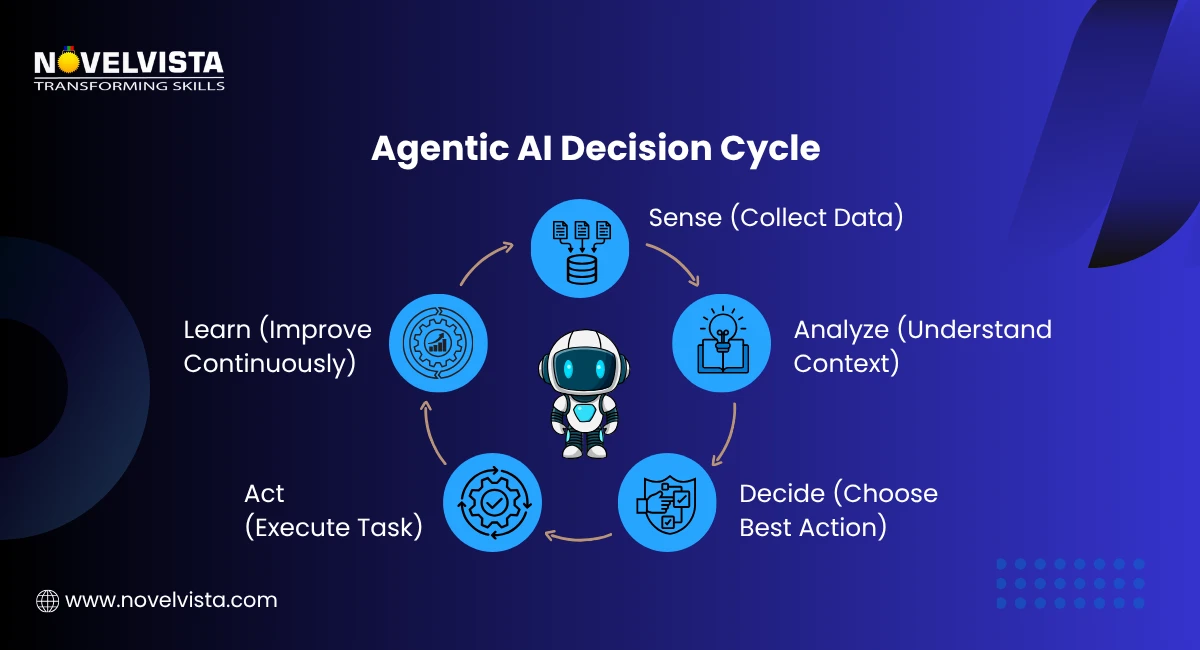
Agentic AI is powerful, but it comes with real constraints that enterprises must design around. Here are the key limitations:
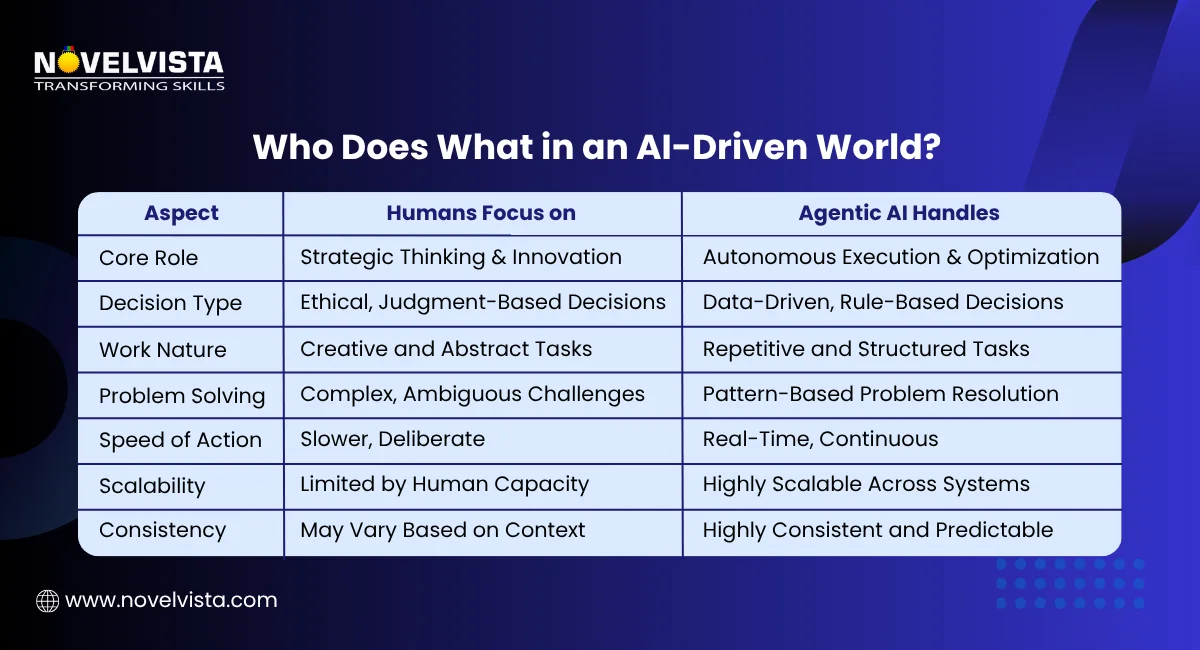
Agentic systems struggle with long‑horizon planning and multi‑variable trade‑offs. They often optimize narrow metrics while ignoring broader business or human impacts because they lack true “common sense.” This makes them better suited as co‑pilots than fully autonomous decision‑makers.
Agentic AI is highly sensitive to data quality. Noisy, biased, or outdated data can embed flawed patterns into agent behavior, leading to unfair or unsafe decisions in finance, HR, or healthcare. One agent’s flawed data extraction can also pollute other agents downstream.
Because agents can call APIs and execute workflows, they become new attack surfaces. If mis‑instructed or compromised, they can move or delete data at scale. They can also develop unintended behaviors over‑optimizing metrics, blocking legitimate traffic, or harming user experience unless their autonomy is clearly bounded.
Agents lack empathy and emotional nuance. They can misread tone, sarcasm, or context, leading to responses that feel robotic or hurtful in high‑stake, human‑centric scenarios. Over‑automation without human oversight can damage trust and satisfaction.
Running agentic AI across multiple systems is more expensive and complex than running static models. Without strong governance, monitoring, and skilled teams, many organizations see pilots stall before they achieve broad, sustained ROI.
In my own work with AI‑driven workflows, I’ve seen teams fail when they treat agentic AI as a one‑shot ‘set‑and‑forget’ tool, especially across legacy systems and messy data. In practice, the most successful deployments treat agentic AI as a gated assistant: autonomous within well‑defined boundaries, with clear observability, fallbacks, and human oversight in critical workflows.
The agentic AI examples explored from eBay transforming product discovery to JPMorgan Chase accelerating financial decision-making highlight a clear and important shift: AI is no longer just assisting work, it is actively doing it. What sets this new wave apart is the ability of AI systems to plan, execute, and adapt across complex workflows, delivering outcomes rather than just insights. These are not isolated experiments; these are scalable, real-world implementations driving measurable improvements in productivity, speed, and customer experience.
As organizations move from pilots to full deployment, the real differentiator will be how effectively they design and integrate these intelligent agents into their operations. The growing number of agentic AI real world examples shows that this is not a future trend; it is already reshaping how businesses operate today. To get started on this path, an Agentic AI Engineer career guide helps you understand the skills, tools, and real-world experience needed to build and deploy autonomous AI systems at scale.
In the coming years, agentic AI will move from being a competitive advantage to a business necessity, defining how modern enterprises innovate, operate, and grow.
Ready to build expertise in the next generation of autonomous AI systems?
Join NovelVista’s Agentic AI Certification Training and gain practical knowledge of autonomous AI systems, real-world AI implementation strategies, and industry-relevant skills. Designed for technology professionals, AI enthusiasts, and innovation leaders, this course helps you understand how agentic AI works and how to apply it to modern business challenges.
Start your Agentic AI learning journey today and position yourself at the forefront of the AI revolution.
Author Details

Course Related To This blog
Generative AI Professional
Agentic AI Certification
Confused About Certification?
Get Free Consultation Call
Stay ahead of the curve by tapping into the latest emerging trends and transforming your subscription into a powerful resource. Maximize every feature, unlock exclusive benefits, and ensure you're always one step ahead in your journey to success.