Category | Quality Management
Last Updated On 11/05/2026
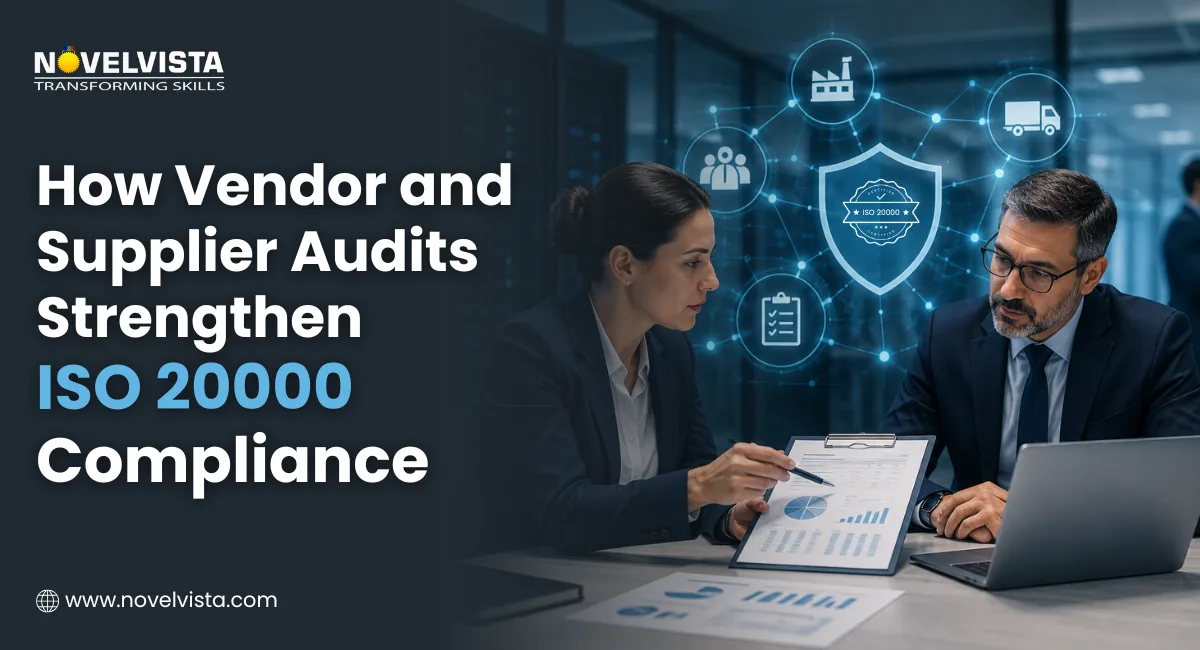
Modern IT services rarely operate in isolation. From cloud hosting providers and cybersecurity partners to managed service vendors and software suppliers, organizations today depend heavily on third parties to deliver seamless digital experiences. In fact, industry reports suggest that more than 60% of IT service disruptions involve third-party vendors in some way. This raises an important question: how can organizations maintain consistent service quality and compliance when external suppliers play such a major role?
This is where vendor and supplier audits become essential.
Vendor and supplier audits strengthen ISO 20000 compliance by ensuring third-party providers meet SLA commitments, security requirements, and service management standards. These audits help organizations identify operational risks, improve supplier accountability, and maintain consistent service quality. Regular audits also support continual improvement and provide evidence needed during ISO 20000 certification assessments.
For organizations pursuing ISO 20000 certification, supplier governance becomes even more critical. ISO 20000, the international standard for IT Service Management Systems (SMS), emphasizes the importance of controlled, measurable, and continuously improving service delivery. Since external vendors directly influence service quality, strong ISO 20000 vendor management practices are necessary to maintain compliance and operational stability.
In this blog, we will explore how vendor and supplier audits help organizations strengthen ISO 20000 compliance and improve IT service quality. We’ll discuss the role of ISO 20000 vendor management, the importance of supplier accountability, and how audits reduce operational and compliance risks. You’ll also learn about different types of supplier audits, audit best practices, and practical steps to build an ISO 20000-aligned vendor audit program.
Topic | Key Insight |
| Vendor & Supplier Audits | Improve compliance, accountability, and service quality |
| ISO 20000 Vendor Management | Helps control third-party service risks |
| Supplier Audits | Validate SLA, security, and process compliance |
| Audit Benefits | Reduce operational risk and support continual improvement |
| Certification Readiness | Strengthens evidence for ISO 20000 audits |
ISO 20000 vendor management is not limited to selecting suppliers or negotiating contracts. It covers the complete lifecycle of supplier relationships, including:
The goal is to ensure that external providers consistently support the organization’s service management objectives.
Third-party suppliers often manage critical services such as cloud infrastructure, software maintenance, cybersecurity operations, customer support, and network management. If these suppliers fail to perform, the organization’s ability to meet service commitments may suffer. Effective supplier governance becomes easier when organizations understand the core ISO 20000 principles that drive service quality, continual improvement, and process consistency.
The table below shows how supplier performance impacts ISO 20000 compliance:
Supplier Activity | Impact on ISO 20000 Compliance |
SLA adherence | Supports service-level management |
Security management | Reduces operational and compliance risk |
Incident response | Improves service continuity |
Change management coordination | Prevents service disruptions |
Documentation and reporting | Supports audit readiness |
Without effective supplier governance, even a well-designed ITSM framework can experience gaps in compliance and service quality.
One of the biggest advantages of a vendor audit ISO 20000 process is improved supplier accountability.
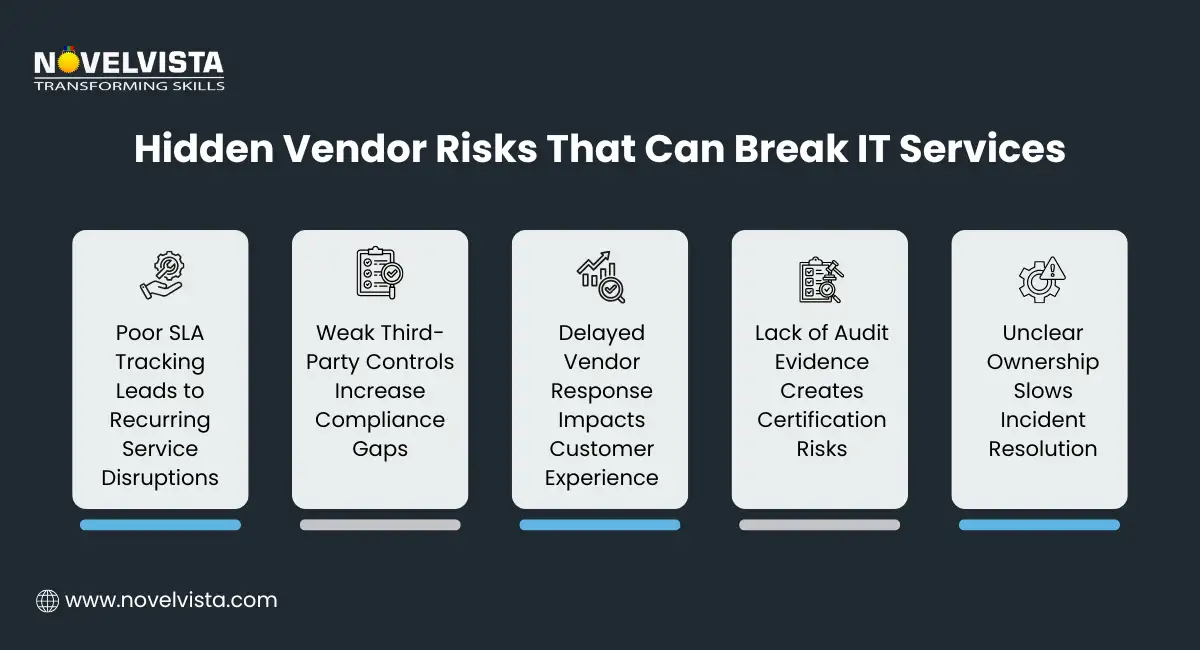
Audits help organizations verify whether vendors are meeting agreed performance indicators, contractual obligations, and SLA commitments. This includes evaluating response times, service availability, incident resolution quality, and operational efficiency.
For example, if a cloud provider promises 99.9% uptime but repeatedly fails to meet availability targets, audits provide documented evidence of performance gaps. This evidence supports corrective action planning and supplier-performance discussions.
Supplier audits also strengthen ISO 20000 service-level management by ensuring that vendors align with organizational expectations and customer requirements.
Key accountability metrics commonly reviewed during audits include:
By maintaining evidence-based supplier reviews, organizations can demonstrate stronger compliance during ISO 20000 certification audits.
Third-party vendors can introduce major operational risks if their controls, security practices, or service-delivery capabilities are weak.
A supplier audit ISO 20000 program helps organizations identify these risks before they escalate into service disruptions or compliance failures.
Audits can uncover issues such as:
For example, a managed service provider with outdated security controls may expose sensitive organizational data to cyber threats. Through audits, organizations can identify these vulnerabilities and demand corrective actions before they lead to incidents.
ISO 20000 requires organizations to identify, assess, and manage risks associated with suppliers. Vendor audits provide the operational visibility needed to meet this requirement effectively.
Strong ISO 20000 vendor management practices also improve business continuity by ensuring suppliers are prepared to handle service interruptions and emergencies.
Another important benefit of vendor audits is ensuring that supplier processes align with the organization’s Service Management System (SMS).
Organizations pursuing ISO 20000 certification must ensure consistency across all service management processes, including those managed by external vendors.
During a vendor audit ISO 20000 review, organizations often evaluate:
If supplier processes conflict with the organization’s internal ITSM framework, service quality and compliance can suffer.
For example, if a supplier follows weak change management procedures, unauthorized changes could disrupt critical services and violate ISO 20000 requirements.
Audits help maintain alignment between internal teams and external providers, ensuring that all stakeholders operate under consistent service management principles.
This alignment also improves collaboration, reduces operational confusion, and strengthens overall IT governance.
ISO 20000 emphasizes continual improvement as a core principle of effective IT Service Management.
Supplier audits contribute directly to continuous improvement by generating measurable data that organizations can use to optimize service delivery.
Audit findings often reveal opportunities to:
Instead of treating audits as one-time compliance exercises, mature organizations use them as strategic improvement tools.
For example, if repeated audits show delayed incident escalation from a vendor, the organization can redesign escalation procedures and update SLA expectations.
The table below highlights how audit findings support continual improvement:
| Audit Finding | Improvement Opportunity |
| Repeated SLA breaches | Revise supplier KPIs |
| Poor incident reporting | Improve communication processes |
| Incomplete documentation | Strengthen compliance controls |
| Slow response times | Enhance escalation workflows |
| Security weaknesses | Upgrade supplier security measures |
This fact-based approach supports better decision-making and aligns closely with ISO 20000 continual-improvement requirements.
Many organizations assume suppliers are meeting contractual obligations simply because services appear operational. However, without structured audits, hidden compliance gaps often go unnoticed.
A supplier audit ISO 20000 process validates whether vendors are actually delivering services according to agreed contracts and SLAs.
Audits help organizations confirm:
This reduces the risk of SLA violations, financial penalties, customer dissatisfaction, and reputational damage.
For example, if a supplier contract requires monthly performance reporting but reports are incomplete or inconsistent, audits identify the issue early.
Regular vendor reviews also improve transparency between organizations and suppliers, creating stronger long-term partnerships.
Different audit approaches serve different operational purposes within ISO 20000 vendor management.
Audit Type | Purpose |
| Announced Audits | Planned supplier reviews with defined scope and preparation timelines |
| Unannounced Audits | Evaluate real-time operational behavior and day-to-day compliance |
| Desktop Audits | Review contracts, SLAs, policies, and certifications remotely |
These are scheduled reviews where suppliers prepare documentation and evidence in advance. They are useful during planned performance-review cycles.
These audits assess real operational practices without prior preparation. They help evaluate resilience, responsiveness, and operational discipline.
Desktop audits focus on documentation reviews such as contracts, SLA reports, certifications, and policies. They provide an efficient way to assess supplier compliance remotely.
During ISO 20000 certification assessments, auditors expect organizations to demonstrate effective supplier governance.
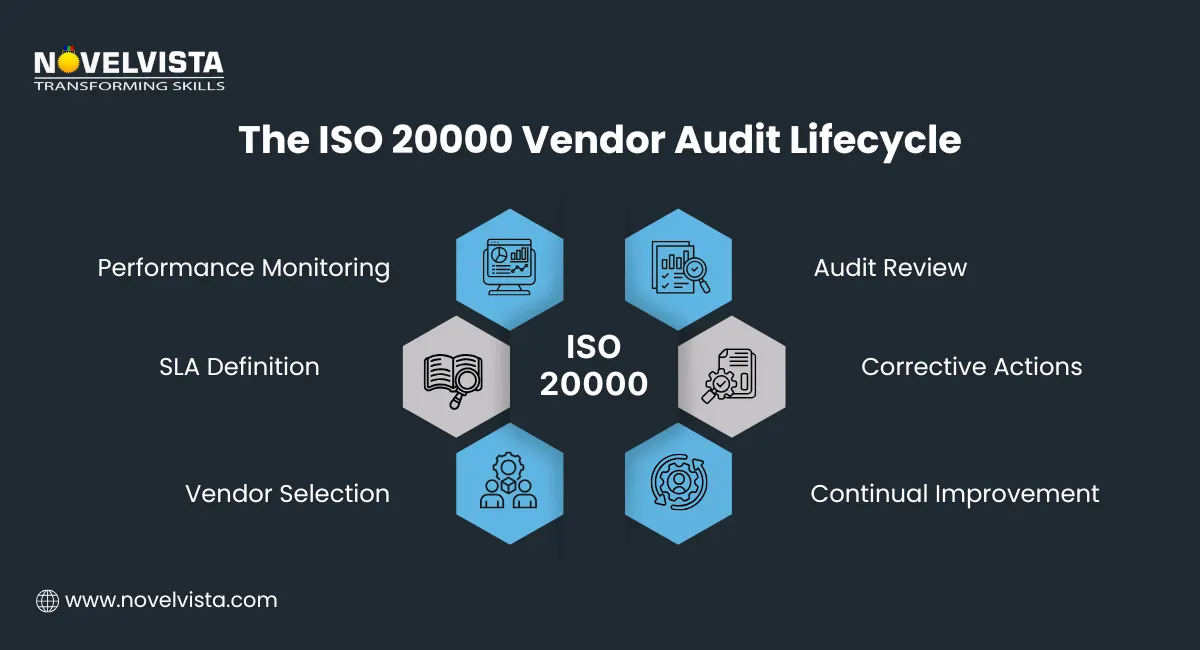
Common evidence requested during audits includes:
A structured vendor audit ISO 20000 framework helps organizations maintain this evidence in a clear and organized manner.
Strong supplier governance also simplifies internal audits, surveillance audits, and recertification reviews because organizations can quickly demonstrate control over third-party services.
This improves audit readiness and reduces the stress associated with certification assessments. Organizations preparing for certification audits should also understand the structure, assessment criteria, and preparation strategies outlined in this detailed ISO 20000 Exam Guide.
Organizations can strengthen compliance by creating a formal supplier-audit framework.
Here are some practical steps:
Identify suppliers that directly impact service delivery, security, or customer experience.
High-risk vendors may require quarterly audits, while lower-risk suppliers may only need annual reviews.
Include criteria related to:
Ensure audit results are discussed during ITSM governance meetings and continual-improvement reviews.
Assign ownership, deadlines, and measurable outcomes for supplier improvements.
By following these steps, organizations can create a more resilient and ISO 20000-compliant supplier-management framework. Organizations can streamline audit preparation and documentation processes by using a structured ISO 20000 Toolkit aligned with service management and supplier governance requirements.
Vendor and supplier audits play a far greater role than basic compliance verification. A strong vendor audit ISO 20000 strategy helps organizations improve accountability, reduce operational risk, strengthen SLA management, and support continual improvement across IT services.
Similarly, an effective supplier audit ISO 20000 program ensures that external vendors align with organizational objectives, service-management processes, and compliance requirements.
As organizations become increasingly dependent on third-party service providers, ISO 20000 vendor management becomes essential for maintaining service quality, operational resilience, and certification readiness.
Businesses that treat supplier audits as strategic improvement tools rather than routine checklists are better positioned to deliver reliable, compliant, and high-performing IT services.

Ready to strengthen your ISO 20000 auditing and supplier management expertise?
Join NovelVista’s ISO/IEC 20000:2018 Lead Auditor Certification Training and gain practical knowledge of vendor audits, supplier governance, SLA compliance, and ITSM audit practices. Designed for ITSM professionals, auditors, and service-management leaders, this globally recognized course helps you confidently lead ISO 20000 audits and improve service quality across complex vendor ecosystems.
Start your ISO 20000 Lead Auditor journey today!
Author Details

Course Related To This blog
ISO 20000:2018 Lead Auditor
Confused About Certification?
Get Free Consultation Call
Stay ahead of the curve by tapping into the latest emerging trends and transforming your subscription into a powerful resource. Maximize every feature, unlock exclusive benefits, and ensure you're always one step ahead in your journey to success.