NovelVista logo

Effective Communication Techniques for ISO 9001 Lead Auditors

Category | Quality Management

Last Updated On 09/01/2026

Effective Communication Techniques for ISO 9001 Lead Auditors | Novelvista

Let’s be honest. Many audits fail not because the processes are weak, but because communication breaks down. Poor clarity, confusing questions, defensive responses, and misunderstood findings slow down everything. That’s exactly why auditor communication skills play such a powerful role in ISO 9001 audits.


Across our ISO 9001 Lead Auditor training and real audit discussions, we consistently see that technical knowledge alone is never enough. Auditors who communicate clearly, listen actively, and build trust deliver far stronger audit outcomes than those who rely only on checklists.


In this guide, we focus on how better communication improves ISO 9001 audit interviews, builds trust, strengthens leadership presence, and helps auditors collect stronger evidence with confidence and clarity.
Core Auditor Communication Skills Every ISO 9001 Lead Auditor Must Master

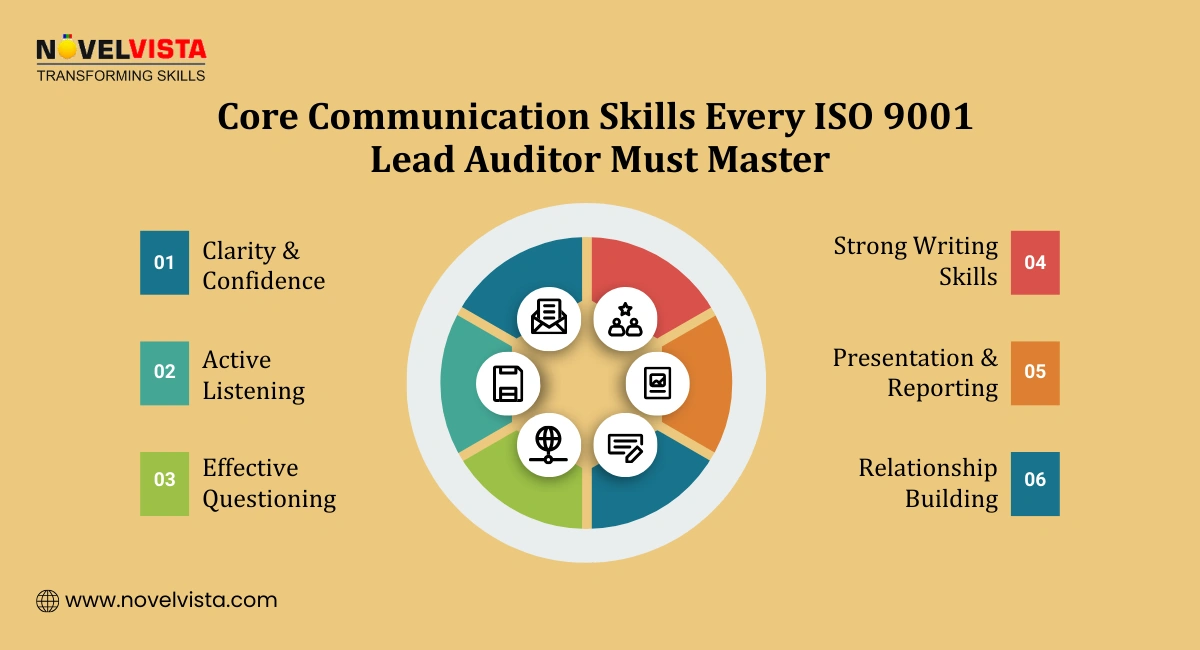
Core Communication Skills Every ISO 9001 Lead Auditor Must Master   Clarity & Confidence Active Listening Effective Questioning Strong Writing Skills Presentation & Reporting Relationship Building

Strong audits are not built on checklists alone. They are built on how well the auditor connects with people, explains expectations, and asks the right questions. The foundation of strong auditor communication skills includes:

 
  • Clarity in Expression: Explaining the audit purpose, process expectations, and findings in clear, simple language helps people stay relaxed, open, and confident during interactions.
     
  • Structured Questioning Ability: Being able to move smoothly from open questions to probing questions helps the auditor uncover the real truth behind the processes instead of rehearsed responses.
     
  • Active Listening Discipline: Listening carefully allows auditors to understand tone, hesitation, confidence, and gaps. This is where real insights appear, not only in what is said but how it is said.
     
  • Confident Written and Spoken Communication: Strong reporting, gentle but firm conversations, and well-structured discussions create trust and respect.
     
  • Relationship Building Skills: Trust encourages honest answers. When people feel comfortable, ISO 9001 audits become collaborative rather than confrontational.
     

These auditor communication skills truly shape how effective an ISO 9001 Lead Auditor becomes.

Key Communication Skills for ISO 9001 Audit Interviews

ISO 9001 audits heavily depend on conversations. Poor interviews = poor evidence. Strong interviews = meaningful insights. Many auditors struggle during interviews because they either interrogate too aggressively or communicate too softly. 


Through structured learning and scenario-based exercises, auditors can learn how to conduct balanced, confident, respectful conversations that reveal the true strength of the QMS. That’s why mastering these auditor communication skills during ISO 9001 audit interviews is essential.

 
  • Active Listening: Helps uncover real process behavior instead of scripted statements, while showing respect to auditees.
     
  • Clear and Simple Language: Avoiding jargon keeps everyone aligned. Even non-technical staff should understand questions and findings easily.
     
  • Effective Questioning Techniques: Using open questions for understanding and closed questions for confirmation helps auditors gather reliable and honest evidence.
     
  • Non-Verbal Awareness: Body language, tone shifts, and hesitation often speak louder than words during ISO 9001 audit interviews.
     
  • Empathy with Objectivity: Auditors must understand people without losing neutrality. This balance builds trust while maintaining authority.
     

Strong ISO 9001 audit interviews depend on how confidently and respectfully these communication skills are applied.

Written & Presentation Communication for Strong Audit Outcomes

A great audit loses impact if the message is weak. That’s why auditor communication skills must also reflect in writing and presentation.

 
  • Clear Written Findings: Findings should be structured, factual, clause-linked, and easy to understand. No confusion, no drama, just clarity.
     
  • Visual and Data Support: Charts, visuals, trends, and metrics make QMS performance easier for leadership teams to understand and accept.
     
  • Confident Presentation Skills: During opening and closing meetings, strong presentation skills help align leadership, reduce resistance, and support smooth acceptance of findings.
     

Good communication makes findings meaningful instead of threatening.


Report writing is one of the most important parts of an ISO 9001 audit. Want to do it right? Read our blog on ISO 9001 Report Writing to create clear, accurate, and audit-ready reports.

Audit Leadership Communication: Guiding Teams & Setting Standards

A lead auditor is not just a technical person; they are also a communicator, guide, and mentor. Strong auditor communication skills directly strengthen audit leadership.

 
  • Lead auditors must communicate purpose and expectations clearly to team members
  • Provide direction during challenging audit situations
  • Maintain authority without aggression
  • Encourage team alignment and consistency


Good audit leadership grows from confident communication, emotional intelligence, and clarity.

Mastering ISO 9001 Audit Interviews: Techniques That Work

A strong conversation leads to strong evidence. The better you handle ISO 9001 audit interviews, the more honest, useful, and real insights you get. Here’s how to do it right:

 
  1. Structure interviews properly: Plan your conversation flow instead of jumping randomly. Start with comfort questions, move into real process discussions, and close with clarity so there’s no confusion on what was discussed or agreed.
 
  1. Use opening questions smartly: Your opening tone sets trust. Keep it friendly, neutral, and clear so the person feels comfortable sharing information without feeling judged, cornered, or defensive about their work.
 
  1. Probe with purpose: Don’t accept surface answers. Ask follow-up questions, ask “how” and “why”, and request real examples so you uncover actual practices instead of only polished textbook responses.
 
  1. Seek clarity before moving forward:Summarize what you heard and confirm understanding. This prevents misinterpretation and builds confidence that the discussion is fair, clear, and transparent.

Human conversation > interrogation mode: When ISO 9001 audit interviews feel like natural conversations, people open up. When they feel like a courtroom, they shut down. Simple as that.

Communication Tools That Strengthen Audit Effectiveness

Good communication becomes even stronger when the right tools support it. These tools make findings clearer, conversations smoother, and outcomes easier to understand.

 
  • Visual aids for clarity: Dashboards, graphs, process maps, and trend visuals help explain performance much better than lengthy explanations or text-heavy discussions.
     
  • Communication feedback loops: Regular checkpoints, recap discussions, and follow-up clarifications help avoid misunderstandings and make everyone aligned on what the audit truly indicates.
     
  • Clear documentation habits: Structured report formatting, standardized templates, and simple wording ensure reports are understood by leadership, teams, and stakeholders without confusion.
     
Transparent communication flow: When stakeholders know what to expect, resistance drops and collaboration increases, leading to smoother audits and meaningful quality improvement.

Managing Resistance During Audits with Confidence

Not everyone welcomes audits. Some feel threatened. Some get defensive. Strong auditor communication skills help turn resistance into cooperation.

 
  1. Handle objections calmly: Stay composed and neutral. Listen fully, acknowledge their concern, and respond logically instead of reacting emotionally.
 
  1. Use persuasive communication: Connect findings to benefits. Show how improvements reduce workload, improve efficiency, and support real business success rather than blaming people.
 
  1. Link discussions to business value: When people see that the audit supports stability, growth, risk reduction, and smoother work life, resistance naturally comes down.
 

In our workshops, many auditors share that resistance usually reduces when communication improves. Transparent intent, respectful tone, and clarity of purpose build trust, making even challenging conversations far easier to handle during ISO 9001 audits.
Conflict Resolution Audit Strategies for ISO 9001 Lead Auditors

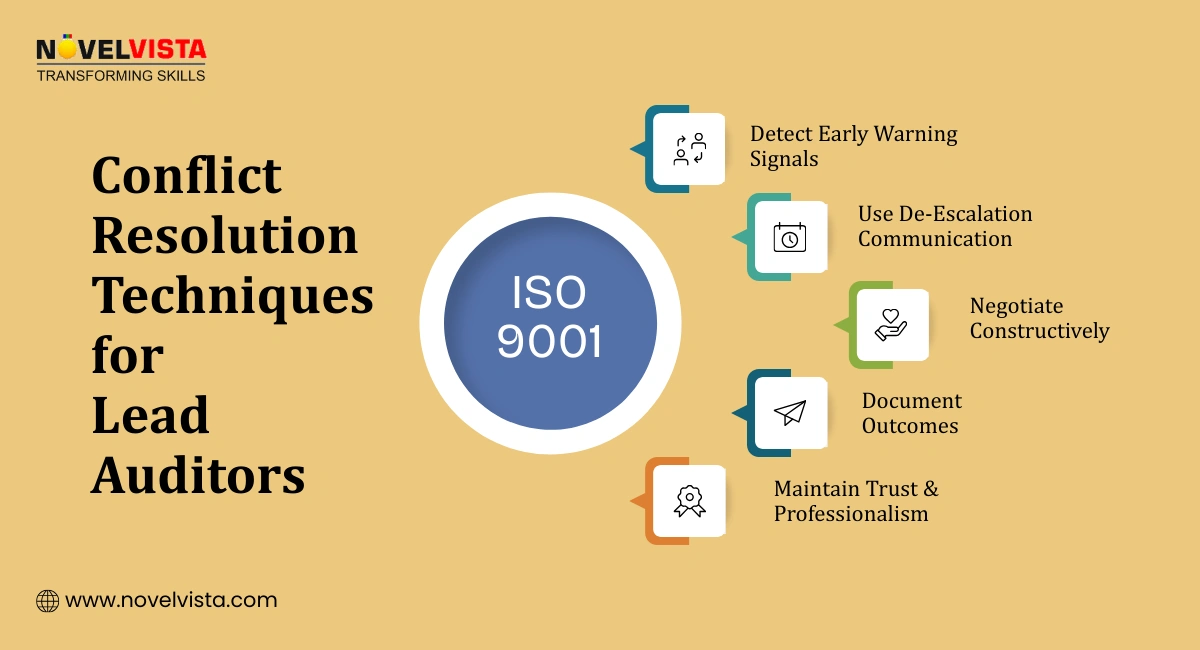
Conflict Resolution Techniques for Lead Auditors  Detect early warning signals Use de-escalation communication Negotiate constructively Document outcomes Maintain trust & professionalism

Even with good communication, some situations heat up. That’s where strong conflict resolution audit handling makes the difference between a tense audit and a productive one.

 
  • Identify early warning signals: Notice hesitation, tone shifts, defensive replies, or avoidance. These are signs of emotional resistance developing during the audit.
     
  • Use calm de-escalation techniques: Lower your voice tone, slow your pace, reassure fairness, and bring discussions back to facts rather than emotions or blame.
     
  • Apply negotiation when needed: Sometimes alignment requires discussion, explanation, and a balanced approach. Be firm with standards but human with communication.
     
  • Always document resolutions: Capture agreements, clarifications, actions, and understanding so there’s trust, transparency, and no confusion later.
     

Strong conflict handling builds credibility, strengthens trust, and protects the integrity of the audit.

Why Strong Auditor Communication Skills Lead to Better ISO 9001 Audits

Good communication does more than “sound nice”. It actually changes audit quality in real life.

  • Builds trust so people speak honestly instead of hiding weaknesses
  • Improves the accuracy of evidence because conversations become clearer
  • Strengthens leadership confidence as findings are explained with clarity
  • Helps organizations accept improvement areas without resistance or fear

Better communication simply means better audits.

Practical Tips for Lead Auditors to Improve Communication

If you want to continuously grow as a lead auditor, communication has to stay in training mode.

 
  1. Practice real ISO 9001 audit interviews regularly to sharpen questioning style and listening depth.
     
  2. Role-play resistance and conflict situations so handling objections becomes natural, not stressful.
     
  3. Develop clarity, empathy, confidence, and neutrality because balance is what earns respect.
     
  4. Keep learning and refining skills through training, mentorship, and on-job experience.

Strong communication isn’t luck. It’s a skill you polish.


Want to communicate more effectively in global audits? Read our blog on ISO 9001 Cross-Cultural Auditing Communication to learn practical tips that help lead auditors handle cultural differences with clarity and confidence.

Download: Non-Verbal & Psychological Communication Guide for Auditors

Learn how to read the room during audits.
Understand body language, tone, resistance, and 
group dynamics to stay in control, gain trust, and audit with calm confidence.

Conclusion: Communication Excellence = Better ISO 9001 Audit Success

Great auditors aren’t only technically strong, they communicate with clarity, empathy, confidence, and structure. Strong auditor communication skills help you get better evidence, handle resistance smoothly, guide teams effectively, and build trust across the organization. When communication improves, audit quality improves, and real value is delivered.


These insights come from continuous training interactions, live audit simulations, and engagement with professionals preparing for ISO 9001 Lead Auditor roles. The goal is to help auditors strengthen communication skillsets that not only support certification success but build long-term credibility.

Next Step

If you want to strengthen your expertise and stay ahead in IT Service Management auditing, explore NovelVista’s ISO 9001 Lead Auditor Certification Training Course. It helps professionals master audit techniques, understand real-world ISO 20000 requirements, and confidently assess Service Management Systems. With expert trainers, practical learning, and career-focused outcomes, it’s designed to enhance your auditing capability and prepare you to lead ISO 20000 audits with confidence.
Become A Job-Ready ISO 9001 Lead Auditor With Real Audit Confidence   Learn how to plan, conduct, and report effective audits Gain globally recognized credibility for quality roles Train with NovelVista’s expert-led programs

Frequently Asked Questions

Auditors manage conflict by remaining objective and focusing on factual evidence. They use empathetic listening to understand the client's perspective while firmly negotiating recommendations that mitigate identified risks.

Active listening allows auditors to capture subtle details and build rapport. By focusing entirely on the speaker, they identify potential red flags that standard checklists might easily miss.

An effective report uses clear and concise language to convey findings. It avoids technical jargon to ensure that stakeholders can quickly understand the risks and implement the suggested improvements.

Non-verbal cues like eye contact and open posture establish professional trust. Auditors who mirror positive body language often find that auditees become more transparent and less defensive during questioning.

Auditors can refine their skills through specialized workshops and peer reviews. Consistent practice in drafting reports and conducting mock interviews helps sharpen their ability to deliver complex information clearly.

Author Details

Mr.Vikas Sharma

Mr.Vikas Sharma

Principal Consultant

I am an Accredited ITIL, ITIL 4, ITIL 4 DITS, ITIL® 4 Strategic Leader, Certified SAFe Practice Consultant , SIAM Professional, PRINCE2 AGILE, Six Sigma Black Belt Trainer with more than 20 years of Industry experience. Working as SIAM consultant managing end-to-end accountability for the performance and delivery of IT services to the users and coordinating delivery, integration, and interoperability across multiple services and suppliers. Trained more than 10000+ participants under various ITSM, Agile & Project Management frameworks like ITIL, SAFe, SIAM, VeriSM, and PRINCE2, Scrum, DevOps, Cloud, etc.

Confused About Certification?

Get Free Consultation Call

Sign Up To Get Latest Updates on Our Blogs

Stay ahead of the curve by tapping into the latest emerging trends and transforming your subscription into a powerful resource. Maximize every feature, unlock exclusive benefits, and ensure you're always one step ahead in your journey to success.
Topic Related Blogs