ISO 9001 audit report writing, audit documentation best practices, lead auditor reporting format

Category | Quality Management

Last Updated On

ISO 9001 audit report writing, audit documentation best practices, lead auditor reporting format | Novelvista

Something feels off when an audit report looks messy, unclear, or full of guesswork. You read a sentence three times but still can’t figure out what the auditor actually found. That small confusion later turns into wrong fixes, repeated issues, and frustrated teams. This is where ISO 9001 audit report writing makes all the difference.

This blog gives you a clear way to write clean, accurate, easy-to-read ISO 9001 audit reports. You’ll learn structure, finding-writing techniques, NCR writing, evidence handling, the lead auditor reporting format, and simple examples you can reuse anytime.
Basic Structure of an ISO 9001 Audit Report (Easy Breakdown)

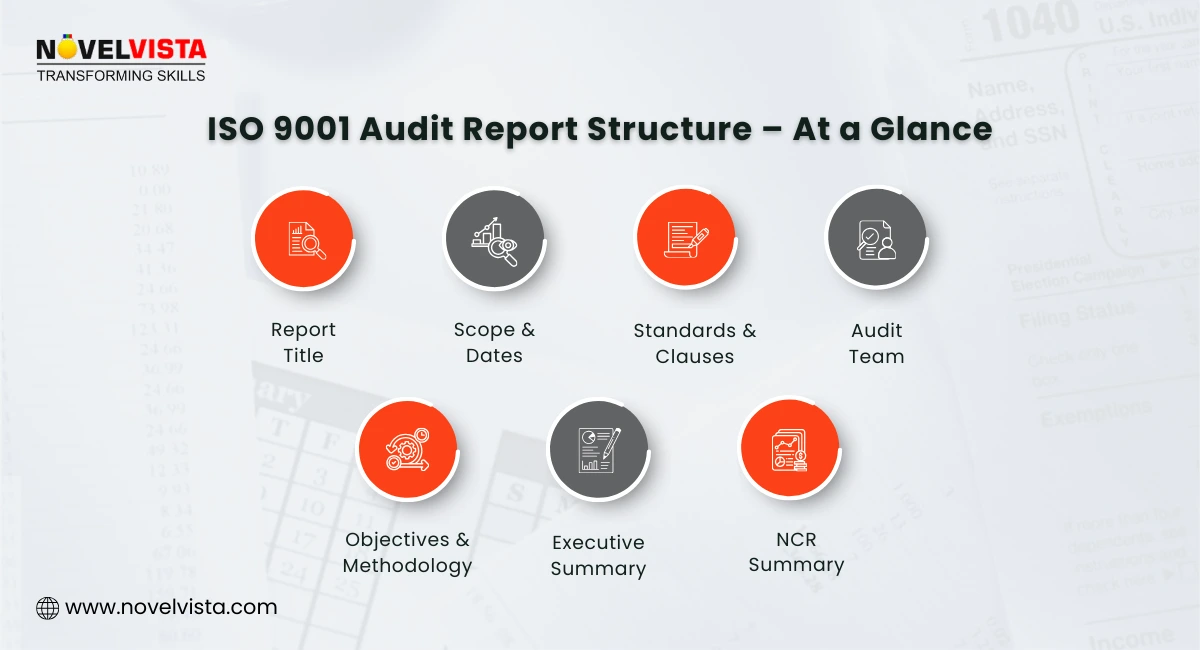
ISO 9001 Audit Report Structure – At a Glance

A good ISO 9001 audit report follows a simple structure. When this structure stays consistent, both the organisation and audit team can understand findings faster and take the right actions.

Here’s the basic breakdown:

1. Report Title, Scope & Audit Dates

These three details help readers quickly see what was audited, when it happened, and the overall focus of the assessment. It sets the stage for the full report.

2. Standard & Clauses Covered

This shows exactly which ISO 9001 clauses were reviewed. It avoids confusion and makes it easier for the organisation to track which areas were assessed.

3. Audit Team Details

Names, roles, and responsibilities of auditors help maintain transparency. It also helps the organisation know who to contact for clarifications.

4. Audit Objectives & Methodology

This part explains why the audit was done and how the audit was carried out. It covers interviews, site visits, sampling, and document reviews.

5. Executive Summary

This section highlights the overall conformity status, key strengths, number of NCRs, and general observations. It gives leadership a quick, clear picture of how the QMS performed.

This structure reflects the same reporting model used in our ISO 9001 Lead Auditor programs. It aligns with how certification bodies expect reports to be formatted, helping professionals build reports that meet global auditing practices.

How to Document Audit Findings the Right Way

This is where many audit reports start becoming confusing. Clear writing begins when every finding follows the 5 C method, a format used widely in strong reports and audit documentation best practices.

 
  1. Criteria: This is the ISO 9001 clause, procedure, or documented requirement that the process must follow. It sets the rule against which the finding is compared.
 
  1. Condition: This explains what the auditor actually saw. It describes the observed situation without judgment, opinions, or assumptions.
 
  1. Cause: If known, this explains why the issue happened. It helps the organisation understand the root of the problem and plan solid corrective actions.
 
  1. Consequence: This tells how the issue affects the QMS or the process. It may affect consistency, customer satisfaction, record accuracy, or process control.
 
  1. Corrective Action: This is the required action for NCRs or a suggestion for improvement for OFIs. It should be clear, realistic, and connected directly to the finding.
 

When auditors follow this simple structure, ISO 9001 audit report writing becomes far easier for both the writer and the reader.

Writing NCRs and OFIs Clearly and Professionally

NCR writing is one area where most lead auditors struggle—not because the issues are complex, but because the wording becomes messy or unclear. Here’s a simple way to write them cleanly:

Writing a Nonconformity Statement Linked to a Clause

A strong NCR directly mentions the ISO 9001 clause and describes what requirement was not met. This avoids all doubts and helps the organisation plan corrections quickly.

Major vs Minor NCRs

 
  • Major NCR: A failure that affects the whole system or shows a complete breakdown in meeting requirements.
     
  • Minor NCR: A small issue that doesn’t break the whole process but still needs correction.
 

Check out the common Non-conformities found in audits and how a pro auditor resolve them 

Describing OFIs

An OFI highlights a chance to improve—not a mandatory fix. The wording should guide without forcing the organisation to take action.

Neutrality and Accuracy

Avoid emotional or opinion-based language. Stick to clear, factual, simple statements backed by strong evidence.


These NCR and OFI guidelines come from patterns we see repeatedly during audits conducted by trained professionals. Clear wording reduces misunderstandings and makes ISO 9001 audit report writing more professional and trustworthy.

Audit Documentation Best Practices for Accuracy

Strong audit reports always follow a set of habits that make findings sharp, factual, and reliable. These habits form the heart of audit documentation best practices.

1. Use Factual Language Only

Write what you saw, heard, or verified. No guesses. No assumptions.

2. Add Exact Evidence Reference

Mention documents, interviews, records, screenshots, or sample numbers. This makes your report stronger and easier to verify.

3. Use Standard Templates

Using Word or Excel templates aligned with your company’s lead auditor reporting format helps keep reporting consistent and easy to read.

4. Link Every Finding to a Clause

Every NCR or OFI must show exactly which ISO 9001 clause or internal requirement it relates to.

5. Avoid Personal Opinions

Audit reports are not personal reviews. They are objective assessments based on facts, evidence, and requirements.


These habits help keep the ISO 9001 audit report writing accurate, simple, and dependable.

Key Elements of the Lead Auditor Reporting Format

Every lead auditor uses a common structure to keep reports clean and consistent. Here are the most important parts of the lead auditor reporting format:

 
  1. Opening Meeting Notes and Agreements: A summary of what was discussed: scope, logistics, team details, and rules of the audit.
 
  1. Closing Meeting Summary: A short review of NCRs, OFIs, positive points, and conclusions shared with management.
 
  1. Positive Observations & Strengths: Highlighting what the organisation does well helps create balanced feedback and encourages good practices.
 
  1. NCR & OFI Classification: Clear tagging of major/minor NCRs and improvement suggestions based on evidence.
 
  1. Follow-Up Verification Plan: A simple plan showing how and when the auditor will check corrective actions and confirm NCR closure.
 

This structure keeps reports clear and supports smooth follow-up after the audit.

Additional Guidance for Lead Auditor Professionals

How Lead Auditors Should Analyse Evidence

A good lead auditor doesn’t just record what they see. They look for patterns. When reviewing evidence, check how different records connect, how processes link, and whether actions match what documents say. This helps you see system-level issues rather than isolated mistakes. Cross-checking interviews, documents, and logs also reduces confusion and keeps the ISO 9001 audit report writing accurate and balanced.

Skills Lead Auditors Need for High-Quality Reporting

Good reporting needs simple but important skills: clear writing, calm observation, steady thinking, and the ability to ask the right questions. A strong understanding of ISO 9001 clauses helps you explain findings without sounding complex. Objectivity matters too, because it keeps reports fair, factual, and aligned with audit documentation best practices. These skills grow with practice and help you write reports that people trust.


This reporting format is used in our lead auditor assessments and mirrors the structure followed by globally recognised certification bodies. It ensures consistency, clarity, and professional reporting standards.
Common Mistakes to Avoid in ISO 9001 Audit Report Writing

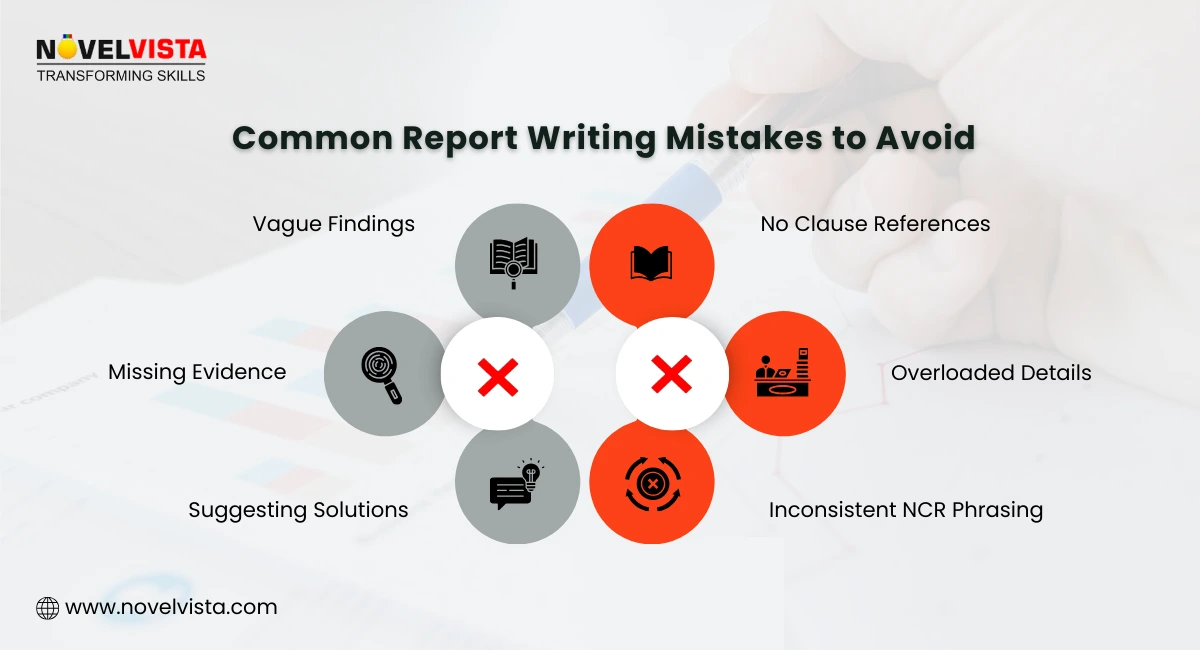
Common Report Writing Mistakes to Avoid

Even experienced auditors fall into simple mistakes that make reports confusing. Avoiding these helps your reports stay clean and useful.

 
  • Vague Findings Without Evidence: Statements like “procedure not followed” or “records missing” offer no clarity. Always describe the exact record or activity checked during ISO 9001 audit report writing so the organisation knows what to fix.
     
  • Writing Solutions Instead of Describing Issues: Telling teams how to fix the problem shifts the auditor into a consulting role. State the issue and impact, not the step-by-step solution.
     
  • Adding Too Many Unnecessary Details: Filling pages with extra text makes the report hard to read. Stick only to what supports the finding.
     
  • Missing Clause References: Without a clause reference, teams won’t know what requirement was not met, which slows down corrective action planning.
     
  • Inconsistent NCR Wording: Changing format, tone, or sequence across NCRs confuses readers. Follow a clean, repeatable structure based on the lead auditor reporting format.
     

These mistakes are based on real examples from audits we’ve supervised and corrected. Highlighting them helps auditors avoid errors that slow down NCR closure or create confusion for QMS teams.

Action Planning and Follow-Up After the Audit

A good audit report doesn’t end when the closing meeting finishes. Action planning ensures NCRs are handled in a way that strengthens the QMS.

 
  • Assign NCR Owners: Every NCR must have a clear owner who understands the issue and can coordinate the fix.
     
  • Set Realistic Deadlines: Deadlines must be practical, allowing enough time for analysis, correction, and verification.
     
  • Track Corrective Action Effectiveness: Organisations should check whether the fix truly prevents the issue from repeating, not just close the NCR.
     
  • Capture Management Responses: Approvals, comments, resources, or follow-up instructions should be documented for clarity and accountability.
     
  • Maintain Evidence of Closure: Records, logs, updated documents, or photos help the lead auditor verify closure during follow-up.
     

These steps make follow-up smoother and support long-term improvements.

Download: ISO 9001 Lead Auditor Report Structure Blueprint

Get a clean, desk-friendly map to structure every ISO 9001
audit report. Stay organized, confident, and professional while saving time on reporting.

Simple Example of ISO 9001 Audit Report Structure

Here’s a clear example that shows how simple and clean ISO 9001 findings can look when the right structure is used.

Sample NCR

 
  • Criteria: ISO 9001:2015 – Clause 7.2 (Competence)
     
  • Condition: Two training records for new operators did not include proof of skill assessment for machine setup.
     
  • Cause: Assessment step was missed due to a recent shift schedule change.
     
  • Consequence: Operators may perform tasks without confirmed competence, which may affect product consistency.
     
  • Corrective Action: Conduct missing assessments and update the training process to include verification after shift changes.

Sample OFI

 
  • Criteria: Internal Procedure – Document Control
     
  • Condition: Three documents were kept in older versions, while updated versions were available in the system.
     
  • Suggestion: Consider reminding teams to check the updated document list before printing copies to avoid confusion.
     

Examples like these make ISO 9001 audit report writing easier for both new and experienced auditors.

Conclusion: Building Better QMS Reports with Consistent Practices

Become A Certified ISO 9001 Lead Auditor And Elevate Your QMS Expertise

Clear ISO 9001 audit reports help organisations understand what’s working and what needs attention. When findings follow a simple structure, connect to clauses, and stay supported by evidence, the whole QMS becomes easier to improve. Using strong habits, templates, and the lead auditor reporting format helps every auditor keep reports clean, fair, and useful. With practice, these methods turn report writing from a stressful task into a smooth and repeatable process that supports better decisions and better outcomes.

Everything in this guide is built from real audit situations, trainee challenges, and QMS issues we see during workshops. These practices help auditors write reports that organisations trust and certification bodies appreciate.

Next Step

If you want to sharpen your audit skills and write reports that are clear, simple, and accurate, NovelVista’s ISO 9001 Lead Auditor Certification training course is the best place to start. The training helps you understand clause interpretation, audit planning, NCR writing, report formatting, and real-world audit scenarios. You also learn the skills needed to lead audits with confidence and accuracy. This certification gives you the edge to stand out as a strong lead auditor in any industry.

Frequently Asked Questions

The purpose of an ISO 9001 audit report is to document findings, evaluate conformity to the standard, highlight nonconformities, and provide evidence that supports continual improvement within the Quality Management System.
An ISO 9001 audit report should include audit objectives, scope, methodology, key observations, nonconformities, positive practices, and recommendations. It must be factual, objective, and aligned with ISO 19011 reporting requirements.
Nonconformity reports should be detailed enough to clearly describe the issue, the requirement that was not met, the evidence observed, and the impact on the QMS. The goal is clarity, so the organization can take accurate corrective actions.
Accuracy and objectivity come from using verifiable evidence, avoiding assumptions, following ISO 19011 guidelines, and ensuring that all findings are based solely on observed data rather than opinion or interpretation.
Auditors need strong analytical skills, clarity in communication, attention to detail, and the ability to connect evidence with specific ISO 9001 requirements. Familiarity with audit techniques and report structures is essential for producing a high-quality, credible report.

Author Details

Mr.Vikas Sharma

Mr.Vikas Sharma

Principal Consultant

I am an Accredited ITIL, ITIL 4, ITIL 4 DITS, ITIL® 4 Strategic Leader, Certified SAFe Practice Consultant , SIAM Professional, PRINCE2 AGILE, Six Sigma Black Belt Trainer with more than 20 years of Industry experience. Working as SIAM consultant managing end-to-end accountability for the performance and delivery of IT services to the users and coordinating delivery, integration, and interoperability across multiple services and suppliers. Trained more than 10000+ participants under various ITSM, Agile & Project Management frameworks like ITIL, SAFe, SIAM, VeriSM, and PRINCE2, Scrum, DevOps, Cloud, etc.

Enjoyed this blog? Share this with someone who'd find this useful

Confused About Certification?

Get Free Consultation Call

Sign Up To Get Latest Updates on Our Blogs

Stay ahead of the curve by tapping into the latest emerging trends and transforming your subscription into a powerful resource. Maximize every feature, unlock exclusive benefits, and ensure you're always one step ahead in your journey to success.

Topic Related Blogs