ISO 9001 Cross-Cultural Auditing – Key Tips for Lead Auditors

Category | Quality Management

Last Updated On

ISO 9001 Cross-Cultural Auditing – Key Tips for Lead Auditors | Novelvista

Some audits feel smooth… until the moment communication slips, tones clash, or the answers sound “off” even though the process seems fine. These moments often trace back to cross-cultural auditing, where culture silently shapes how people speak, react, and share information. If you’ve ever felt that small confusion during a global ISO 9001 audit, you’re definitely not alone.

This guide gives you simple, practical ways to handle cultural gaps, adjust your style, and build confidence during international audit practices. By the end, you’ll know how to read people better, ask questions that work across cultures, and keep your audit judgment clear and fair.

Understanding Cultural Differences in ISO 9001 Audits

Cultural differences play a bigger role in ISO 9001 audits than most people expect. They influence how people answer questions, raise issues, share evidence, and even react to nonconformities. When you walk into a global ISO 9001 audit, you’re not just dealing with processes; you’re dealing with mindsets shaped by years of cultural habits.

Key Cultural Dimensions That Affect Audits

Here are some cultural aspects that often shape audit interactions:

 
  1. Hierarchy and authority: In high-hierarchy cultures, employees may hesitate to speak freely, especially when leaders are present. This can lead to short answers or “safe” responses that hide the real situation.
 
  1. Communication style (direct vs. indirect): Some cultures prefer honest, straightforward answers. Others use softer, indirect ways of saying “no,” which can confuse auditors who expect clear responses.
 
  1. Decision-making behavior: In some regions, decisions come from the top. In others, teamwork drives decisions. This impacts how responsibilities are explained during an audit.
 
  1. Comfort level with reporting problems: Some employees may avoid mentioning issues because they fear blame. This makes detection of gaps harder unless the auditor reads the cues carefully.

Examples of Cultural Gaps in Real Audits

 
  • A team avoids admitting they skipped a step because they don’t want to “disrespect” their manager.
     
  • An operator keeps smiling and saying “yes” even though they don’t fully understand the question.
     
  • A department shares only surface-level information because deep details are considered “internal.”
     

These moments show how cultural differences can affect evidence, clarity, and findings during cross-cultural auditing.

How Cultural Bias Affects Audit Judgment

Even trained auditors sometimes fall into subconscious bias, such as:

 
  • Assuming a confident speaker is always correct,
     
  • Thinking silence means agreement,
     
  • Misreading politeness as dishonesty.
     

These cultural patterns reflect the behaviour trends we explain during our auditor readiness sessions. They come from observing how professionals across Asia, Europe, and the Middle East respond during audits. Using these real cases helps auditors understand why cultural awareness improves evidence collection and clarity. Building cultural awareness helps you avoid these traps and improves the fairness of your global ISO 9001 audit.
Communication in Quality Audits: Handling Cultural Barriers

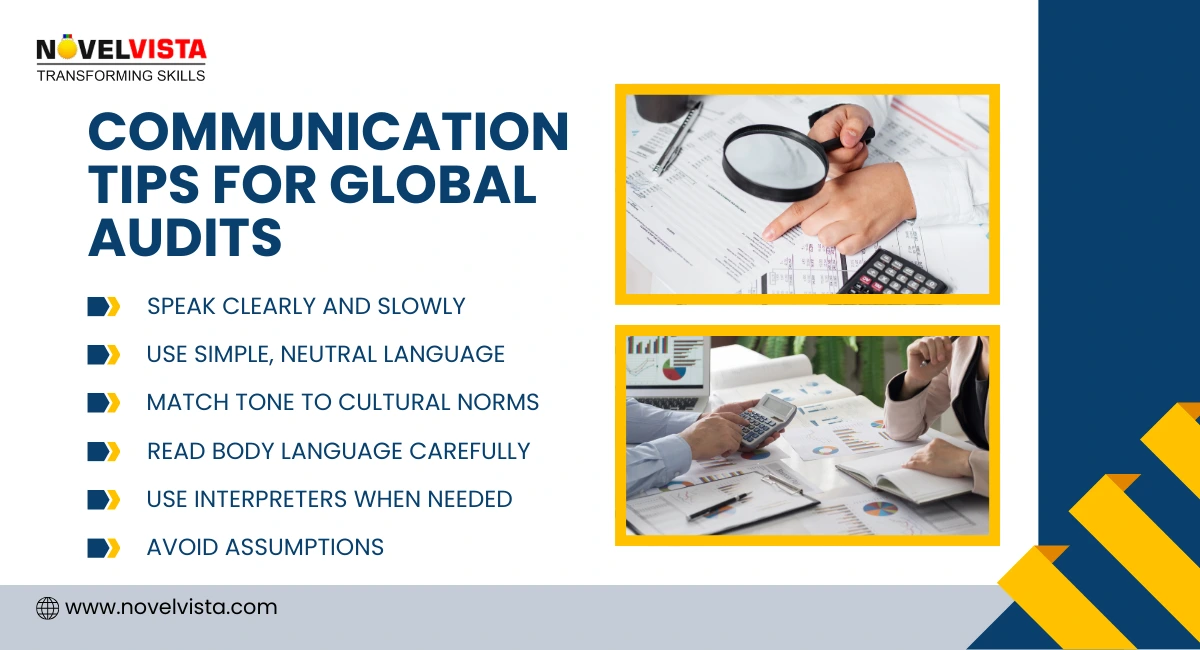
Communication Tips for Global Audits   Checklist:  Speak clearly and slowly Use simple, neutral language Match tone to cultural norms Read body language carefully Use interpreters when needed Avoid assumptions

Strong and adaptive communication is at the heart of communication in quality audits. When cultures differ, words alone are not enough; you must pay attention to tone, expressions, and comfort levels.

Why Communication Style Matters

Some cultures speak openly. Others prefer subtle hints. Some value facts. Others value relationships. Once you understand these styles, the audit becomes easier and smoother.

Adjusting Verbal and Non-Verbal Communication

Here are ways to align your style with the local culture:

 
  1. Slow down and keep questions simple: Long or complicated questions may confuse people who speak English as a second language. Simple questions open the door for better answers.
 
  1. Pay attention to body language: A nod does not always mean agreement. A smile can sometimes hide discomfort. Observing these cues helps you understand what is really going on.
 
  1. Use a neutral and non-threatening tone: Direct questions may sound rude in some cultures. Softening the tone keeps the conversation open without losing clarity.

When to Use Interpreters

Interpreters are helpful, especially when you want accuracy in technical areas. But the audit flow should stay natural. To do this:

 
  • Brief the interpreter before the meeting,
     
  • Explain the type of responses you need,
     
  • Speak in short sentences,
     
  • Avoid jargon.
     

This prevents messages from getting distorted.

Handling Interviews in Hierarchy-Sensitive Cultures


In some cultures:

 
  • Employees won’t speak openly in front of bosses,
     
  • Disagreements are avoided,
     
  • Mistakes are hidden to protect the team.
     

In such cases:

 
  • Interview staff in smaller groups,
     
  • Ask scenario-based questions,
     
  • Use a friendly tone so they feel safe to answer honestly.
     

These approaches make communication in quality audits far more effective during cross-cultural auditing.

Adapting ISO 9001 Audit Techniques Across Countries

ISO 9001 stays the same everywhere, but how you apply audit techniques should match the local work culture. A rigid approach may work in one country but fail in another.

Tailoring the Audit Approach

Here are practical adjustments without losing ISO 9001 integrity:

 
  1. Change your interview style: In some regions, people speak better when questions feel like a conversation, not an interrogation. This builds trust and encourages real answers.
 
  1. Modify evidence-gathering methods: Some cultures rely heavily on verbal sharing; others document everything. Knowing this helps you choose the right way to collect reliable evidence.
 
  1. Strengthen observation techniques: If employees avoid speaking directly, watching their workflow closely gives you accurate insights.

Common Work Habits That Influence Audits

 
  • Indirect disclosure — People slowly reveal information, expecting you to “read between the lines.”
     
  • Formal communication — Teams may rely on strict communication channels, so you must follow their structure.
     
  • Relationship-oriented approach — Building rapport matters, and trust can lead to more honest discussions.
     

These adaptations make a global ISO 9001 audit smoother and more transparent.


Also Read: Challenges during remote audits and how to overcome them

Ethical and Regulatory Awareness for Global Audits

When you’re working across different countries, the ethical landscape shifts. What feels normal in one place may seem unusual in another. This is where the real skill of cross-cultural auditing comes in, understanding the local environment while staying fully aligned with ISO 9001 requirements.

Balancing ISO 9001 With Local Norms

Every region has its own business customs:

 
  • Some cultures offer small gifts as a gesture of respect.
     
  • Some teams stay silent as a sign of agreement.
     
  • Some employees avoid sharing problems because it reflects poorly on the department.
     

Your role as an auditor is to stay polite, stay neutral, and still stay firm. This helps you protect your independence, avoid influence, and maintain trust.

Handling Sensitive Situations

Here are some common scenarios in a global ISO 9001 audit:

 
  • A manager joins every interview and answers for the team.
     
  • A team tries to impress the auditor with hospitality.
     
  • A site hides certain documents, thinking they’re protecting their reputation.
     

A culturally aware auditor doesn’t overreact. Instead, they gently guide the audit back on track and maintain objectivity.


Ethical awareness keeps your international audit practices strong and your findings trustworthy.

Planning and Risk Assessment for Cross-Cultural Audits

Before stepping into a new country, good planning reduces surprises. Culture influences how people report issues, follow procedures, and react during audits. That’s why cultural risk assessment is just as important as operational risk assessment.

Spotting Cultural Risks Early

Some cultural factors can hide real gaps:

 
  • Reluctance to challenge authority
     
  • Avoidance of direct answers
     
  • Limited documentation due to informal habits
     
  • Over-dependence on managers to speak for everyone
     

Mapping these risks helps you prepare an audit approach that brings out genuine insights.


If you want a clear way to structure your assessments, explore our breakdown of a practical risk management methodology that makes planning, analyzing, and treating risks much easier.

Preparing With Cultural Profiles and Research

A little homework goes a long way:

 
  • Understand basic cultural behavior patterns
     
  • Learn how people prefer to communicate
     
  • Check the country’s work norms
     
  • Review common professional etiquette
     

This preparation helps you design a comfortable audit environment where teams feel safe sharing real operational conditions.

Planning the Audit With Culture in Mind

Your plan should consider:

 
  • How long do interviews take in cultures where people speak slowly or indirectly?
     
  • How to structure meetings in hierarchy-heavy workplaces?
     
  • How to manage translations or language gaps?
     
  • How to encourage team members to express concerns?
     

The planning advice here comes from our global audit preparation modules, where auditors learn how cultural behaviour influences risk visibility. These methods help teams design stronger audit plans and avoid misinterpretations during multinational audits. A thoughtful plan improves transparency and strengthens communication in quality audits, especially during cross-cultural auditing.


Get a complete guide on how to create an effective audit plan in our comprehensive guide

Tools and Techniques for Effective International Audit Practices

Modern audits are easier with the right tools, especially when culture adds an extra layer of complexity.

Helpful Digital Tools

Lead auditors often use:

 
  • Translation apps for quick clarifications,
     
  • Speech-to-text tools for meeting notes,
     
  • Audit management platforms for evidence tracking,
     
  • Dashboards that show performance trends without language barriers.
     

These tools support smooth international audit practices during a global ISO 9001 audit.

Practical Techniques for Better Cross-Cultural Interviews

 
  • Start with simple rapport-building questions
     
  • Observe tone, pace, and comfort level
     
  • Ask scenario-based questions to get natural responses
     
  • Allow pauses. Silence is normal in many cultures
     
  • Confirm your understanding by repeating key points slowly
     

These small techniques reduce confusion and help you interpret answers more accurately during cross-cultural auditing.

Learning and Upskilling

Culture evolves. Global business evolves. Your audit style must evolve, too. Continuous learning keeps you relevant as more organizations expand globally and expect cultural fluency from their audit teams.

Lead Auditor Skills for Cross-Cultural Excellence

A strong lead auditor does more than check records. They guide people, connect with teams, and interpret behavior with sensitivity and clarity.

Essential Competencies

Here are the skills that make you effective in culturally diverse audits:

 
  • Cultural intelligence (CQ) to understand how attitudes vary
     
  • Empathy to create a comfortable audit environment
     
  • Clear observation to catch small but meaningful cues
     
  • Calm communication to handle tense or indirect conversations
     

These build trust and make your global ISO 9001 audit more accurate.

Leading Cross-Cultural Audit Teams

A lead auditor must also support the team:

 
  • Teach new auditors how to adapt questions,
     
  • Explain cultural expectations before meetings,
     
  • Review findings carefully to avoid bias,
     
  • Ensure documentation remains objective.
     

Strong leadership ensures consistency during international audit practices even when cultures differ widely.

Unlock the True Business Value of ISO 9001 Lead Auditor Certification

See how auditing boosts efficiency and measurable ROI
Learn simple strategies to cut waste and improve processes
Gain insights to move from compliance to competitive advantage

Real-World Examples: Successes and Challenges

Over the years, many professionals trained by NovelVista have shared how cultural awareness completely changed the outcome of their ISO 9001 audits. Here are a few quick examples that highlight what they experienced in the field:

Example 1: The Quiet Team

One of our trained auditors was assigned to an Asian manufacturing unit where the team kept their responses extremely short. At first, it felt like they were withholding information. Later, the auditor realized the team was showing respect through brief answers. After adjusting the pace and using a softer questioning style, the conversation opened up, and the audit went smoothly.

Example 2: The Manager Who Spoke for Everyone

During an audit in Europe, another professional noticed the manager would jump in before employees could respond. Using interview techniques learned during training, the auditor requested individual sessions. This helped uncover a process issue the manager wasn’t aware of.

Example 3: Verbal Processes Over Written Notes

A trained auditor working in the Middle East discovered that many strong practices existed informally through trust and verbal agreements. By shifting to scenario-based questioning and observation methods, they were able to validate practices that weren’t documented but still aligned with ISO principles.

Example 4: Building Rapport First

One of our lead auditors in South America shared how spending a few minutes building rapport before diving into questions created instant trust. This simple cultural adjustment led to more open discussions and clearer findings.


Each story continues to remind our learners that when auditors adapt to culture, the quality of evidence improves and global audits become far more accurate.

Conclusion: Becoming a Culturally-Aware ISO 9001 Lead Auditor

Become A Certified ISO 9001 Lead Auditor And Elevate Your Quality Management Career   Master essential QMS auditing practices Build strong global recognition and opportunities Train with NovelVista & GSDC’s expert-led programs

Cross-cultural auditing isn’t about changing your audit style—it’s about understanding people. When you recognize how culture shapes communication, decision-making, and comfort levels, your ISO 9001 audits become clearer, smoother, and far more accurate. These skills help you read situations better, avoid misunderstandings, and build trust with teams across different regions. 

With a bit of preparation and the right mindset, cultural differences stop feeling like obstacles and start becoming valuable insights that strengthen your audit findings. Mastering this approach not only improves your effectiveness as a lead auditor but also prepares you for global audit environments where awareness, empathy, and adaptability truly set you apart.

Everything shared in this guide is shaped by what we teach in our ISO 9001 auditor programs and the real challenges practitioners face in international audits. These practical techniques help future auditors handle cultural variety with confidence while keeping their audit conclusions consistent and fair.

Frequently Asked Questions

A cross-cultural ISO 9001 audit is an audit conducted in a country, region, or organization whose cultural norms, communication styles, and work practices differ from the auditor’s own. It requires cultural awareness to ensure accurate, fair, and unbiased assessment.
Cultural awareness helps auditors interpret evidence correctly, avoid miscommunication, and maintain objectivity. Different cultures may have different ways of documenting, communicating, or escalating issues; understanding this ensures a more effective audit.
Common challenges include language barriers, indirect communication styles, hierarchical decision-making, reluctance to report issues, and differing attitudes toward nonconformities. Lead auditors must adapt their approach to gather accurate information.
Preparation includes researching the host country’s cultural norms, understanding common communication practices, learning key industry terms in the local language, and adjusting audit techniques to encourage open dialogue with auditees.
Lead auditors should use clear and simple language, validate understanding frequently, avoid idioms or culturally specific references, and leverage interpreters when needed. Maintaining patience and active listening helps bridge gaps effectively.

Author Details

Mr.Vikas Sharma

Mr.Vikas Sharma

Principal Consultant

I am an Accredited ITIL, ITIL 4, ITIL 4 DITS, ITIL® 4 Strategic Leader, Certified SAFe Practice Consultant , SIAM Professional, PRINCE2 AGILE, Six Sigma Black Belt Trainer with more than 20 years of Industry experience. Working as SIAM consultant managing end-to-end accountability for the performance and delivery of IT services to the users and coordinating delivery, integration, and interoperability across multiple services and suppliers. Trained more than 10000+ participants under various ITSM, Agile & Project Management frameworks like ITIL, SAFe, SIAM, VeriSM, and PRINCE2, Scrum, DevOps, Cloud, etc.

Enjoyed this blog? Share this with someone who'd find this useful

Confused About Certification?

Get Free Consultation Call

Sign Up To Get Latest Updates on Our Blogs

Stay ahead of the curve by tapping into the latest emerging trends and transforming your subscription into a powerful resource. Maximize every feature, unlock exclusive benefits, and ensure you're always one step ahead in your journey to success.

Topic Related Blogs