Category | Quality Management
Last Updated On 07/09/2026
Artificial Intelligence (AI) is no longer a futuristic concept—it’s embedded in business operations worldwide. From predictive analytics in banking to recommendation engines in e-commerce, AI drives efficiency, innovation, and competitive advantage. However, with great power comes great responsibility. A 2025 report revealed that over 60% of organizations using AI face challenges with governance, risk, or compliance, leading to costly errors, reputational damage, and regulatory scrutiny.
So, how can organizations ensure their AI systems are safe, ethical, and compliant? The answer lies in a structured ISO 42001 Gap Assessment. But what exactly does this involve, and why is it critical for your organization? This guide breaks it down step by step.
Implementing AI in an organization is more than deploying algorithms—it’s about managing risks, ensuring compliance, and establishing responsible governance. Organizations often face three common challenges:
AI Governance Gaps – Unclear roles, responsibilities, or policies for AI decision-making.
AI Risk Gaps – Missing risk assessments, bias evaluations, or mitigation strategies.
AI Compliance Gaps – Lack of alignment with ethical standards, legal requirements, or regulatory frameworks.
A Gap Assessment helps detect these gaps before they escalate. It provides a structured approach to analyze your AI management system, benchmark it against ISO 42001 requirements, and plan improvements. Essentially, it acts as a roadmap to enhance AI maturity, reduce operational risks, and ensure regulatory compliance.
This assessment is particularly valuable for:
AI teams wanting to strengthen internal controls.
Compliance officers aiming to align AI with legal and ethical standards.
Risk managers looking to minimize AI-related operational or reputational risks.
Executives and decision-makers striving for trustworthy AI adoption.
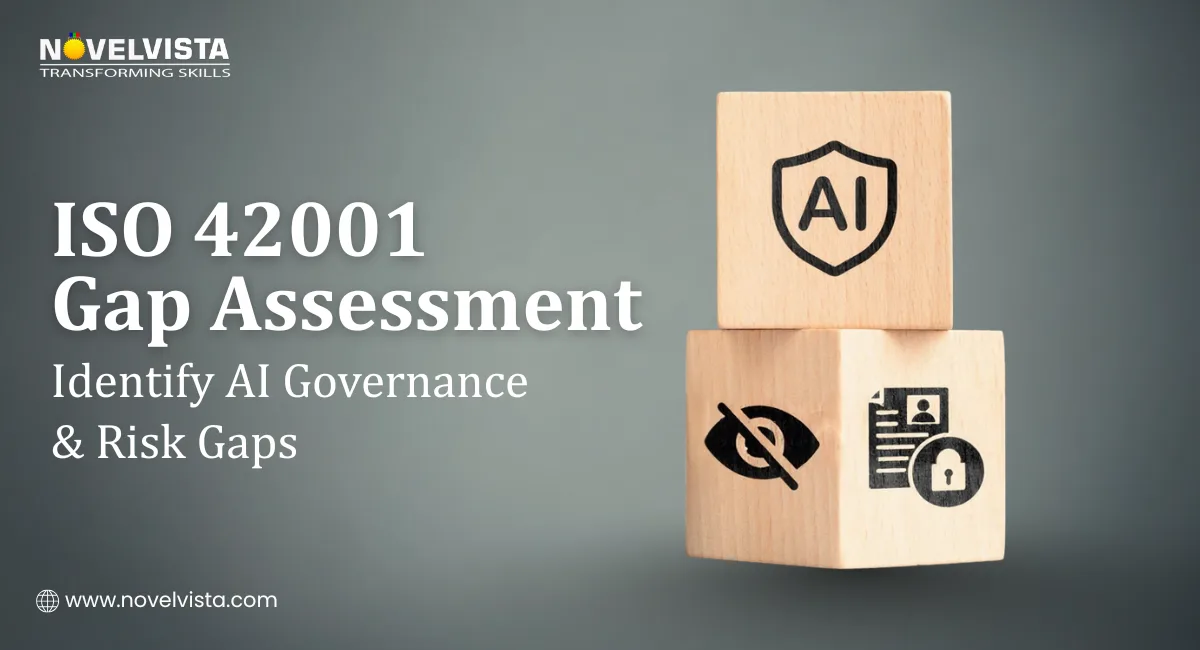
At its core, an ISO 42001 Gap Assessment is a systematic evaluation of an organization’s AI management practices against the ISO 42001 standard. Unlike a formal audit, it is diagnostic rather than judgmental. The goal is to uncover where your organization falls short in three key areas:
AI Governance Gaps – Are policies, accountability structures, and oversight mechanisms robust enough?
AI Risk Gaps – Are risks identified, assessed, and mitigated effectively?
AI Compliance Gaps – Is your AI aligned with ethical principles, regulations, and organizational standards?
This process is often referred to as an ISO 42001 gap analysis, highlighting the difference between current practices and the ISO standard. Conducting this assessment allows organizations to prioritize corrective actions and prepare for successful certification if desired.
Understand where your AI governance, risk, and compliance stand today Learn how to spot critical AI gaps before they turn into business risks Get a clear, practical roadmap to strengthen your AI management system
A gap assessment happens before certification and is diagnostic, showing where your AI management system currently stands against ISO 42001. An internal audit happens after implementation and checks whether controls that are already in place are working effectively. Readers often confuse the two, so clarifying this early builds trust and answers a real search query.
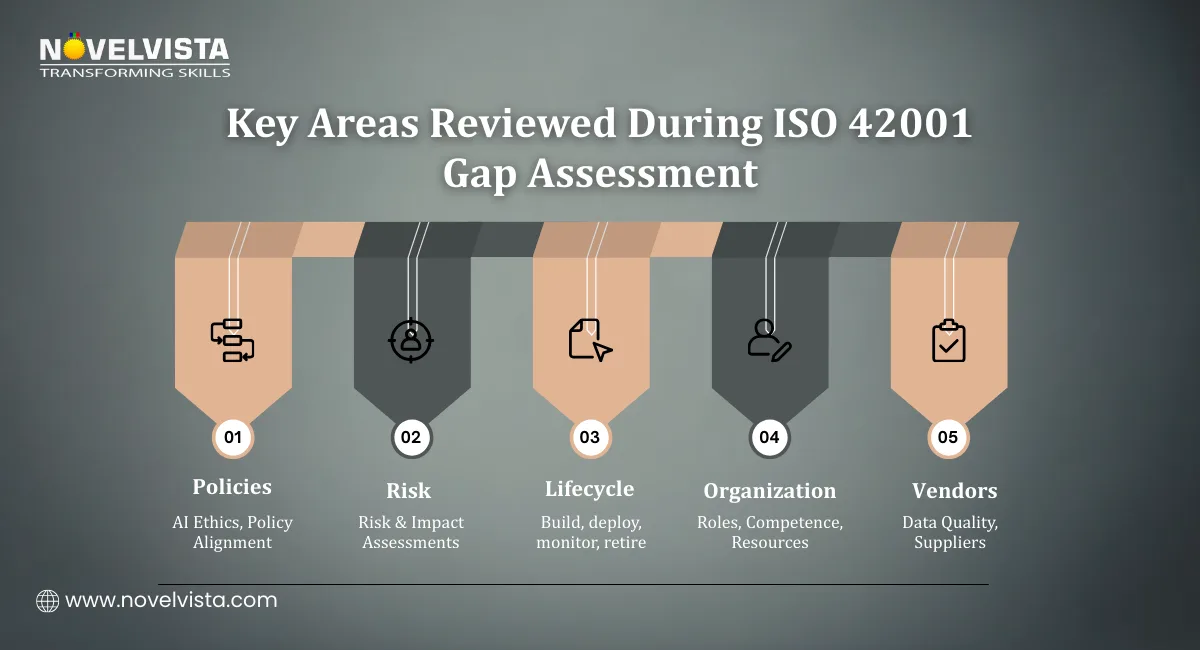
A thorough assessment does not stop at governance, risk, and compliance in general terms. It walks through Clauses 4 to 10 (context of the organization, leadership, planning, support, operation, performance evaluation, and improvement) and checks Annex A controls covering areas like AI system impact assessments, data governance, third-party and supplier AI risks, transparency to users, and human oversight. Mapping gaps to specific clause numbers makes findings actionable and auditable, and gives your content the technical depth ISO auditors expect.
Internal teams know the business context but may miss blind spots or lack ISO 42001 expertise. Independent assessors bring objectivity and experience benchmarking against the standard, but cost more and need onboarding time. Many organizations use a hybrid approach: internal teams gather documentation and evidence, while an external ISO 42001 lead auditor validates findings and prioritizes remediation.
A structured approach ensures that your gap assessment is effective and actionable. Here’s a step-by-step guide:
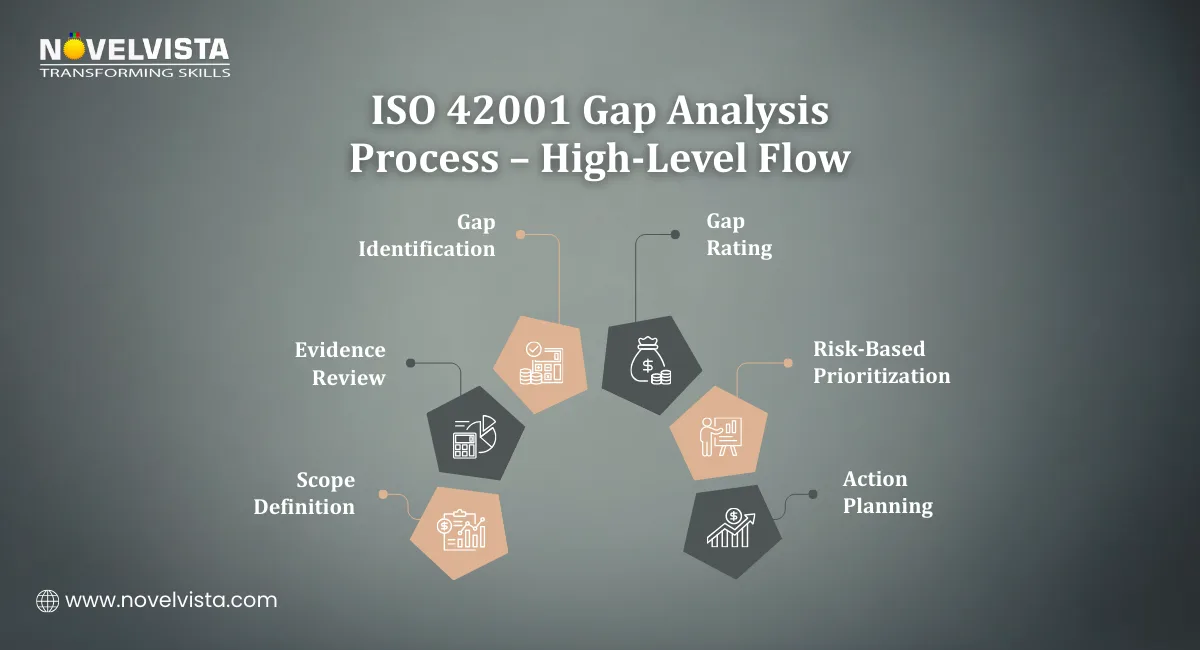
Define the scope and objectives of the assessment. Decide which AI systems, teams, or processes will be included. Identify stakeholders such as AI developers, compliance officers, risk managers, and executive sponsors. Clear preparation sets the foundation for a smooth assessment.
Document and evaluate existing AI processes, governance structures, and risk management strategies. Use internal documentation, policies, and past audits as reference points. The objective is to create a baseline for comparison against ISO 42001 requirements.
Identify Gaps is the core of an ISO 42001 Gap Assessment, where current AI practices are compared with ISO 42001 requirements. This step highlights AI governance gaps such as missing policies, unclear accountability, or weak oversight. It also uncovers AI risk gaps, including incomplete risk assessments, unmanaged biases, or lack of mitigation plans. Finally, AI compliance gaps emerge when regulatory alignment is weak, ethical principles are inconsistently applied, or documentation is insufficient. Identifying these gaps helps organizations focus on the most critical improvements needed for ISO 42001 alignment.
Maintain a clear record of all identified gaps, including risk severity, impacted processes, and potential consequences. This documentation becomes a roadmap for corrective actions and helps prioritize remediation.
Develop an action plan to close gaps, allocate responsibilities, and set timelines. Consider quick wins for critical gaps and longer-term strategies for systemic improvements. Successful remediation strengthens AI governance, mitigates risk, and enhances compliance.
Cost and timeline depend on organization size, number of AI systems in scope, and assessment depth. A small organization with one or two AI systems might complete a gap assessment in one to two weeks, while a large enterprise with multiple AI models across departments could take four to eight weeks. Costs vary from a few thousand dollars for a focused internal review to significantly more for a full third-party assessment covering multiple business units. Giving readers a realistic range, even approximate, answers a query your competitors leave unaddressed.
Rather than listing gaps as simply present or absent, mature assessments score each finding on a scale, for example 0 (not addressed) to 4 (fully embedded and continuously improved). This lets organizations prioritize remediation by both risk impact and current maturity level, instead of treating every gap as equally urgent.
A well-structured gap assessment report typically includes an executive summary, a clause-by-clause and control-by-control breakdown, risk ratings for each gap, a maturity score, recommended corrective actions, and a suggested timeline for remediation. Showing readers what the deliverable looks like builds confidence and answers a practical, bottom-of-funnel question.
Many organizations pursuing ISO 42001 already hold ISO 27001 certification. The two standards share structural elements (both follow Annex SL, the common high-level structure), so existing information security controls, risk management processes, and documentation practices can often be extended rather than rebuilt. However, ISO 42001 adds AI-specific requirements around bias, fairness, transparency, and AI system lifecycle management that ISO 27001 does not cover. If you're evaluating how these two standards differ and complement each other, our detailed guide on ISO 42001 vs ISO 27001 provides a helpful side-by-side comparison. Readers researching both standards will find this comparison genuinely useful.
Organizations frequently encounter certain recurring gaps during assessments. Understanding these can help prepare in advance:
Organizations operating in or selling into the EU are increasingly asked how ISO 42001 aligns with EU AI Act obligations. While ISO 42001 is a voluntary management system standard and the EU AI Act is binding law, conformity with ISO 42001 can support (though not guarantee) demonstrating the kind of risk management, documentation, and governance practices regulators expect under the Act. This is a fast-growing search topic worth capturing early.
Performing a structured ISO 42001 gap analysis offers multiple advantages:
Strengthens AI Governance – Establishes clear policies, accountability, and oversight mechanisms.
Reduces AI Risks – Identifies operational, ethical, and reputational risks before they escalate.
Ensures Compliance – Aligns AI practices with ISO 42001, regulations, and ethical standards.
Builds Stakeholder Confidence – Demonstrates commitment to responsible AI, boosting trust with customers, regulators, and investors.
Prepares for ISO 42001 Certification – Creates a roadmap for formal certification and continuous improvement.
In short, a gap assessment is both preventive and strategic, transforming AI governance from reactive to proactive.
To get the most out of your assessment, follow these best practices:
Frequent missteps include scoping the assessment too narrowly (missing shadow AI tools used by individual teams), treating it as a one-time exercise instead of a recurring practice, failing to involve technical AI teams alongside compliance staff, and stopping at documentation review without validating that controls actually operate as described. Naming these mistakes helps readers avoid them and adds practical, experience-based value.
In an era where AI decisions increasingly shape business outcomes and public trust, overlooking governance, risk, or compliance is no longer an option. A well-structured ISO 42001 Gap Assessment helps organizations clearly identify AI governance gaps, AI risk gaps, and AI compliance gaps, turning uncertainty into a practical improvement roadmap. By proactively addressing these gaps, organizations can strengthen accountability, minimize AI-related risks, and stay aligned with ethical and regulatory expectations. For AI teams, risk managers, and compliance professionals alike, beginning an ISO 42001 gap analysis is not just about meeting a standard, it’s a strategic move toward building responsible, resilient, and truly trustworthy AI systems.

Ready to take your AI governance expertise to the next level?
Join NovelVista’s ISO/IEC 42001 Lead Auditor Certification Training and gain hands-on skills to assess, audit, and improve AI management systems with confidence. This course equips you with practical auditing techniques, real-world insights into AI governance, risk, and compliance, and a globally recognized credential aligned with ISO 42001 requirements. Designed for AI professionals, risk managers, and compliance leaders, it empowers you to lead responsible AI audits and drive trustworthy AI adoption across your organization.
Start your ISO 42001 Lead Auditor journey today!
Author Details

Confused About Certification?
Get Free Consultation Call
Stay ahead of the curve by tapping into the latest emerging trends and transforming your subscription into a powerful resource. Maximize every feature, unlock exclusive benefits, and ensure you're always one step ahead in your journey to success.