Category | Quality Management
Last Updated On 06/01/2026
Artificial Intelligence is no longer experimental. It is embedded in hiring systems, healthcare diagnostics, financial decisions, customer profiling, and national infrastructure. According to recent industry reports, over 75% of enterprises now use AI-driven decision-making, yet fewer than 30% have formal AI governance frameworks in place. This gap has made AI risk, accountability, and compliance a global priority.
As regulators introduce stricter AI laws and organizations race to adopt ethical and trustworthy AI, ISO 42001 has emerged as the first international standard dedicated to AI Management Systems (AIMS). Naturally, professionals who can implement, audit, and govern AI responsibly are in high demand.
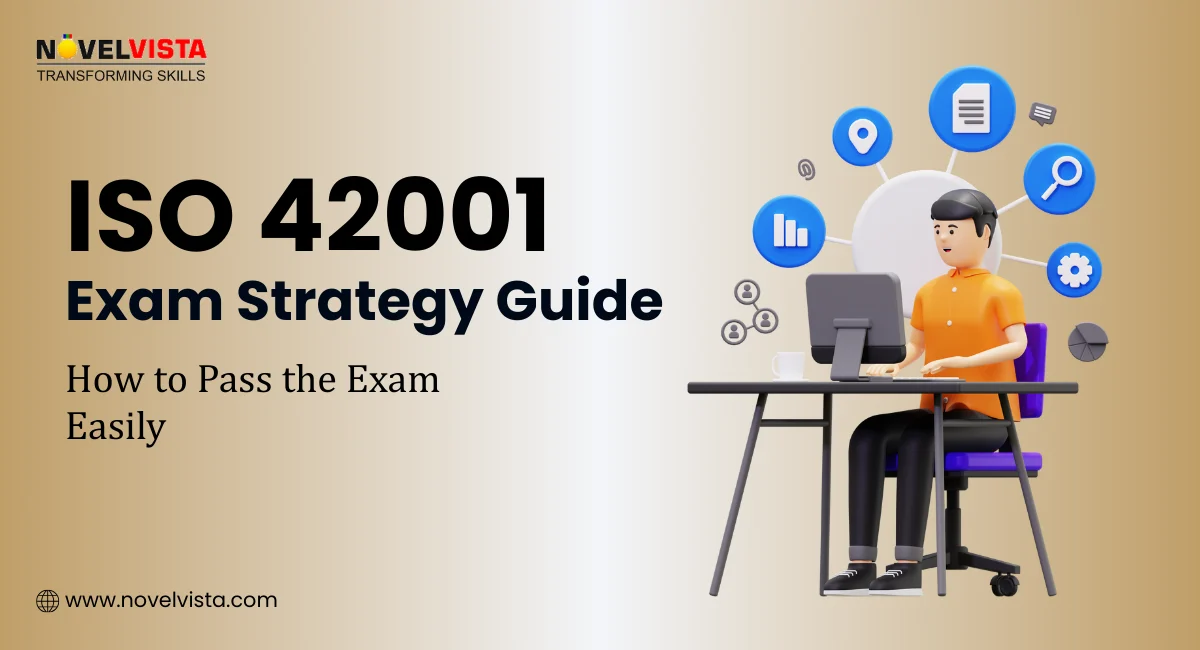
However, many candidates struggle with the exam, not because the content is impossible, but because they lack a clear strategy. That’s where this ISO 42001 Exam Strategy Guide becomes essential. Whether you are preparing for Foundation, Implementer, or Lead Auditor certification, a structured approach can turn confusion into confidence and preparation into success.
This guide will walk you through what the exam really tests, how to study smartly, and how to apply AI governance concepts practically, without overwhelm.
Before jumping into preparation, it’s critical to understand what the ISO 42001 exam actually evaluates. The exam is not designed to test memorization. Instead, it assesses your ability to apply AI governance principles in real-world scenarios.
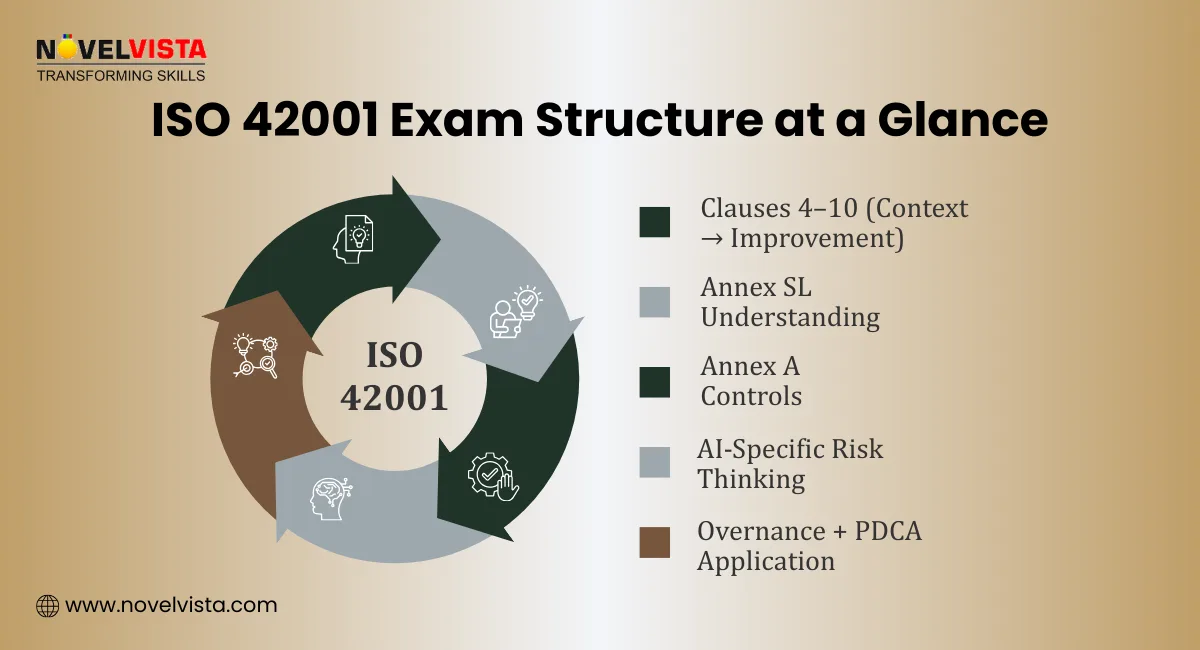
At its core, the exam focuses on three areas:
ISO 42001 follows the Annex SL framework, which aligns it with other ISO management system standards. This ensures consistency across governance, leadership, risk planning, operations, and improvement.
You are expected to understand and interpret:
Annex A is where ISO 42001 becomes truly practical, covering controls related to bias, transparency, data governance, human oversight, and AI lifecycle risks.Strong ISO 42001 exam preparation begins with understanding how these elements connect, not studying them in isolation.
Example Scenario:
An organization identifies bias in its AI hiring tool.
A high-scoring answer would:
Structured, clause-linked answers consistently score higher.
To boost exam readiness:
Understand what the exam really tests
Learn how to structure high-scoring answers
Build confidence for Foundation to Lead Auditor levels
Beyond the exam, ISO 42001 Lead Auditors play a critical role in organizations by:
Understanding this real-world impact helps candidates answer scenario questions with confidence and maturity.
Lead Auditor candidates are evaluated at a much deeper level and are expected to demonstrate a strong understanding of ISO 19011 auditing principles, including audit planning, evidence collection, interview techniques, audit sampling, documentation discipline, and correct non-conformity grading and reporting. The ISO 42001 Exam Strategy Guide for Lead Auditors emphasizes thinking like an auditor, evaluating evidence, risk, and compliance, rather than approaching the standard as a passive reader. Use an ISO 42001 Checklist alongside this guide to track your readiness, verify clause coverage, and ensure no critical exam requirement is missed.
Effective ISO 42001 preparation goes beyond reading the standard.
Focus on high-risk AI areas during your preparation by paying extra attention to algorithmic bias, model drift, training data integrity, and security of AI systems. These risk areas frequently appear in scenario-based questions, as they directly impact AI reliability, compliance, and trust, making them a critical part.
ISO 42001 aligns closely with international AI frameworks and regulations. Understanding this alignment strengthens your answers.
Apply PDCA thinking when answering exam questions, as most scenarios expect you to use PDCA logic to address AI governance challenges. Demonstrating how organizations plan controls, implement them, monitor performance, and drive continual improvement strengthens answers and reflects a mature ISO 42001 exam preparation approach.
Aim for:
This balance ensures consistent scoring across question types.
A short but focused ISO 42001 study plan can be highly effective if structured properly.
The goal of Week 1 is conceptual clarity, not speed.
This approach reinforces your ISO 42001 study plan while preventing last-minute overload.
Annex A includes 38 AI-specific controls, and this is where many candidates lose marks. These controls are grouped across key AI governance objectives, such as:
Controls related to training data integrity, bias reduction, data lineage, and data security are heavily tested. Exam questions often assess how organizations validate data sources, prevent discriminatory outcomes, maintain traceability across the AI lifecycle, and protect sensitive data, making these controls a critical focus area in any effective ISO 42001 exam preparation strategy.
Candidates must understand how organizations ensure AI decisions are explainable, traceable, and documented. Exam scenarios frequently test how transparency measures are implemented in practice, how decision logic is recorded for audits, and how these controls support accountability and trust within an effective ISO 42001 exam preparation framework.
Annex A emphasizes human-in-the-loop controls, override mechanisms, and accountability structures. Annex A is critical because most scenario-based exam questions are rooted here. A strong ISO 42001 Exam Strategy Guide always prioritizes Annex A confidence over rote learning.
The exam repeatedly tests how well candidates understand governance flow, not just individual clauses.
You must understand how organizations identify internal and external AI risks, stakeholder expectations, regulatory obligations, and leadership responsibilities. Leadership accountability is a recurring exam theme.
Clause 6 introduces AI Impact Assessments (AIIA), a core ISO 42001 concept that ensures AI risks are identified early and addressed proactively. Exams often test how organizations identify, analyze, evaluate, and mitigate AI risks before deployment, including ethical, legal, and operational impacts, and how these controls are integrated into the overall ISO 42001 exam preparation approach for responsible AI governance.
Before exam day, ensure:

Passing ISO 42001 is not about studying more; it’s about studying with purpose and structure. When your preparation is guided by clear objectives, practical understanding, and consistent revision, exam success becomes a natural outcome rather than a challenge.
This ISO 42001 Exam Strategy Guide is built to give you that direction, helping you focus on what truly matters, avoid common pitfalls, and approach the exam with confidence and clarity. By following a disciplined ISO 42001 study plan and strengthening your ISO 42001 exam preparation through real-world application, you position yourself for first-attempt success.
AI governance is no longer optional; it is essential. Start your preparation today, stay focused, and take the next step toward becoming a trusted professional in responsible AI management.
Ready to take the next step?
To translate your preparation into exam success, the right training support matters. NovelVista’s ISO/IEC 42001 Lead Auditor Certification Course complements this ISO 42001 Exam Strategy Guide with expert-led sessions, practical audit scenarios, and strong coverage of clauses, Annex A controls, and ISO 19011 principles. Designed for professionals aiming to pass confidently and lead AI governance audits, this globally recognized course helps you build real-world competence.
Start your ISO 42001 Lead Auditor journey with NovelVista and move forward with confidence.
Author Details

Course Related To This blog
ISO 42001 Lead Auditor
Confused About Certification?
Get Free Consultation Call
Stay ahead of the curve by tapping into the latest emerging trends and transforming your subscription into a powerful resource. Maximize every feature, unlock exclusive benefits, and ensure you're always one step ahead in your journey to success.