Category | Quality Management
Last Updated On 11/03/2026
Many IT professionals work hard in service management roles but still struggle to explain their value during audits, interviews, or career moves. That gap is exactly where an ISO 20000 Qualification for professional growth makes a real difference. It gives structure to your ITSM knowledge and proves that you understand service management beyond tools and tickets.
Across professional ITSM training programs, many participants report that ISO 20000 qualifications help them articulate service value more clearly during audits, interviews, and management reviews.
This article explains what ISO 20000 qualifications mean for individuals, how credentials are structured, and how professionals can choose the right certificate based on their role and career direction.
| Topic | What You’ll Learn |
| Purpose | Why ISO 20000 qualifications matter for individual careers |
| Credentials | Difference between Foundation, Lead Implementer, and Lead Auditor |
| Focus | Implementation vs auditing vs ITSM fundamentals |
| Who It’s For | IT managers, consultants, auditors, service professionals |
| Outcome | Clear certification path and career alignment |
An ISO 20000 credential for Individuals is not about certifying an organization. It certifies you. It proves your personal competence in understanding, applying, or assessing ISO/IEC 20000-1 requirements.
Holding this credential shows that you understand:
An ISO 20000 credential for Individuals focuses on knowledge, judgment, and professional capability, not company maturity. This makes it portable, role-based, and globally useful.
These certificate are offered through accredited examination bodies such as GSDC and similar institutes, ensuring consistency and international recognition.
ISO 20000 credentials follow a role-based progression model. This means you don’t “collect certificates.” You choose credentials that match what you actually do at work.
The core certificate include:
Each certificate focuses on different responsibilities. This is why an ISO 20000 credential for professional growth feels practical instead of theoretical. You can move forward step by step, based on experience and job role.
Professionals who follow this role-based certificate structure tend to progress more smoothly into senior ITSM, consulting, or audit roles compared to unstructured learning paths.
The Foundation level is where most professionals begin. It introduces ISO/IEC 20000-1 concepts without overwhelming technical depth.
This certificate focuses on:
The Foundation certificate is ideal if you:
An ISO 20000 Qualification for professional beginners helps build confidence. You start understanding why processes exist, not just how they are followed.
Once professionals move beyond the basics, the next step is implementation. The Lead Implementer is designed for people who actually design, deploy, and improve a Service Management System.
This level covers:
An ISO 20000 credential for professional implementation roles fits:
Implementation-focused professionals often find this credential valuable because it strengthens decision-making around scope, risk prioritization, and performance measurement.
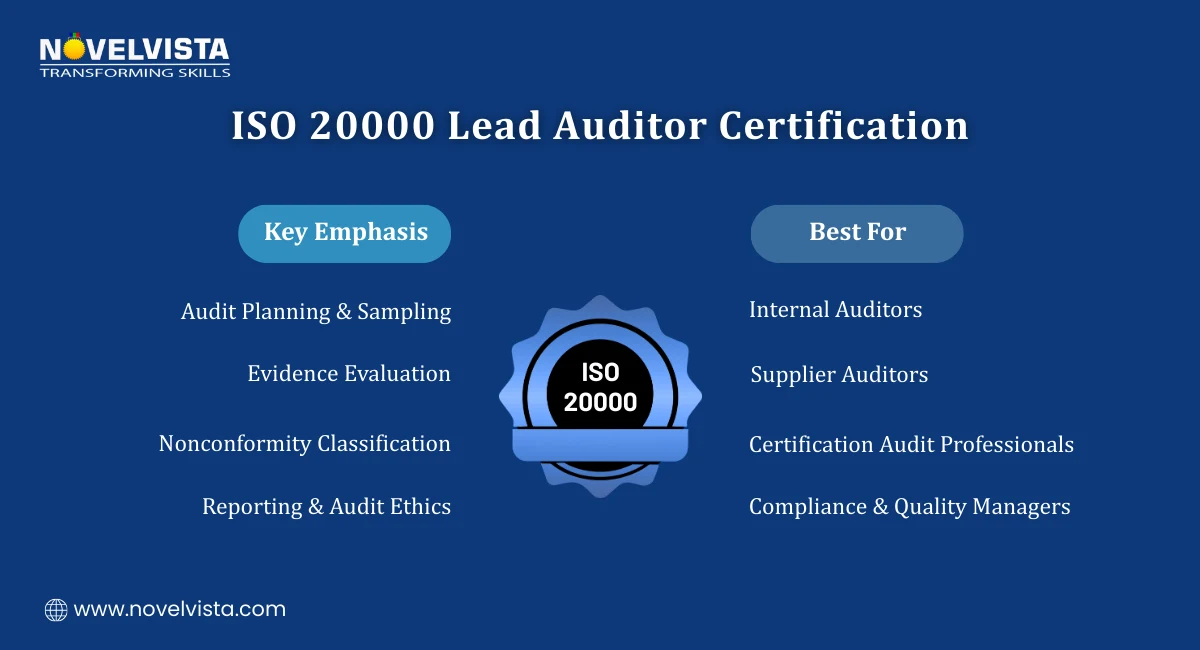
The ISO 20000 Lead Auditor is designed for professionals who want to assess, not build, a Service Management System. This ISO 20000 credential for professional auditors focuses on conformity, effectiveness, and evidence rather than implementation tasks.
At this level, the emphasis shifts to:
The certificate also introduces ethical auditing practices and follow-up actions, ensuring audits are fair, consistent, and reliable. It is well-suited for professionals involved in internal audits, supplier audits, and third-party certificate assessments.
For many, this credential becomes a gateway into consulting, governance, and independent auditing roles.
Before pursuing the Lead Auditor path, professionals should honestly assess their readiness. This certificate expects more than basic knowledge of clauses.
You should be comfortable with:
Evaluating readiness before pursuing the Lead Auditor path helps professionals avoid superficial and instead build credible, evidence-based audit capability.
It also helps to have an interest in:
This self-check helps ensure that the ISO 20000 credential for Individuals at the auditor level adds value instead of becoming overwhelming.
Must Read: ISO 20000 Lead Auditor Readiness Checklist to Check If You Are Exam-Ready
The certificates follow a structured learning and assessment approach.
Most certificates require 3–5 days of accredited training delivered by Authorized Training Providers (ATPs) such as NovelVista. Training includes clause walkthroughs, case discussions, and exam preparation.
This structure ensures that each ISO 20000 Qualification for professional development is role-appropriate and practical.
Check Out: The Complete Information About the Training, including training style, cost, training schedule, etc.
Holding an ISO 20000 credential strengthens both technical credibility and career mobility.
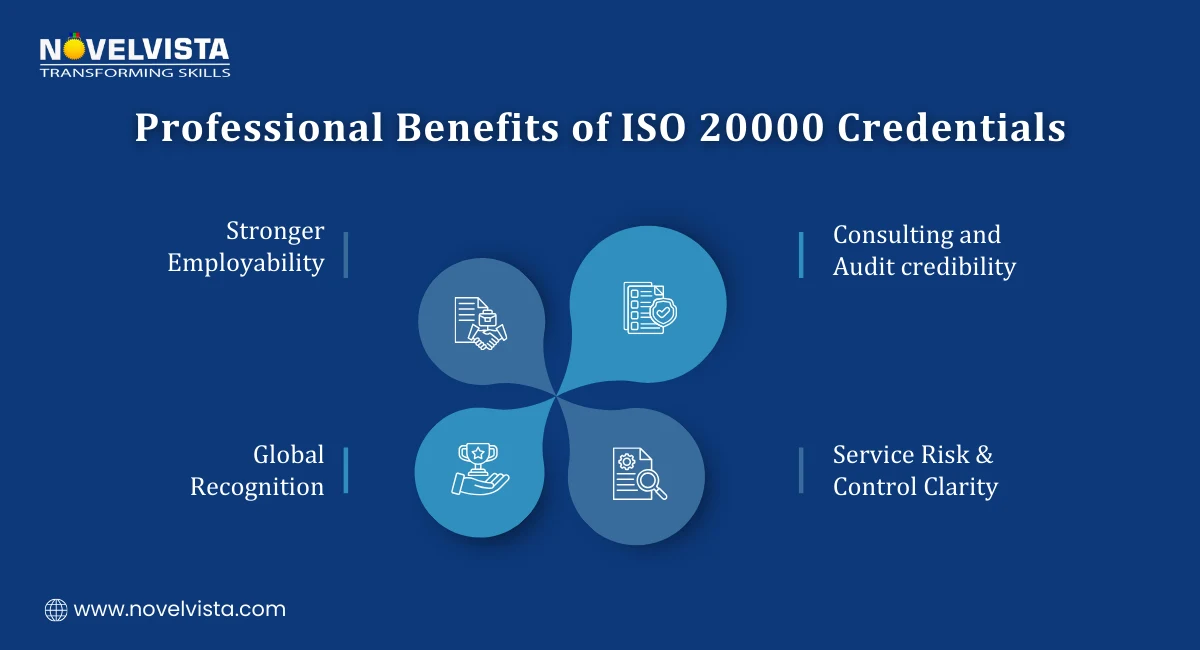
Key benefits include:
Professionals holding ISO 20000 individual credentials are often more confident engaging with auditors, customers, and leadership on service performance topics.
ISO 20000 is designed to support long-term career growth, not quick wins.
A typical progression looks like this:
This step-by-step approach supports steady development in ITSM and auditing roles. Each ISO 20000 Qualification for professional growth builds on the previous one, making career advancement structured and predictable.
Also Read: ISO 20000 Qualification Path: From the Foundation to Lead Auditor
An ISO 20000 Qualification for professional development helps individuals move from operational roles into structured, decision-driven ITSM careers. Whether you begin with Foundation or aim directly for Lead Auditor, the right credential depends on your responsibilities and long-term goals, not job titles.
ISO 20000 qualifications remain relevant because they are periodically updated to reflect changes in service delivery models, sourcing practices, and governance expectations.
By choosing a recognized body and a role-aligned credential, professionals gain lasting value, global credibility, and skills that remain relevant across industries.
If your goal is to assess service management systems, support certificate audits, or move into governance and consulting roles, NovelVista’s ISO 20000 Lead Auditor is a strong next step. The program combines structured training, practical audit scenarios, and exam readiness support to help professionals build real auditing confidence. It is designed for individuals who want credible skills, global recognition, and long-term growth in ITSM and compliance careers.
Author Details

Course Related To This blog
ISO 20000:2018 Lead Auditor
Confused About Certification?
Get Free Consultation Call
Stay ahead of the curve by tapping into the latest emerging trends and transforming your subscription into a powerful resource. Maximize every feature, unlock exclusive benefits, and ensure you're always one step ahead in your journey to success.